QUICK SUMMARY
What are the best breastfeeding tips for new moms? The best breastfeeding tips are to prepare your mindset, get support early, nurse often, protect skin during the first tender weeks, eat a clean nutrient-dense diet, stay hydrated, rest when you can, and use natural tools wisely.
Breastfeeding is beautiful, but let’s be real: it can also be hard, especially in the beginning. As a Mama to 7, I’ve walked through sore nipples, milk supply concerns, cluster feeding, engorgement, teething babies, pregnancy while nursing, and long nights when I needed prayer just as much as practical help.
This guide shares my favorite breastfeeding strategies, low-tox postpartum supplies, natural remedies, nursing roll-ons, mindset tips, and Scriptures to encourage you. Every mama’s journey is different, and there is no shame here. The goal is wisdom, support, and faith-filled encouragement for the path God has for you and your baby.
My hope and prayer is that this breastfeeding guide and product collection list makes your nursing journey more enjoyable, supported, and successful.
And always remember: every journey is different.
Some mamas exclusively nurse. Some pump. Some combo feed. Some need donor milk or formula. Some tandem nurse beautifully. Some have a rough start and still finish strong.
Follow the plan God has for your body, which will often align with what He has laid on your heart.
Table of Contents
- Why Is Breastfeeding Important?
- Breastfeeding Is Worth the Effort
- My Breastfeeding Strategy
- Can I Bottle Feed?
- Mama Z’s Top 5 Breastfeeding Strategies & Supplies
- Nursing Roll-Ons for Milk Supply and Digestion
- Tips for Long-Term Breastfeeding
- Scriptures for Breastfeeding & Prayer
- Breastfeeding FAQs
- Resources & References

Why Is Breastfeeding Important?
As a Mama to 7, I’ve experienced just about every breastfeeding challenge under the sun, from milk supply issues and sore nipples to cluster feeding marathons and teething babies.
Along the way, I’ve gathered a toolbox of breastfeeding tips, practical wisdom, and natural remedies that helped me nourish my babies and care for my own body, too.
Breastfeeding is beautiful, but let’s be real: it is also tough sometimes, especially in the beginning!
That is why I am sharing my strategies, tips, tricks, and go-to natural solutions that helped me nurse each one of my babies. And that starts with mindset, support, and knowing where to find the best low-tox products for you and baby.
Without question, breast milk is God-designed nutrition for babies.
The CDC says breastfeeding is the best source of nutrition for most infants and can reduce the risk of certain health conditions for both babies and mothers. (1) The American Academy of Pediatrics recommends exclusive breastfeeding for about 6 months, introducing complementary foods around 6 months, and continuing breastfeeding for 2 years or beyond as mutually desired. (2)
This is important because breastfeeding is not just about calories.
Breast milk provides antibodies, immune factors, enzymes, hormones, beneficial bacteria, prebiotics, and living nutrition that changes to meet your baby’s needs. Human milk supports immune development, gut development, bonding, and nourishment in ways formula cannot fully duplicate. (2)
That is why the breastfeeding tips in this post matter so much.
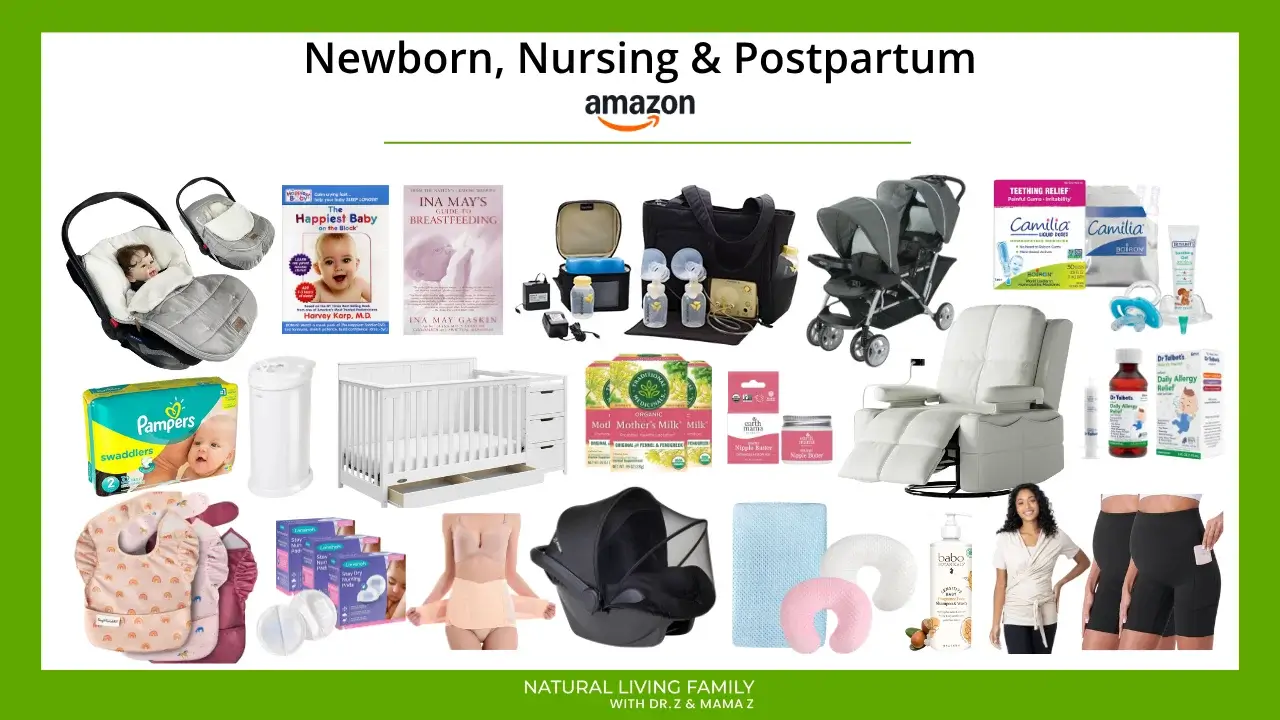
Tap the image below or click here to shop our Natural Living Family Store to check out my favorite newborn, nursing & postpartum finds on Amazon.
My
Breastfeeding Is Worth the Effort
It is no wonder so many women stop nursing earlier than they planned.
Breastfeeding can be hard. Support can be limited. Pain can feel discouraging. Sleep deprivation is real. And many women are not given enough practical education before baby arrives.
One of the most encouraging things said to me when I was pregnant with Esther was, “If you can make it through the first two weeks, you can make it through anything!”
I am so grateful a friend said this to me, especially during the first two to three weeks, which I call “the razor blades” phase.
This is when milk is coming in, your body is regulating flow, and your baby is learning to suckle. Suckling, or rooting, is one of the first things babies instinctively learn to do, which shows how much natural sustenance means to the Lord.
Breastfeeding is worth the effort, especially when you consider the long-term benefits of breastfeeding and human milk.
At the same time, we should be honest and compassionate. If breastfeeding is not possible, babies still need to be fed safely and lovingly. Formula can be necessary and life-saving in some situations. But it can also be difficult to navigate, and some research has raised concerns about infant exposure to microplastics through infant formula, plastic feeding bottles, and infant feeding systems. (3, 4)
That is one reason I encourage mothers who desire to breastfeed to get support quickly and keep going if possible.
If you are facing challenges with nursing, you are not alone, and you do not have to figure it out alone either. Connecting with a lactation consultant, your local La Leche League group, a midwife, a doula, or even a trusted friend who has breastfed before can make all the difference in the world.
Be encouraged, Mama: God designed your body with incredible capacity to nourish and sustain your baby.
It is not always easy, and it is not always glamorous, but you can do this. You were made for this sacred work.
And it is not about how you start; it is about how you finish. I have known many mamas who had rough starts and were still able to have a successful breastfeeding journey. We are all a work in progress, and the Lord continues to perfect that which concerns us.
“The Lord will perfect that which concerns me.” — Psalm 138:8
My Breastfeeding Strategy

Yes, I breastfed most of my babies until they were at least two years old, no matter what was going on in life.
I have nursed through date nights, major events, travel, and even pageants!
In the photo above, I am at the Mrs. Georgia America pageant in 2016 with Baby Bella in my arms, totally knocked out in a sweet little “nummy” milk coma.
When we took Bella to her six-month milestone appointment, a little early, she was in the 80th to 90th percentile across the board.
And get this: none of our babies eat solid food until their first birthday.
That is right. We wait until they are one year old, on their first birthday, before introducing blended solids. We truly celebrate this milestone, skipping sugary smash cakes and instead nourishing them with blended organic avocados, mangoes, and a combination of both, with bananas as a backup option.
As you can see, they never miss a meal!
This is our family’s approach, and it worked beautifully for us. The AAP recommends exclusive breastfeeding for about 6 months for most babies, with complementary foods introduced around 6 months while breastfeeding continues. (2) So, talk with your pediatrician, midwife, or natural healthcare provider about your baby’s growth, readiness, iron needs, and individual plan.
Let me say this clearly: never feel ashamed if your journey looked different.
If you were not able to breastfeed, chose not to, did not have the support you needed, or had medical complications, that does not make you any less of a good mama.
I am incredibly grateful for the breastfeeding classes I took while pregnant with my oldest daughter, taught by the go-to lactation consultant in our area at the time.
I am also grateful for the support I received from my mom, who breastfed all three of her children; Julie, my first doula and pregnancy exercise coach, who was also an assistant lactation consultant and physical therapy assistant; a kind and wise lactation consultant; the local La Leche League; and my midwifery team and their local group, the Mother Earth Mamas.
I surrounded myself with women who had successfully nursed because I knew that support would be key.
And it was.
As a breastfeeding peer mentor for years, I encourage you not to give up until you find the support you need to make your breastfeeding journey work.
“A man has joy by the answer of his mouth, and a word spoken in due season, how good it is!”
— Proverbs 15:23
And remember, before you make any changes to your routine, herbs, supplements, or essential oil use, always consult with your natural healthcare provider, midwife, lactation consultant, or naturopath.
Can I Bottle Feed?
For the mamas out there thinking about breastfeeding, breast milk really is best when it is possible. It is worth every bit of effort, and the blessings it brings are beautiful beyond words.
Formula can be tricky to navigate. It is hard to find one that is truly clean and free from concerns like microplastics, heavy metals, and questionable contaminants. That is something to think about when it is your little one’s main nourishment. (3, 4)
Nursing, when you are able, is such a gift. It is this amazing mix of nourishment, bonding, and simplicity that only God could design.
If you are concerned about nursing from a cosmetic standpoint, I can assure you that my body has not seen negative effects from full-time nursing. In fact, some areas have improved!
Exclusive pumping is also a beautiful act of love for mamas who cannot full-time nurse. And it is hard work, so much harder than nursing in many ways. There is nothing but respect for the moms who go this route.
If you are working outside the home and baby receives breast milk during the day, I encourage you to take time in the morning and evening to breastfeed if you can. This gives you the best of both worlds and allows you to still experience those special moments that only nursing can bring.
I remember hearing in my first breastfeeding class that many women’s supply dips around six months, not always because they cannot produce, but because support, motivation, and daily rhythm become harder to maintain.
It really can be that challenging. It is a sacrifice, but one that is so worth it.
What I have learned along the way is that every bottle can take the place of a special moment where your baby signals your body to let down milk. Nursing helps activate those amazing hormones that keep your supply going strong.
That is one reason I choose to nurse exclusively. I do pump to keep up supply or relieve engorgement, and I donate that milk whenever I can. It has been a blessing to share with moms going through tough seasons or friends fighting illness.
Breast milk truly is a miracle food. Scientists discovered a protein-lipid complex called HAMLET in human milk research that kills tumor cells and immature cells while sparing healthy, differentiated cells in experimental settings. (5) That is divine design at work.
One of the best little tips I can share is to let Dad handle the diapers and/or burping so you can grab a little more rest.
Every bit of sleep helps!
If nursing is part of your journey, it is a wonderful place to start. Nursing and bottle-feeding together can be a great next option when needed. Then exclusive pumping. Then, when medically necessary or best for your family, formula.
And whatever your journey looks like, please know there is no shame.
We are all doing our best with what God has given us.
Mama Z’s Top 5 Breastfeeding Strategies & Supplies
Here are a few of my favorite natural go-tos that helped support healthy milk flow and overall wellness while nursing.
1. Clean, Balanced Diet
One of the best things you can do while breastfeeding is to eliminate common allergens and inflammatory foods, especially if you notice baby reacting after feeds.
I personally avoided what I am most sensitive to: casein, dairy, gluten and wheat, processed sugar, preservatives, soy, and peanuts.
For our family, doing this helped reduce acid reflux, colic, and tummy issues.
It might feel like a lot to adjust your diet, but your body and baby will thank you.
Application: If baby is fussy, gassy, rashy, refluxy, or uncomfortable, start a food and symptom journal. Bring it to your lactation consultant, pediatrician, midwife, or natural healthcare provider.
2. Essential Oils
I used therapeutic-grade basil and fennel essential oils, always diluted, and gently massaged them around my milk ducts after nursing.
This helped keep things flowing for me.
Note that fennel essential oil should not be used continuously for more than 10 days. Prolonged use may overstimulate the urinary tract and lead to excessive urination. Fennel also contains constituents with estrogen-like activity, so use caution with hormone-sensitive conditions and always keep it away from baby’s mouth and face.
Important: Never apply essential oils directly to the nipple before feeding. Wash the area well before nursing if oils have been applied near the breast.
3. Hot Compresses
During those early days, what I lovingly call the “razor blades” phase, I used hot compresses made with chamomile tea to soothe my chest and relieve occasional tightness or discomfort.
This was especially helpful when dealing with engorgement, tenderness, or general discomfort as my body adjusted to feeding and baby’s schedule.
For plugged ducts, severe pain, fever, red streaking, flu-like symptoms, or suspected mastitis, contact your provider promptly.
4. Low-Tox Must-Haves
I have gathered a list of pregnancy and nursing essentials I recommend, including low-tox products you can find easily on Amazon.
From support pillows, nipple creams, nursing pads, postpartum supplies, teas, and baby care basics, you will want to have these on hand to make your journey smoother and more joyful.
Click here for my trusted favorites.
5. Nourishing Foods
I loaded up on super greens through shakes, organic salads, and fresh-pressed organic juices.
I also made sure to include healthy fats like organic avocados and coconut in my meals. These nutrient-dense foods gave my body the fuel it needed to support both my energy and milk production.
If you have trouble fitting vegetables into your diet, consider serving any main dish over a bed of organic spinach or leafy greens.
Application: Breastfeeding mamas need nourishment, not restriction. Build your plate with clean protein, healthy fats, colorful plants, minerals, and plenty of fluids.
Nursing Roll-Ons for Milk Supply and Digestion
These recipes are designed to support milk flow, comfort, and digestion. They are tried-and-true blends that helped me successfully nurse our kiddos.
Mama's Milk - Start Production Roll-On
Quantity
Ingredients
- 6 drops clary sage essential oil
- 6 drops jasmine essential oil
- Carrier oil (I like using half organic jojoba and half fractionated coconut oil)*
Supplies
Instructions
- Add the essential oils to a glass roll-on bottle.
- Fill the remaining space of your roller bottle with the carrier oil of your choice. Gently pop the roller top back on, secure the cap, and give it a good shake to blend everything.
- Roll over your body’s most permeable areas, such as the chest, head and neck, inner arms, inner thighs, and behind the knees. I like to apply around all the mammary glands, starting under the armpit and moving around the breast, into the clavicle.
Mama's Milk - Boost Production Roll-On
Quantity
Ingredients
- 6 drops basil essential oil
- 6 drops fennel essential oil*
- Carrier oil (I like using half organic jojoba and half fractionated coconut oil)**
Supplies
Instructions
- Add the essential oils to a glass roll-on bottle.
- Fill the remaining space of your roller bottle with the carrier oil of your choice. Gently pop the roller top back on, secure the cap, and give it a good shake to blend everything.
- Roll over your body’s most permeable areas, such as the chest, head and neck, inner arms, inner thighs, and behind the knees. I like to apply around all the mammary glands, starting under the armpit and moving around the breast, into the clavicle.
Upset Tummy Roll-On for Babies
Quantity
Ingredients
- 2 drops peppermint essential oil
- 1 drop thyme essential oil
- 1 drop cardamom essential oil
- 1 drop clove essential oil
- 1 drop ginger essential oils
- 1 drop caraway essential oil
- Carrier oil (I like using half organic jojoba and half fractionated coconut oil)*
Supplies
Instructions
- Add essential oils to the roller bottle, then top off with your favorite carrier oil. Insert roller ball, close cap, and shake to combine.
- Roll on the tummy for relief. I like to massage in a circular (clockwise) motion all around the tummy.
Essential oil safety for nursing mamas: Use diluted oils only. Keep oils away from baby’s face, hands, and mouth. Do not apply oils to nipples before feeding. Wash skin before nursing if oils have been applied near the breast. Avoid casual internal essential oil use while breastfeeding unless guided by a qualified practitioner. Use caution with peppermint and sage because they are traditionally used by some women to reduce milk supply.
Tips for Long-Term Breastfeeding
Hang in there, Mama. You can make it through the “razor blades” phase.
Those first few weeks of nursing can feel intense, but if you persevere with prayer, support, and patience, it truly does become easier. Once you are over that initial hump, you will find your rhythm.
That is not to say there will not be bumps along the way, but trust me, every challenge is workable with the right support.
Follow Baby’s Natural Schedule
Your baby’s schedule may feel hectic at first, but once they reach the 9- to 10-pound mark, you may be able to almost predict when they want to feed and sleep.
They begin to present their natural daily schedule.
Often, their sleep periods become longer, giving you a well-deserved break. As my mom always says, “If you can, try to rest when the baby rests!”
Avoid Pacifiers at First
We try to avoid using pacifiers for the first two weeks of baby’s life because it can contribute to nipple confusion for some babies.
This also helps them turn to the breast for comfort, which can support milk supply.
Some families need pacifiers for specific medical or soothing reasons, so use wisdom and get support if latch or supply is a concern.
Involve Dad
There is a common misconception that fathers cannot be as involved in baby’s life if Mom is doing all the feeding.
I involved Dr. Z in our nursing journey by having him change many of the diapers, burp and/or swaddle the baby, and perform all the “5 S’s”.
He also came to the fourth trimester class, where he learned how to support me and baby best. This wisdom came from my mom and other family members, with a few tweaks to make it work for our family.
Dad’s support matters more than most people realize.
Prep for the Future
Pump and store your breast milk early on, if that works for your body, so you have it ready to mix into puréed organic fruits and veggies when baby starts solids later.
It is a great way to stretch the benefits of your milk even further.
Embrace Breast-to-Baby Contact
Breast-to-baby contact is what stimulates the best milk production.
You make much of your on-demand milk because baby stimulates it. If possible, nursing on demand, meaning directly from the breast, is a wonderful plan.
Skin-to-skin time also supports bonding, nervous system regulation, and breastfeeding rhythms.
Rely on God’s Unique Plan for Your Nursing Journey
I have been incredibly blessed to be home with my babies, and I recognize not every family is in the same situation.
My little ones have never taken a bottle; they have all nursed on demand from the breast.
My first nursed for 2 years and 1 1/2 months. My second nursed for 17 1/2 months. My third nursed for 2 1/2 years. Sweet Bella was 2 1/2 years old when she stopped nursing.
Ezekiel was 18 months, Isaac was 2 years and 2 months, and Elizabeth is going strong!
All of my shorter-term nursing babies weaned because I was pregnant with the next baby, as my breast milk turns more sour at a certain point in my pregnancies.
This is God’s great design to help the big brother or sister transition to the natural phase of weaning. At this point, we love including the child in home midwife appointments, using the fetal doppler, showing Mama where baby is, and extending the bedtime experience to longer prayers.
Bonus: this approach helps prevent sibling jealousy and provides a peaceful weaning experience.
Scriptures for Breastfeeding & Prayer
These Scriptures and quote encouraged me throughout pregnancy and my nursing journey:
- “The Lord will perfect that which concerns me.” — Psalm 138:8
- “But let patience have its perfect work, that you may be perfect and complete, lacking nothing.” — James 1:4
- “You have given him his heart’s desire, and have not withheld the request of his lips. Selah.” — Psalm 21:2
- “Without struggle, there is no progress.” — Winston Churchill
This was my heart’s desire: to nurse, nourish, and connect deeply with each of my children.
If this is your heart’s desire, I pray these tips bless you in a meaningful, practical, and encouraging way.
You’ve got this, Mama!
Thank You, Lord, for this precious Mama. We ask You to bless her hands and body. God, we ask that as You formed her body and designed Your plan, You give her the desire of her heart, whether it be increased milk production, the best breastfeeding experience, or help restoring what was lost.
We thank You and commit this special time to You. We ask that You bless this special time of connection with each of our babies. We thank You, Lord, for showing us just what to do and blessing the work of our hands to prosper this family journey.
As Your beloved children, we know You give us sweet sleep. Help each Mama and Daddy get the rejuvenating rest they need, even if it is blessed and multiplied power naps.
We thank You for perfecting the things that concern us. Show us the areas where we can grow. And thank You for doing exceedingly abundantly beyond all that we can ask or think, because we know we can do all things through You who strengthens us. In Jesus’ Name, amen.
Tap the image below or click here to shop our Natural Living Family Store to check out my favorite newborn, nursing & postpartum finds on Amazon.
Breastfeeding FAQs
What are the best breastfeeding tips for beginners?
The best breastfeeding tips for beginners are to get lactation support early, nurse often, check baby’s latch, use skin-to-skin contact, stay hydrated, eat nourishing foods, rest when possible, and ask for help before pain or supply issues become overwhelming.
How long should I breastfeed?
The American Academy of Pediatrics recommends exclusive breastfeeding for about 6 months, introducing complementary foods around 6 months, and continuing breastfeeding for 2 years or beyond as mutually desired by mother and child. (2)
What should I do if breastfeeding hurts?
Some tenderness can happen early on, but severe pain, cracked nipples, bleeding, or ongoing “razor blade” pain may signal latch problems, tongue tie, thrush, vasospasm, or another issue. Contact a lactation consultant, midwife, or healthcare provider quickly.
How can I support milk supply naturally?
Nurse often, keep baby close, empty the breasts well, rest when you can, eat enough calories, hydrate, reduce stress, and get support for latch or transfer issues. Some moms also use herbs, foods, and diluted essential oil roll-ons with professional guidance.
What foods should I eat while breastfeeding?
Focus on clean protein, healthy fats, leafy greens, colorful vegetables, fruits, mineral-rich foods, soups, smoothies, fresh juices, and plenty of fluids. Avoid foods you know you or baby react to, and consider a food journal if reflux, gas, rash, or colic symptoms appear.
Can I use essential oils while breastfeeding?
Yes, some essential oils can be used while breastfeeding when diluted properly and kept away from baby’s mouth, face, and hands. Do not apply oils to nipples before feeding. Use extra caution with peppermint, sage, fennel, and any internal use. Ask a qualified practitioner when needed.
Can I pump and still breastfeed?
Yes. Many moms pump and breastfeed successfully. If you are away from baby during the day, nursing in the morning and evening can help preserve bonding and support milk supply.
Is formula ever necessary?
Yes, formula can be necessary in some situations and can help babies thrive when breast milk is not available or sufficient. There is no shame in feeding your baby. When possible, get guidance from a pediatrician and lactation consultant to protect both baby’s nutrition and your breastfeeding goals.
What can Dad do if Mom is breastfeeding?
Dad can change diapers, burp baby, swaddle, rock, soothe, bring water and food to Mom, handle household tasks, protect Mom’s rest, attend breastfeeding classes, and encourage her during hard moments.
How can I keep breastfeeding long term?
Build support, nurse on demand when possible, avoid unnecessary early interruptions, protect your sleep, eat well, address problems quickly, and remember your “why.” Prayer, Scripture, encouragement, and practical help make a huge difference.
Final Thoughts on Breastfeeding Tips for Moms
Breastfeeding is one of the most sacred, stretching, beautiful, exhausting, and rewarding things I have ever done as a mother.
It is nourishment. It is bonding. It is sacrifice. It is worship in the ordinary moments.
Some days feel easy and sweet. Other days require tears, prayer, hot compresses, a lactation consultant, and one more deep breath.
Mama, you are not alone.
Whether your journey is exclusive nursing, pumping, combo feeding, donor milk, formula, tandem nursing, or peaceful weaning, God sees you. He cares about your body, your baby, your sleep, your concerns, and your heart’s desire.
Take the next faithful step. Ask for help. Nourish your body. Protect your peace. And trust that the Lord is perfecting the things that concern you.

Resources & References
- Centers for Disease Control and Prevention. About Breastfeeding. https://www.cdc.gov/breastfeeding/php/about/index.html
- Meek JY, Noble L; Section on Breastfeeding. Policy Statement: Breastfeeding and the use of human milk. Pediatrics. 2022;150(1):e2022057988. https://pubmed.ncbi.nlm.nih.gov/35921640/
- Zhang Q, et al. Microplastics in infant milk powder. Environmental Pollution. 2023. https://pubmed.ncbi.nlm.nih.gov/36758924/
- Li D, et al. Microplastic release from the degradation of polypropylene feeding bottles during infant formula preparation. Nature Food. 2020. https://pubmed.ncbi.nlm.nih.gov/37128027/
- Svanborg C, Agerstam H, Aronson A, et al. HAMLET, a tumoricidal molecular complex from human milk. Advances in Cancer Research. 2003;88:1-29. https://pmc.ncbi.nlm.nih.gov/articles/PMC2727106/
- Moore ER, Bergman N, Anderson GC, Medley N. Early skin-to-skin contact for mothers and their healthy newborn infants. Cochrane Database of Systematic Reviews. 2016. https://livrepository.liverpool.ac.uk/3005651/1/Moore_et_al-2016-The_Cochrane_Library.pdf
- Centers for Disease Control and Prevention. Breastfeeding. https://www.cdc.gov/breastfeeding/
- National Library of Medicine. Drugs and Lactation Database (LactMed). https://www.ncbi.nlm.nih.gov/books/NBK52688/