QUICK SUMMARY
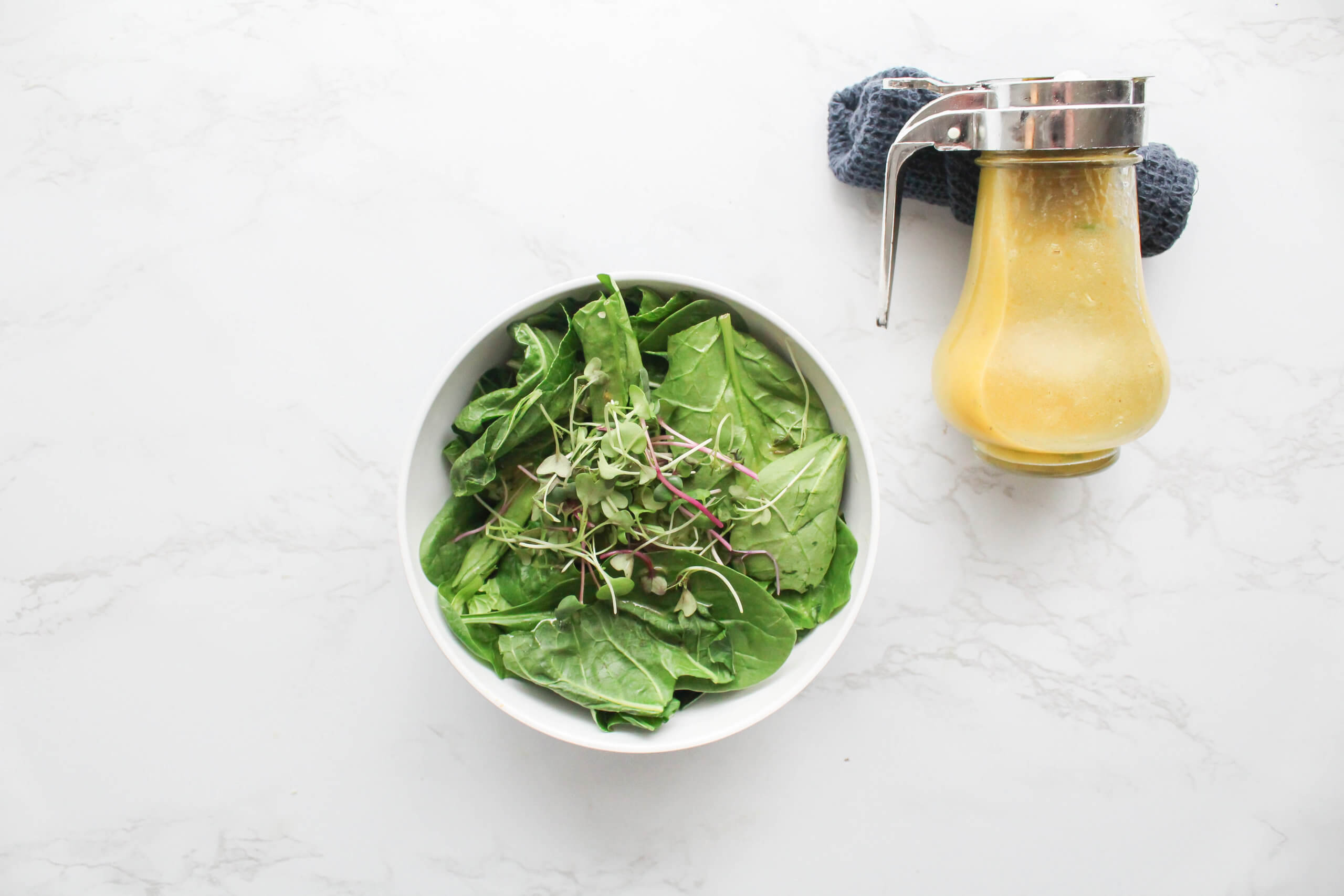
This Spinach Cucumber Salad is a crisp, refreshing, 10-minute side dish made with baby spinach, cucumber, bok choy, kale, microgreens, and a light apple cider vinaigrette.
Bok choy and kale are cruciferous vegetables rich in glucosinolates. When these vegetables are chopped, chewed, and digested, glucosinolates can form bioactive compounds such as indoles and isothiocyanates. Most cancer-mechanism research on these compounds is preclinical, while human research on cruciferous vegetable intake is promising but mixed.
It’s naturally gluten-free, dairy-free, made without added sugar, and easy to make vegan by using egg replacer in the vinaigrette. Simple, fresh, and full of God-given plant goodness!
My Spinach Cucumber Salad is perfect for those times when you just want fresh veggies without a lot of fanfare. Bok choy and kale give this simple salad a cruciferous vegetable boost, while cucumber keeps it cool and refreshing.
It’s topped with delicate microgreens and drizzled with a light apple cider vinaigrette. Sometimes, simple is best!
Table of Contents:

Make Superfood Spinach Cucumber Salad
This salad takes just 10 minutes to prep, and that includes making your own gourmet vinaigrette! This recipe serves 4-6 people, generously. It makes a fantastic light lunch or side dish.
Spinach and Cucumber Salad with Apple Cider Vinaigrette (With Vegan Option)
Servings
Ingredients
Salad
- 2 cups finely chopped organic bok choy stalks AND leaves
- 2 cups organic Tuscan kale OR other kale first remove stem and spine and then tear into small pieces
- 2 cups organic baby spinach
- 2 large organic cucumbers, peeled, seeded, AND thinly sliced
- Organic chia sprouts OR your favorite sprouts OR microgreens, for garnish
Vinaigrette
- 1 cup extra-virgin olive oil
- ¼ cup organic unfiltered apple cider vinegar
- 1 large pasture-raised organic egg OR 1 tablespoon egg replacer PLUS 2 tablespoons purified OR distilled water
- 1 teaspoon fresh organic chives, chopped
- 1 teaspoon herbes de Provence OR herbs of Italy OR organic dried Italian seasoning blend*
- ½ teaspoon pink Himalayan salt OR sea salt, ground
- ¼ teaspoon organic white pepper, ground
Supplies
- Mini blender , immersion blender, OR small mixing bowl
Instructions
- For the salad: Toss the bok choy, kale, spinach, and cucumbers in a salad bowl.
- For the vinaigrette: Pour the olive oil into a mini blender or whisk it in a bowl. Slowly pour in the cider vinegar to emulsify. Add the egg and blend thoroughly. Season with chives, dried herbs, sea salt, and white pepper. Store the vinaigrette in the fridge, where it will last 2-4 weeks, depending on your climate.
- As you plate the salad, top each serving with a small amount of chia sprouts. Drizzle with the vinaigrette.
Step One: Make the Apple Cider Vinaigrette

Pour the olive oil into a mini blender or whisk it in a small bowl. Slowly pour in the apple cider vinegar to emulsify. Add the egg or egg replacement and blend thoroughly. Season with chives, dried herbs, sea salt, and white pepper. Set aside while you make the salad.
Step Two: Make the Salad

Toss the bok choy, kale, spinach, and cucumbers in a salad bowl. As you plate the salad, top each serving with a small amount of chia sprouts. Drizzle with the vinaigrette.
I prefer adding the dressing to this salad after plating it to keep the veggies crisp. Enjoy!


Cruciferous Vegetables Can Change Your Health

Cruciferous vegetables are nutrient-dense foods from the Brassicaceae family. Bok choy and kale, which we use in this salad, provide vitamins, minerals, fiber, and a distinctive group of sulfur-containing plant compounds called glucosinolates. (1)
When raw cruciferous vegetables are chopped or chewed, plant enzymes help convert glucosinolates into biologically active compounds such as isothiocyanates and indoles. Gut bacteria can also help form these metabolites after cooked cruciferous vegetables are eaten. (1)
This is an exciting area of nutrition research, but it is important to describe the evidence accurately. The National Cancer Institute notes that many of the best-known anticancer mechanisms for indoles and isothiocyanates come from animal and laboratory research. Human studies examining cruciferous vegetable intake and specific cancer risks have produced mixed results. (2) A 2021 review reached a similar conclusion: the preclinical evidence is substantial, but more large, controlled human trials are needed. (3)
I love seeing how much God packed into ordinary vegetables.
A 2025 dose-response meta-analysis of 17 observational studies found an inverse association between cruciferous vegetable intake and colon cancer risk, with the strongest estimated association at moderate intakes. The authors also identified heterogeneity and publication bias, and their trim-and-fill adjustment weakened the association enough that the confidence interval crossed the null. So this is encouraging observational evidence, not proof that cruciferous vegetables prevent cancer. (4)
Other examples of cruciferous veggies include:
- Arugula
- Broccoli
- Brussels Sprouts
- Cabbage
- Cauliflower
- Collard Greens
- Horseradish
- Mustard Greens
- Radish
- Rutabaga
- Turnips
- Watercress
- Wasabi
I make it a goal to include some of these beautiful gifts from God in my diet each week. One of the easiest ways to get more bioactive foods on the table is to make fresh salads like this one!
Application: Chop, chew, and enjoy your cruciferous vegetables. Those simple food-prep steps help activate plant myrosinase in raw crucifers, while gut bacteria can also help form glucosinolate metabolites from cooked vegetables. The practical takeaway is simple: enjoy a variety of cruciferous vegetables regularly.
Super Greens Salad & Dressing Ingredients

This recipe is such a delicious way to nourish your body! It uses simple ingredients to create a plate full of lovely greens. A delicious vinaigrette takes it to a whole new level!
Organic Greens: Aside from the cruciferous veggies we already mentioned, this salad is full of baby spinach. Spinach, kale, and bok choy contribute fiber, vitamins, minerals, and plant compounds. Fiber supports fullness, digestive health, and blood sugar control. The CDC notes that soluble fiber can slow digestion and help control blood sugar, while insoluble fiber can help increase insulin sensitivity. (5)
Organic Cucumbers: Cucumbers are one of the most refreshing things God created. They’re about 96% water, which makes them a crisp, hydrating addition to salads, snacks, and infused water. (6)
Organic Microgreens: Microgreens are a beautiful garnish, and they have a light flavor that complements the crispness of the vinaigrette perfectly! USDA researchers found substantial concentrations of vitamins and carotenoids in 25 commercially available microgreens, while a separate USDA-led analysis identified 164 polyphenols across five Brassica microgreen species. (7, 8) Good things really can come in small packages!
Extra-Virgin Olive Oil: Extra-virgin olive oil gives this vinaigrette richness and helps carry all those herb flavors. It is rich in monounsaturated fat and contains polyphenols. A 2024 umbrella review found the strongest health evidence for olive oil in cardiovascular outcomes and risk factors, with additional evidence involving mortality, diabetes, and other chronic-disease outcomes. (9) Quality and freshness still matter, so see how we approach choosing the best olive oil brands.
Pasture-Raised Organic Eggs: Adding eggs to your vinaigrette is a simple chef’s trick that helps the dressing cling to the greens and gives it a smooth texture. If you have an egg allergy or want a vegan salad, use an egg replacer and purified or distilled water. Because this vinaigrette is served uncooked, FDA recommends pasteurized eggs or pasteurized egg products for recipes that contain raw or undercooked egg. Egg replacer is another easy option. (10)
Organic Unfiltered Apple Cider Vinegar: This vinegar comes from fermented apples and gives the dressing its bright, tangy flavor. Small human studies have examined vinegar and apple cider vinegar for glucose control. A 2004 study found improved insulin sensitivity after a high-carbohydrate meal in adults with insulin resistance or type 2 diabetes, and a 2023 randomized trial found improvements in several glucose and lipid markers after eight weeks of 30 mL daily apple cider vinegar in adults with type 2 diabetes. (11, 12)
Those studied amounts and populations are very different from enjoying a little vinaigrette on a salad, so think of the vinegar here first as a flavorful whole-food ingredient, not a treatment. When purchasing apple cider vinegar, I prefer raw, unfiltered vinegar with the “mother,” but the human studies above do not establish that the mother itself is responsible for the observed effects.
Organic Herbes de Provence: I love Italian seasoning in my dressings, but I learned that sage has traditionally been used to decrease breast milk supply, so I switched to herbes de Provence. LactMed notes that sage has been used for reducing lactation, while also stating that scientific studies directly evaluating its effect on milk supply are lacking. (13) My family has loved herbes de Provence so much that it’s all we use! Check your blend because ingredients vary by brand.
Pink Himalayan Salt or Sea Salt: Salt is primarily sodium chloride. Specialty sea salts can contain trace minerals, but those trace amounts are not a reason to treat salt as a major mineral supplement. We recommend using Colima sea salt. I love that it is hand-harvested, and it tastes great! You can also use pink Himalayan salt.
Spinach Cucumber Salad FAQs
What is spinach cucumber salad good for?
Spinach cucumber salad is an easy way to add hydrating vegetables, leafy greens, fiber, and a variety of plant compounds to your meal. This version also includes bok choy and kale, two cruciferous vegetables rich in glucosinolates.
Is this spinach cucumber salad healthy?
Yes. This salad is built around whole-food ingredients including spinach, cucumber, bok choy, kale, microgreens, extra-virgin olive oil, apple cider vinegar, herbs, and sea salt. It fits naturally into the plant-forward approach we discuss in our anti-inflammatory diet guide.
Can I make this salad vegan?
Yes. Use the egg replacer option in the vinaigrette instead of the pasture-raised egg. The dressing still blends beautifully and gives you that smooth, clingy texture without using eggs.
Can I make spinach cucumber salad ahead of time?
You can prep the greens, cucumbers, and vinaigrette ahead of time, but don’t dress the salad until you’re ready to serve. This keeps the bok choy, kale, spinach, and cucumbers crisp instead of soggy.
Why add bok choy and kale to a cucumber salad?
Bok choy and kale add crunch, color, fiber, micronutrients, and the glucosinolates that make cruciferous vegetables nutritionally distinctive.
Is apple cider vinaigrette sugar-free?
This vinaigrette contains no added sugar. Its bright flavor comes from apple cider vinegar, herbs, chives, sea salt, white pepper, and extra-virgin olive oil.
Should I peel cucumbers for salad?
This recipe calls for peeled, seeded cucumbers for a delicate texture. If you’re using organic cucumbers and your family digests the peel well, you can leave some peel on for extra crunch and color.
- Linus Pauling Institute, Oregon State University. “Cruciferous Vegetables.” Micronutrient Information Center. Source.
- National Cancer Institute. “Cruciferous Vegetables and Cancer Prevention.” Source.
- Connolly EL, Sim M, Travica N, et al. “Glucosinolates From Cruciferous Vegetables and Their Potential Role in Chronic Disease: Investigating the Preclinical and Clinical Evidence.” Frontiers in Pharmacology. 2021;12:767975. Source.
- Lai B, Li Z, Li J. “Cruciferous vegetables intake and risk of colon cancer: a dose-response meta-analysis.” BMC Gastroenterology. 2025;25(1):575. PMC.
- Centers for Disease Control and Prevention. “Fiber: The Carb That Helps You Manage Diabetes.” Updated May 15, 2024. Source.
- Simon D. “Cucumber Nutrition Facts and Benefits.” N.C. Cooperative Extension, Franklin County Center. August 15, 2024. Source.
- Xiao Z, Lester GE, Luo Y, Wang Q. “Assessment of vitamin and carotenoid concentrations of emerging food products: edible microgreens.” Journal of Agricultural and Food Chemistry. 2012;60(31):7644-7651. USDA ARS.
- Sun J, Xiao Z, Lin LZ, Lester GE, Wang Q, Harnly JM, Chen P. “Profiling polyphenols in five Brassica species microgreens by UHPLC-PDA-ESI/HRMS(n).” Journal of Agricultural and Food Chemistry. 2013;61(46):10960-10970. PubMed.
- Chiavarini M, Rosignoli P, Giacchetta I, Fabiani R. “Health Outcomes Associated with Olive Oil Intake: An Umbrella Review of Meta-Analyses.” Foods. 2024;13(16):2619. PMC.
- U.S. Food and Drug Administration. “What You Need to Know About Egg Safety.” Source.
- Johnston CS, Kim CM, Buller AJ. “Vinegar improves insulin sensitivity to a high-carbohydrate meal in subjects with insulin resistance or type 2 diabetes.” Diabetes Care. 2004;27(1):281-282. PubMed.
- Jafarirad S, Elahi MR, Mansoori A, Khanzadeh A, Haghighizadeh MH. “The improvement effect of apple cider vinegar as a functional food on anthropometric indices, blood glucose and lipid profile in diabetic patients: a randomized controlled clinical trial.” Frontiers in Clinical Diabetes and Healthcare. 2023;4:1288786. Source.
- National Library of Medicine. “Sage.” Drugs and Lactation Database (LactMed). Revised July 15, 2025. Source.