


QUICK SUMMARY
To dilute essential oils safely, match the diluting or dispersing ingredient to the finished product. Carrier oils work best for leave-on topical blends because essential oils dissolve readily in fats. Water does not dilute essential oils, so sprays, toners, gels, and baths need a suitable solubilizer, surfactant, prepared base, or high-proof ethanol formula.
A few key rules make essential oil DIYs much safer:
- For skin oils: Use a carrier oil and calculate the finished essential-oil percentage.
- For sprays: Dissolve essential oils in 190-proof ethanol or use a compatible cosmetic solubilizer before adding water.
- For baths: Use a dispersant or enough compatible bath base for one-time use. Salt, baking soda, milk, honey, witch hazel, and water do not disperse essential oils on their own.
- For lotions and gels: Use a prepared, preserved base designed to accept added essential oils. A thickener such as xanthan gum does not automatically solubilize oils or preserve a water-based product.
- For accurate formulas: Treat drop counts as approximations because oil viscosity and bottle inserts can change drop size.
This guide explains dilution, solutions, solubilizers, emulsions, preservation, and five practical recipes while preserving the simple DIY approach our family loves.
We love essential oils because incorporating them into our lives can help us achieve a better degree of clean living. Diluting essential oils at appropriate levels for applications is one of the basic standards of safe use, especially when applying directly to the body. See our free downloadable essential oil dilution chart to help you figure out safe percentages for various types of use.
Sometimes, this is very easy to achieve. But there will inevitably be occasions when we need to combine essential oils with substances that may not really “jive” well with their chemistry.
In other words, the essential oil may not adequately mix into these substances without separation. This in and of itself causes an issue since one of the most important things about essential oil safety is that we need to pay attention whenever we are putting ourselves into contact with a neat essential oil.
Ultimately, an essential oil’s ability to mix into another substance or liquid boils down to solubility, meaning the chemical compatibility between the essential oil and whatever you want to incorporate it into.
Dilution, dispersion, solubilization, emulsification, and preservation are connected, but they are not interchangeable. Once you understand the difference, you can look at almost any essential oil DIY recipe and quickly see whether the formula makes sense.
Are y’all ready to go back to school?
Table of Contents
- Diluting Essential Oils
- Solutions, Solubilizers & Emulsions
- Prepared Bases for Essential Oil DIYs
- Substances That DON’T Mix With Essential Oils
- Witch Hazel Facial Toner
- Shot Glass Relaxation Bath
- Quick Countertop Cleaner
- Sunburn Relief Gel
- Sleepy-Time Pillow Spray
- Essential Oil Dilution FAQs
- References

Diluting Essential Oils
Essential oils are highly concentrated plant-based volatile organic compounds that pack a super punch of therapeutic benefits. To put this into perspective, it takes roughly three pounds of lavender flowers to distill down to an itty-bitty 15 ml bottle of essential oil. It is hard to conceptualize because one lavender flower is so light. Imagine three pounds!
This being said, essential oils need to be used wisely. While there is a time and a place for neat application, the smart way to apply oils topically is to dilute them first. Carrier oils are nonvolatile oils that can be blended with essential oils before applying them to the skin.
Popular carrier oils include coconut oil, olive oil, sweet almond, jojoba, avocado, apricot, and sunflower. Most carrier oils have their own health benefits that you can explore to create even more beneficial blends.
Carrier oils do much more than make an essential-oil blend weaker. They:
- Dilute and disperse concentrated essential oils across a larger area
- Reduce the risk of irritation and sensitization
- Slow evaporation so the essential oils remain on the skin longer
- Improve slip and make massage easier
- Help essential-oil constituents penetrate the outer skin layers
- Contribute their own nourishing and therapeutic properties
- Can amplify the overall therapeutic effect by improving contact time and application
That is why choosing a carrier is part of the remedy, not an afterthought.
A dilution percentage describes how much essential oil is present in the entire finished blend. A 2% dilution means the complete formula contains approximately 2% essential oil and 98% carrier or base. The greater the concentration, the greater the possibility of a skin reaction, although every oil also has its own constituent profile and topical maximum. (1)
Dilution Cheat Sheet
Topical application can be directly in a small area, such as for scar support, or broader for massage oil. The important variables are the oil, person, application area, frequency, duration, and dilution rate you choose.
0.5% Dilution: A good starting range for very sensitive skin, facial use when extra caution is needed, and many child-conscious applications. Strong oils may require oil-specific maximums that are even lower.
Ideal for cautious testing, sensitive skin, and properly selected oils for children. Cinnamon, eucalyptus, and peppermint each have unique age and concentration restrictions, so do not treat them as interchangeable merely because they appear in the same dilution category.
1% Dilution: Even adults who tolerate oils well will still find some oils too strong for normal applications. A 1% dilution rate protects your skin while still offering the benefit of potent essential oils. It is commonly used for facial products, delicate skin, long-term daily application, pregnancy-conscious blends, and older adults.
Ideal for facial applications and delicate skin. Examples include tea tree for acne and frankincense in a facial toner.
2-3% Dilution: This is the most common adult dilution range, suitable for many massage oils, healing treatments, lotions, creams, and cosmetic applications. It is enough to gain significant benefits from the essential oil without using an unnecessarily strong concentration.
Ideal for many lotions, creams, salves, balms, and body oils. Examples include geranium, helichrysum, and chamomile.
5%+ Dilution: Higher concentrations should be used with care and for a clear reason. They are generally best reserved for short-term, localized applications with oils whose safety profiles support that concentration.
Ideal for selected acute or highly targeted situations. Examples may include carefully formulated blends using lavender, sweet orange, or tea tree. Higher is not automatically better.
The following home-blending conversions use the traditional estimate of about 20 drops per milliliter:
- 1% dilution: Approximately 6 drops of essential oil per ounce of carrier oil
- 2% dilution: Approximately 12 drops of essential oil per ounce of carrier oil
- 3% dilution: Approximately 18 drops of essential oil per ounce of carrier oil
If working with tablespoons is more comfortable, 1 fluid ounce equals 2 tablespoons:
- 1% dilution: Approximately 3 drops of essential oil per tablespoon of carrier oil
- 2% dilution: Approximately 6 drops of essential oil per tablespoon of carrier oil
- 3% dilution: Approximately 9 drops of essential oil per tablespoon of carrier oil
These are convenient home estimates, not exact laboratory measurements. Empirical studies have found substantial variation in the number and weight of drops produced by different oils and dispensing inserts. Tisserand Institute summarizes findings ranging from about 20 to 40 drops per milliliter. (2)
For a small family DIY, counting drops is practical. For larger batches, products intended for sale, high-risk oils, or formulas near a dermal maximum, measure by weight with a scale accurate to 0.01 gram and keep the measuring method consistent.
Do not assume that one drop always weighs 20, 25, or 30 milligrams. The density and viscosity of the oil, bottle temperature, angle, and orifice reducer all influence the result.
Direct Answer: What is the safest way to dilute essential oils?
For most leave-on topical products, blend the essential oil into a compatible carrier oil at an age-appropriate, oil-specific percentage. Water, witch hazel, salt, aloe juice, and glycerin are not substitutes for a carrier oil because they do not dissolve essential oils.
For products that contain water, choose a tested prepared base, cosmetic solubilizer, appropriate emulsifier, or high-proof ethanol formula and address preservation separately.
Solutions, Solubilizers & Emulsions

Carrier oils work nicely to reduce, or dilute, the concentration of essential oils because their overall chemical qualities match those of essential oils. Both are lipid-loving substances. Remember that like dissolves like? We can use a carrier oil to sufficiently dilute our essential oils. You can read more about how to do that here.
Real life is not always simple, however, so sometimes we need a base beyond just a carrier oil. That is where solutions, solubilizers, surfactants, and emulsions come into play. They are a step up in complexity.
Sometimes, we need essential oils to mix into substances in which they are not miscible, meaning the liquids do not remain evenly mixed on their own. When this is the case, we have several potential options:
- Use a solvent that dissolves the essential oil and remains compatible with the water phase, creating a solution.
- Use a solubilizer designed to incorporate a small amount of oil into a mostly water-based product.
- Use an emulsifier to hold droplets of one liquid throughout another liquid.
- Use a professionally prepared base that already contains the ingredients needed for stability and preservation.
Solutions and Solubilizers
You get a solution when one substance, the solute, dissolves into another substance, the solvent, and the finished product remains homogeneous.
High-proof ethanol is one practical solvent for many essential oils. Add the essential oils to the ethanol first and allow them to dissolve before slowly adding distilled water, hydrosol, or another aqueous ingredient.
For reliable essential-oil solubilization, Tisserand Institute recommends 95% ethanol when available and notes that 75% ethanol may work for many lighter oils. Ordinary vodka, which is usually about 40% ethanol, does not reliably solubilize essential oils. Heavy resinous oils may remain difficult to dissolve even in high-proof ethanol. (3)
When ethanol is also expected to help preserve a water-based spray, the final ethanol concentration matters. A common home-formulation target is approximately 25% of the entire finished formula when using 190-proof ethanol. That is closer to one part 190-proof ethanol in four total parts of finished product, not one part alcohol plus four parts water. The essential-oil percentage must also be included in the total formula.
For example, a simple room or pillow spray might contain:
- 25% 190-proof ethanol
- 1-3% essential oil, within oil-specific safety limits
- The remaining percentage distilled water
This does not make every formula automatically stable or suitable for skin. Ingredient load, pH, packaging, contamination, intended use, and the exact alcohol all matter.
Use ethanol intended for food, cosmetic, or perfumery formulation in body and linen products. 91% isopropyl alcohol can dissolve many essential oils and is useful for sanitizing tools or selected household formulas, but it is more drying and is not my first choice for facial toner, body spray, or bedding.
Alcohol and essential oils are flammable and can damage finished wood, stone sealers, painted surfaces, some plastics, and manicures. Keep them away from flame and test household sprays in an inconspicuous area.
Emulsions and Surfactants
An emulsion occurs when droplets of one liquid are dispersed through another liquid in which they would not normally remain mixed. IUPAC defines an emulsifier as a surfactant that facilitates the formation or stability of an emulsion. A surfactant lowers surface or interfacial tension between phases. (4, 5)
Where essential oils are concerned, a compatible surfactant can help distribute the oil through water. That does not mean every soap or foaming ingredient creates a stable, shelf-ready emulsion.
One important thing to remember is that you must first add the essential oil to your surfactant, solubilizer, or prepared base and mix it thoroughly before adding the water phase.
For a single-use bath, liquid soap can help distribute essential oils more safely than dropping them directly into the tub. Mix the essential oils thoroughly into enough liquid castile soap, then add the mixture to running bathwater and agitate the water.
This creates a practical temporary dispersion for immediate use. It should not be confused with a professionally tested, shelf-stable emulsion.
Commercial solubilizers are another option. Products such as Solubol or an appropriate cosmetic-grade solubilizer are designed to incorporate small amounts of essential oils into water-based mists, sprays, and baths. The exact ratio varies by the essential oil and product, so follow the manufacturer’s instructions instead of assuming a universal one-to-one ratio. (6)
Dilution Is Not the Same as Dispersion
A carrier oil can properly dilute essential oils for skin contact while still floating on top of bathwater. A surfactant may disperse oil through water without lowering the essential-oil percentage enough for sensitive skin. A preservative may control microbes without solubilizing the essential oil.
A complete formula may need all three jobs addressed:
- Dilution: Controls essential-oil concentration
- Dispersion or solubilization: Keeps the oil from collecting in concentrated droplets
- Preservation: Controls bacteria, yeast, and mold in products containing water
Prepared Bases for Essential Oil DIYs

A third option for mixing essential oils is a prepared cosmetic base. Many supply companies carry premade lotions, creams, shampoos, washes, and gels intended for customers to customize with a limited fragrance or essential-oil load.
These products can be especially helpful because a reputable supplier will tell you:
- The maximum percentage of essential oil or fragrance that can be added
- Whether the base is appropriate for leave-on or rinse-off use
- The acceptable pH range
- Whether extra ingredients can interfere with preservation
- The proper mixing method
Do not assume that every unscented lotion or gel can accept any amount of essential oil. Adding oils, water, herbs, aloe, or other ingredients can destabilize the emulsion or weaken the preservative system.
Another product that can hold essential oil for topical applications is a properly formulated thickened aloe gel. These gels differ from pure aloe gel in that they may contain a thickener like a carbomer or xanthan gum, along with a compatible solubilizer and preservative.
Here is the important correction: xanthan gum is a thickener, not a reliable essential-oil solubilizer and not a preservative. A mixture can look thick and uniform while still containing concentrated essential-oil droplets and supporting microbial growth.
Water-based body products need special care. The FDA identifies contaminated water or ingredients, ineffective preservation, poor packaging, storage conditions, and consumer use as pathways for harmful bacteria or fungi to enter cosmetics. Refrigeration may slow growth, but it does not turn an unpreserved formula into a preserved one. (7)
For home use:
- Sanitize tools and containers before mixing.
- Use distilled water rather than tap water.
- Make small batches when the formula lacks a tested preservative system.
- Use pumps or sprays instead of repeatedly dipping fingers into a jar.
- Label the product with the date made.
- Discard it immediately if the smell, color, texture, or separation changes.
Essential oils are not dependable broad-spectrum preservatives at the low percentages normally used in skin products.
Substances That DON’T Mix With Essential Oils
The options mentioned above are solid choices when solubilizing or diluting essential oils or creating cooperation between them and liquids they will not usually mix in. But many substances thought to work this way do not.
Many ingredients promoted in aromatherapy traditions or online DIY recipes do not blend with essential oils the way people think they do. This can leave a concentrated droplet of essential oil in direct contact with the skin and increase the risk of irritation or sensitization.
When I first started learning about essential oils, some of the information was misleading or incorrect. When you understand the chemical properties, you realize that much of what is out there does not actually work.
On their own, the following substances do not reliably dilute and disperse essential oils throughout water:
- distilled water
- deionized water
- witch hazel
- hydrosols
- ordinary vodka
- sea or table salt
- Epsom salts
- magnesium oil
- baking soda
- sugar
- aloe vera juice
- pure aloe gel
- glycerin
- milk
- honey
- peroxide
In a nutshell, the chemical properties of these substances do not match those of essential oils, so diluting essential oils into these things will not be effective without incorporating an appropriate carrier, solubilizer, emulsifier, or surfactant.
A few distinctions matter:
- Witch hazel: Even witch hazel containing about 14% alcohol is still mostly water and does not reliably solubilize essential oils.
- Vodka: Ordinary 80-proof vodka contains about 40% ethanol, which is generally too low for reliable solubilization.
- Salt and baking soda: They dissolve in bathwater and release the essential oil, leaving it to float or contact the skin.
- Milk, honey, and glycerin: They may appear to hold essential oils for a moment, but they do not create a stable water dispersion.
- Carrier oil: It safely dilutes the essential oil but still floats in bathwater, which can make the tub slippery.
- Shaking: It temporarily breaks oil into smaller droplets but does not create lasting solubility or preservation.
This does not mean honey, milk, glycerin, or carrier oils have no place in a complete food or body-care recipe. It means they should not be treated as universal essential-oil dispersants.
The internal-use question requires its own rules because swallowing a concentrated essential oil is different from making a spray or bath.
Can I ingest essential oils?
Do not casually ingest essential oils in water or neat (undiluted). Internal use of essential oils requires proper dilution, product quality, dosing knowledge, and safety guidance. Learn more about how to ingest essential oils here.
Here is a brief list of products often made in the home, done just a little better using the principles for diluting essential oils mentioned above.
Witch Hazel Facial Toner
This delightful toner is refreshing and clarifying. Your skin will love being pampered without the use of toxins!

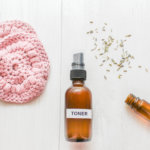
Witch Hazel Facial Toner
Quantity
Ingredients
- 6 drops essential oils*
- 1½ teaspoons 190 proof alcohol OR the highest proof alcohol you can find
- Unscented witch hazel
Supplies
- Glass measuring cup or jar for mixing
Instructions
- Add the essential oils and alcohol to a glass measuring cup or jar. Gently stir to mix.
- Pour into a glass spray bottle, then fill the bottle the rest of the way with witch hazel, leaving enough room to replace the lid.
- Replace the top and shake to mix.
- To use, spray toner on a cotton round and gently swipe over the face.
Step One: Add Essential Oils

Place the essential oils and alcohol in a glass measuring cup or jar. Stir to mix. See the above notes for customizing the oils to fit your skin needs.
For a facial product, use the ethanol specified in the recipe or another cosmetic-appropriate ethanol. Do not substitute isopropyl rubbing alcohol unless a qualified formulation specifically calls for it.
Step Two: Tone Your Face

Gently stir the mixture to combine and pour into a dark glass spray bottle. Fill the bottle the rest of the way with witch hazel. Store away from light.
To use, douse a cotton round with the mixture and gently wipe over the face. No need to rinse!
Patch test before using the toner over your entire face. Avoid the eyelids, lips, nostrils, broken skin, and irritated areas. Stop if the toner causes persistent burning, redness, swelling, or dryness.
The alcohol first helps solubilize the essential oils, but whether the finished toner is adequately preserved depends on the final ethanol percentage and complete formula. If the recipe does not reach a preservation level or use another tested preservative system, make a small batch, keep the container clean, and use it quickly.
Shot Glass Relaxation Bath
Need some R&R? Try our Shot Glass Relaxation Bath! This DIY comes together in minutes.

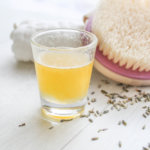
Shot Glass Relaxation Bath
Quantity
Ingredients
- 10-20 drops essential oils*
- Organic unscented liquid castile soap
Supplies
- Shot glass
Instructions
- Add the essential oils to a shot glass.
- Fill the glass the rest of the way with liquid castile soap and stir to mix.
- To use, pour the shot under running water. Relax and enjoy!
Step One: Add Essential Oils

Add the essential oils of your choice to a shot glass. See the notes above for suggestions on selecting relaxing EOs.
Step Two: Add Liquid Soap

Fill the rest of the glass with castile soap. This helps the EOs disperse more evenly for a single-use bath. Slowly stir to combine.
Your mixture should look milky, like in the photo above. To use, add the shot to running bathwater and agitate the water before getting in. Enjoy your relaxing bath!
Use comfortably warm water, not scalding water. Choose oils that are appropriate for full-body bathing and avoid highly irritating oils such as cinnamon bark, clove, oregano, and thyme unless a professionally calculated formula specifically includes them.
The tub may become slippery. Use a bath mat, hold the rail when entering or leaving, and rinse the tub afterward. Reduce the essential-oil amount for sensitive skin and child-conscious baths. Do not use this adult recipe for babies.
Quick Countertop Cleaner
My Quick Countertop Cleaner gets the job done naturally! It smells incredible and degreases the roughest surfaces.

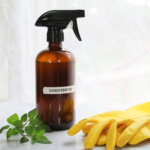
Quick Countertop Cleaner
Quantity
Ingredients
- 36 drops essential oils*
- 2 tablespoons organic unscented liquid castile soap
- Purified OR distilled water
Supplies
Instructions
- Add the essential oils and liquid soap to a spray bottle. Mix to combine thoroughly.
- Fill the bottle the rest of the way with distilled water. Replace the top and shake to mix.
- Use as you would a conventional kitchen cleaner.
Step One: Mix the Essential Oils and Soap

Add the essential oils of your choice and liquid soap to a spray bottle. See the notes above for tips on choosing antimicrobial EOs.
Gently mix to combine thoroughly.
Step Two: Add Water

Fill the bottle the rest of the way with distilled water. Replace the top and shake gently to mix.
Use as you would a conventional kitchen cleaner. Enjoy your clean counters!
This formula is a cleaner, not a registered disinfectant. The EPA distinguishes cleaning, which removes dirt and organic matter with soap or detergent, from sanitizing and disinfecting, which require tested antimicrobial products and label directions. (8)
Use this DIY for everyday dirt, grease, and grime. For a situation that genuinely requires disinfection, such as certain illnesses or raw-meat contamination, clean first and then use an appropriate disinfectant according to its label and contact time.
Test the cleaner before using it on natural stone, sealed surfaces, unfinished wood, painted finishes, or specialty countertops. For food-contact surfaces, wipe away cleaner residue with a clean damp cloth.
Sunburn Relief Gel
Our Sunburn Relief Gel is a summer must! It soothes hot, uncomfortable skin and provides a refreshing cooling sensation.

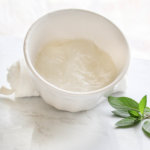
Sunburn Relief Gel
Quantity
Ingredients
- ¼ teaspoon xanthan gum
- 4 ounces aloe vera gel
- 48 drops essential oils*
Supplies
- Glass jar for storage
Instructions
- Whisk the xanthan gum into the aloe vera gel until smooth.
- Add the essential oils and mix well.
- Store in a glass jar in the refrigerator.
- To use, spread over sunburned skin.
Step One: Thicken the Aloe Vera Gel

Whisk the xanthan gum into the aloe vera gel until smooth.
Xanthan gum changes texture, but it does not solubilize essential oils or protect the gel from bacteria, yeast, and mold. A commercially prepared and preserved aloe gel designed for customization is the most dependable starting point.
Step Two: Add the Essential Oils

Add the essential oils of your choice and mix well. See the above notes for my favorite combination.
Stir the mixture well until it turns a milky color. Store in the fridge and apply as needed.
The finished gel should remain uniform. If you see oil droplets or separation, do not apply it over a large area. Remake the product with a compatible prepared gel or cosmetic solubilizer.
Use this gel only for mild sunburn on intact skin. Do not use it on open blisters, infected skin, severe burns, or large burns accompanied by fever, chills, vomiting, dizziness, confusion, dehydration, or intense pain. Those symptoms need medical attention.
Avoid adding expressed phototoxic citrus oils to sun-exposed skin. Refrigeration feels soothing and may slow microbial growth, but it is not a preservative. Use clean hands or a clean scoop, make a small batch, and discard it if the color, odor, texture, or appearance changes.
Sleepy-Time Pillow Spray
If you have trouble winding down, give this pillow spray a try! It combines relaxing essential oils to help create a peaceful bedtime atmosphere.

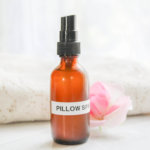
Sleepy-time Pillow Spray
Quantity
Ingredients
- 60 drops essential oils*
- 1 tablespoon + 1 teaspoon 190 proof alcohol OR the highest proof alcohol you can find
- Purified OR distilled water
Supplies
- Glass jar for mixing
Instructions
- In a glass jar, mix the essential oils and alcohol until well combined.
- Pour into a glass spray bottle.
- Fill the bottle the rest of the way with distilled water, leaving enough room to replace the top.
- Replace the lid and gently shake to combine.
- To use, spray on linens and pillows before bed.
Step One: Mix Essential Oils and Alcohol

Mix the essential oils of choice and alcohol until well blended. See the above notes for relaxing EO suggestions. Add to a 2-ounce spray bottle.
Step Two: Add Water

Fill the bottle the rest of the way with distilled water. To use, spritz lightly on pillows and bedding before you go to sleep. Let the fabric dry before placing your face on it. Sweet dreams!
Do not spray directly into the face, onto skin, near flame, or into an infant’s sleep space. Keep the bottle away from children and pets, and check that each selected oil is appropriate for everyone who shares the room.
If the finished formula does not contain enough ethanol or another tested preservative system, prepare a small amount and use it quickly. If preservation is expected from 190-proof ethanol, calculate the alcohol as a percentage of the complete finished spray instead of merely adding a splash.
Essential Oil Dilution FAQs
What is the difference between diluting and dispersing essential oils?
Diluting lowers the essential-oil concentration. Dispersing distributes oil droplets through another liquid. A carrier oil dilutes essential oils but does not disperse them through bathwater. A solubilizer can disperse essential oils through water, but the finished percentage must still be safe for the intended use.
Can I dilute essential oils with water?
No. Essential oils and water naturally separate. Adding more water does not make a floating essential-oil droplet less concentrated when it contacts the skin. Use a compatible carrier, solubilizer, emulsifier, high-proof ethanol formula, or prepared base.
Does witch hazel dilute essential oils?
Witch hazel does not reliably dissolve essential oils on its own. The common product containing about 14% alcohol is still mostly water. Dissolve the essential oils in a suitable solubilizer or high-proof ethanol first.
Can I use vodka in an essential oil spray?
Ordinary 80-proof vodka is generally too low in ethanol for reliable essential-oil solubilization and preservation. High-proof ethanol works more predictably. Calculate the alcohol concentration in the finished formula.
Does shaking an essential oil spray make it safe?
Shaking creates temporary droplets but does not make oil and water permanently compatible. It also does nothing to preserve a water-based product. A properly formulated spray should address solubilization, dilution, and microbial safety.
How many drops of essential oil are in one milliliter?
Drop count varies with the oil, temperature, bottle, and dispensing insert. Research summarized by Tisserand Institute found approximately 20 to 40 drops per milliliter, with 30 drops per milliliter used as a convenient average. Use one consistent chart for household blending and measure by weight when precision matters.
Do essential oils preserve homemade cosmetics?
Do not rely on essential oils alone as the preservative in a water-based toner, gel, lotion, or spray. Antimicrobial activity in a laboratory does not prove that a low essential-oil percentage protects an entire home formula against bacteria, yeast, and mold during storage and use.
How long does a water-based essential oil DIY last?
There is no universal shelf life. A tested preservative system, final alcohol concentration, pH, packaging, sanitation, storage, and ingredient load all affect safety. Without a validated preservative system, make very small batches, refrigerate when appropriate, use them promptly, and discard them at the first sign of change.
What carrier oil is best for essential oils?
The best carrier depends on the application. Fractionated coconut oil is light and shelf-stable, olive oil is easy to find and nourishing, jojoba has a long shelf life, and apricot or sunflower oil can work well for larger skin areas. Consider allergies, texture, scent, oxidation, cost, and the therapeutic purpose.
Can I add essential oils directly to Epsom salt?
Mixing essential oils into Epsom salt does not safely disperse them in bathwater. The salt dissolves and releases the oil. First combine the essential oil with a suitable bath dispersant, prepared bath base, or properly chosen carrier, understanding that a carrier oil will float and make the tub slippery.
Final Thoughts on Diluting Essential Oils
God created each of us to be unique, and our body-care products can reflect that. As you learn about diluting essential oils, remember to customize your recipes to fit your specific needs.
The chemistry does not have to make natural living intimidating. It simply gives us a better way to steward powerful plant compounds.
Use carrier oils when you want to nourish and treat the skin. Use high-proof ethanol or a suitable solubilizer when making a water-based spray. Use a compatible bath base before adding oils to bathwater. Choose prepared, preserved lotions and gels when a formula becomes more complicated.
Most importantly, do not let a product’s milky appearance, thickness, or pleasant scent fool you into assuming it is diluted, stable, and preserved. Give each part of the formula its proper job.
Once you understand that distinction, your DIYs become more reliable, your skin gets better protection, and you can enjoy essential oils with greater confidence.


References
- Tisserand Institute. “Dilution for Essential Oils.” Accessed August 2, 2026. Source.
- Tisserand H. “How Big Is a Drop?” Tisserand Institute. Accessed August 2, 2026. Source.
- Carper S. “Effective Use of Alcohol for Aromatic Blending.” Tisserand Institute. Accessed August 2, 2026. Source.
- International Union of Pure and Applied Chemistry. “Emulsifier.” Compendium of Chemical Terminology, 5th ed. Online version 5.0.0. 2025. doi:10.1351/goldbook.E02064.
- International Union of Pure and Applied Chemistry. “Surfactant.” Compendium of Chemical Terminology, 5th ed. Online version 5.0.0. 2025. doi:10.1351/goldbook.S06194.
- Tisserand Institute. “Bath Safety: How to Use Essential Oils Safely in the Bath.” Accessed August 2, 2026. Source.
- U.S. Food and Drug Administration. “Microbiological Safety and Cosmetics.” Updated October 15, 2024. Source.
- U.S. Environmental Protection Agency. “What’s the Difference Between Products That Disinfect, Sanitize, and Clean Surfaces?” Updated October 8, 2025. Source.
- Halla N, Fernandes IP, Heleno SA, et al. “Cosmetics Preservation: A Review on Present Strategies.” Molecules. 2018;23(7):1571. doi:10.3390/molecules23071571.


