

QUICK SUMMARY
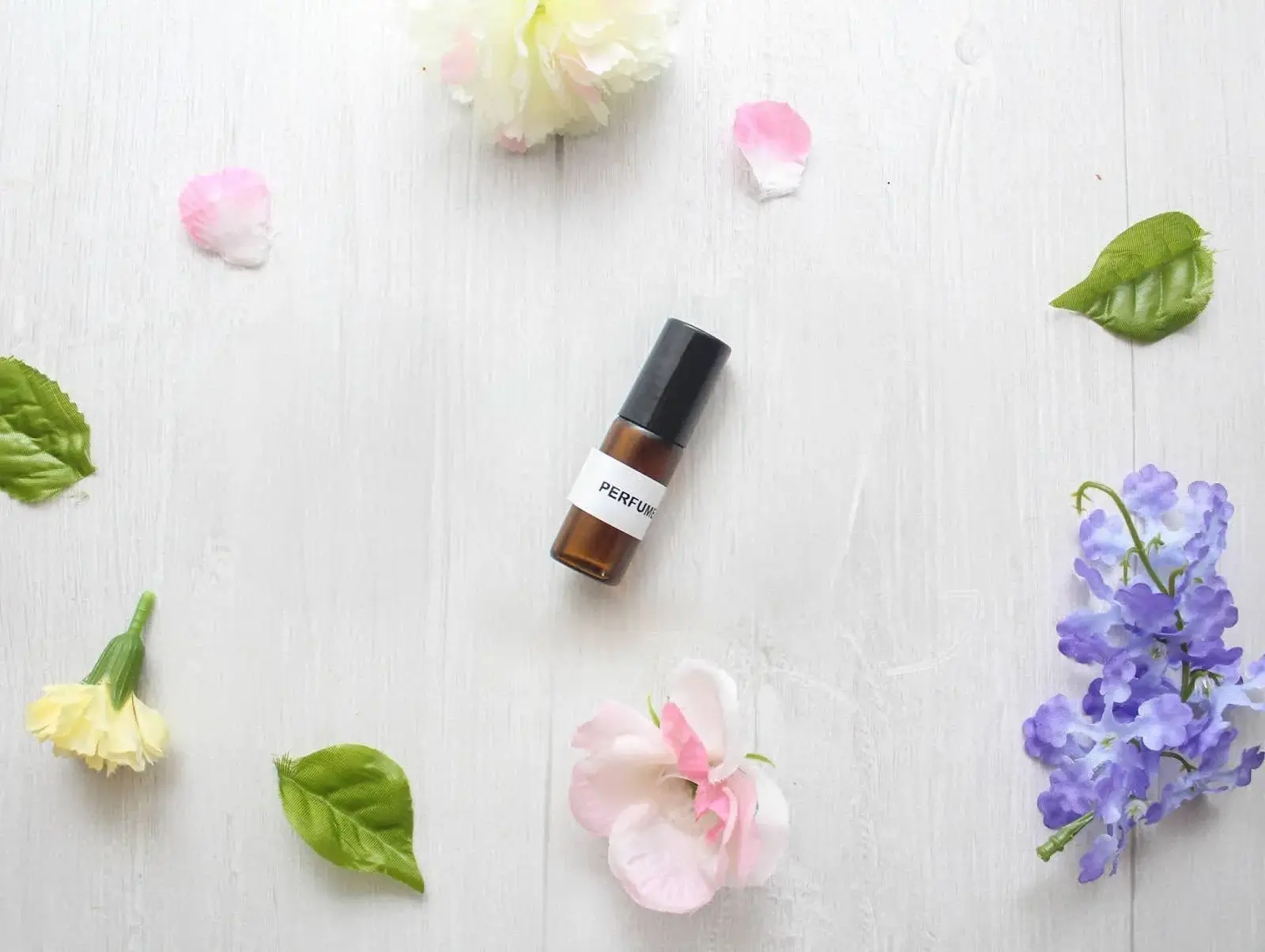
DIY essential oil perfume allows you to create a personalized fragrance without relying on a mystery blend labeled only as “fragrance.”
A balanced perfume usually combines:
- Top notes that provide the first bright aroma
- Heart notes that form the main body of the scent
- Base notes that add depth and help the fragrance linger
Jojoba or fractionated coconut oil works well for roll-on perfume, while perfumer’s alcohol is best for a traditional spray. Essential oils should always be diluted, and the total concentration must account for each oil’s individual skin-safety and phototoxicity limit.
Cold-pressed bergamot, lemon, lime, bitter orange, and certain other citrus oils require special care before ultraviolet exposure. Furanocoumarin-free, steam-distilled, or properly diluted versions may offer safer alternatives.
It’s time to rethink artificial fragrance and discover the beauty of DIY essential oil perfume.
Store-bought perfumes may look luxurious, but the word “fragrance” on a cosmetic label can represent a complex mixture of aromatic ingredients. Most people use these products without a problem, yet certain fragrance compounds—whether synthetic or naturally derived—can trigger headaches, respiratory irritation, or allergic contact dermatitis in sensitive individuals.
Case in point: We’ve all walked through a department store and felt overwhelmed by the perfume counter. Strong scents can give me a headache almost immediately, so I prefer to control exactly what I wear and how concentrated it is.
Thankfully, there’s another option. God gave us plants with beautiful aromas, and essential oils can be blended into customized perfumes that reflect your personality and values.
Here’s the thing: natural perfume still requires wisdom. Essential oils are highly concentrated, some can irritate or sensitize the skin, and certain citrus oils can cause phototoxic reactions in sunlight. The goal is not simply to replace “synthetic” with “natural,” but to create a thoughtfully diluted perfume that smells wonderful and respects your body.
Table of Contents
- What Is Hidden Behind the Word “Fragrance”?
- Why Make DIY Essential Oil Perfume?
- Are Essential Oils Safer Than Synthetic Fragrance?
- Understanding Top, Heart, and Base Notes
- Essential Oils for Natural Perfume
- Choosing a Perfume Base
- How to Dilute Essential Oil Perfume
- DIY Essential Oil Perfume Recipes
- How to Create a Signature Scent
- Packaging, Storage, and Shelf Life
- Essential Oil Perfume Safety
- DIY Essential Oil Perfume FAQs
- Final Thoughts
- Resources
What Is Hidden Behind the Word “Fragrance”?
Most commercial perfumes contain a combination of:
- Aromatic compounds
- Alcohol or another solvent
- Fixatives
- Stabilizers
- Antioxidants
- Colorants in some products
On a cosmetic label, multiple aromatic ingredients may appear under the collective term “fragrance” or “parfum.”
This does not prove that every undisclosed ingredient is dangerous. It does mean a person with a known allergy or fragrance sensitivity may not be able to identify every component from the label alone.
The FDA advises fragrance-sensitive consumers to look for fragrance-free products, read labels carefully, and contact manufacturers when they need more detailed ingredient information. (1)
Why Can Fragrance Cause Symptoms?
Fragrance ingredients can affect people in different ways.
Possible reactions include:
- Irritant contact dermatitis
- Allergic contact dermatitis
- Headaches or migraines
- Coughing or throat irritation
- Eye irritation
- Asthma symptoms in susceptible people
- Nausea or dizziness
An allergic reaction involves an immune response to a particular substance. Irritation or fragrance sensitivity may produce symptoms without a true allergy.
Fragrance ingredients are among the more common causes of cosmetic contact allergy. Patch testing performed by a dermatologist or allergist can help identify specific triggers. (2)
Does Every Commercial Perfume Contain “Toxins”?
No.
It is inaccurate to claim that every commercial perfume contains carcinogens, endocrine disruptors, or ingredients that damage the nervous system at the concentrations used.
Hazard and exposure are not the same thing.
A chemical may be hazardous at a high occupational or laboratory dose while presenting a much lower risk in a finished cosmetic. Actual risk depends on:
- Concentration
- Route of exposure
- Frequency of use
- Duration
- Individual sensitivity
- Combined exposure from other products
Still, people who develop headaches, asthma symptoms, rashes, or nausea around fragranced products have a legitimate reason to reduce their exposure.
Fragrance Ingredients Worth Understanding
Commercial perfume formulas vary, but these categories often receive attention.
Fragrance Allergens
Both natural and synthetic fragrance materials can contain recognized allergens, including:
- Limonene
- Linalool
- Geraniol
- Citral
- Eugenol
- Citronellol
- Benzyl alcohol
- Benzyl salicylate
Several of these occur naturally in essential oils.
Oxidation can make limonene and linalool more likely to cause sensitization, which is one reason old or improperly stored oils should be discarded.
Phthalates
Certain phthalates have historically been used as solvents or fragrance fixatives.
Not every perfume contains the same phthalates, and manufacturers may formulate without them. People wishing to avoid them can look for transparent ingredient policies or products specifically tested and labeled as phthalate-free.
Synthetic Musks
Synthetic musks are a diverse group.
Some older musk compounds have raised concerns about environmental persistence and accumulation. Modern perfume formulations may use different musk materials with different safety profiles, so they should not all be treated as one chemical.
Preservatives and Antioxidants
Water-containing cosmetics need protection from microbial contamination. Oil- or alcohol-based perfume may also contain antioxidants or stabilizers to reduce oxidation.
A preservative is not automatically harmful. Its purpose, concentration, and safety assessment matter.
Reality check: A long chemical name does not prove an ingredient is toxic, and a familiar botanical name does not prove it is safe for every person.
Why Make DIY Essential Oil Perfume?
A homemade perfume allows you to control:
- Which essential oils are used
- The total fragrance concentration
- The carrier or alcohol base
- The strength of the aroma
- Whether phototoxic citrus oils are included
- How much perfume you apply
It also gives you the freedom to create a scent that does not smell like everyone else’s.
You Can Make a Lighter Fragrance
Commercial perfumes are often designed to project across a room and remain noticeable for hours.
A homemade roll-on can stay much closer to the skin. This may be more comfortable for:
- People who dislike overpowering fragrance
- Families sharing small spaces
- Church services or offices
- People around fragrance-sensitive loved ones
You Can Avoid Ingredients That Trigger You
When you make your own blend, you can omit an essential oil that causes:
- Headaches
- Skin irritation
- Nausea
- Respiratory discomfort
- An unpleasant emotional association
Natural fragrance is still fragrance, so a person who reacts to commercial perfume may also react to essential oils.
You Can Create an Aromatic Ritual
Aroma is closely connected with memory and emotion.
A favorite blend may become part of:
- Morning prayer
- Getting ready for church
- A date night with your spouse
- A quiet evening routine
- A meaningful celebration
The perfume itself is not responsible for spiritual or emotional transformation, but scent can become a beautiful reminder to slow down and focus your heart.
Are Essential Oils Safer Than Synthetic Fragrance?
Essential oils are concentrated plant extracts. They can create extraordinary natural perfumes, but they are not automatically safer simply because they come from plants.
Possible reactions include:
- Skin irritation
- Allergic contact dermatitis
- Phototoxicity
- Headaches
- Respiratory symptoms
- Systemic toxicity when certain oils are overused
Safety depends on the individual oil, its chemistry, the amount used, how it is applied, and the person wearing it.
Natural Fragrance Allergens
Essential oils naturally contain compounds that may appear on cosmetic-allergen lists.
For example:
- Lavender contains linalool.
- Lemon and orange contain limonene.
- Geranium contains geraniol and citronellol.
- Ylang ylang contains several potential fragrance allergens.
- Clove contains eugenol.
This does not mean these oils must be avoided by everyone. It means they need proper dilution, fresh storage, and individual evaluation.
Oxidized Essential Oils
Exposure to heat, oxygen, and light can oxidize essential-oil constituents.
Oxidized oils may:
- Smell stale or sharp
- Lose their original aromatic balance
- Increase the risk of skin sensitization
Close bottles promptly and store them in a cool, dark location.
Patch Testing
Before wearing a new perfume broadly:
- Dilute the essential oils in the chosen base.
- Apply a small amount to the inner forearm.
- Leave the area uncovered.
- Watch for redness, itching, burning, swelling, or rash over the next 24–48 hours.
A home patch test cannot rule out every allergy, but it may reveal an obvious irritation.
Persistent fragrance reactions should be evaluated through professional patch testing.
Understanding Top, Heart, and Base Notes
A beautiful perfume unfolds in stages.
Perfumers describe aromatic materials as top, middle, and base notes according to how quickly they evaporate and how they shape the scent.
Top Notes
Top notes are the first aromas you notice.
They tend to be light, fresh, and quick to evaporate.
Examples include:
Citrus oils add sparkle but usually fade more quickly than woods and resins.
Heart Notes
Heart notes emerge after the top notes begin to soften.
They form the central personality of the perfume.
Examples include:
- Geranium
- Lavender
- Rose
- Clary sage
- Roman chamomile
- Neroli
- Jasmine absolute
Base Notes
Base notes evaporate slowly and give the fragrance depth.
Examples include:
- Sandalwood
- Ylang ylang
- Vanilla absolute, oleoresin, or CO2 extract
- Vetiver
- Patchouli
- Cedarwood
- Frankincense
- Benzoin
Base notes can help a perfume linger, although the carrier and application method also affect longevity.
A Simple Starting Ratio
A beginner blend might use:
- 20% top notes
- 50% heart notes
- 30% base notes
This is a creative framework—not a universal safety formula.
Every oil must still remain within its individual dermal maximum.
Essential Oils for Natural Perfume
Bergamot Essential Oil
Bergamot essential oil smells fresh, lightly floral, and softly citrusy.
It is a beautiful bridge between top and heart notes.
Cold-pressed bergamot is strongly phototoxic. Its level should remain very low in leave-on products that may receive ultraviolet exposure.
Safer options include:
- Bergamot FCF or bergapten-free oil
- Steam-distilled bergamot
- Applying the perfume beneath clothing
- Avoiding sun and tanning beds after use
Geranium Essential Oil
Geranium has a green, rosy aroma that works well as a heart note.
It blends beautifully with:
- Bergamot
- Grapefruit
- Lavender
- Rose
- Sandalwood
Geranium contains natural fragrance allergens, so keep the concentration moderate.
Citrus Essential Oils
Grapefruit, lemon, lime, and orange add brightness and lift.
Phototoxicity varies by:
- The type of citrus
- Which plant part is used
- Whether the oil is expressed or distilled
- Whether furanocoumarins were removed
- The concentration in the finished perfume
Cold-pressed lemon and lime can be phototoxic. Steam-distilled versions generally present less phototoxic concern.
Sweet orange is not considered phototoxic in the same way as expressed bitter orange, although oxidation and skin sensitization remain possible.
Lavender Essential Oil
Lavender adds a soft floral-herbal note.
It blends well with citrus, geranium, rose, vanilla, and woods.
Lavender is often described as gentle, but it can still trigger contact allergy in susceptible people, particularly when oxidized.
Rose Essential Oil
Rose essential oil creates a rich floral heart.
Because true rose essential oil is precious and concentrated, one drop can transform an entire blend.
Rose absolute is produced by solvent extraction and has a slightly different aromatic profile from steam-distilled rose otto.
Vanilla
Vanilla is not usually available as a true steam-distilled essential oil.
Perfume ingredients may include:
- Vanilla absolute
- Vanilla oleoresin
- Vanilla CO2 extract
- Vanilla-infused oil
Some thick vanilla extracts will not dissolve smoothly in every carrier or spray base. Follow the supplier’s solubility instructions.
Ylang Ylang Essential Oil
Ylang ylang is a deep, sweet floral with excellent staying power.
Use it lightly. Too much can overwhelm a blend or trigger headaches in sensitive users.
Ylang ylang also has a relatively low dermal maximum compared with many common perfume oils, so do not treat it as an unlimited base note.
Sandalwood Essential Oil
Sandalwood adds a smooth, creamy, woody foundation.
Look for a responsibly sourced botanical species because overharvesting has affected some sandalwood populations.
Choosing a Perfume Base
The base determines how the perfume feels, projects, and lasts.
Jojoba Oil
Organic jojoba oil is technically a liquid wax rather than a triglyceride oil.
It is popular for roll-on perfume because it:
- Has very little aroma
- Feels lightweight
- Oxidizes more slowly than many plant oils
- Helps the fragrance remain close to the skin
Fractionated Coconut Oil
Fractionated coconut oil remains liquid at room temperature.
It is:
- Lightweight
- Nearly odorless
- Easy to find
- Suitable for roller bottles
Perfumer’s Alcohol
Perfumer’s alcohol is designed to dissolve aromatic materials and evaporate cleanly from the skin.
It is usually the best option for a traditional spray perfume.
Follow the supplier’s directions and use it away from flames because high-proof alcohol is extremely flammable.
Vodka
High-proof, unflavored vodka may work for a simple homemade spray, but ordinary 80-proof vodka contains substantial water.
This can cause:
- Cloudiness
- Incomplete dissolution
- Separation
- A weaker perfume structure
Higher-proof food-grade alcohol generally performs better, where legal and available.
Witch Hazel
Unscented witch hazel is not equivalent to perfumer’s alcohol.
Commercial witch hazel usually contains water and a smaller percentage of alcohol. It may not dissolve essential oils completely or produce a clear, stable perfume.
A water-containing spray also raises preservation considerations.
For the simplest home formula:
- Use oil for a roll-on.
- Use high-proof perfumer’s alcohol for a spray.
Do Not Add Plain Water Without a Preservative
Water-based perfume can support bacterial, yeast, or mold growth.
Essential oils and alcohol at an unknown final concentration should not be assumed to preserve a diluted water spray.
For a shelf-stable water-containing perfume, use:
- A compatible solubilizer
- A broad-spectrum cosmetic preservative
- An appropriate pH
- Validated formulation guidance
How to Dilute Essential Oil Perfume
Dilution reduces the risk of:
- Skin irritation
- Sensitization
- Phototoxicity
- Excessive systemic exposure
A higher concentration creates a stronger scent but also increases the chance of an adverse reaction.
General Concentration Guide
For a healthy adult using a small-area roll-on perfume:
- 1%: Approximately 3 drops per 1 tablespoon or 15 mL of carrier
- 2%: Approximately 6 drops per 15 mL
- 3%: Approximately 9 drops per 15 mL
- 5%: Approximately 15 drops per 15 mL
Drop size varies by oil, bottle, and temperature, so weight-based formulation is more precise.
These percentages are general starting points. They do not override the lower safety maximum of a specific oil.
What About 20–30 Drops per Ounce?
Twenty drops in 1 fluid ounce or approximately 30 mL is generally around a 3% concentration, depending on drop size.
Thirty drops is approximately 5%.
That range may be appropriate for a localized adult perfume when every ingredient remains within its individual safety limit.
Use a lower concentration for:
- Sensitive skin
- Older adults
- Frequent daily application
- Large application areas
- Strong sensitizing oils
- Pregnancy or significant medical concerns
Calculate the Whole Formula
The safety limit applies to the finished bottle, not merely the aromatic blend before dilution.
For example, cold-pressed bergamot should remain at or below its phototoxicity limit in the complete leave-on product unless you use a nonphototoxic version.
Do not calculate a 5% total fragrance and then add restricted oils freely within that 5%.
DIY Essential Oil Perfume Recipes
These simple recipes are an excellent introduction to natural perfume making.
Uplift - Ladies Essential Oil Perfume Roll-On
Quantity
Ingredients
- 8 drops lavender essential oil
- 6 drops bergamot essential oil
- 6 drops geranium essential oil
- 6 drops vanilla absolute CO2, OR oleoresin
- 4 drops grapefruit OR lemon OR lime OR orange essential oil
- 4 drops ylang ylang essential oil
- Organic jojoba oil OR fractionated coconut oil OR a combination of both, to fill the bottle*
Supplies
- 10ml glass roll-on bottle
Instructions
- Add the essential oils to a glass roll-on bottle and gently swirl to mix.
- Fill the remaining space of your roller bottle with the carrier oil of your choice. Gently pop the roller top back on, secure the cap, and give it a good shake to blend everything together.
- Apply to wrists and back of neck each morning.
Uplift - Ladies Essential Oil Perfume Spray
Quantity
Ingredients
- 20 drops lavender essential oil
- 15 drops bergamot essential oil
- 15 drops geranium essential oil
- 15 drops vanilla absolute, CO₂ OR oleoresin
- 10 drops grapefruit OR lemon OR lime OR orange essential oil
- 10 drops ylang ylang essential oil
- Organic jojoba oil OR fractionated coconut oil OR a combination of both, to fill the bottle* **
Supplies
Instructions
- Add the essential oils to the glass spray bottle and gently swirl to mix.
- Fill the remaining space with the carrier oil of your choice.
- Shake to mix and spray on wrists and back of neck each morning.
Step One: Sanitize and Dry the Bottle
Wash your glass roller bottle and roller insert with warm, soapy water.
Rinse thoroughly and allow every piece to dry completely.
Residual water may shorten the life of an oil perfume.
Step Two: Add the Essential Oils
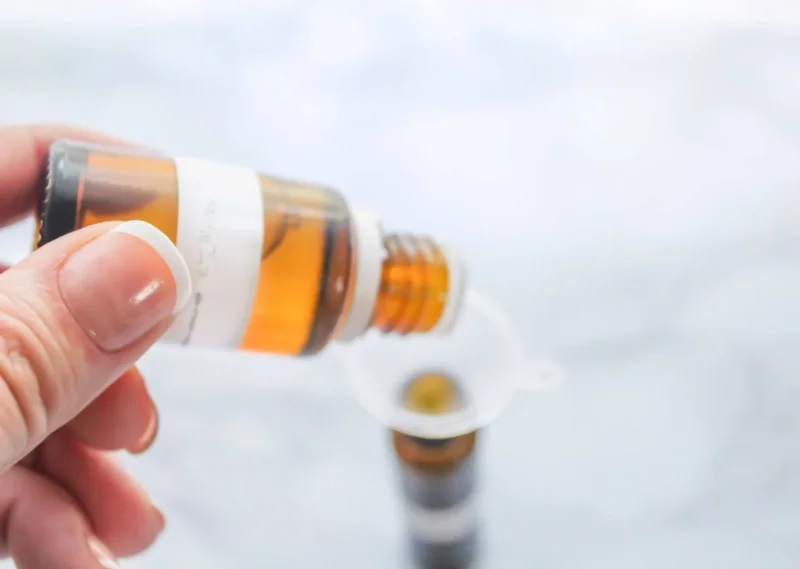
Add the essential oils to the bottle.
Gently swirl to combine them before adding the carrier.
Step Three: Fill With Carrier Oil
Fill the remaining space with jojoba or fractionated coconut oil.
Leave enough room to insert the roller top without overflowing.
Step Four: Rest the Blend
Close the bottle and allow the perfume to rest for at least 24–48 hours.
For a more developed aroma, let it mature for one to two weeks in a cool, dark place.
Smell the blend periodically rather than adding more oil immediately. Aromas often change as they settle.
Step Five: Patch Test
Apply a tiny amount to the inner forearm.
Wait and watch for irritation before using it on the neck, wrists, or chest.
Step Six: Apply Sparingly
Roll a small amount onto:
- Wrists
- Forearms
- Upper chest beneath clothing
- Behind the ears when the skin tolerates it
Avoid broken, freshly shaved, sunburned, or inflamed skin.
How to Make a Spray Perfume
For an alcohol-based perfume:
- Add the measured aromatic blend to a glass spray bottle.
- Add perfumer’s alcohol according to the recipe.
- Close tightly and shake.
- Allow the perfume to mature in a dark place.
- Filter it if plant particles or insoluble extracts remain.
Keep alcohol perfume away from:
- Flames
- Candles
- Gas stoves
- Smoking materials
- High heat
How to Create a Signature Scent
Scent is deeply personal. The same blend may smell different on different people because of skin chemistry, temperature, application, and individual perception.
Start With a Small Test Blend
Before filling a full bottle, create a fragrance concentrate using a small number of drops.
For example:
- 2 drops top note
- 5 drops heart note
- 3 drops base note
Place the drops in a small glass vial or onto a perfume-testing strip.
Smell it:
- Immediately
- After 15 minutes
- After one hour
- The following day
Change One Ingredient at a Time
Keep written notes about:
- The oil
- The botanical name
- The number of drops
- The supplier
- The extraction method
- Your impression over time
Changing only one element makes it easier to learn what improved or disrupted the blend.
Try These Natural Perfume Profiles
Bright and Joyful
Blend:
- Sweet orange
- Geranium
- Vanilla
Soft Floral
Blend:
- Bergamot FCF
- Lavender
- Rose
- Sandalwood
Warm and Grounding
Blend:
-
- Mandarin
- Frankincense
- Cedarwood
- Vanilla
Deep Floral
Blend:
- Grapefruit
- Geranium
- A tiny amount of ylang ylang
- Patchouli
Fresh Herbal
Blend:
- Bergamot FCF
- Lavender
- Clary sage
- Cedarwood
Always calculate the final dilution and phototoxicity limit before applying a test blend to skin.
Use Blotter Strips Before Skin
Paper fragrance strips let you evaluate an aroma without repeatedly exposing your skin.
This is especially helpful when working with:
- Ylang ylang
- Jasmine
- Patchouli
- Vetiver
- Strong citrus oils
Packaging, Storage, and Shelf Life
Proper packaging protects your perfume from oxidation, evaporation, leakage, and light.
Choose Dark Glass
Amber, cobalt, or violet glass helps reduce light exposure.
A clear bottle may be used when stored inside a dark cabinet or box.
Label Every Bottle
Include:
- The perfume name
- Every essential oil
- The carrier or alcohol base
- The preparation date
- Relevant sunlight precautions
- “For external use only”
When giving perfume as a gift, include the complete ingredient list so the recipient can identify allergies.
Store Upright
Keep roll-ons and sprays upright to reduce:
- Leaks
- Damage to furniture
- Staining of fabrics
- Deterioration of roller or spray components
Keep It Cool and Dark
Avoid:
- Sunny windows
- Hot vehicles
- Bathroom steam
- Radiators
- Open flames
How Long Does DIY Perfume Last?
An oil-based perfume may remain usable for approximately 6–12 months or longer, depending on:
- The carrier oil
- The freshness of the essential oils
- Storage conditions
- How often the bottle is opened
Jojoba-based perfume often oxidizes more slowly than blends made with delicate vegetable oils.
Alcohol-based perfume may last longer when formulated and stored correctly.
When to Discard It
Throw the perfume away when:
- The aroma becomes rancid, sour, or sharply unpleasant.
- The carrier smells stale.
- The color changes dramatically.
- Unexpected sediment, mold, or cloudiness appears.
- The perfume suddenly irritates your skin.
Cloudiness in an alcohol formula may reflect incomplete solubility rather than microbial contamination, but the product should still be evaluated before use.
Essential Oil Perfume Safety
Phototoxicity
Certain expressed citrus oils contain furanocoumarins that can react with ultraviolet light.
A phototoxic reaction may cause:
- Severe redness
- Burning
- Blistering
- Long-lasting discoloration
Cold-pressed bergamot is among the most phototoxic commonly used perfume oils. Its recommended maximum in leave-on products is approximately 0.4% when ultraviolet exposure is expected. (3)
Other potentially phototoxic expressed citrus oils include:
- Lemon
- Lime
- Bitter orange
- Grapefruit at higher concentrations
Learn more about essential-oil phototoxicity.
Keep Perfume Away From the Eyes
Do not apply essential-oil perfume:
- On the eyelids
- Directly beneath the eyes
- Inside the nose
- Inside the ears
- On the lips
- On mucous membranes
Wash your hands after applying a concentrated fragrance blend.
Do Not Apply Undiluted Oils
Undiluted use increases the risk of irritation and sensitization.
A person can tolerate an oil repeatedly and then develop a reaction later. More is not better.
Pregnancy and Breastfeeding
Essential-oil choice, dose, and frequency matter during pregnancy and breastfeeding.
Avoid applying strong perfume near the breast before nursing, and remember that an infant may inhale the scent while being held.
Review the entire formula with a qualified professional when:
- You are pregnant
- You are breastfeeding
- You have a high-risk pregnancy
- You take multiple medications
- You have a seizure disorder or significant medical condition
Children
Children require lower concentrations and age-appropriate oil selection.
A strong adult perfume should not be applied to a baby or young child.
Store bottles securely because essential oils can be toxic when swallowed.
Fragrance-Free Spaces
A natural perfume may still trigger symptoms in someone with:
- Asthma
- Migraines
- Fragrance allergy
- Chemical sensitivity
- Respiratory disease
Use perfume sparingly before visiting:
- Hospitals
- Clinics
- Nurseries
- Shared offices
- Fragrance-free churches or events
Loving our neighbor sometimes means choosing not to wear a scent.
Do Not Ingest the Perfume
This recipe is for external use.
Do not place it:
- In water
- Under the tongue
- In a capsule
- On food
- Inside the mouth
Alcohol perfume is also highly flammable and must never be swallowed.
DIY Essential Oil Perfume FAQs
How do you make perfume with essential oils?
Combine a carefully measured blend of top, heart, and base notes, then dilute it in jojoba, fractionated coconut oil, or perfumer’s alcohol. Let the perfume mature before evaluating the final aroma.
What is the best carrier oil for essential oil perfume?
Jojoba and fractionated coconut oil are popular because they have mild aromas, feel light on the skin, and remain stable in roller bottles.
Can I make essential oil perfume with vodka?
Yes, but higher-proof alcohol works better than ordinary 80-proof vodka. Lower-proof vodka may produce separation or cloudiness because it contains more water.
Can I use witch hazel instead of alcohol?
Witch hazel is not a direct substitute for perfumer’s alcohol. It contains water, may not dissolve the oils, and can create preservation concerns.
How many essential-oil drops should I use per ounce?
Approximately 20–30 drops per 1 ounce generally creates a 3–5% concentration, although drop size varies. Every individual oil must also remain within its own dermal maximum.
Is a 5% perfume dilution safe?
It may be suitable for a small-area adult perfume when all oils are appropriate at that concentration. Sensitive users and frequent applications may require a lower percentage.
Can I apply essential oils directly as perfume?
No. Dilute them before skin application to reduce the risk of irritation, sensitization, and phototoxicity.
What are the three perfume notes?
Top notes provide the first impression, heart notes form the main aroma, and base notes add depth and longevity.
What essential oils make perfume last longer?
Sandalwood, patchouli, vetiver, cedarwood, frankincense, ylang ylang, vanilla extracts, and benzoin generally evaporate more slowly than citrus oils.
Why does my natural perfume fade quickly?
Essential oils are volatile, especially citrus top notes. Oil perfumes also remain closer to the skin than many commercial perfumes with specialized fixatives.
How can I make essential oil perfume last longer?
Use an appropriate base note, apply to moisturized skin, store the bottle properly, and allow the blend to mature. Do not exceed safe concentrations merely to increase longevity.
Can essential oil perfume cause an allergy?
Yes. Natural fragrance compounds can cause allergic contact dermatitis in susceptible people.
Why did my skin react after using the perfume for months?
Repeated exposure can contribute to sensitization, and old oils may oxidize. Stop using the blend and seek medical advice when the reaction is persistent or severe.
Are essential oils healthier than synthetic fragrance?
They offer ingredient control and a natural aromatic profile, but they are not automatically safer. Both natural and synthetic fragrance ingredients can irritate or sensitize certain people.
Are all commercial perfumes toxic?
No. Product safety depends on the formula, concentration, exposure, and individual sensitivity. People who experience symptoms may still benefit from reducing or avoiding commercial fragrance.
Can perfume cause migraines?
Strong natural or synthetic scents can trigger migraines in susceptible individuals.
Can perfume trigger asthma?
Fragrance may irritate the airways or trigger symptoms in some people with asthma, even when the response is not a true allergy.
Which citrus essential oils are phototoxic?
Cold-pressed bergamot, lemon, lime, bitter orange, and some other expressed citrus oils may be phototoxic. Risk varies by oil, extraction method, and concentration.
Is sweet orange essential oil phototoxic?
Sweet orange is not generally considered phototoxic, but it can oxidize and may still cause irritation or sensitization.
Is bergamot essential oil safe in perfume?
Yes, when a nonphototoxic bergamot or an appropriately low concentration is used. Cold-pressed bergamot requires strict ultraviolet precautions.
Can I spray essential oil perfume on clothing?
You can, but essential oils, absolutes, carrier oils, and colored extracts may stain fabric. Test an inconspicuous area first.
Can I wear essential oil perfume in the sun?
Only when the formula does not contain phototoxic oils above their safe ultraviolet-exposure limits. Applying beneath clothing can reduce exposure but does not correct an unsafe formula.
How long should homemade perfume mature?
A simple oil perfume may improve after several days to two weeks. Alcohol perfume may continue developing for several weeks.
How long does DIY essential oil perfume last?
Many oil perfumes remain fresh for 6–12 months when made with fresh ingredients and stored properly. Shelf life depends on the carrier and essential oils.
Does essential oil perfume need a preservative?
An anhydrous oil or high-alcohol formula usually does not require the same microbial preservative as a water-based cosmetic. Any formula containing significant water requires a proper preservation strategy.
Can I give homemade perfume as a gift?
Yes. Include the complete ingredient list, preparation date, application instructions, and any sunlight or allergy precautions.
Can children use DIY perfume?
Use a separate child-appropriate formula with a much lower dilution and carefully selected oils. Do not give children unrestricted access to essential-oil bottles.
Can I use DIY perfume during pregnancy?
Pregnancy requires individualized oil selection and conservative dilution. Review the complete formula with a qualified professional, especially when you have a high-risk pregnancy or take medication.
Final Thoughts on DIY Essential Oil Perfume
Making your own perfume is a creative way to reduce unnecessary fragrance exposure while celebrating the aromas God placed in plants.
You can choose a sparkling citrus top note, a gentle floral heart, and a warm, grounding base that reflects your unique personality.
But natural perfume is not about fear.
Not every commercial perfume is toxic, and not every essential oil is harmless. The wise approach is to understand both:
- Commercial fragrance may contain ingredients that are not individually disclosed.
- Some people experience legitimate headaches, asthma symptoms, or skin reactions from perfume.
- Essential oils give you greater control over the formula.
- Essential oils still require dilution, freshness, and safety limits.
This is important because creating a healthy home is not merely about replacing every synthetic ingredient with something natural. It is about developing discernment.
Choose quality oils. Use a conservative concentration. Respect phototoxicity. Label the bottle. Consider the people around you. Pay attention to how your body responds.
Scent is deeply personal. It can remind us of a treasured memory, a beloved person, or a peaceful season.
Whether you are preparing for church, enjoying a quiet evening at home, or getting ready for a date with your spouse, your signature scent can become a simple part of an intentional beauty routine.
As Proverbs 27:9 says:
“Oil and perfume make the heart glad.”
You were fearfully and wonderfully made. Let your perfume reflect your creativity without compromising wisdom, stewardship, or love for your neighbor.

- U.S. Food and Drug Administration. Fragrances in Cosmetics. https://www.fda.gov/cosmetics/cosmetic-ingredients/fragrances-cosmetics
- Johansen JD. Fragrance Contact Allergy: A Clinical Review. American Journal of Clinical Dermatology. 2003. https://pubmed.ncbi.nlm.nih.gov/14572300/
- Tisserand Institute. Phototoxicity: Essential Oils, Sun and Safety. https://tisserandinstitute.org/phototoxicity-essential-oils-sun-and-safety/
- Tisserand Institute. Dilution for Essential Oils. https://tisserandinstitute.org/dilution-essential-oils/
- Steinemann A. Fragranced Consumer Products: Exposures and Effects From Emissions. Air Quality, Atmosphere & Health. 2016. https://pmc.ncbi.nlm.nih.gov/articles/PMC5093181/
- Steinemann A. Fragranced Consumer Products: Effects on Asthmatics. Air Quality, Atmosphere & Health. 2018. https://pmc.ncbi.nlm.nih.gov/articles/PMC5773620/
- Mahajan VK, et al. Perfumes and Associated Allergens: A Brief Review. CosmoDerma. 2022. https://cosmoderma.org/perfumes-and-associated-allergens-a-brief-review/
- U.S. Food and Drug Administration. Trade Secret Ingredients in Cosmetics. https://www.fda.gov/cosmetics/cosmetics-labeling/trade-secret-ingredients
- National Association for Holistic Aromatherapy. Aromatherapy Extracts Produced From Plants. https://naha.org/explore-aromatherapy/about-aromatherapy/aromatherapy-extracts-produced-from-plants
- Kazemi Z, et al. Evaluation of Pollutants in Perfumes, Colognes and Health Effects on the Consumer: A Systematic Review. Journal of Environmental Health Science and Engineering. 2022. https://pmc.ncbi.nlm.nih.gov/articles/PMC9163252/