

QUICK SUMMARY
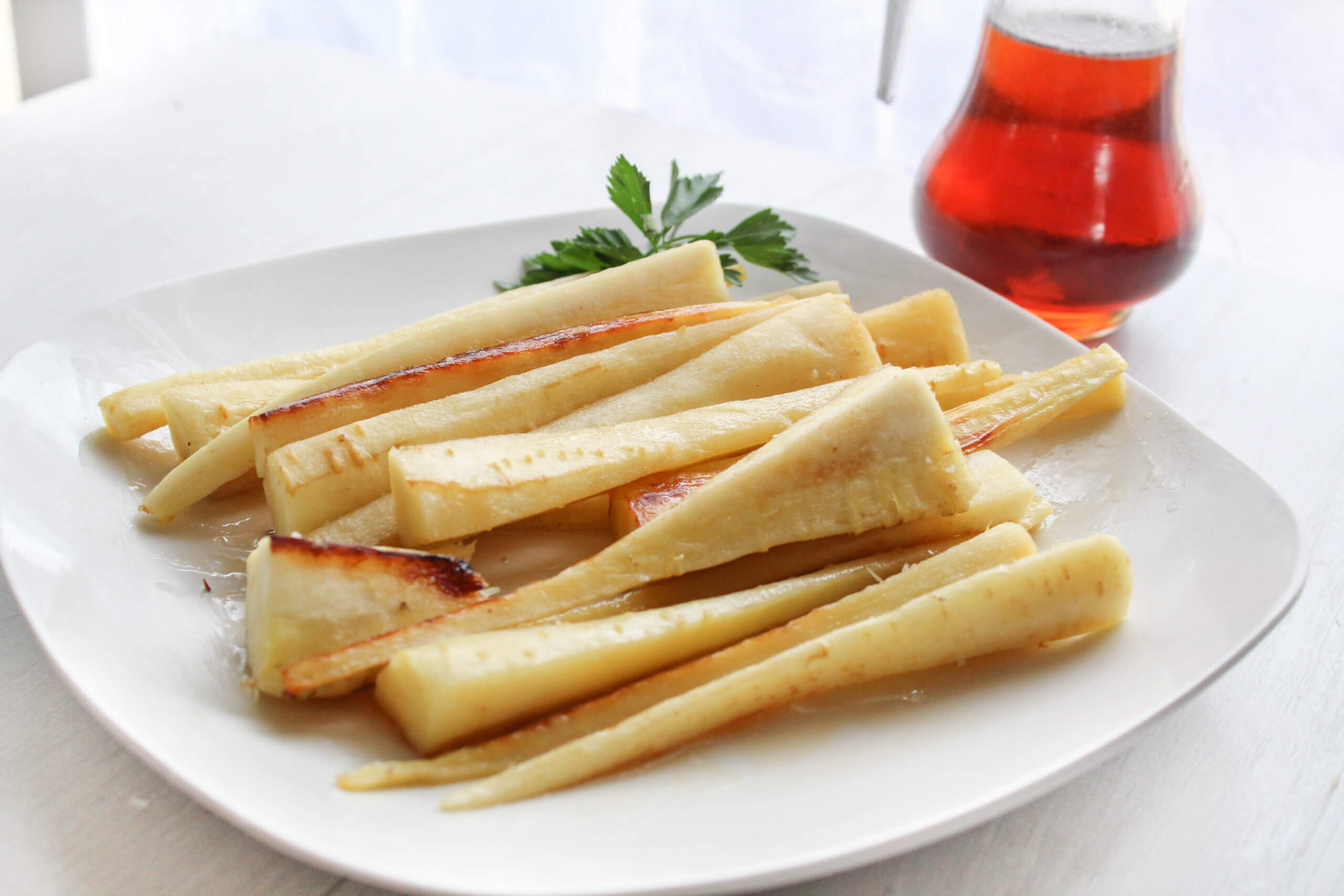
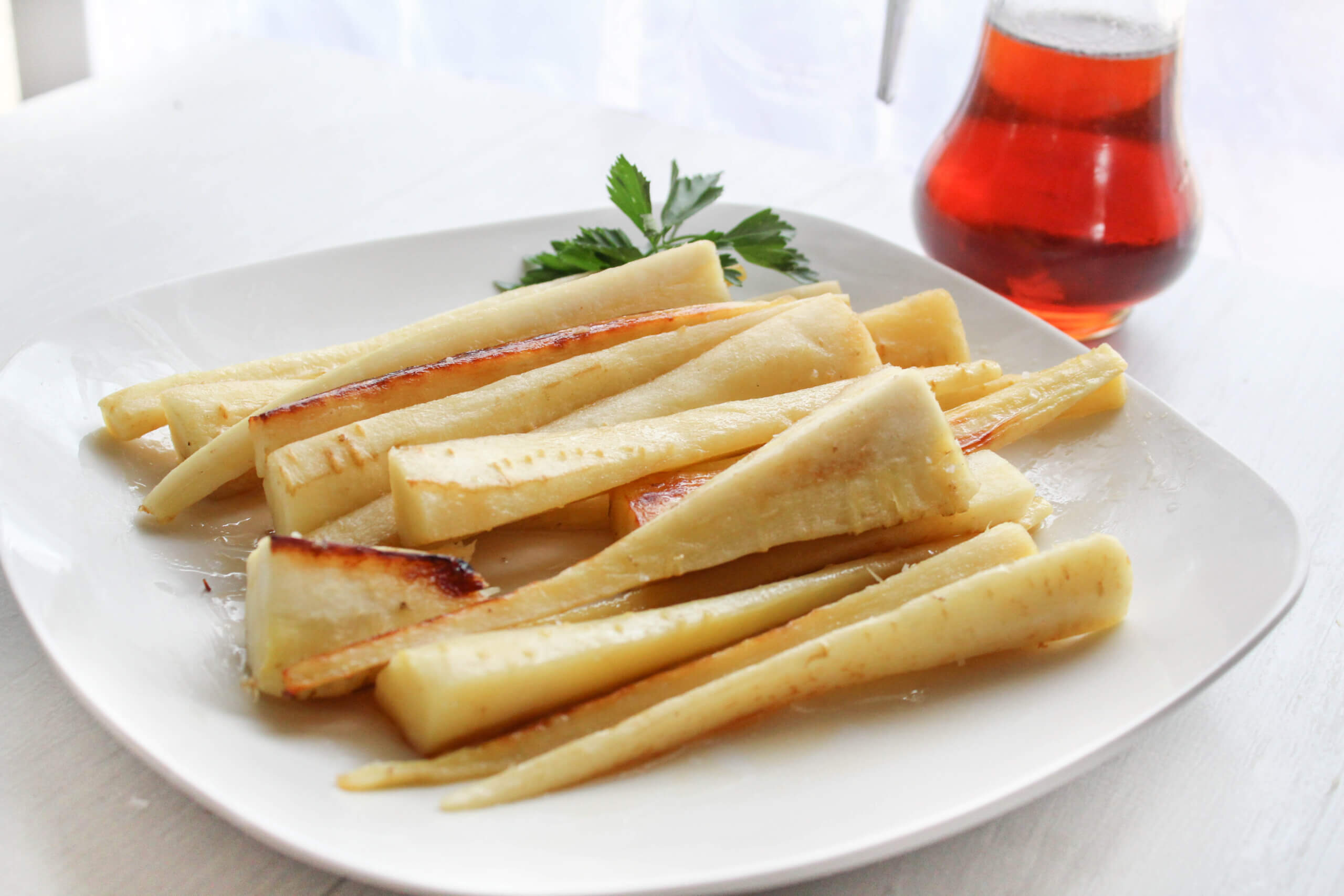
These healthy glazed parsnips are a sweet, savory side dish made with just four ingredients: organic parsnips, coconut oil, sea salt, and pure maple syrup. Parboiling the parsnips first gives them a tender center, while browning them in the skillet creates crisp edges that taste wonderful with warm maple syrup.
Parsnips are an underrated root vegetable that provide dietary fiber along with vitamin C and other micronutrients. Fiber supports digestive health and can help meals feel more satisfying, while vitamin C contributes to normal immune function and antioxidant protection. (1, 2, 3)
This recipe keeps the original family favorite intact while updating a few nutrition claims. Coconut oil is still our preferred cooking fat here, but it is not a meaningful omega-3 source, and genetic modification does not create artificial trans fats. The FDA identifies partially hydrogenated oils, not GMO technology, as the primary historic source of industrial trans fat in processed foods. (4, 5)
For the richest maple flavor, look for pure organic Grade A Dark Color, Robust Taste maple syrup, the current USDA terminology for what many of us used to call dark amber syrup. (7)
My Healthy Glazed Parsnips are a family favorite. This decadent side dish features crisp parsnips topped with sweet maple syrup. Cooking this root vegetable brings out all the sweetness, making this recipe a perfect addition to any meal.
This side dish originally came from our family friend Gene. It was a memorable part of holiday meals, so I made a few swaps to create a healthier version. I know you’ll love it as much as I do!
If parsnips are new to your family, this is one of the easiest ways to introduce them. They look a little like pale carrots, but their flavor is sweeter, earthier, and slightly nutty once cooked. Browning brings out their natural sweetness, and the maple syrup turns them into a holiday-worthy side dish that still starts with a real vegetable.
Table of Contents:

Gene’s Glazed Parsnips (Vegan)
Servings
Ingredients
- 2 pounds organic parsnips
- 2-3 tablespoons coconut oil extra-virgin AND unrefined
- ½ teaspoon pink Himalayan salt OR sea salt, ground
- ¼ cup Grade A Dark Amber maple syrup, organic
Instructions
- Peel the parsnips, then parboil them over medium-high heat for 8-10 minutes, or until soft.
- Let cool and slice lengthwise into thick slices.
- In a large saucepan over low heat, melt the coconut oil. Once the oil is melted, carefully lay the parsnips into the oil and sprinkle with salt. Fry until barely browned. Repeat until all parsnips are roasted.
- Place on a serving dish and pour warmed maple syrup over them. Serve warm.
Benefits of Eating Organic Parsnips
If you’ve never had roasted parsnips before, you’re in for a treat! This delicious root vegetable is full of nutrients and should be included in more diets.
I encourage you to find creative ways to incorporate this veggie into your menu plans. Many people use parsnips alongside or in place of potatoes and enjoy them mashed, roasted, baked, or pan-browned as in this recipe. Try them in our colorful hash brown recipe!
USDA FoodData Central added raw parsnips to its Foundation Foods database in December 2025, providing current analytical data for this humble root vegetable. Parsnips contribute dietary fiber and a variety of micronutrients, making them more than just a sweet holiday side. (1)
Here are a few things this ingredient brings to the table.
Provide Fiber for Digestive Health and Fullness
Parsnips are a naturally fiber-rich vegetable.
Dietary fiber supports normal bowel function and helps nourish the gut microbiome. Higher-fiber eating patterns are also associated with better digestive and metabolic health, and fiber can help support satiety. (2)
That makes parsnips a useful vegetable when you’re trying to build meals that are satisfying without relying entirely on refined starches.
The original article said fiber could ease bloating, but that is not true for everyone. Fiber often supports regularity, yet rapidly increasing fiber can temporarily cause gas or bloating, especially in people with sensitive digestion.
If your family is not used to high-fiber vegetables, start with a normal serving and let your body adjust.
Supply Antioxidant Nutrients
A diet rich in colorful plant foods helps provide antioxidant nutrients and phytochemicals that support the body’s normal defenses against oxidative stress.
Parsnips contain vitamin C, which acts as an antioxidant in the body and also participates in collagen formation, iron absorption, and immune function. (3)
No single vegetable can “fight free radicals” in isolation or prevent chronic disease by itself. But eating a wide variety of vegetables gives your body the nutrients and plant compounds it uses every day.
Support Normal Immune Function
One antioxidant found in parsnips is vitamin C, which plays an important role in normal immune function.
The research on vitamin C and colds is more nuanced than simply saying it prevents illness. NIH’s current review notes that regular vitamin C supplementation does not prevent the common cold for most people, although it may modestly shorten cold duration and lessen severity. (3)
That does not make vitamin C unimportant. It means we should get plenty of vitamin C-rich foods as part of a nourishing diet rather than treating one nutrient as a shield against every seasonal bug.
Parsnips can be one small piece of that bigger picture, alongside the other strategies in our natural immune-support guide.
Make a Satisfying Swap for Other Root Vegetables
Parsnips are often compared with potatoes because both become tender and comforting when cooked.
You do not have to choose one or the other. Mixing root vegetables is one of the easiest ways to increase variety at the dinner table.
Try:
- Half parsnip and half potato mash
- Parsnip-carrot roasting trays
- Parsnips in soups and stews
- Shredded parsnips in hash browns
- Baked parsnip fries
- These maple glazed parsnips for holidays and Sunday dinners
Healthy Glazed Parsnip Ingredients
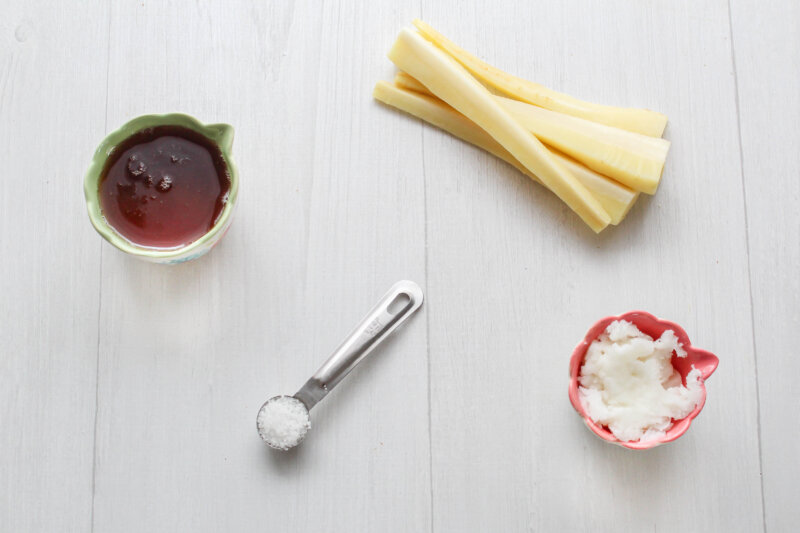
You only need four ingredients to make this delicious treat. You probably have some in your pantry already! Here’s what you need to add to your shopping cart.
Organic Parsnips
This ingredient can be found at most well-stocked grocery stores. Parsnips are similar to carrots in looks but are usually paler.
Many people grow them in their gardens, so you may be able to find some at your local farmer’s market.
Look for parsnips that are:
- Firm rather than rubbery
- Free from large soft spots
- Relatively smooth and evenly colored
- Small to medium when possible, since very large roots can develop a woody core
Store unwashed parsnips in the refrigerator until you’re ready to use them.
Coconut Oil, Extra-Virgin and Unrefined
Yes, it is possible to enjoy pan-browned foods without reaching for the oils we prefer to avoid.
I still recommend staying away from canola and highly refined soybean oil in our kitchen, and extra-virgin unrefined coconut oil works beautifully in this recipe.
There are two factual updates worth making to the older explanation, though.
First, coconut oil is not a meaningful source of omega-3 fatty acids. It is predominantly saturated fat.
Second, GMO technology does not create artificial trans fats. The FDA identifies partially hydrogenated oils as the major historic source of industrial trans fat in processed foods, and the agency has removed those uses from its food regulations. Most U.S. soy and much canola are genetically engineered crops, but that is a separate issue from trans-fat formation. (4, 5)
Our preference for coconut oil here is about the food we choose to keep in our home, the way it cooks, and the flavor it adds to the parsnips.
Coconut oil does contain medium-chain fatty acids, but it should not be treated as interchangeable with purified MCT oil used in metabolic research. A meta-analysis of clinical trials found that coconut oil raised LDL cholesterol compared with non-tropical vegetable oils, so I would not present it as a heart-health supplement. (6)
In this recipe, it is simply the cooking fat we prefer.
Pink Himalayan Salt or Sea Salt
Traditional table salt is highly refined, and I prefer the flavor and sourcing of a good-quality sea salt.
I encourage you to use Colima sea salt because it’s hand-harvested and tastes incredible. You can also use Himalayan salt if you don’t have Colima sea salt.
Specialty salts can contain trace minerals, but the amounts are generally too small to turn salt into a major mineral supplement. Use the salt you prefer for flavor and sourcing.
Organic Pure Maple Syrup
This natural sweetener gives these glazed parsnips their signature finish.
I recommend pure organic maple syrup rather than pancake syrup made primarily from refined sweeteners and flavorings.
I especially love dark, robust maple syrup because the robust flavor stands up beautifully to browned parsnips. “Dark Amber” is older terminology, so if you are shopping today, look for Grade A Dark Color, Robust Taste. (7)
Maple syrup is still an added sugar, so a little goes a long way when the parsnips are already naturally sweet.
Make Roasted Glazed Parsnips
This recipe is easy to make. The stovetop version gives you beautifully browned edges, while the baked variation below is ideal when you’d rather fix it and forget it.
Step One: Parboil the Parsnips
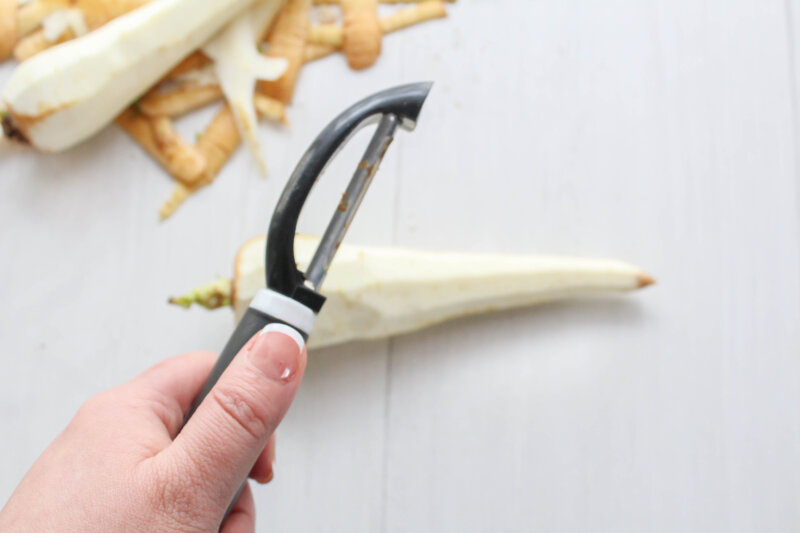
Peel the parsnips, then parboil them over medium-high heat for 8-10 minutes, or until soft.
Parboiling gives you a tender center before the outside starts browning. The goal is soft enough to slice without falling apart.
Step Two: Slice Lengthwise
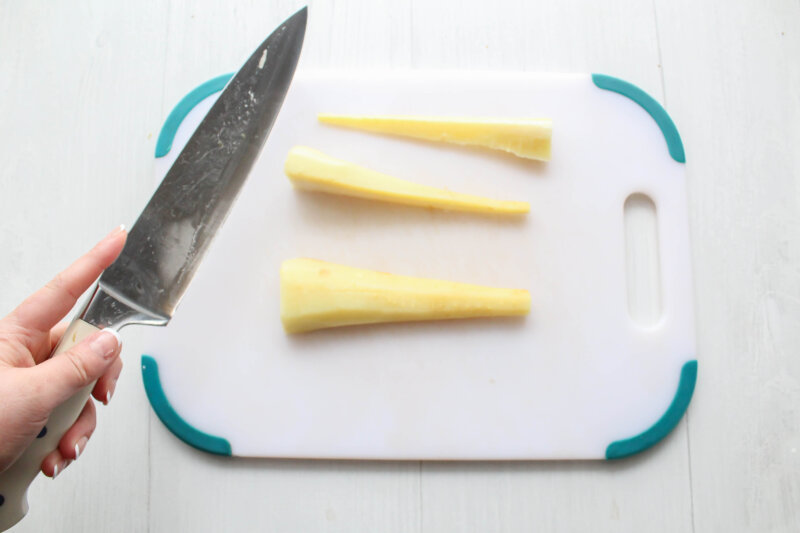
Let the parsnips cool to the touch, then slice lengthwise into thick slices.
Try to keep the pieces relatively even so they brown at about the same rate.
Step Three: Fry Until Brown
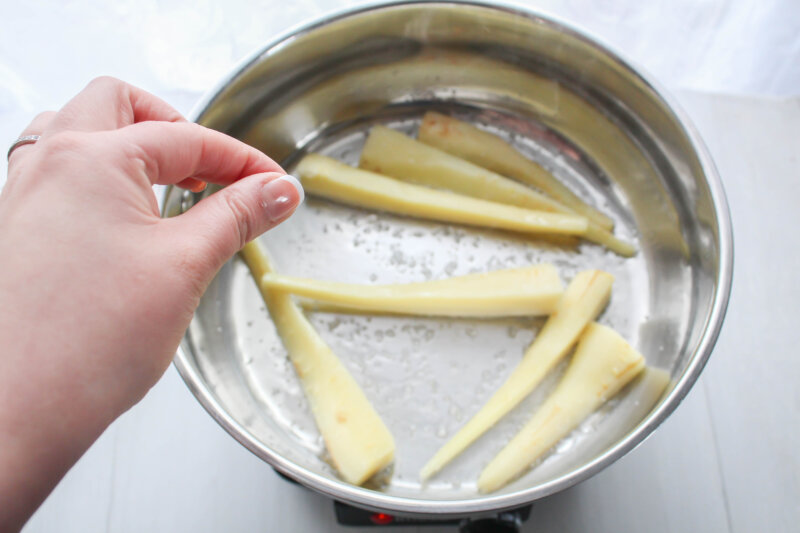
In a large saucepan over low heat, melt the coconut oil. Once the oil is melted, carefully lay the parsnips into the oil and sprinkle with salt. Fry until barely browned. Repeat until all parsnips are roasted.
Do not crowd the pan. Giving each piece contact with the cooking surface helps create the browned edges that make this recipe so good.
Step Four: Serve With Syrup
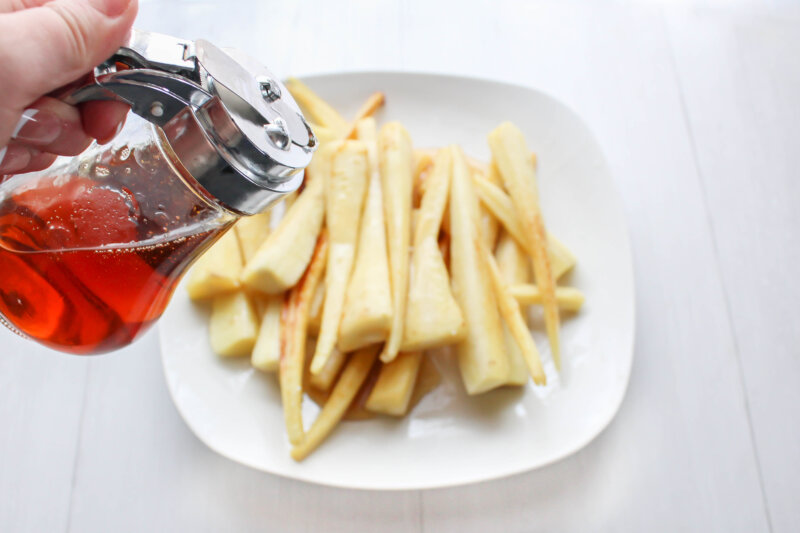
Place on a serving dish and pour warmed maple syrup over them. Serve warm. Enjoy!
Pro Tip: The browned parsnips may be set aside and reheated before serving with syrup.
Make-Ahead Holiday Tip
If you are making these for Thanksgiving, Christmas, Easter, or a big Sunday dinner, do the messy part early.
You can:
- Peel and parboil the parsnips.
- Cool and slice them.
- Refrigerate them in a covered container.
- Brown or bake them closer to serving time.
- Warm the maple syrup separately and add it right before serving.
This keeps the parsnips from sitting in syrup and losing their browned edges.
Healthy Baked Parsnip Variation
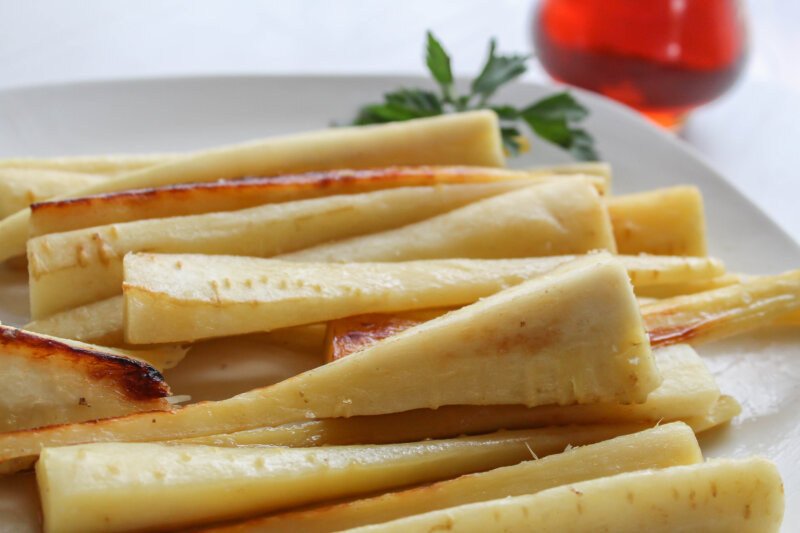
If you prefer, you can bake this side dish. Baking has its benefits, especially on those days when you’d like to fix it and forget it! The recipe is the same delicious parsnips you know and love, with a different cooking method.
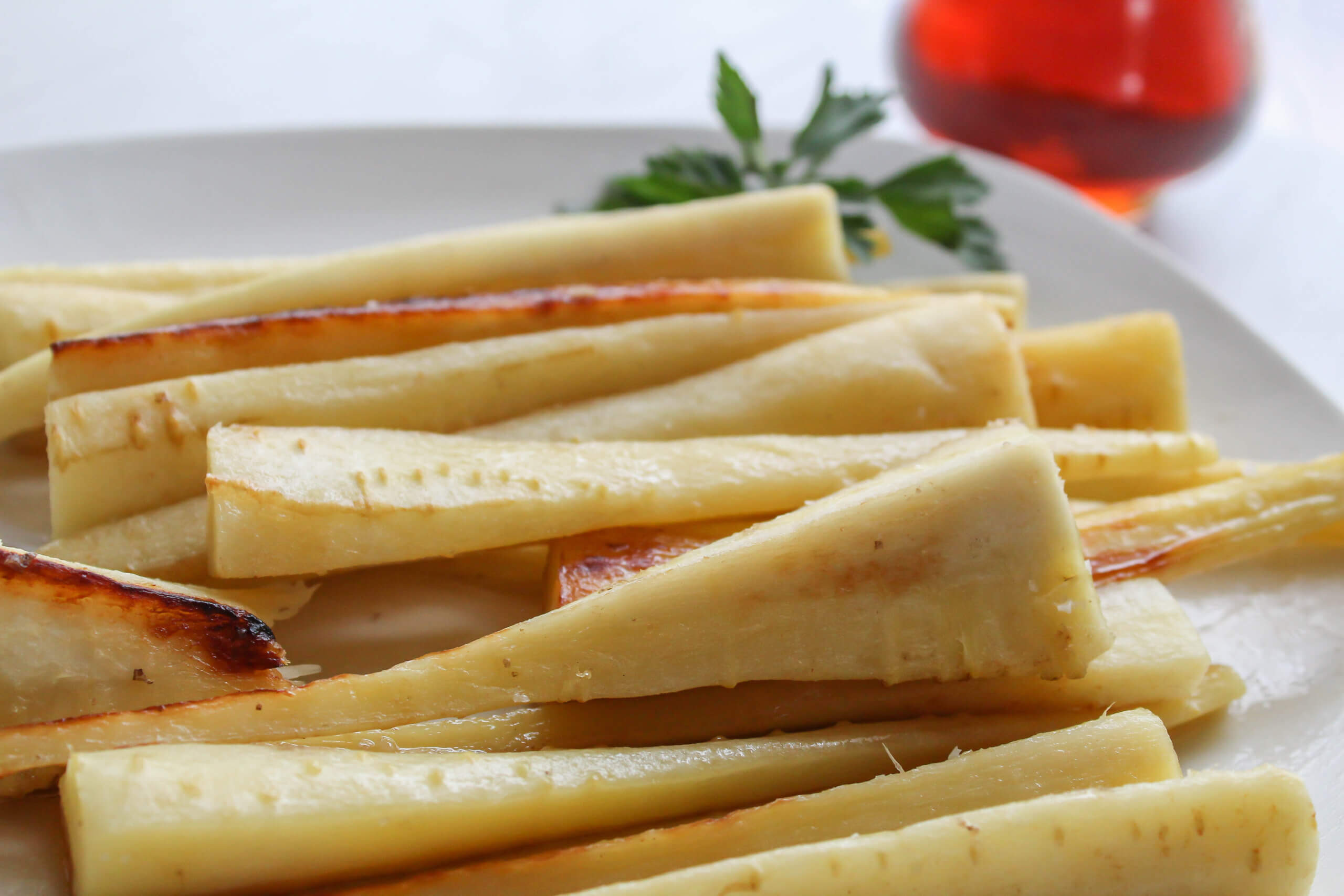
Gene's Baked Glazed Parsnips (Vegan)
Servings
Ingredients
- 2 pounds organic parsnips
- 2-3 tablespoons coconut oil extra-virgin AND unrefined
- ½ teaspoon pink Himalayan salt OR sea salt, ground
- ¼ cup Grade A Dark Amber maple syrup, organic
Instructions
- Preheat the oven to 375℉. Peel the parsnips, then slice them lengthwise into large pieces.
- Place the parsnips in a 9 x 13-inch baking pan. Pour the melted coconut oil over the top, and sprinkle with sea salt. Gently toss to coat.
- Roast for 30-40 minutes, or until barely browned. You can also steam the parsnips first to cut down on cooking time.
- Place on a serving dish and pour warmed maple syrup over them. Serve warm.
Skillet vs. Baked Glazed Parsnips
Both versions work, but they have slightly different advantages.
Choose the skillet method when:
- You want the deepest browning.
- You are making a smaller batch.
- You want to watch the texture closely.
Choose the baked version when:
- Your stovetop is crowded with other holiday dishes.
- You are cooking for a larger group.
- You want a more hands-off method.
Either way, the maple syrup is the finishing touch. The parsnips should taste delicious before they are glazed.
Glazed Parsnips FAQs
What do parsnips taste like?
Parsnips are naturally sweet, earthy, and slightly nutty. They are related to carrots and parsley, but their flavor becomes deeper and sweeter after cooking. Browning them brings out even more of that natural sweetness.
Do you need to peel parsnips?
You can scrub very young, tender parsnips well and leave the skin on, but I peel them for this recipe because it gives the finished dish a smoother texture and cleaner presentation.
Why do you parboil parsnips before browning them?
Parboiling softens the center so the outside can brown without leaving the inside hard. It also shortens the skillet cooking time.
Can I make glazed parsnips ahead of time?
Yes. Parboil, cool, and slice them ahead of time, then refrigerate. Brown or bake them closer to serving and add the warm maple syrup just before they go to the table.
Can I use honey instead of maple syrup?
The recipe card is built around maple syrup, so I recommend making it as written the first time. Honey has a different flavor and browns differently under heat. If you experiment with another sweetener later, add it near the end and watch it carefully.
Is maple syrup healthier than refined sugar?
Pure maple syrup is a minimally processed sweetener with a distinctive flavor and small amounts of naturally occurring minerals and plant compounds, but it is still primarily sugar. We use it because a relatively small amount adds a lot of flavor, not because unlimited maple syrup becomes a health food.
Is coconut oil a source of omega-3 fats?
No. Coconut oil is predominantly saturated fat and contains very little omega-3. The older version of this article overstated that point. Coconut oil remains our preferred cooking oil for this recipe because of its flavor and cooking qualities, not because it supplies omega-3s. (6)
Do genetically modified canola and soybean oils contain artificial trans fats?
Genetic modification and trans-fat formation are different issues. Artificial trans fats were primarily created through partial hydrogenation of oils. FDA determined that partially hydrogenated oils were no longer generally recognized as safe and subsequently removed their authorized food uses. Our preference to avoid canola and soybean oil is a separate food-quality and sourcing choice. (4, 5)
What should I serve with glazed parsnips?
They are especially good with holiday meals, roast chicken, turkey, beef, green vegetables, salads, and other savory sides. Their maple sweetness works best when the rest of the plate has plenty of savory flavor.


- USDA FoodData Central. Foundation Foods update adding raw parsnips. December 2025.
- Barber TM, Kabisch S, Pfeiffer AFH, Weickert MO. The Health Benefits of Dietary Fibre. Nutrients. 2020;12(10):3209.
- NIH Office of Dietary Supplements. Vitamin C Fact Sheet for Health Professionals. Updated 2025.
- U.S. Food and Drug Administration. GMO Crops, Animal Food, and Beyond. Updated 2024.
- U.S. Food and Drug Administration. Final Determination Regarding Partially Hydrogenated Oils.
- Neelakantan N, Seah JYH, van Dam RM. The Effect of Coconut Oil Consumption on Cardiovascular Risk Factors: A Systematic Review and Meta-Analysis of Clinical Trials. Circulation. 2020.
- USDA Agricultural Marketing Service. Maple Syrup Grades and Standards.
- Florence TM. The Role of Free Radicals in Disease. Australian and New Zealand Journal of Ophthalmology. 1995. Foundational reference preserved from the original article.
- Satiation, Satiety and the Action of Fibre on Food Intake. Foundational reference preserved from the original article.
- Anderson JW, et al. Health Benefits of Dietary Fiber. Nutrition Reviews. 2009. Foundational reference preserved from the original article.
- Wintergerst ES, Maggini S, Hornig DH. Immune-Enhancing Role of Vitamin C and Zinc and Effect on Clinical Conditions. 2006. Foundational reference preserved from the original article.
- Iqbal MP. Trans Fatty Acids: A Risk Factor for Cardiovascular Disease. 2014. Foundational reference preserved from the original article.
- St-Onge MP, et al. Medium-Chain Triglycerides Increase Energy Expenditure and Decrease Adiposity in Overweight Men. 2003. Foundational reference preserved from the original article.