QUICK SUMMARY
This kale quinoa salad combines cruciferous vegetables, quinoa, chickpeas, grapes, raisins, shredded vegetables, and walnuts with a bright homemade Greek dressing.
Kale and cabbage provide glucosinolates that form bioactive isothiocyanates when the vegetables are chopped and chewed. Quinoa adds fiber, minerals, and complete plant protein, while chickpeas and walnuts make the salad more satisfying.
Prepare the quinoa ahead, let it cool completely, and massage the kale with a small amount of dressing before combining everything. The finished salad can be chilled before serving and works beautifully for meal prep, potlucks, lunches, and healthy family dinners.
Kale is a fantastic superfood with a deep, earthy flavor. My Colorful Kale Quinoa Salad with Greek Dressing is one of the tastiest ways to incorporate this leafy green into your family’s diet.
This recipe has a special place in my heart. When I was on bed rest, several precious ladies brought meals to our home and included the recipes so I could make them again. This salad was one of those meals, and I absolutely loved it! Thankfully, my family feels the same way.
This colorful kale salad is the perfect mix of sweet and savory. Grapes and raisins add little bursts of natural sweetness, while cabbage, carrots, chickpeas, quinoa, and walnuts give every bite a satisfying combination of textures.
The homemade Greek dressing ties everything together with olive oil, herbs, and carefully measured culinary essential oils for an extra bioactive boost.
Plus, this salad is beautiful! The more naturally colorful your plate is, the greater the variety of vitamins, minerals, carotenoids, polyphenols, and other God-given plant compounds you are likely to enjoy.
Table of Contents:
Kale: A Cruciferous Superfood
Kale had its moment as a health-food superstar, with people blending it into smoothies, tossing it into salads, and crisping it into kale chips.
It deserves every bit of the spotlight!
Kale belongs to the cruciferous vegetable family alongside cabbage, broccoli, cauliflower, Brussels sprouts, bok choy, mustard greens, and arugula.
These vegetables are low in calories and rich in fiber, vitamins, minerals, carotenoids, polyphenols, and sulfur-containing compounds called glucosinolates. (1)
Why Cruciferous Vegetables Are So Powerful
When cruciferous vegetables are chopped, crushed, or chewed, an enzyme called myrosinase helps transform glucosinolates into biologically active compounds, including isothiocyanates and indoles.
One of the most researched isothiocyanates is sulforaphane. Laboratory and animal research shows that these compounds can influence antioxidant defenses, detoxification enzymes, inflammation, cell-cycle regulation, apoptosis, and other pathways involved in cancer development. (1, 2)
Human observational studies also associate higher cruciferous vegetable intake with a modestly lower risk of several cancers, although findings differ by cancer type, population, preparation method, and total dietary pattern. Recent meta-analyses continue to report protective associations, particularly for several gastrointestinal cancers. (3)
This is important: kale is not a stand-alone cancer treatment, and there is no single number of weekly servings that guarantees prevention. Still, regularly eating cruciferous vegetables is a practical way to fill your diet with cancer-fighting plant compounds.
God has a creative mind! The same sulfur chemistry that gives these vegetables their slightly bitter flavor is responsible for many of the cellular effects that make researchers so interested in them.
Does Kale Support Heart Health?
Kale provides fiber, potassium, vitamin C, vitamin K, carotenoids, and polyphenols that fit beautifully into a heart-healthy diet.
An early human trial found that daily kale-juice consumption favorably changed several cardiovascular risk markers in men with high cholesterol. The study was small and used kale juice rather than a typical serving of salad, so it should not be interpreted as proof that kale treats cardiovascular disease. (4)
The bigger picture is clear: diets rich in vegetables, legumes, nuts, seeds, and minimally processed plant foods consistently support cardiovascular health.
Should You Buy Organic Kale?
Kale has frequently appeared on consumer produce-residue lists because conventionally grown samples can contain detectable pesticide residues.
That does not mean conventional kale is automatically unsafe or that families should skip vegetables when organic options are unavailable. The health benefits of eating more produce remain important.
When your budget allows, organic kale can help reduce exposure to certain agricultural chemicals. Either way, remove damaged leaves and wash kale thoroughly under running water before eating it. Avoid washing produce with soap, bleach, or household cleaners.
If you grow your own kale, you gain even greater control over soil quality, pest management, and harvest timing.
Healthy Kale Quinoa Salad Ingredients
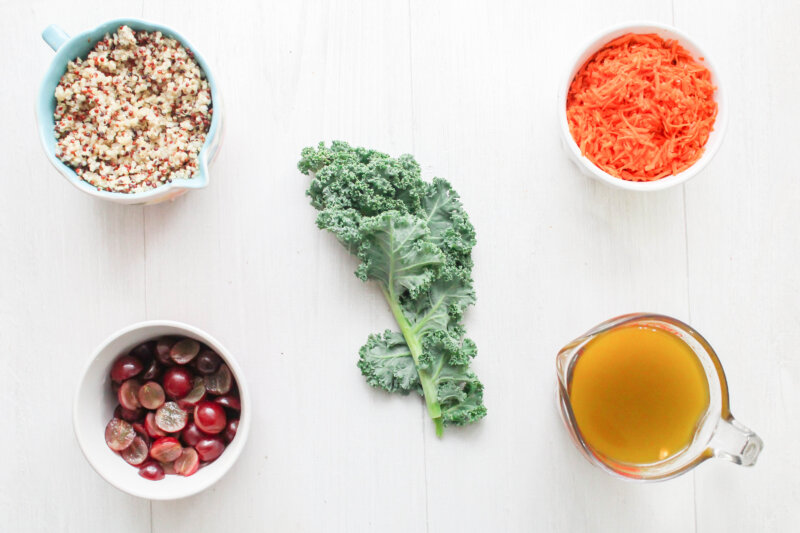
The secret to this kale quinoa salad is the combination of sweet fruit, earthy greens, tender grains, creamy chickpeas, crisp vegetables, and crunchy walnuts.
Here’s what you need.
Organic Quinoa
I love adding quinoa to salads because it gives them a unique texture and makes the finished dish more filling.
Quinoa is technically a pseudocereal rather than a true grain. It provides fiber, magnesium, iron, folate, polyphenols, and all nine essential amino acids, making it a complete plant-protein source.
Contrary to the claim that quinoa is always a high-glycemic food, quinoa is generally considered to have a low-to-moderate glycemic impact, though the response varies with processing, cooking, serving size, and the foods eaten alongside it.
Recent human research suggests that quinoa may improve post-meal glucose regulation and other metabolic markers in people with impaired glucose tolerance. It is not a treatment for diabetes, but it can be a nourishing alternative to refined grains. (5, 6)
I love using tri-colored quinoa because it makes the salad extra special. You can cook it in filtered water, organic vegetable broth, coconut milk, or coconut water.
Let the cooked quinoa cool completely before adding it to the salad. Warm quinoa can wilt the kale and make the vegetables soggy.
If you don’t have quinoa, brown rice is a wonderful substitution.
Organic Grapes
Grapes add a delightful pop of color and juicy sweetness.
They contain vitamin C and polyphenols, including anthocyanins, flavanols, and resveratrol. Human trials using Concord or purple grape juice and grape-derived polyphenols have reported improvements in certain aspects of cognition and memory, particularly among older adults or people experiencing mild memory decline. (7, 8)
Those studies used specific juices or extracts, so we cannot promise that a handful of grapes will produce the same outcome. Still, whole grapes are a delicious way to add hydration and antioxidant plant compounds to this salad.
Cut them in half for easy eating and to make the recipe more child-friendly.
Organic Kale
Besides the benefits we’ve already discussed, kale adds fiber, calcium, potassium, folate, carotenoids, vitamin C, and vitamin K.
To minimize bitterness, remove the tough center stems and finely chop the leaves. Throw the remnants in your compost bin!
Massaging the kale with a little dressing softens the texture and distributes flavor throughout every bite.
Organic Unsweetened Raisins
Raisins add chewy pops of natural sweetness.
They contain fiber, potassium, phenolic compounds, and naturally occurring sugars. Laboratory research has identified antimicrobial compounds in raisins, and small human studies suggest raisins may support oral health under certain conditions. That does not mean sticky dried fruit prevents cavities, so regular brushing and dental care still matter. (9)
Choose unsweetened raisins without added oil or sulfur preservatives when possible.
You can also use unsweetened dried cherries, cranberries, or currants.
Organic Cabbage
Cabbage is another cruciferous vegetable full of antioxidant compounds.
Red cabbage contributes anthocyanins, while both red and green varieties provide vitamin C, vitamin K, fiber, and glucosinolates.
Use finely shredded cabbage so it blends easily with the kale and quinoa.
Organic Chickpeas
Chickpeas provide plant protein, fiber, folate, iron, magnesium, potassium, and slowly digested carbohydrates.
They contain all essential amino acids, though—as with many legumes—they are relatively lower in methionine. Pairing chickpeas with quinoa, nuts, seeds, and a varied diet creates a well-rounded amino-acid pattern.
Their combination of fiber and protein makes this salad more satisfying and may support steadier post-meal blood sugar than a salad made only with leafy vegetables.
Drain and rinse canned chickpeas before using them to remove excess sodium and packing liquid.
Organic Shredded Vegetables
Additional vegetables add color, crunch, and flavor.
Bright beets and carrots have persuaded many picky children to give salad another chance! Some of our favorite options include:
- Shredded carrots
- Shredded beets
- Shredded zucchini
- Thinly sliced bell peppers
- A combination of several colorful vegetables
Different colors represent different plant pigments, including carotenoids, betalains, chlorophyll, and anthocyanins.
Eat the rainbow!
Organic Raw Walnuts
Most of my salads include nuts because they add a much-needed crunch.
Walnuts are especially rich in alpha-linolenic acid, or ALA, a plant-based omega-3 fatty acid. They also provide polyphenols, fiber, magnesium, copper, and plant protein.
Meta-analyses of randomized trials suggest that walnut-enriched diets can improve total and LDL cholesterol and may favorably influence certain inflammatory markers, though changes are not consistent across every biomarker. (10)
If you don’t have walnuts, chopped pecans are delicious.
For a nut-free salad, use pumpkin seeds or sunflower seeds.
Greek Dressing
This dressing is a family favorite. It’s packed with extra-virgin olive oil, herbs, citrus, and a hint of sweetness.
It blends beautifully with kale and makes the salad extra special. The oil also helps your body absorb fat-soluble carotenoids from the kale, cabbage, carrots, and other colorful vegetables.
The dressing includes carefully measured essential oils. Use only products specifically labeled by the manufacturer for culinary use, and do not increase the number of drops.
Fresh lemon zest, oregano, basil, or other culinary herbs can be substituted when dietary essential oils are not appropriate for your family.
This dressing is fantastic on Mediterranean-inspired dishes, but it works on most salads. We even use it as a marinade for veggie kabobs!
Make Colorful Kale Quinoa Salad
This salad comes together in minutes when your quinoa is already cooked and cooled.
Using pre-shredded vegetables and already-chopped nuts makes prep work a breeze. It’s perfect for busy nights because you can prepare it ahead, chill it for an hour, and serve.
Bon appétit!
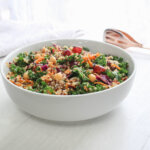
Colorful Kale Quinoa Salad With Vegan Greek Dressing
Quantity
Ingredients
- 1 cup organic tri-colored quinoa OR brown basmati rice, cooked AND cooled
- ½ cup organic unsweetened raisins
- ½ cup organic green OR red grapes, halved lengthwise
- 6 cups (8 ounces) organic shredded kale, measured after stems and spines are removed
- 1 (15.5-ounce) can organic chickpeas, black beans, OR lentils, rinsed AND drained*
- 1 cup organic shredded carrots beets, OR zucchini, OR a combination
- ½ cup organic shredded red OR green cabbage
- ½ cup chopped organic raw walnuts OR pecans (optional)
- 1 cup Greek Dressing
Supplies
Instructions
- In a large bowl (preferably one with a lid or cover), mix the quinoa, raisins, grapes, shredded kale, chickpeas, carrots, cabbage, and walnuts, if using.
- Pour the cup of dressing over the salad. If the bowl has a lid, cover it, shake the salad thoroughly, and transfer it to a serving bowl.
- Alternatively, toss the salad and serve.
Greek Dressing
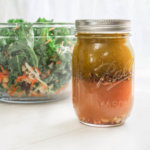
Greek Dressing (With Vegan Option)
Quantity
Ingredients
- 1 cup organic unfiltered apple cider vinegar
- ½ cup extra-virgin olive oil
- ½ cup Spanish olive oil
- 1 tablespoon organic coconut sugar OR 2 tablespoons raw organic local honey OR Grade A Dark Amber maple syrup, organic*
- 1 tablespoon pink Himalayan salt OR sea salt, ground
- 4-6 medium organic garlic cloves, pressed
- 1 tablespoon freshly squeezed organic lemon OR lime juice
- 2 teaspoons organic herbes de Provence OR organic Greek seasoning OR ½ teaspoon each organic dried basil, oregano, parsley, AND thyme
- 1 teaspoon organic yellow OR Dijon mustard
- ½ teaspoon organic crushed red pepper flakes
- ½ teaspoon organic white pepper, ground
- 2 drops lemon essential oil (optional)
- 2 drops lime essential oil (optional)
Instructions
- Combine the cider vinegar, olive oils, coconut sugar, sea salt, garlic, lemon juice, herbes de Provence, mustard, red pepper flakes, white pepper, and essential oils in a glass jar with a tight-fitting lid.
- Tighten the lid, making sure it is secure, and shake vigorously. Use the dressing immediately and refrigerate any leftovers. It can also be used as a marinade, but do not use it as a dressing on the completed dish.
Step One: Mix the Salad Ingredients
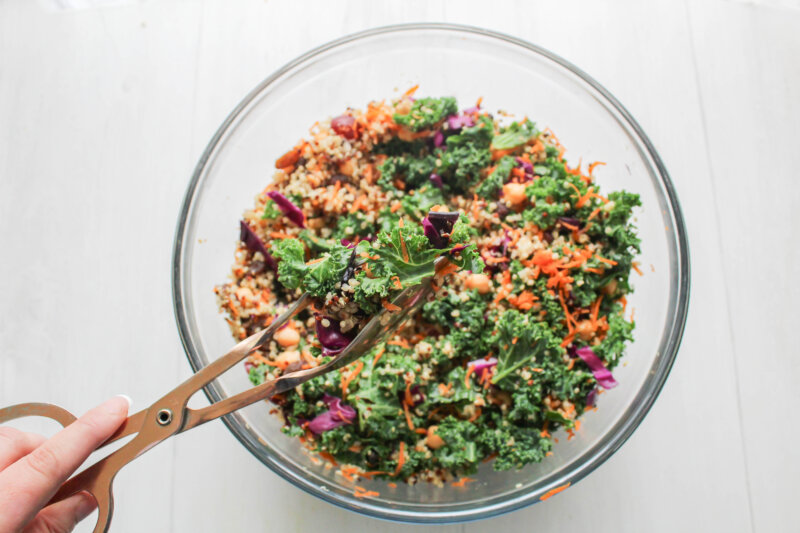
In a large bowl, mix the cooled quinoa, raisins, grapes, shredded kale, chickpeas, carrots, cabbage, and walnuts.
I prefer using a bowl with a fitted cover, which makes the next step a cinch.
Step Two: Add the Dressing
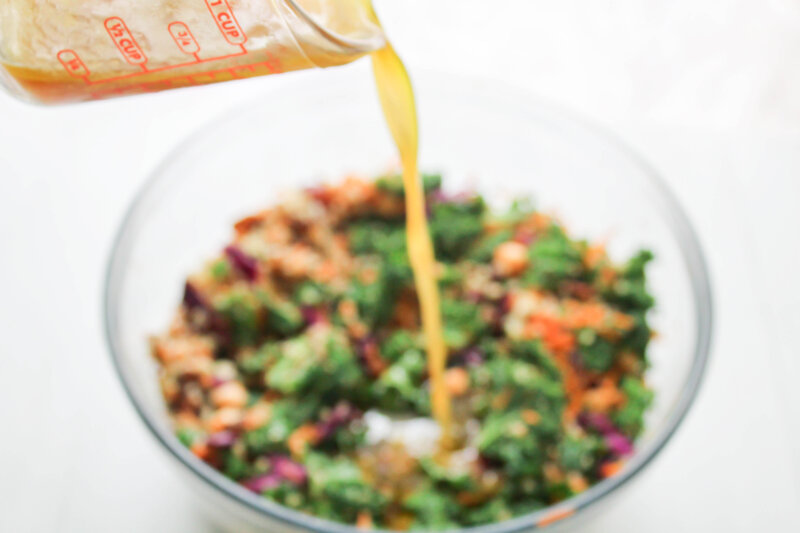
Pour the dressing over the kale quinoa salad.
If your bowl has a secure lid, cover it and gently shake the salad. This ensures every bite is filled with delicious dressing!
If you don’t have a cover, use salad tongs to toss everything thoroughly.
For the best flavor, refrigerate the salad for 30–60 minutes before serving.
How to Make Kale Taste Less Bitter
Kale’s bitter flavor comes partly from its glucosinolates and other plant compounds. That bitterness is one reason kale pairs so well with sweet fruit, citrus, healthy fat, and a touch of natural sweetener.
Use these tricks to make raw kale more tender and family-friendly:
- Remove the stems: The thick center ribs are tougher and more bitter than the leaves.
- Chop it finely: Smaller pieces are easier to chew and absorb more dressing.
- Massage the leaves: Add a spoonful of dressing and massage the kale with clean hands for 1–2 minutes.
- Add sweet ingredients: Grapes, raisins, carrots, and beets balance earthy flavors.
- Include healthy fat: Olive oil and walnuts mellow bitterness and improve satisfaction.
- Let it rest: Chilling the dressed salad gives the kale time to soften.
Do not massage the leaves so aggressively that they become limp or mushy. You want tender kale that still has a little texture.
Storage and Meal-Prep Tips
Kale holds up better than delicate greens, making this an excellent make-ahead salad.
Store the finished salad in a tightly covered container in the refrigerator. For the best quality, enjoy it within 3 days.
If you want the walnuts to remain especially crisp, store them separately and add them just before serving.
You can also prepare the ingredients in stages:
- Cook and refrigerate the quinoa up to 3–4 days ahead.
- Wash, dry, stem, and chop the kale in advance.
- Shred the cabbage and carrots and store them separately.
- Prepare the Greek dressing and refrigerate it in a covered glass jar.
- Add grapes, walnuts, and dressing closer to serving time for the freshest texture.
Because cooked quinoa and chickpeas are perishable, do not leave the salad at room temperature for more than 2 hours, or more than 1 hour in very hot outdoor conditions.
Kale Quinoa Salad FAQs
Is kale quinoa salad healthy?
Yes. This salad provides fiber, plant protein, healthy fats, vitamins, minerals, glucosinolates, carotenoids, and polyphenols from kale, cabbage, quinoa, chickpeas, grapes, vegetables, and walnuts.
Is quinoa a grain?
Quinoa is a pseudocereal. It is prepared like a grain but comes from a plant more closely related to spinach, beets, and amaranth.
Does quinoa have a high glycemic index?
Quinoa generally has a low-to-moderate glycemic impact, depending on the variety, cooking method, serving size, and meal composition. Human research suggests it may support post-meal glucose control when used in place of more refined carbohydrates. (5, 6)
Do cruciferous vegetables prevent cancer?
Cruciferous vegetables contain cancer-fighting glucosinolate metabolites that influence antioxidant, detoxification, inflammatory, apoptosis, and cell-growth pathways in preclinical research. Observational studies associate higher intake with a reduced risk of some cancers, but they cannot guarantee prevention. (1, 2, 3)
Can I make this salad without essential oils?
Yes. Replace the culinary essential oils in the Greek dressing with fresh herbs, citrus zest, or additional juice according to taste.
Can I use spinach instead of kale?
Yes, but spinach is softer and will wilt more quickly. Add the dressing shortly before serving and plan to eat the salad the same day.
Can I make this kale quinoa salad nut-free?
Yes. Replace the walnuts with sunflower seeds, pumpkin seeds, or another allergy-appropriate crunchy ingredient.
How do I keep quinoa salad from getting soggy?
Cool and drain the quinoa completely, dry the vegetables well, and avoid adding excessive dressing. Store the walnuts separately when preparing the salad several days ahead.
Can I serve this as a main dish?
Yes. The quinoa, chickpeas, and walnuts provide fiber, plant protein, and healthy fat. Increase the chickpeas or add another clean protein when you need a more substantial meal.
Want More Cruciferous Vegetables?
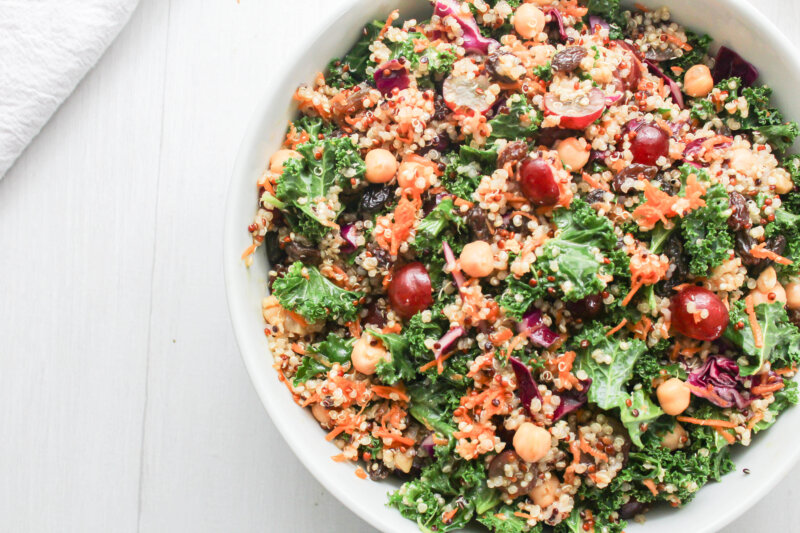
To include more cruciferous vegetables in your diet, try my homemade vegan coleslaw.
It’s packed with healthy vegetables and is completely dairy-free. Unique ingredients such as apples and culinary essential oils make this side dish a hit at family gatherings.
For a fermented option, try my homemade kimchi. Fermented vegetables can add live microorganisms and fermentation metabolites to the diet when they are prepared and stored properly.
We enjoy a little kimchi with eggs, salads, bowls, or as a flavorful side dish. Learn more about creating an inside-out plan for gut health.
Final Thoughts on Kale Quinoa Salad
This Colorful Kale Quinoa Salad is more than another bowl of greens. It is a complete celebration of color, texture, nourishment, and community.
Kale and cabbage bring cancer-fighting glucosinolate compounds. Quinoa and chickpeas provide fiber and plant protein. Grapes and raisins add natural sweetness, while walnuts contribute satisfying crunch and plant-based omega-3 fats.
But the story behind this recipe may be my favorite ingredient of all.
When I was on bed rest, women in our community showed God’s love by bringing food to our family. They didn’t just drop off a meal. They included the recipe, giving me a way to recreate their gift of care long after that difficult season had passed.
Here’s the thing: nourishing food can become ministry.
Make this salad for your family, prepare it for a church gathering, or take a bowl to someone who needs practical encouragement. Let the bright vegetables remind you that healthy eating is not supposed to be dull, restrictive, or colorless.
God filled creation with an incredible variety of nourishing foods. Our job is to receive those gifts with gratitude, prepare them with wisdom, and share them generously with others.


- Ağagündüz D, Şahin TÖ, Yılmaz B, Ekenci KD, Duyar Özer Ş, Capasso R. Cruciferous Vegetables and Their Bioactive Metabolites: From Prevention to Novel Therapies of Colorectal Cancer. Evidence-Based Complementary and Alternative Medicine. 2022. https://pmc.ncbi.nlm.nih.gov/articles/PMC9017484/
- Ho E, Beaver LM, Williams DE, Dashwood RH. Dietary Factors and Epigenetic Regulation for Prostate Cancer Prevention. Advances in Nutrition. 2011. https://pubmed.ncbi.nlm.nih.gov/22332086/
- Guo C, et al. Effect of Cruciferous Vegetable Intake on Cancer: An Umbrella Review of Systematic Reviews and Meta-Analyses. 2024. https://pubmed.ncbi.nlm.nih.gov/39138635/
- Kim SY, Yoon S, Kwon SM, Park KS, Lee-Kim YC. Kale Juice Improves Coronary Artery Disease Risk Factors in Hypercholesterolemic Men. Biomedical and Environmental Sciences. 2008. https://pubmed.ncbi.nlm.nih.gov/18548846/
- Díaz-Rizzolo DA, et al. Glycaemia Fluctuations Improvement in Old-Age Prediabetic Subjects Consuming a Quinoa-Based Diet. Nutrients. 2022. https://pmc.ncbi.nlm.nih.gov/articles/PMC9183167/
- Zeng H, et al. Glucolipid Metabolism Improvement in Impaired Glucose-Tolerance Patients Through Quinoa Consumption. 2023. https://pmc.ncbi.nlm.nih.gov/articles/PMC10354450/
- Lamport DJ, Lawton CL, Merat N, et al. Concord Grape Juice, Cognitive Function, and Driving Performance: A Randomized Crossover Trial. American Journal of Clinical Nutrition. 2016. https://pubmed.ncbi.nlm.nih.gov/26864371/
- Krikorian R, Nash TA, Shidler MD, Shukitt-Hale B, Joseph JA. Concord Grape Juice Supplementation Improves Memory Function in Older Adults With Mild Cognitive Impairment. British Journal of Nutrition. 2010. https://pubmed.ncbi.nlm.nih.gov/20028599/
- Rivero-Cruz JF, et al. Isolation of Antimicrobial Compounds From Raisins. Journal of Nutrition. 2009. https://academic.oup.com/jn/article/139/9/1818S/4670552
- Mateș L, Popa DS, Rusu ME, Fizeșan I, Leucuța D. Walnut Intake Interventions Targeting Biomarkers of Metabolic Syndrome and Inflammation: A Systematic Review and Meta-Analysis of Randomized Controlled Trials. Antioxidants. 2022. https://pmc.ncbi.nlm.nih.gov/articles/PMC9312161/