




QUICK SUMMARY
The best essential oils for energy and focus have bright, invigorating aromas that may help increase alertness, refresh your mood, and make mentally demanding tasks feel more manageable.
Rosemary and peppermint have some of the strongest human research for memory, alertness, and cognitive performance. Citrus oils such as lemon, bergamot, grapefruit, and sweet orange can create an uplifting atmosphere, while pine and May Chang add a fresh, clarifying aroma.
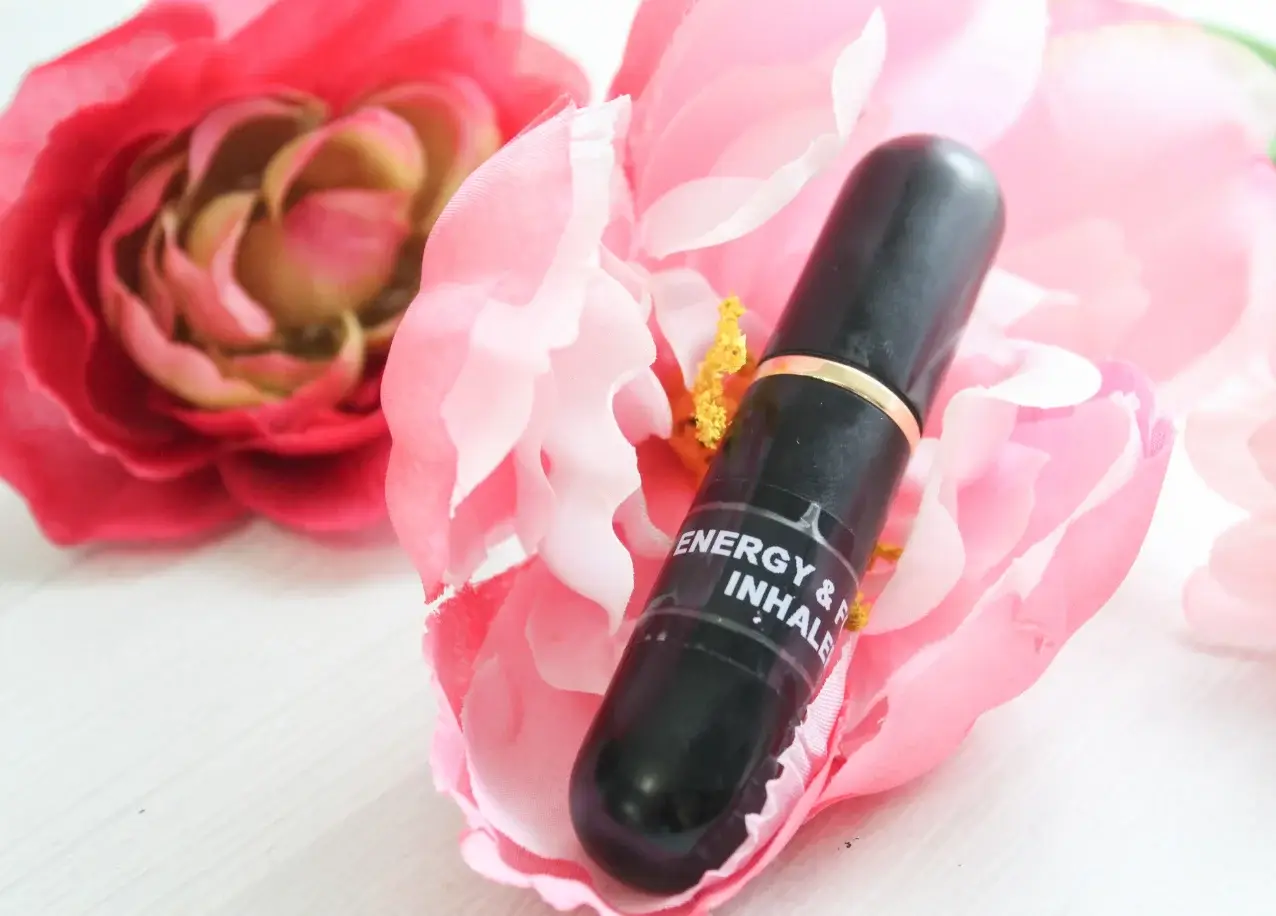
This portable Energy & Focus Inhaler combines rosemary, pine, and May Chang essential oils for a quick aromatherapy boost without sugar, caffeine, or synthetic stimulants. Inhale gently as needed, but remember that persistent fatigue can be a sign that your body needs sleep, nourishment, hydration, stress relief, or medical attention.
When you find your energy levels flagging, you can turn to natural solutions like these essential oils for energy to help give you a refreshing, non-toxic boost.
Whether you’re powering through a long day of teaching, preparing for a big project, or trying to stay mentally sharp without another cup of coffee, this Energy & Focus Inhaler is an easy way to enjoy an invigorating aroma wherever you go.
Energy drinks and concentrated stimulants can sometimes cause a racing heartbeat, anxiety, sleep disruption, and the dreaded energy crash. Essential oils work differently. They do not flood your body with caffeine or sugar. Instead, their volatile aromatic compounds interact with the olfactory system and brain regions involved in memory, emotion, attention, and alertness.
Research on aromatherapy is still developing, and not every energizing oil has been tested in large human trials. A 2024 scoping review of 28 human studies found olfactory interventions promising for alertness and fatigue relief, while also noting wide variation in the scents, protocols, and outcome measures used. That fits what we see in individual studies of rosemary, peppermint, bergamot, and other aromas: some can influence cognitive performance, fatigue, stress, mood, or subjective alertness, but the effect depends on the oil, person, setting, and task. (13)
Put simply, an essential oil inhaler will not manufacture energy your body does not have. But it may help clear mental cobwebs, refresh your mood, and support focused attention when the afternoon slump arrives.
Table of Contents

Top 10 Essential Oils for Energy and Focus
Essential oils are rich in bioactive compounds that are easily dispersed into the air and inhaled. Their aromas can influence how alert, calm, focused, or fatigued you feel, making aromatic use one of the simplest ways to enjoy them.
Whether you’re fighting brain fog, emotional exhaustion, or ordinary tiredness, these 10 essential oils can help create a more energized and focused atmosphere.
1. Rosemary Essential Oil
Called the “herb of remembrance” since ancient times, rosemary essential oil is one of the most researched aromas for cognitive performance.
In one human study, higher blood levels of 1,8-cineole after exposure to rosemary aroma were associated with faster and more accurate performance on cognitive tasks. Earlier research also found that rosemary aroma affected memory, alertness, and mood. In a randomized field trial involving shift-working nurses, rosemary inhalation reduced self-reported sleepiness and increased alertness compared with control. (1, 4, 14)
Rosemary is an excellent choice when you need to study, write, teach, organize, or work through a mentally demanding task. It can help with alertness, but it still does not replace the sleep your body needs.
2. Lemon Essential Oil
Lemon essential oil has a bright, crisp aroma that can make a room feel fresh and energized.
Research on lemon aroma suggests that it may influence mood and physiological stress responses, although claims that inhaling lemon directly increases dopamine or treats fatigue go beyond current human evidence. (5)
Pair lemon with rosemary or peppermint when you want a clean, motivating blend for morning routines or afternoon work.
3. Peppermint Essential Oil
Peppermint essential oil is one of the most stimulating choices for mental alertness.
A controlled human study found that peppermint aroma enhanced memory and increased subjective alertness. In a 2026 simulated-driving study of 34 licensed drivers, peppermint odor produced the largest reduction in reaction time and increased alertness-related measures in monotonous highway conditions. That does not make peppermint a substitute for sleep or safe driving practices, but it adds current human evidence that peppermint aroma can influence vigilance and attention. (2, 6, 16)
We also use peppermint essential oil as part of our natural approach to exercise performance.
4. Bergamot Essential Oil
Bergamot essential oil combines a bright citrus aroma with a softer, calming quality.
Human studies suggest that bergamot inhalation may help reduce stress or anxious feelings and improve emotional well-being in certain settings. By easing mental tension, it may help you feel clearer and less emotionally drained. (3, 7)
This makes bergamot a wonderful essential oil for stress when exhaustion is tied to worry, tension, or overwhelm.
5. Grapefruit Essential Oil
Grapefruit essential oil has a sparkling, bittersweet aroma that many people find motivating.
Animal and mechanistic research has explored how grapefruit aroma may affect autonomic nerve activity and metabolic pathways. However, inhaling grapefruit oil has not been proven to produce meaningful fat loss or “detox” the human body. (8)
Use grapefruit primarily for its fresh, uplifting scent and its abundance of limonene, a signature constituent of many citrus essential oils.
6. Lemongrass Essential Oil
With its strong lemony scent, lemongrass essential oil can quickly refresh a stale-feeling room or sluggish mind.
Lemongrass contains citral and other compounds with demonstrated antifungal and antibacterial activity in preclinical research. Those antimicrobial properties do not directly create energy, but the oil’s sharp aroma makes it a popular choice for invigorating blends.
7. Basil Essential Oil
Basil essential oil has a fresh, herbaceous aroma traditionally associated with mental clarity and resilience.
Different basil varieties can contain linalool, eugenol, methyl chavicol, or other dominant constituents, so the aroma and safety profile vary by chemotype. Human evidence for basil as a cognitive enhancer remains limited, but it blends beautifully with rosemary, lemon, and peppermint when you need a focused atmosphere.
8. Pine Essential Oil
Pine essential oil brings the clean, expansive scent of the forest indoors.
Human research on conifer aromas suggests that inhalation may support relaxation, vigor, and emotional restoration. One controlled study found that fir essential oil improved vigor and reduced fatigue and anxiety. That is useful evidence for conifer aromatherapy, but it is not a direct clinical trial of pine essential oil itself. (9)
I still love pine in this blend for its crisp, expansive forest aroma. Think of it as a refreshing aromatic partner to rosemary, not a proven stimulant.
9. May Chang Essential Oil
May Chang, also known as Litsea cubeba, has a bright, lemony aroma due largely to its citral content.
Traditionally used to ease nervous tension and refresh the senses, May Chang creates a cheerful middle ground between stimulating and calming. In a small human study of 15 healthy volunteers, inhaled Litsea cubeba essential oil improved total mood disturbance, reduced confusion, and lowered salivary cortisol. Another human EEG study reported a more sedative pattern during inhalation. Those findings do not prove that May Chang increases physical energy or concentration, so I think of it as supporting calm clarity rather than acting like a stimulant. (15, 18)
It works beautifully with rosemary and pine in the inhaler recipe below because it brightens the aroma without making the blend feel frantic or overly stimulating.
10. Sweet Orange Essential Oil
Sweet orange essential oil has a cheerful, familiar aroma that can brighten your surroundings without feeling overpowering.
Clinical aromatherapy research suggests that sweet orange aroma may help reduce anxious feelings in certain situations. That emotional lift can be especially useful when stress, discouragement, or overwhelm is draining your mental energy. (11)
Sweet orange blends well with peppermint, rosemary, bergamot, pine, and nearly every other oil on this list.
The Energy & Focus Inhaler
This is the perfect gift for helping a teacher survive a long day at school. These essential oils for concentration offer a quick aromatic refresh without reaching for another energy drink.
You can also create a more calming version by substituting lavender, Roman chamomile, bergamot, or sweet orange.

The Energy & Focus Inhaler
Quantity
Ingredients
- 10 drops rosemary essential oil
- 5 drops pine essential oil
- 5 drops May Chang essential oil (Litsea cubeba)
Supplies
Instructions
- Drop all the essential oils directly into the inhaler tube. Shake gently to blend.
- Then place the cotton pad wick into the inhaler tube and replace the top.
These little personal inhalers make thoughtful, faith-inspired gifts for teachers, college students, parents, caregivers, or anyone who could use a natural lift. Add a tag with a favorite Bible verse and a handwritten note of encouragement.
“The LORD will guide you continually and satisfy your desire in scorched places and make your bones strong.”
Isaiah 58:11
Why This Energy Inhaler Works
This recipe combines three complementary aromas: rosemary for cognitive stimulation, pine for fresh clarity, and May Chang for a bright emotional lift.
Rosemary Essential Oil: The Herb of Remembrance
Rosemary is the backbone of this blend.
Rich in 1,8-cineole, rosemary aroma has been linked to measurable changes in memory speed, accuracy, alertness, and subjective mental state. Researchers have even detected 1,8-cineole in participants’ blood after aroma exposure, showing that inhaled aromatic compounds can be absorbed and may influence cognition through more than scent preference alone. (1)
That makes rosemary especially helpful when you feel mentally dull, distracted, or bogged down by a long list of tasks.
Pine Essential Oil: Clarity and Renewal
Pine contributes a crisp, forest-like scent that helps keep the blend from becoming overly sweet.
Research involving conifer aromas suggests they may reduce stress and fatigue while supporting vigor and emotional restoration. The human study cited here used fir essential oil rather than pine, so I use it as supporting evidence for the broader conifer aroma family, not as proof that pine itself has been clinically shown to increase energy. (9)
May Chang Essential Oil: Uplift and Refresh
Bright, lemony, and cheerful, May Chang rounds out the blend.
It helps soften rosemary’s herbal sharpness and adds a lively citrus note without making the inhaler smell like household cleaner. Small human studies suggest May Chang can influence mood, confusion, cortisol, and brainwave patterns, but the direction is more calming than stimulating. (15, 18)
Together, these oils create a balanced aromatic blend: rosemary carries the strongest alertness and cognition evidence, pine contributes the fresh conifer note, and May Chang keeps the blend bright and emotionally refreshing. Rather than forcing wakefulness, the inhaler gives you a simple sensory cue to pause, breathe, and re-engage with the work in front of you.
How to Use an Essential Oil Inhaler
Remove the cap, place the inhaler just beneath one nostril, and take one or two gentle breaths. Repeat on the other side, then replace the cap tightly.
Use it during afternoon slumps, before mentally demanding work, while studying, or whenever you need to pause and refocus.
Do not insert the inhaler into the nostril, share it with other people, or allow the essential oils to touch your eyes. Stop using it if the aroma triggers coughing, headache, nausea, dizziness, or airway irritation.
Children should use personal inhalers only with adult supervision and an age-appropriate formula. Do not assume this adult rosemary, pine, and May Chang blend is automatically appropriate for a young child. If you have asthma, fragrance-triggered migraines, a seizure disorder, or another condition that makes strong aromas problematic, get individualized guidance before using a concentrated personal inhaler.
Application: Pair your inhaler with a glass of water, a protein-rich snack, several slow breaths, or a short walk outside. Sometimes the most effective energy strategy is not another stimulant but giving your body what it has been asking for.
Essential Oils for Energy FAQs
What is the best essential oil for energy?
Rosemary and peppermint have some of the strongest human research for alertness, memory, and cognitive performance. May Chang has small human studies supporting mood and stress effects, while lemon, pine, and sweet orange are used mainly for their bright, refreshing aromatic character and more limited human evidence. (1, 2, 14, 15)
Do essential oils actually increase energy?
Essential oils do not supply calories or physical energy. Their aromas may influence alertness, mood, attention, stress, and perceived fatigue, which can help you feel more mentally energized.
Which essential oils help with focus and concentration?
Rosemary and peppermint are the leading choices for focus. Human studies have linked their aromas with changes in memory, alertness, processing, and cognitive performance. (1, 2, 4)
How often can I use an essential oil inhaler?
Use one or two gentle inhalations when needed, then wait and assess how you feel. There is usually no benefit to breathing from it continuously. Frequent use may dull your perception of the aroma or trigger irritation.
Can I use this energy inhaler while driving?
Do not use an essential oil inhaler to push through drowsy driving. If you are sleepy enough that you are questioning whether you should drive, the answer is to rest, not to rely on an aroma. NHTSA states that adequate daily sleep is the only true protection against drowsy-driving risk. Never handle the inhaler while the vehicle is moving. (17)
Can essential oils replace coffee?
They may provide a refreshing sensory lift, but they do not work like caffeine. Some people use an inhaler to reduce their reliance on repeated cups of coffee, especially when they want greater alertness without another stimulant.
Why am I tired all the time?
Persistent fatigue can be linked to inadequate sleep, dehydration, under-eating, stress, anemia, thyroid disorders, sleep apnea, infection, medication effects, blood-sugar problems, or other health conditions. An inhaler may give you a temporary sensory reset, but ongoing, worsening, or unexplained fatigue deserves proper evaluation rather than simply adding more stimulation.
Final Thoughts on Essential Oils for Energy
Essential oils for energy are not a shortcut around your body’s need for rest. They are aromatic tools that can help you reset, refresh the atmosphere around you, and approach the next task with renewed focus.
Rosemary and peppermint have the strongest alertness and cognition evidence in this article. Citrus, pine, and May Chang bring different kinds of support, from emotional uplift to calm clarity and a fresh, invigorating aroma.
Here’s the thing: lasting energy is built through biblical health habits. Nourishing food, hydration, movement, restorative sleep, prayer, fresh air, healthy boundaries, and wise stress management form the foundation. Essential oils work best alongside those daily practices, not in place of them.
Keep this inhaler in your desk, school bag, or purse, and reach for it when you need a simple reminder to pause and renew your strength. Sometimes a few intentional breaths are all it takes to clear the mental clutter and move forward with clarity and hope.


- Moss M, Oliver L. Plasma 1,8-Cineole Correlates With Cognitive Performance Following Exposure to Rosemary Essential Oil Aroma. Therapeutic Advances in Psychopharmacology. 2012. https://pubmed.ncbi.nlm.nih.gov/23983963/
- Moss M, Hewitt S, Moss L, Wesnes K. Modulation of Cognitive Performance and Mood by Aromas of Peppermint and Ylang-Ylang. International Journal of Neuroscience. 2008. https://pubmed.ncbi.nlm.nih.gov/18041606/
- Han X, Gibson J, Eggett DL, Parker TL. Bergamot Essential Oil Inhalation Improves Positive Feelings in the Waiting Room of a Mental Health Treatment Center. Phytotherapy Research. 2017. https://pubmed.ncbi.nlm.nih.gov/28337799/
- Moss M, Cook J, Wesnes K, Duckett P. Aromas of Rosemary and Lavender Essential Oils Differentially Affect Cognition and Mood in Healthy Adults. International Journal of Neuroscience. 2003. https://pubmed.ncbi.nlm.nih.gov/12690999/
- Kiecolt-Glaser JK, Graham JE, Malarkey WB, Porter K, Lemeshow S, Glaser R. Olfactory Influences on Mood and Autonomic, Endocrine, and Immune Function. Psychoneuroendocrinology. 2008. https://pubmed.ncbi.nlm.nih.gov/18178322/
- Ilmberger J, Heuberger E, Mahrhofer C, Dessovic H, Kowarik D, Buchbauer G. The Influence of Essential Oils on Human Attention. Chemical Senses. 2001. https://pubmed.ncbi.nlm.nih.gov/11287383/
- Watanabe E, Kuchta K, Kimura M, Rauwald HW, Kamei T, Imanishi J. Effects of Bergamot Essential Oil Aromatherapy on Mood States, Parasympathetic Nervous System Activity, and Salivary Cortisol Levels. Complementary Therapies in Medicine. 2015. https://pubmed.ncbi.nlm.nih.gov/25824404/
- Shen J, Niijima A, Tanida M, Horii Y, Maeda K, Nagai K. Olfactory Stimulation With Scent of Grapefruit Oil Affects Autonomic Nerves, Lipolysis, and Appetite in Rats. Neuroscience Letters. 2005. https://pubmed.ncbi.nlm.nih.gov/15639155/
- Kim C, Lee C, Shin WS, et al. Physiological and Psychological Relaxation Effects of Fir Essential Oil Inhalation. International Journal of Environmental Research and Public Health. 2022. https://pmc.ncbi.nlm.nih.gov/articles/PMC9103969/
- Kamle M, Mahato DK, Lee KE, et al. Ethnopharmacological Properties and Bioactive Compounds of Litsea cubeba. Pharmaceuticals. 2019. https://pmc.ncbi.nlm.nih.gov/articles/PMC6722645/
- Goes TC, Antunes FD, Alves PB, Teixeira-Silva F. Effect of Sweet Orange Aroma on Experimental Anxiety in Humans. Journal of Alternative and Complementary Medicine. 2012. https://pubmed.ncbi.nlm.nih.gov/22849536/
- Sattayakhom A, Wichit S, Koomhin P. The Effects of Essential Oils on the Nervous System: A Scoping Review. Molecules. 2023. https://pmc.ncbi.nlm.nih.gov/articles/PMC10180368/
- Jiang X, Muthusamy K, Fang X. A Scoping Review of Olfactory Interventions for Fatigue Relief: Addressing Occupational Health Hazards. Frontiers in Public Health. 2024. https://pubmed.ncbi.nlm.nih.gov/39005987/
- Mahmoudi H, et al. The Effect of Rosemary Essential Oil Inhalation on Sleepiness and Alertness of Shift-Working Nurses: A Randomized, Controlled Field Trial. 2021. https://pubmed.ncbi.nlm.nih.gov/33550193/
- Chaiyasut C, et al. Effects of Litsea cubeba Essential Oil Aromatherapy on Mood States and Salivary Cortisol Levels in Healthy Volunteers. 2020. https://pubmed.ncbi.nlm.nih.gov/32774414/
- Peng S, et al. Cognitive Activation and Emotional Regulation Effects of Olfactory Intervention in the Context of Advanced Driver Assistance Systems. Traffic Injury Prevention. 2026. https://pubmed.ncbi.nlm.nih.gov/41811267/
- National Highway Traffic Safety Administration. Drowsy Driving. Accessed September 28, 2026. https://www.nhtsa.gov/risky-driving/drowsy-driving
- Wattanasakulpong P, et al. Effects of Thai Local Ingredient Odorants, Litsea cubeba and Garlic Essential Oils, on Brainwaves and Moods. 2021. https://pubmed.ncbi.nlm.nih.gov/34063337/


