

QUICK SUMMARY
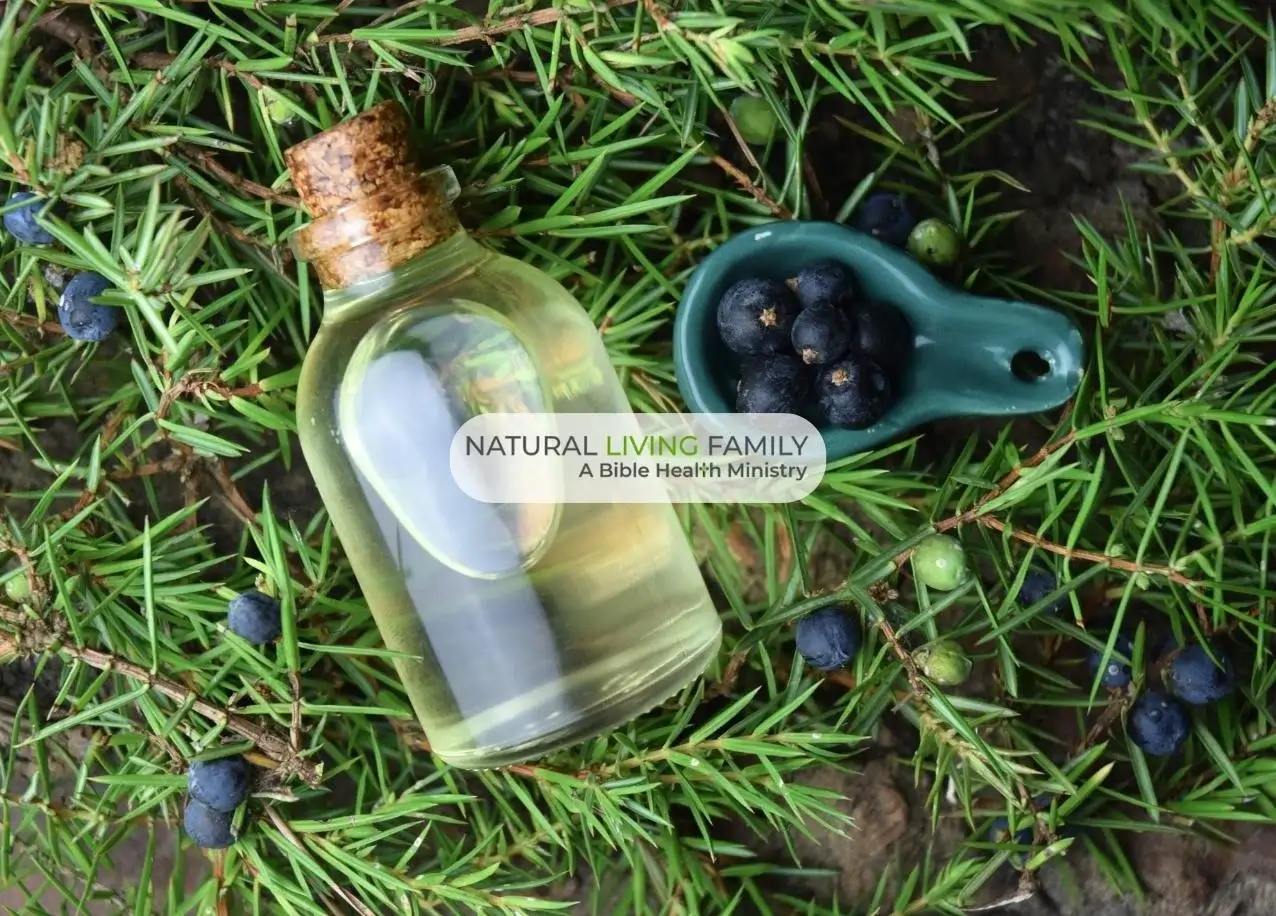
Juniper berry essential oil benefits are supported by a combination of traditional herbal use, laboratory research, animal studies, and one small human inhalation study. Steam-distilled Juniperus communis berry oil is rich in volatile monoterpenes such as alpha-pinene, myrcene, sabinene, limonene, and terpinen-4-ol, although the exact chemical profile varies with growing region, harvest, and distillation. (2, 3)
Research has documented antioxidant and antimicrobial activity in laboratory models, anti-inflammatory effects in cultured human skin cells, metabolic and neurological effects in animals, and short-term changes in blood pressure and autonomic nervous-system activity in a small human inhalation study. These findings are encouraging, but most juniper research is still preclinical. (2, 4, 7, 10)
For everyday use, juniper berry is especially practical in inhalation blends, properly diluted topical preparations, skin care, and natural home applications. Internal use is a separate route that requires appropriate product quality, dilution, dosing knowledge, duration, interaction awareness, and safety guidance.
Pregnancy, lactation, and significant kidney disease deserve additional caution. European herbal-medicine guidance does not recommend medicinal juniper oil during pregnancy or breastfeeding and contraindicates it in severe renal disease. (12)
Juniper berry essential oil is one of those oils that beautifully connects traditional herbal wisdom with modern research.
For centuries, people have turned to juniper for cleansing, digestive and urinary traditions, skin care, aching joints, and emotional renewal. Today, researchers are beginning to show why the plant became so valued, with studies exploring antioxidant activity, inflammatory signaling, microbes, metabolism, the nervous system, and skin-cell biology.
Most of this research is still laboratory or animal research, so we do not need to turn promising findings into human treatment claims.
What we can say is that juniper berry essential oil is a wonderfully versatile oil to keep in the natural home.
Used wisely, it can become part of your inhalation routine, diluted topical blends, skin care, seasonal cleaning, and peaceful moments of prayer and reflection.
As always, we look at God's creation with gratitude. The goal is not to make an essential oil responsible for healing everything. It is to learn what the plant actually offers and use it with wisdom.
Table of Contents

History & Traditional Herbal Uses
Juniper has been treasured across cultures for thousands of years.
Juniper berries and other plant parts have a long history in European herbal medicine, where the berries were traditionally used for digestion, urinary complaints, fluid balance, and inflammatory discomfort. Historical records also describe juniper preparations in ancient Mediterranean cultures. (1)
Traditional use was not limited to Europe.
Ethnobotanical records document Juniperus communis among plants used medicinally by Indigenous peoples throughout parts of North America. Preparations made from the boughs, roots, bark, and other portions of the plant were used in different communities for respiratory complaints, wounds, sprains, tonics, and ceremonial purposes. (13)
It is important to distinguish those whole-plant traditions from the concentrated essential oil we use today. A tea, decoction, resin, berry preparation, smoke, and distilled essential oil are not interchangeable preparations.
Still, the long relationship between people and juniper gives us helpful context for why scientists continue to investigate it.
During later European herbal traditions, juniper remained valued for digestive and urinary uses and became a familiar ingredient in kitchens, herbal preparations, and eventually spirits such as gin.
Today, juniper remains a beloved winter botanical in the modern home apothecary. Its crisp evergreen aroma works beautifully in bath and body preparations, inhalation blends, natural home products, and seasonal routines.
Its scent evokes forest walks, winter holidays like Christmas, and quiet moments of renewal.
For me, that makes juniper another reminder of God's steady provision through every season.
Where Juniper Essential Oil Comes From
Juniper berry essential oil is traditionally produced through steam distillation or closely related hydrodistillation methods.
The “berries” are technically fleshy seed cones. Once mature, they contain the volatile compounds responsible for juniper's characteristic crisp, resinous, evergreen aroma.
Steam passes through the botanical material and carries those volatile compounds with it. After the vapor cools and condenses, the essential oil separates from the water-based hydrosol and can be collected.
Researchers have found considerable chemical variation among juniper oils depending on:
- Growing region
- Plant genetics
- Whether berries, needles, branches, or other plant material were distilled
- Berry maturity
- Harvest conditions
- Extraction method
That is one reason the botanical name and plant part matter.
When we are talking about juniper berry essential oil in this article, we mean oil from Juniperus communis, ideally distilled from the mature berry-like cones.
A well-characterized Bulgarian berry oil, for example, contained alpha-pinene as its largest constituent at 51.4%, followed by myrcene, sabinene, limonene, and beta-pinene. Other authentic oils can have substantially different percentages. (2)
Specialty extraction techniques such as supercritical CO2 extraction can also produce juniper extracts, but those extracts are chemically different products from conventional steam-distilled essential oil.
Variations such as microwave-assisted hydrodistillation are also being studied and used commercially. We personally prefer traditionally steam-distilled oils for home essential-oil use.
This is also where GC/MS testing becomes helpful.
GC/MS stands for gas chromatography/mass spectrometry. It allows laboratories to separate and identify many of the volatile constituents within an essential oil. A reputable supplier should be able to tell you the botanical species, plant part, extraction method, and ideally provide batch-specific testing.
We go much more in depth about what this means and how you can use the information when shopping in our guide to Where to Buy Essential Oils.
9 Juniper Berry Essential Oil Benefits
Let’s take a closer look at what the research actually shows about juniper berry essential oil.
More than a seasonal fragrance or flavoring, juniper has a fascinating chemical profile. But the evidence is not equally strong for all nine benefits, so I will distinguish the human, animal, laboratory, and traditional findings as we go.
1. Antioxidant & Cellular Protection
Juniper berry essential oil is rich in volatile monoterpenes, including compounds such as alpha-pinene, myrcene, sabinene, limonene, and beta-pinene.
These are terpenes, not polyphenols.
That distinction matters because different plant compounds behave differently in the body.
A frequently cited 2014 study tested Juniperus communis berry essential oil through multiple antioxidant laboratory assays and in the yeast Saccharomyces cerevisiae. Researchers found radical-scavenging activity and observed effects on antioxidant enzymes including superoxide dismutase, catalase, and glutathione peroxidase in the yeast model. The oil also inhibited lipid peroxidation, although in parts of the experiment it was less effective than the comparison antioxidant BHT. (2)
Another animal study gave juniper oil orally to rats consuming a high-cholesterol diet and found effects on antioxidant enzymes and lipid-peroxidation markers in heart tissue. (8)
Those findings are interesting, but neither study proves that diffusing juniper essential oil acts as an antioxidant treatment inside the human body.
What they do establish is that juniper oil and its volatile constituents have measurable antioxidant activity worth continuing to investigate.
For more on why oxidative balance matters, see our guide to oxidative stress and free radicals.
2. Anti-Inflammatory Activity
One of the most interesting juniper studies used human dermal fibroblasts, the connective-tissue cells that help maintain the structure of skin.
Researchers exposed pre-inflamed cultured fibroblasts to juniper berry essential oil and found that it significantly reduced several inflammatory and immune-signaling markers, including IP-10, I-TAC, and M-CSF. It also altered broader gene-expression pathways associated with inflammation and immune response. (4)
That gives us useful mechanistic evidence.
But these were cells in a laboratory, not people applying juniper oil to arthritis, muscle pain, eczema, or another inflammatory condition.
So I would not call the study clinical proof that juniper treats joint pain or inflammatory skin disease.
It does, however, help us understand why juniper is interesting as a properly diluted ingredient in soothing topical blends and why its traditional uses continue to attract scientific attention.
Application: Try our skin-soothing Dermatitis Healing Salve, which uses juniper berry with other essential oils and natural ingredients. You can also explore our guide to anti-inflammatory essential oils for additional topical options.
3. Antimicrobial Support & Cleansing
Juniper berry essential oil has demonstrated antibacterial and antifungal activity in laboratory research.
Studies of J. communis oils have reported activity against various Gram-positive and Gram-negative bacteria and fungal organisms. The strength of that activity varies considerably depending on the oil's chemistry, microorganism, concentration, and testing method. (5)
A newer 2026 study tested pure juniper essential oil and juniper-oil nanoemulsions against foodborne and seafood-spoilage bacteria. Researchers observed concentration-dependent antibacterial activity, with susceptibility differing substantially among organisms. (6)
That is legitimate antimicrobial evidence, but it is still in-vitro research.
It does not mean you should treat a urinary tract infection, fungal infection, infected wound, or another medical infection at home with essential oil.
For everyday life, I especially like juniper in natural cleaning blends, hand soaps, and deodorizing home preparations.
One of Mama Z's favorite uses for juniper is a toilet deodorizing spray made in similar ratios as our homemade room fragrance spray, but with deodorizing essential oils such as cypress, juniper, and pine instead.
Application: Try adding juniper berry to one of these essential oil diffuser blends for a fresh evergreen scent.
4. Metabolic & Heart Health Research
Juniper's metabolic research is intriguing, but this is an area where the preparation and study model matter tremendously.
Some animal experiments have used juniper essential oil orally.
In a high-cholesterol rat model, orally administered J. communis oil affected total cholesterol and oxidized LDL, although not every lipid outcome improved significantly. Importantly, the high-dose group also developed increases in kidney-function markers and renal tubular changes. (8)
Another diabetic-rat experiment using oral juniper oil reported reductions in total cholesterol and triglycerides. (9)
Other blood-sugar studies did not use the essential oil at all.
A classic experiment used a decoction of juniper berries in normal and streptozotocin-diabetic rats and found blood-glucose effects. (14)
So the accurate takeaway is not “juniper essential oil lowers blood sugar and cholesterol in people.”
The takeaway is that multiple juniper preparations have produced metabolic effects in animal models, which gives researchers good reason to keep studying them.
We do not currently have the human clinical evidence needed to recommend juniper berry essential oil as a treatment for diabetes, insulin resistance, high cholesterol, or cardiovascular disease.
That distinction is especially important because the animal studies often used internal doses that should not be translated into DIY human dosing.
For proven lifestyle fundamentals, see our guides on essential oils and high blood sugar support and how to improve insulin resistance.
See 10 more essential oils for heart-health support.
5. Traditional Diuretic Use & Kidney Cautions
Juniper has a centuries-long reputation as a diuretic botanical, meaning it has traditionally been used to increase urine output.
Animal research helps explain some of that history, but the story is more nuanced than saying juniper oil simply “improves kidney function.”
In one rat experiment, researchers compared a 10% aqueous juniper-berry infusion, a 0.1% solution of juniper oil, and terpinen-4-ol.
All stimulated some diuretic activity, but the berry infusion produced the most pronounced effect. That suggests juniper's traditional diuretic action is not attributable to essential oil alone. Water-soluble berry constituents appear to contribute as well. (1)
This section also needs a safety warning.
The European Medicines Agency's traditional herbal monograph contraindicates medicinal juniper-oil use in severe renal disease, including conditions such as nephritis, pyelitis, and pyelonephritis. (12)
And in a rat study using high oral doses of juniper oil, the 200 mg/kg group developed increased blood urea nitrogen and creatinine and evidence of focal renal tubular changes. (15)
So “more” is definitely not better.
I would not use juniper essential oil internally as a DIY kidney cleanse or attempt to reproduce an animal dose.
Application: If juniper is already part of your natural-living routine, enjoy it appropriately diluted in a detox bath or as part of a broader routine using detoxifying essential oils. You can also learn about our castor oil pack routine. Topical or inhalation use should not be confused with proof of a kidney-detoxifying effect.
6. Blood Pressure & Autonomic Balance
This is one of the few juniper essential oil benefits with direct human research.
A 2017 study included 18 participants and measured blood pressure and heart-rate variability before and during short-term inhalation of juniper essential oil.
Participants inhaled juniper oil for five minutes.
Researchers reported that average systolic blood pressure fell from 118 to 107 mmHg and average diastolic pressure fell from 75 to 68 mmHg after exposure. Heart-rate variability also shifted in a direction interpreted as increased parasympathetic activity and reduced sympathetic activity. (7)
In everyday language, the physiological pattern moved toward the body's “rest and digest” side of the autonomic nervous system.
That is fascinating.
It is also a small, short-duration study. It does not establish juniper as a treatment for hypertension or show what happens with repeated use over weeks or months.
I think the most reasonable application is exactly where essential oils shine: helping create a calming environment alongside prayer, slow breathing, Scripture meditation, quiet time, sleep routines, and the medical care you already need.
See our guide to essential oils for healthy blood-pressure support if this is an ongoing concern for you.
Application: Add 1 drop of juniper berry to our Meditation & Mindfulness blend to encourage a peaceful environment during prayer, deep breathing, or journaling.
7. Emotional Health & Stress Support
Emotionally, juniper berry essential oil is often described as grounding, clearing, forest-like, and quietly uplifting.
That traditional experience fits nicely with the human autonomic study we just discussed.
After five minutes of juniper inhalation, participants showed increased parasympathetic activity and reduced sympathetic activity based on heart-rate variability. (7)
That does not mean the oil was clinically proven to treat anxiety.
An older study sometimes cited for juniper's anti-anxiety activity actually tested Juniperus virginiana, Eastern red cedar, rather than Juniperus communis juniper berry oil. Because those are different species with different chemical profiles, I would not use that experiment as direct evidence for this oil.
Instead, the strongest case here is simpler.
The aroma itself can become part of a calming routine, and we have a small human physiological study suggesting an acute autonomic effect.
For a holistic approach, pair juniper with Scripture meditation, prayer, slow breathing, an evening routine, adequate sleep, movement, and the relationships God has placed in your life.
You can learn more about how we use essential oils alongside these foundational practices in our guide to essential oils for anxiety and emotional support.
Application: Try our Great Outdoors Calm & Peace Diffuser Blend below, using juniper berry with spruce, bergamot, and thyme to bring the refreshing atmosphere of the forest indoors.
8. Brain Health & Cognitive Research
Juniper berry essential oil also has intriguing preclinical research involving the brain.
In a 2015 rat study, researchers injected amyloid beta into the brain to create an experimental model of Alzheimer's-related oxidative stress.
The rats were then exposed by inhalation to 1% or 3% juniper volatile oil for 60 minutes daily over 21 days.
Juniper inhalation reduced acetylcholinesterase activity in the hippocampus and favorably affected several measures of oxidative stress. Related research from the same group also reported improvements in memory performance in this animal model. (10)
Acetylcholinesterase is the enzyme that breaks down acetylcholine, an important neurotransmitter involved in memory and signaling.
That makes the finding scientifically interesting.
It does not mean diffusing juniper has been shown to prevent, reverse, or treat Alzheimer's disease in people.
We have animal evidence that gives researchers a possible mechanism to investigate further. Human cognitive trials are still needed.
For everyday use, I think of juniper as an oil for creating an environment that supports clarity, calm, and mental focus, not as a neurological treatment.
9. Skin Health & Tissue-Remodeling Research
Juniper berry's skin research is another good example of why reading the actual study matters.
In the human dermal fibroblast experiment discussed earlier, juniper berry essential oil influenced inflammatory and tissue-remodeling pathways. Researchers observed reductions in inflammatory chemokines as well as collagen I, collagen III, and PAI-1 under their experimental conditions. (4)
That means it would be inaccurate to summarize the study by simply saying juniper “boosts collagen” or clinically heals wounds.
What the study actually showed is that juniper oil can significantly alter signaling associated with inflammation, fibrosis, and tissue remodeling in cultured human skin cells.
That is valuable mechanistic research, especially for an ingredient already used traditionally in skin care.
It simply needs a human clinical trial before we can say what those changes mean for wrinkles, scars, dermatitis, wound healing, or another real-world skin outcome.
Practically, I still enjoy juniper berry in properly diluted DIY cleansers, body oils, and skin blends, particularly alongside oils we already love such as lavender, frankincense, geranium, and helichrysum.
Application: Use juniper berry as one option in Mama Z's DIY Foaming Facial Cleanser alongside other skin-loving essential oils such as helichrysum, geranium, and lavender.
The Great Outdoors Calm & Peace Blend
Bring the peaceful stillness of the forest right into your home.
This grounding, woodsy diffuser blend creates a soothing atmosphere perfect for prayer, deep breathing, journaling, or unwinding after a long day.
The Great Outdoors Calm & Peace Diffuser Blend
Quantity
Ingredients
- 2 drops bergamot essential oil
- 2 drops spruce essential oil
- 1 drop juniper berry essential oil
- 1 drop thyme essential oil
Supplies
Instructions
- Add the essential oils to your diffuser.
- Fill the reservoir with clean water according to your diffuser’s guidelines.
- Diffuse for 20–30 minutes to enjoy the calming, crisp aroma of the great outdoors, right in the comfort of your home.
Why We Love It
This refreshing, forest-inspired blend pairs the bright citrus lift of bergamot with the grounding strength of spruce, the crisp clarity of juniper berry, and the herbal tranquility of thyme essential oil.
Together, they create a peaceful, revitalizing atmosphere that I love for slowing things down at the end of the day.
The small human juniper study showing a short-term shift toward parasympathetic autonomic activity gives us an intriguing physiological reason its scent may fit so naturally into a quiet-time routine. (7)
But you do not need to turn your prayer time into a biology experiment.
Sometimes an essential oil simply helps signal that it is time to turn off the noise, slow the breathing, open your Bible, and focus your heart on God.
Let this forest-inspired blend remind you of His steady presence in every season.
Safety & Precautions for Juniper Oil
Juniper berry essential oil is highly concentrated, so route, dilution, dose, duration, and the person using it all matter.
For topical use, juniper berry essential oil should be diluted with carrier oil.
Carrier oils do more than simply “water down” an essential oil. They help dilute and disperse concentrated essential oils, reduce evaporation, improve topical safety, help the oil spread and penetrate the skin, and can amplify the therapeutic value of the finished blend through their own skin-supporting properties.
For general adult topical use, we usually keep juniper around 1.5-2% in a high-quality carrier such as fractionated coconut oil, jojoba, sweet almond, grapeseed, or Mama Z’s favorite DIY oil base.
Patch testing can be helpful if you have reactive skin. Dilute the oil first, apply a small amount to a limited area, and watch for redness, itching, burning, swelling, or another reaction before using it over a larger area.
Pregnancy, Breastfeeding & Kidney Disease
The European Medicines Agency's herbal monograph for Juniperus communis essential oil does not recommend medicinal use during pregnancy or lactation because adequate safety data are lacking and historical concerns remain. The monograph also contraindicates medicinal use in severe renal disease. (12)
That deserves more weight than the old blanket statement that juniper is dangerous simply because it “makes the kidneys work harder.”
The safety record is more complicated than that. EMA's assessment specifically notes historical confusion between authentic juniper oil and contaminated or adulterated oils, including possible confusion with turpentine oil.
Still, we have enough uncertainty that pregnancy, breastfeeding, and significant kidney disease are situations where I would not experiment with medicinal juniper use on your own.
Internal Use of Juniper Berry Essential Oil
Internal use is a legitimate route for appropriately selected essential oils, but it is very different from adding a few random drops to water because an animal study looked promising.
The metabolic, antioxidant, and renal studies discussed above often used preparations, concentrations, and oral doses that cannot responsibly be converted into a DIY human protocol.
This article therefore does not provide a medicinal internal-use dose for juniper berry essential oil.
If medicinal internal use is appropriate, the protocol should identify the actual oil, dilution or carrier, amount, frequency, timing, duration, stopping rule, medication interactions, and individual contraindications.
People using diuretic medicines, glucose-lowering medications, or managing kidney disease especially need individualized guidance because juniper preparations have shown diuretic and glucose-related effects in experimental research. (12, 14)
Can I ingest essential oils?
Do not casually ingest essential oils in water or neat (undiluted). Internal use of essential oils requires proper dilution, product quality, dosing knowledge, and safety guidance. Learn more about how to ingest essential oils here.
Choose the Right Juniper Oil
Quality matters particularly with juniper.
Look for:
- Juniperus communis on the label
- The plant part identified, preferably mature berries or berry-like cones for juniper berry oil
- Steam distillation when purchasing conventional juniper berry essential oil
- Batch-specific GC/MS or other appropriate analytical testing
- A supplier willing to disclose sourcing and testing information
Do not assume that a study using another Juniperus species proves the same effect for J. communis.
That is particularly important because oils from Juniperus virginiana, J. oxycedrus, J. chinensis, and other junipers can have very different chemical profiles.
Used with that kind of discernment, juniper berry essential oil can be a beautiful addition to your natural home: fresh in the diffuser, useful in properly diluted topical blends, wonderful for skin and home-care recipes, and a reminder to slow down and enjoy the things God has made.


References
- Raina R, Verma PK, Peshin R, Kour H. “Potential of Juniperus communis L as a nutraceutical in human and veterinary medicine.” Heliyon. 2019;5(8):e02376. PubMed Central.
- Höferl M, Stoilova I, Schmidt E, et al. “Chemical Composition and Antioxidant Properties of Juniper Berry (Juniperus communis L.) Essential Oil. Action of the Essential Oil on the Antioxidant Protection of Saccharomyces cerevisiae Model Organism.” Antioxidants. 2014;3(1):81-98. doi:10.3390/antiox3010081.
- Falcão S, Bacém I, Igrejas G, Rodrigues PJ, Vilas-Boas M, Amaral JS. “Chemical composition and antimicrobial activity of hydrodistilled oil from juniper berries.” Industrial Crops and Products. 2018;124:878-884. doi:10.1016/j.indcrop.2018.08.069.
- Han L, Parker TL. “Anti-inflammatory activity of Juniper (Juniperus communis) berry essential oil in human dermal fibroblasts.” Cogent Medicine. 2017;4:1306200. doi:10.1080/2331205X.2017.1306200.
- Falcão S, Bacém I, Igrejas G, et al. “Chemical composition and antimicrobial activity of hydrodistilled oil from juniper berries.” Industrial Crops and Products. 2018;124:878-884. ScienceDirect/DOI.
- Çolak B, Durmuş M, Küley E, et al. “Application of juniper (Juniperus communis) essential oil nanoemulsions to control spoilage and pathogenic bacteria in fish.” Frontiers in Microbiology. 2026;17:1758540. doi:10.3389/fmicb.2026.1758540.
- Park JS. “Effects of Juniper Essential Oil on the Activity of Autonomic Nervous System.” Biomedical Science Letters. 2017;23(3):286-289. doi:10.15616/BSL.2017.23.3.286.
- Gumral N, Doguc Kumbul D, Aylak F, Saygin M, Savik E. “Juniperus communis Linn oil decreases oxidative stress and increases antioxidant enzymes in the heart of rats administered a diet rich in cholesterol.” Toxicology and Industrial Health. 2015;31(1):85-91. doi:10.1177/0748233712469995.
- Mahmood EA, Kahraman T. “The effects of Juniperus communis (Cupressaceae) oil application on the serum paraoxonase and pancreatic enzymes activities and lipid levels in experimental diabetic rats.” Turkish Journal of Veterinary Research. 2019. Turkish Journal of Veterinary Research.
- Cioanca O, Hancianu M, Mihasan M, Hritcu L. “Anti-acetylcholinesterase and Antioxidant Activities of Inhaled Juniper Oil on Amyloid Beta (1-42)-Induced Oxidative Stress in the Rat Hippocampus.” Neurochemical Research. 2015;40(5):952-960. doi:10.1007/s11064-015-1550-0.
- Gonçalves AC, Flores-Félix JD, Coutinho P, et al. “Zimbro (Juniperus communis L.) as a Promising Source of Bioactive Compounds and Biomedical Activities: A Review on Recent Trends.” International Journal of Molecular Sciences. 2022;23(6):3197. doi:10.3390/ijms23063197.
- European Medicines Agency, Committee on Herbal Medicinal Products. “Community herbal monograph on Juniperus communis L., aetheroleum” and supporting assessment report. European Medicines Agency.
- Uprety Y, Asselin H, Dhakal A, Julien N. “Traditional use of medicinal plants in the boreal forest of Canada: review and perspectives.” Journal of Ethnobiology and Ethnomedicine. 2012;8:7. doi:10.1186/1746-4269-8-7.
- Sánchez de Medina F, Gámez MJ, Jiménez I, Jiménez J, Osuna JI, Zarzuelo A. “Hypoglycemic activity of juniper ‘berries'.” Planta Medica. 1994;60(3):197-200. doi:10.1055/s-2006-959457.
- Akdogan M, Koyu A, Ciris M, Yildiz K. “Anti-hypercholesterolemic activity of Juniperus communis Linn oil in rats: a biochemical and histopathological investigation.” Biomedical Research. 2012. Full study.