QUICK SUMMARY
Essential oils for sex drive are not a modern trend. Aromatic plant oils have been connected with love, beauty, attraction, and marital intimacy for thousands of years, even in the Song of Solomon.
Low libido and erectile dysfunction are common, and they can be connected with stress, fatigue, hormonal shifts, alcohol use, chronic illness, medications, pain, sleep problems, and relationship strain. Essential oils are not a magic potion or a substitute for addressing those root issues, but they can support relaxation, emotional connection, sensual atmosphere, and some of the stress- and menopause-related factors that affect intimacy. (1, 2, 3)
Our six go-to essential oils for sex and intimacy are rose, jasmine, clary sage, ylang ylang, neroli, and fennel. The human evidence is not equally strong for every oil. Neroli has direct randomized-trial evidence for increased sexual desire in postmenopausal women. Jasmine has newer but still preliminary sexual-function research. Rose, clary sage, and ylang ylang are better supported for relaxation, mood, autonomic balance, and stress-related pathways, while much of the human sexual-health research on fennel has tested fennel seed, extract, or vaginal cream rather than fennel essential oil itself. (5, 7, 8, 9, 10, 12, 14, 16)
The idea of using an essential oil for sex drive boosting may seem strange to us, but aromatic oils for stimulating the libido have been something our ancestors enjoyed for thousands of years. Let’s see what the Bible says about the two famed lovers from the Song of Solomon…
- “Your oils have a pleasing fragrance, Your name is like purified oil; Therefore the maidens love you.” (Song of Solomon 1:3)
- “How fair is thy love, my sister, my bride! How much better is thy love than wine! And the fragrance of thine oils than all manner of spices!” (Song of Solomon 4:10)
Enjoying a strong and vibrant sex drive is normal. Intimacy in marriage is a gift from God, and it is meant to be enjoyed with tenderness, honor, and joy. Sadly, low libido and erectile dysfunction affect more people than many couples realize. If you can relate, it is important to understand that sexual desire is the product of many factors, and natural therapies like essential oils for sex can support libido, connection, and relaxation in a unique way.
Years ago, we were surprised to learn that our original “Essential Oils for Sex” article had become the most-visited post on our site, with most readers finding it through search. People rarely asked us about sex directly, but clearly many couples were quietly looking for help. That experience has stayed with us: intimacy may be private, but struggles with desire and sexual function are not unusual.
This is important: oils do not replace communication, rest, nutrition, prayer, medical care when needed, or emotional healing. But they can be a beautiful part of a Biblical health lifestyle that supports the whole person: body, mind, heart, and spirit.
Table of Contents

You’re Not Alone
Before we dive into the best essential oils for sex, the first thing to understand is that you are not alone. A 2024 analysis of a nationally representative U.S. sample of 1,822 men found erectile dysfunction in 24.2% based on a validated questionnaire, with prevalence rising sharply in older age groups. (1) ACOG also reports that about 4 in 10 women experience a sexual problem at some point in life, including concerns with desire, arousal, orgasm, pain, or medication-related sexual effects. (2)
Suffering from low libido periodically or chronically is nothing to be ashamed of. Bringing your concerns into the open with your spouse can start the path toward health, intimacy, and resolution. Our hope and prayer is that you and your spouse can support each other with no judgment or criticism and seek the Lord for a viable, loving solution.
Reality check: intimacy struggles are rarely “just physical” or “just emotional.” God created us as whole people. Stress affects desire. Sleep affects arousal. Blood sugar and circulation affect sexual response. Pain affects anticipation. Emotional wounds affect closeness. A loving, whole-person approach is usually the most fruitful path.
Persistent erectile dysfunction also deserves attention beyond the bedroom. Current cardiovascular consensus guidance treats ED as an important marker of possible cardiovascular risk, particularly when it is new or unexplained. Frequent or severe pain during sex should also be evaluated rather than simply covered up with fragrance or lubrication. (4, 18)
Low Libido & Erectile Dysfunction Causes
Causes of low libido and erectile dysfunction vary from person to person and range from lifestyle influences to serious disorders. Some of the most prevalent factors include:
- Stress – One of the most basic yet most difficult causes of low libido to fix, simply being stressed out and overtired can put a damper on the mood. Stress over relationship issues, such as raising the kids, money, and house concerns, can lead to a lack of intimacy and hinder libido as well. In a 2025 daily-life study of 59 healthy adults, higher subjective stress was associated with a lower likelihood of sexual desire and arousal at the same time point. (3) Stress can often be reduced with practical lifestyle changes, prayer, rest, movement, non-toxic living habits, and nervous system support.
- Drinking Alcohol – An often overlooked cause of sexual dysfunction, alcohol can be a stressor of its own. While contemporary advice says to utilize alcohol to just relax, it could have the opposite effect and ruin efforts toward libido increase. Alcohol can interfere with arousal, sleep, mood, and sexual response. (2)
- Hormones – Here’s where it gets complicated. The body’s network of hormone responses, the endocrine system, creates long-term messages for the body to respond to. So they aren’t quick to fix. Hormonal changes during pregnancy, postpartum, perimenopause, and menopause can affect libido, lubrication, comfort, mood, and sleep. Thyroid problems and other medical conditions can also contribute. (2) When hormones are at the root of libido issues, expect change to come progressively over time. For related support, see our resources on menstrual discomfort and menopause.
- Illness – Physical stressors on the body, such as obesity, cardiovascular concerns, diabetes, pain, depression, and other illnesses, can hinder sexual desire and response as well. ED can also be an early sign of vascular or metabolic issues, which is one reason men should not ignore persistent symptoms. (4) When an illness or condition is at the root of low libido, working with a doctor is important.
- Medications – Some prescriptions can affect sexual desire, arousal, lubrication, orgasm, or erectile function. ACOG notes that some mental-health, heart, hormone, anticholinergic, and pain medications can contribute to sexual problems. Never stop a medication on your own, but do have an honest conversation with your healthcare provider if symptoms began after starting or changing a medication. (2)
- Relationship strain – Unresolved conflict, criticism, resentment, trauma, secrecy, pornography use, and lack of emotional safety can all dampen desire. Essential oils can help set the atmosphere, but love, repentance, forgiveness, wise counsel, and consistent kindness are often the deeper work.
Check the resource list at the bottom of this article for more about naturally boosting low libido and relieving its various causes. That article is where we go deeper into the larger lifestyle picture. Here, we are staying focused on the essential oils themselves.
6 Essential Oils for Sex Drive
As gentle and relaxing aromas, these oils can be used in diffusions, sprays, topical applications, perfumes, and massage oils. Get creative to see how you can boost libido naturally by incorporating these essential oils for sex into both your daily life and romantic life.
Put simply, these oils work best when they support the real needs behind intimacy: calm, connection, confidence, circulation, stress response, hormone-related comfort, and emotional safety. Only some have been studied for sexual desire directly, so we will make that distinction as we go.
1. Rose
As an anxiety-relieving, calming oil, it comes as no surprise that rose essential oil is also traditionally used as an aphrodisiac. As a pricey oil, though, rose is most efficiently used in blends or heavy dilutions.
The human research on rose is stronger for relaxation than for libido itself. In a study of 40 healthy volunteers, topically applied rose oil produced signs of reduced autonomic arousal, including lower breathing rate and systolic blood pressure, and participants rated themselves as calmer and more relaxed. (5) A randomized clinical trial in 60 burn patients also found that inhaled rose essential oil reduced anxiety and improved sleep quality over three nights. (6)
Why does that matter for intimacy? Because anxiety, poor sleep, and nervous system tension can get in the way of desire. Rose is a beautiful example of an oil that may support the conditions in which intimacy can flourish without pretending that it has been clinically proven to increase libido on its own.
Application: Blend into a perfume to carry this romantic floral scent with you, or diffuse periodically throughout the day for both partners to enjoy. Rose is precious and potent, so one drop goes a long way.
2. Jasmine
A precious and pricey oil derived from delicate flower petals, jasmine has proven itself well in studies. In a clinical study of 40 healthy volunteers, topical jasmine oil increased several measures of autonomic arousal and left participants feeling more alert and vigorous and less relaxed than placebo. (7) This was behavioral and autonomic arousal, not a study of sexual arousal, so we should not blur the two.
Still, jasmine’s rich floral aroma is one reason it is such a beloved essential oil for sex drive and sensual massage. For some people, it helps shift the atmosphere from exhausted and distracted to present and connected.
Newer research is also exploring jasmine inhalation for female sexual function. In a 2025 randomized clinical trial that enrolled 168 women with sexual dysfunction, jasmine aromatherapy improved Female Sexual Function Index scores compared with the no-intervention control. The sweet-almond placebo group also improved in several domains, so the findings are encouraging but not definitive proof that jasmine alone caused the benefit. (8)
One research detail is worth catching: that 2025 paper calls Salvia officinalis “clary sage,” but Salvia officinalis is common sage, not clary sage (Salvia sclarea). We should not use that trial as evidence for clary sage essential oil.
Application: Apply jasmine topically in a perfume or sensual massage oil for men and women. Note that the delicate petals sometimes require the use of a solvent to extract the oil. Check labels carefully, especially for an organic certification.
3. Clary Sage
A 2014 study helps explain why clary sage essential oil remains one of our favorite oils for women navigating stress and hormone transitions. In 22 menopausal women, inhaling clary sage significantly lowered cortisol and increased serotonin concentrations. The study was designed around antidepressant-like and neuroendocrine effects, not libido, and it did not prove that clary sage directly raises estrogen or “balances hormones” in every woman. (9)
That distinction does not take clary sage out of the intimacy conversation. Desire is not only about reproductive hormones. Cortisol, serotonin, sleep, mood, stress, and nervous system tone all matter. That is why clary sage is such a wise oil to consider when libido problems are connected to emotional heaviness, menopause, or stress overload.
Application: Diffuse or inhale periodically to relax, support emotional balance, and get in the mood. During pregnancy, use clary sage only within an established pregnancy or labor protocol appropriate to your stage of pregnancy and individual situation.
4. Ylang Ylang
Ylang ylang is widely used as an aphrodisiac throughout the aromatherapy world and is one of the best essential oils for sex. Its floral scent is rich and distinctive, and its application potential is diverse. Enjoy with other floral oils, or deepen the fragrance with sandalwood.
Human research supports a nervous-system effect, although it does not prove a direct libido boost. In a randomized study of 24 healthy volunteers, inhaling ylang ylang lowered blood pressure and pulse rate while increasing subjective attentiveness and alertness. The researchers described the pattern as “harmonizing” rather than simply sedating. (10) Another study in 29 healthy men found lower systolic and diastolic blood pressure and heart rate after ylang ylang inhalation. (11)
For couples who feel too tense, rushed, or mentally “on” to connect, that is exactly why ylang ylang can be so useful. Its traditional aphrodisiac reputation fits beautifully with its ability to help shift the atmosphere without requiring us to claim that it treats erectile dysfunction or directly raises sex hormones.
Application: Diffusion, inhalation, or diluted into a carrier oil as a massage oil for both men and women. Ylang ylang has a strong aroma and can be skin-sensitizing, so use a small amount and dilute well.
5. Neroli
Essential oil derived from orange blossoms instead of the fruit’s peel is called neroli, a precious and very useful oil. Of the six oils in this article, neroli has some of the most direct human evidence for sexual desire.
In a randomized controlled trial of 63 healthy postmenopausal women, participants inhaled either 0.1% neroli, 0.5% neroli, or almond oil for five minutes twice daily for five days. Both neroli groups improved sexual-desire scores compared with the control group, and the study also reported improvements in several menopause-related and blood-pressure measures. Serum cortisol and estrogen showed favorable trends, but those hormone changes were not the same as proving that neroli functions as hormone replacement. (12)
A 2021 systematic review found limited but promising evidence that low-dose neroli, lavender, and mixed-oil inhalation can improve sexual desire in menopausal women. (13) A newer 2026 systematic review included 12 randomized trials involving 1,170 women and concluded that neroli and related Citrus aurantium flower preparations show promise across several women’s-health outcomes, including sexual satisfaction, while also noting substantial differences among study protocols. (14)
That is a direct and important body of evidence. Neroli is one of the few essential oils in this article with human clinical research specifically measuring sexual desire.
Application: Diffusion or inhalation a couple of times each day for calming, balancing effects. Neroli is also lovely in a diluted roll-on applied to pulse points.
6. Fennel
As a whole herb, fennel has a long traditional history for women’s health. A classic ethnobotanical review documented longstanding reputations for fennel and anise in areas such as menstruation, menopause, lactation, birth, and libido. That historical paper also discussed estrogenic activity associated with anethole-related compounds, but it was not a modern clinical trial proving that fennel essential oil raises estrogen or increases sexual desire in women. (15)
That distinction is especially important with fennel essential oil, because the strongest human evidence for women’s sexual health has tested other fennel preparations. A 2021 systematic review of seven randomized trials found evidence that fennel preparations may improve menopausal symptoms, while evidence for sexual function and quality of life remained unclear. (16) In one trial, 2 grams of fennel seed powder daily for eight weeks improved menopausal symptoms but did not significantly improve sexual desire or estradiol levels compared with control. (17) Another randomized trial found improved sexual-function scores with a fennel vaginal cream, but that preparation should not be treated as proof for inhaled or topically diluted fennel essential oil. (19)
So what does this mean for you? Fennel remains one of our traditional women’s-health oils and can have a place in massage and hormone-support blends, but it should not be marketed as an instant aphrodisiac or as proven estrogen replacement.
Application: Include fennel essential oil in DIY lotion blends or massage oils for balancing effects. Fennel has route-, dose-, and product-specific safety considerations. If you are pregnant, have a hormone-sensitive condition or seizure disorder, or take medications, use individualized guidance rather than assuming every fennel preparation is interchangeable.
Learn what the research REALLY says about using essential oils for libido & PMS in the 7-Video Women’s Health Series
You can learn more here and get access to all 7 videos HERE.
How to Use Essential Oils for Intimacy
Essential oils for sex drive can be used several ways, but the goal is not to overwhelm the room or your spouse with fragrance. The goal is to create an atmosphere of peace, warmth, attraction, and emotional safety.
The best methods are diffusion, inhalation, perfume, diluted roll-ons, and massage oils.
- Diffusion: Add the oils to an ultrasonic diffuser 15 to 30 minutes before bedtime or intentional time together.
- Personal inhaler: Add a few drops to an aromatherapy inhaler for discreet use during the day when stress is part of the problem.
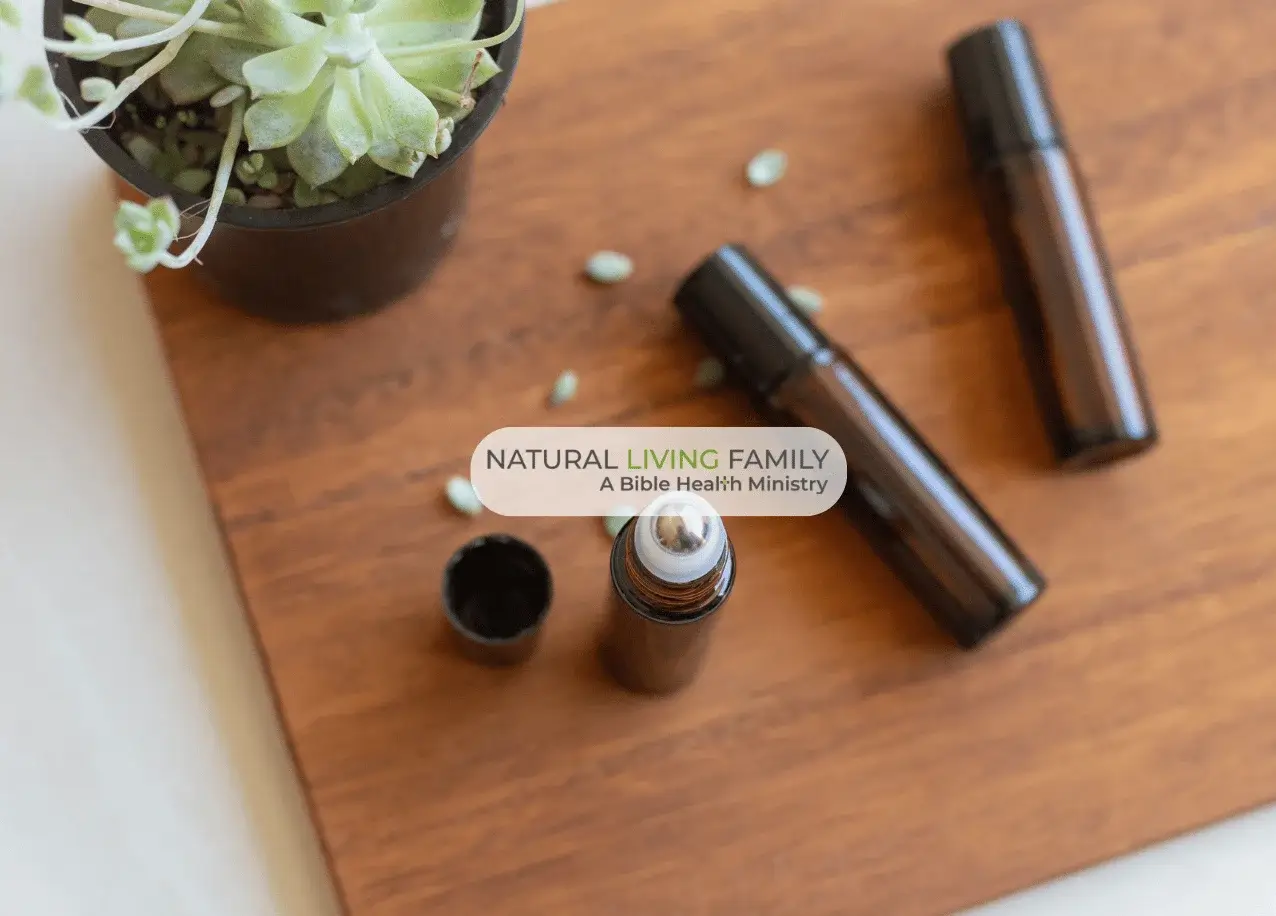
- Roll-on: Dilute oils in a 10ml roll-on bottle and apply to pulse points, neck, wrists, or behind the ears.
- Massage oil: Dilute in a carrier oil and use for a gentle back, shoulder, foot, or hand massage.
- Natural perfume: Combine floral oils with a carrier oil for a romantic non-toxic fragrance.
Carrier oils do more than simply “water down” an essential oil. They dilute and disperse concentrated oils across the skin, slow evaporation, improve topical safety, help the aromatic constituents remain in contact with the body longer, and support penetration. In the right formula, that can amplify the therapeutic effect while making topical use gentler.
Do not apply essential oils neat, or undiluted, to genital tissue. If you use an essential-oil formula on external intimate tissue, use only a properly diluted formula specifically designed for that area and stop if it causes burning, itching, swelling, or irritation. Oil-based massage products and carrier oils can also damage natural-rubber latex condoms, so use a compatible water-based lubricant when a latex barrier is being used. (20)
Message of Hope for Enhancing Intimacy
Men and women of all ages have faced low libido and have found hope and renewal. There is no shame in admitting the struggle and seeking a solution! As a bonus, openness and partnership in finding a remedy or resolution as a couple will help to increase intimacy, as well.
To relieve the stresses of everyday life, boost libido, and begin to ignite a spark with your significant other, try this DIY libido-boosting blend diffused or diluted into a carrier oil (almond or coconut are excellent!) for a soothing massage. Simply blend:
- 2 drops neroli (or sweet orange)
- 2 drops jasmine
- 2 drops ylang ylang
Directly into an ultrasonic diffuser (you could alternatively add this blend to an inhaler).
To use this blend topically, add one drop of each of these oils to a 10ml roll-on bottle and fill the remaining space with your carrier oil of choice. A light carrier oil, like fractionated coconut oil, is a great choice for this kind of application. Apply your finished roll onto your pulse points!
When it comes to essential oils for sex, ylang ylang, clary sage, rose, and jasmine are go-to oils that can be safely used as long as their dermal cautions are observed and make great options for massage oils.
- For either ylang ylang or jasmine, use 2 drops per tablespoon of carrier oil.
- For clary sage, use 6 drops per tablespoon of carrier oil.
- For rose, use 1 drop per tablespoon of carrier oil.
Application: Make intimacy intentional before it becomes urgent. Choose one night this week to turn off the screens, diffuse a romantic blend, pray together, forgive quickly, and enjoy unhurried connection. Essential oils can help set the stage, but love, gentleness, and presence are what make the moment beautiful.
Essential Oils for Sex Drive FAQs
What essential oil is best for sex drive?
Neroli has the most direct human evidence among the six oils featured here. A randomized trial in postmenopausal women measured increased sexual desire after neroli inhalation, and later systematic reviews have found limited but promising support for neroli and aromatherapy in menopausal sexual health. Jasmine also has newer human sexual-function research. Rose, clary sage, and ylang ylang are better supported for the stress, mood, relaxation, and autonomic pathways that can influence intimacy, while fennel’s human sexual-health evidence largely involves non-essential-oil preparations. (8, 12, 13, 14, 16)
Do essential oils really increase libido?
Some essential-oil interventions have improved sexual-desire or sexual-function measures in human trials, especially neroli and mixed aromatherapy interventions in women. But the evidence is oil-specific and population-specific. For several popular aphrodisiac oils, the stronger evidence is for relaxation, stress reduction, mood, sleep, or physiological arousal rather than a direct libido effect. Essential oils should be viewed as supportive tools, not a guaranteed treatment for every cause of low desire.
Which essential oils are aphrodisiacs?
Traditional aphrodisiac essential oils include rose, jasmine, ylang ylang, neroli, sandalwood, patchouli, and clary sage. In practical use, these oils often work by supporting relaxation, emotional connection, alertness, sensual atmosphere, and the nervous-system state that makes closeness easier. Traditional aphrodisiac use is not the same thing as clinical proof that every oil directly increases sex hormones or sexual desire.
How do I use essential oils for intimacy?
Use essential oils for intimacy by diffusing them before bedtime, adding them to a personal inhaler, making a diluted roll-on perfume, or blending them into a massage oil. Always dilute essential oils before applying them to skin, and never apply them neat to genital tissue. Carrier oils help disperse the essential oils, reduce evaporation, improve topical safety, and support penetration.
What essential oils help women’s libido?
Neroli has direct randomized human evidence for sexual desire in postmenopausal women. Jasmine also has preliminary clinical research involving women with sexual dysfunction. Clary sage, rose, and ylang ylang are useful when stress, mood, sleep, tension, or menopause-related changes are part of the picture. Fennel remains a traditional women’s-health oil, but human sexual-function research on fennel has mainly tested seed, extract, or vaginal-cream preparations rather than fennel essential oil alone. (5, 8, 9, 10, 12, 16, 19)
What essential oils help men’s libido?
Ylang ylang, jasmine, rose, sandalwood, clary sage, and neroli can support relaxation, emotional presence, confidence, and sensual atmosphere for men, but direct human evidence that these oils treat male erectile dysfunction is limited. Persistent ED deserves a broader look at cardiovascular health, blood sugar, medications, stress, sleep, hormones, and relationship factors rather than relying on essential oils alone. (1, 4)
Can I put essential oils directly on intimate areas?
Do not apply essential oils neat or undiluted to intimate tissue. These oils are highly concentrated and can irritate sensitive skin and mucous membranes. For external intimate use, choose a properly diluted formula specifically designed for that tissue. For everyday romance, diffusion, a personal inhaler, a diluted perfume, pulse-point roll-on, or massage oil on non-sensitive skin is usually the simpler choice.
What is the best romantic diffuser blend?
A simple romantic diffuser blend is 2 drops neroli or sweet orange, 2 drops jasmine, and 2 drops ylang ylang. Diffuse for 15 to 30 minutes before intentional time together.

References
- Mark KP, Arenella K, Girard A, Herbenick D, Fu J, Coleman E. “Erectile Dysfunction Prevalence in the United States: Report From the 2021 National Survey of Sexual Wellbeing.” Journal of Sexual Medicine. 2024;21(4):296-303. doi:10.1093/jsxmed/qdae008.
- American College of Obstetricians and Gynecologists. “Your Sexual Health.” Accessed August 27, 2026. ACOG.
- Mües HM, Markert C, Feneberg AC, Nater UM. “Bidirectional Associations Between Daily Subjective Stress and Sexual Desire, Arousal, and Activity in Healthy Men and Women.” Annals of Behavioral Medicine. 2025;59(1):kaaf007. doi:10.1093/abm/kaaf007.
- Köhler TS, Kloner RA, Rosen RC, et al. “The Princeton IV Consensus Recommendations for the Management of Erectile Dysfunction and Cardiovascular Disease.” Mayo Clinic Proceedings. 2024;99(9):1500-1517. doi:10.1016/j.mayocp.2024.06.002.
- Hongratanaworakit T. “Relaxing Effect of Rose Oil on Humans.” Natural Product Communications. 2009;4(2):291-296. PubMed.
- Mokhtari R, Mirbagher Ajorpaz N, Abdi K, Golitaleb M. “The Effects of Rosa damascena Aromatherapy on Anxiety and Sleep Quality in Burn Patients: A Randomized Clinical Trial.” Burns. 2023;49(4):973-979. doi:10.1016/j.burns.2022.07.017.
- Hongratanaworakit T. “Stimulating Effect of Aromatherapy Massage With Jasmine Oil.” Natural Product Communications. 2010;5(1):157-162. doi:10.1177/1934578X1000500136.
- Hajabdollahi Z, Loripoor M, Mohseni M, Khalili P. “A Comparison of the Effect of Aromatherapy With Jasmine (Jasminum) and Salvia officinalis on Sexual Dysfunction in Women of Reproductive Age: A Randomized Controlled Clinical Trial.” Journal of Education and Health Promotion. 2025;14:50. doi:10.4103/jehp.jehp_1175_23.
- Lee KB, Cho E, Kang YS. “Changes in 5-Hydroxytryptamine and Cortisol Plasma Levels in Menopausal Women After Inhalation of Clary Sage Oil.” Phytotherapy Research. 2014;28(11):1599-1605. doi:10.1002/ptr.5163.
- Hongratanaworakit T, Buchbauer G. “Evaluation of the Harmonizing Effect of Ylang-Ylang Oil on Humans After Inhalation.” Planta Medica. 2004;70(7):632-636. doi:10.1055/s-2004-827186.
- Jung DJ, Cha JY, Kim SE, Ko IG, Jee YS. “Effects of Ylang-Ylang Aroma on Blood Pressure and Heart Rate in Healthy Men.” Journal of Exercise Rehabilitation. 2013;9(2):250-255. doi:10.12965/jer.130007.
- Choi SY, Kang P, Lee HS, Seol GH. “Effects of Inhalation of Essential Oil of Citrus aurantium L. var. amara on Menopausal Symptoms, Stress, and Estrogen in Postmenopausal Women: A Randomized Controlled Trial.” Evidence-Based Complementary and Alternative Medicine. 2014;2014:796518. doi:10.1155/2014/796518.
- Lee HW, Ang L, Choi J, Lee MS. “Aromatherapy for Managing Menopausal Symptoms: A Systematic Review and Meta-Analysis of Randomized Placebo-Controlled Trials.” Journal of Alternative and Complementary Medicine. 2021;27(10):813-823. doi:10.1089/acm.2020.0315.
- Yilmaz S. “Therapeutic Potential of Neroli Essential Oil (Citrus aurantium) in Obstetrics and Gynecology: A Systematic Review.” Explore. 2026;22(4):103413. doi:10.1016/j.explore.2026.103413.
- Albert-Puleo M. “Fennel and Anise as Estrogenic Agents.” Journal of Ethnopharmacology. 1980;2(4):337-344. doi:10.1016/S0378-8741(80)81015-4.
- Lee HW, Ang L, Kim E, Lee MS. “Fennel (Foeniculum vulgare Miller) for the Management of Menopausal Women’s Health: A Systematic Review and Meta-Analysis.” Complementary Therapies in Clinical Practice. 2021;43:101360. doi:10.1016/j.ctcp.2021.101360.
- Ghaffari P, Hosseininik M, Afrasiabifar A, et al. “The Effect of Fennel Seed Powder on Estradiol Levels, Menopausal Symptoms, and Sexual Desire in Postmenopausal Women.” Menopause. 2020;27(11):1281-1286. doi:10.1097/GME.0000000000001604.
- American College of Obstetricians and Gynecologists. “When Sex Is Painful.” Accessed August 27, 2026. ACOG.
- Yaralizadeh M, Abedi P, Najar S, Namjoyan F, Saki A. “Effect of Fennel Vaginal Cream on Sexual Function in Postmenopausal Women: A Double Blind Randomized Controlled Trial.” Journal of Medicine and Life. 2018;11(1):24-28. PubMed.
- U.S. Food and Drug Administration. “Labeling for Natural Rubber Latex Condoms Classified Under 21 CFR 884.5300.” Accessed August 27, 2026. FDA.