

QUICK SUMMARY
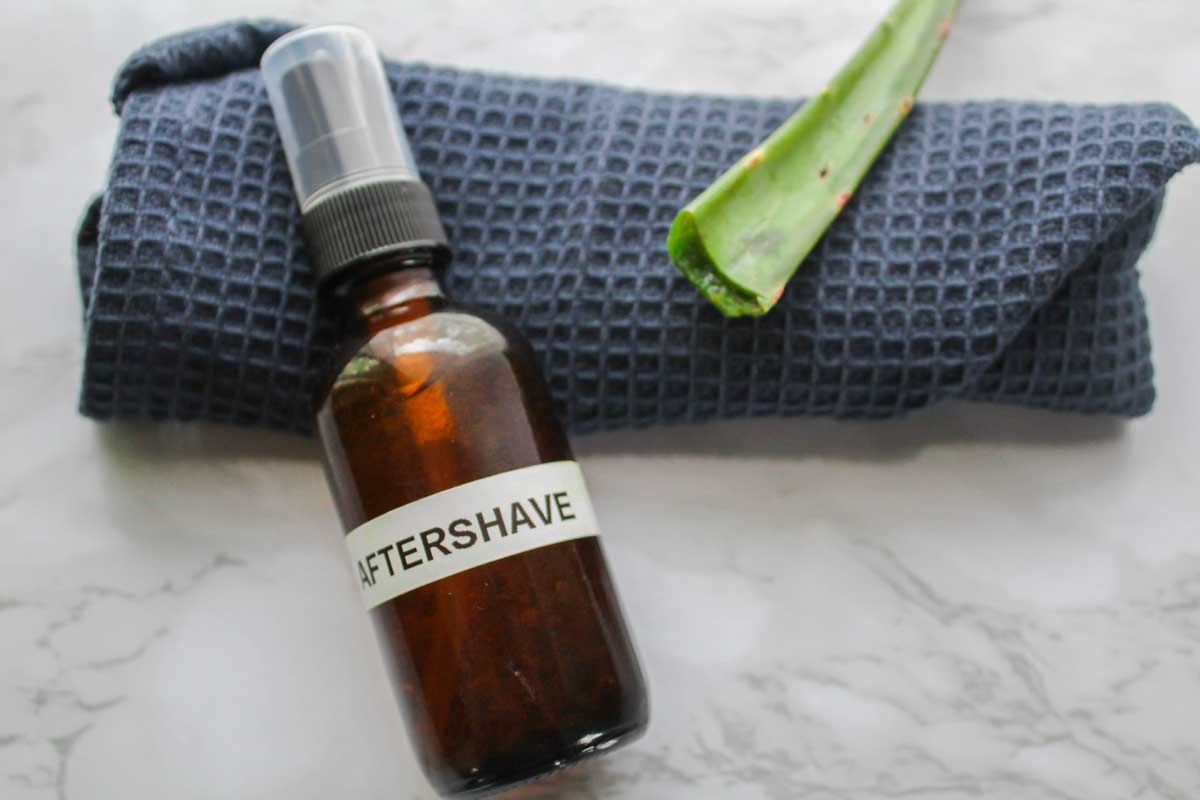
Homemade aftershave gives you a simple, customizable way to soothe the look and feel of razor burn, replenish moisture after shaving, and skip synthetic fragrance.
Mama Z’s DIY aftershave lotion combines aloe vera juice, witch hazel, carrier oil, vegetable glycerin, vitamin E oil, and essential oils for dry or sensitive post-shave skin. The lighter aftershave spray uses witch hazel, aloe vera gel, organic grain alcohol, frankincense essential oil, and sandalwood or cedarwood essential oil for oily skin.
Good shaving technique still matters most: soften the hair, use a sharp razor, shave with the direction of hair growth, and follow with the lotion or spray that best fits your skin.
Shaving isn’t always pretty, especially if you have sensitive skin. Many products on the market claim to eliminate bumps and soothe redness. Those “remedies” may work short-term, but they can also expose your skin to harsh ingredients and synthetic fragrance that create bigger problems for families trying to reduce their toxic burden.
I created my homemade aftershave recipe to give our Natural Living Family an easy, non-toxic DIY option without synthetic fragrance. These recipes don’t just cover shaving irritations. They nourish your skin with moisturizers, botanical ingredients, and essential oils.
Table of Contents

Why Does Shaving Irritate Skin?
Shaving is supposed to improve appearances, but it can leave some of us with unsightly redness, itching, and rashes. Razor burn is skin irritation that can happen after shaving, especially when you dry shave, shave too quickly, or use a dull blade. (1)
When you shave, you’re temporarily removing hair by cutting it down. During the shaving process, the razor blade can tug at the hair and scrape the skin’s surface. All that pulling and friction can irritate your skin if you have sensitivities, leaving it red and itchy.
Shaving can also lead to ingrown hairs. When the cut hair tries to grow back, sometimes it curls inward into the skin instead of growing straight out. These newly sprouted hairs create a red, inflamed bump on the skin that can be painful. Research on pseudofolliculitis barbae, commonly called razor bumps, describes this same process: shaved hairs re-enter or penetrate the skin, triggering irritation and inflammation. (2)
What can you do to help minimize skin irritation caused by shaving? Start with better shaving habits, then give your skin the aftercare it needs.
3 Ways to Avoid Razor Burn
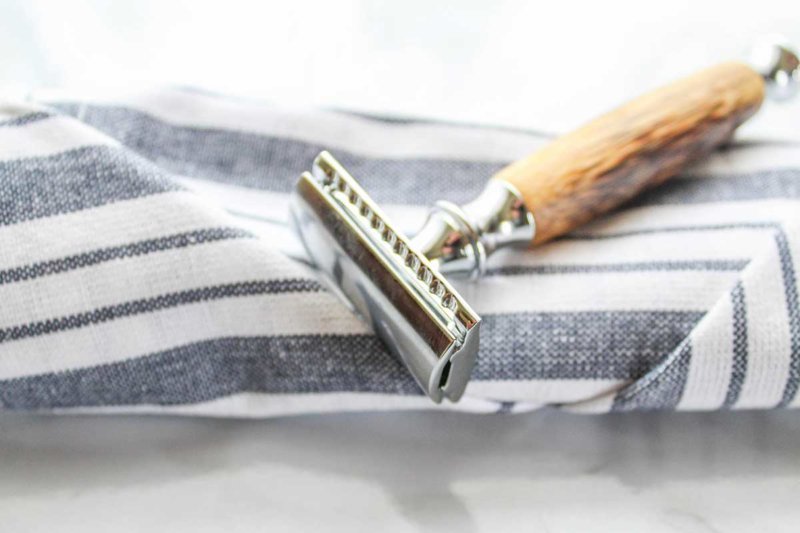
There’s nothing worse than trying to improve your looks with a nice, clean shave that ends in a bumpy, itchy, and unsightly rash. Ouch. That’s why you can try implementing these tips to help keep your skin smooth and razor-burn-free.
1. Use a Quality Razor
Low-quality razors can be harsh on your skin for many reasons. The blades can be duller, so you have to apply more pressure to get a close shave, leading to an increase in cuts. The blades wear out faster because the razor is working harder!
Investing in a better-quality razor can save you money over time because you’re not replacing the blade as often. Many razor options include blades you can sharpen yourself.
A quality razor matters because dull blades increase drag and friction. That means more scraping, more tugging, and more opportunity for irritation.
2. Perfect Your Technique
Believe it or not, there is a correct way to shave! For one, you should always wet your face with warm water to help soften the hair.
Second, shave in the direction the hair is growing and take your time. These small changes can make a big difference, especially if you’re used to rushing through your routine. Using a lubricating product also helps reduce friction, which is why I like pairing good technique with my homemade shaving cream with essential oils. (2)
Reality check: a rushed shave is usually a rough shave. Warm water, a sharp blade, gentle pressure, and shaving with the grain can go a long way toward preventing razor burn.
3. Add a Step
You probably need more pampering than the average Joe if you have sensitive skin. Adding a few extra steps to nourish your skin can help ward off irritations. I recommend starting with my Homemade Aftershave Lotion, which is perfect for sensitive skin!
Post-shave care matters because freshly shaved skin needs cleansing, moisture, and calming support. That is exactly what this homemade aftershave lotion and spray are designed to do.
Top Benefits of Homemade Aftershave
1. Aftershave Can Clean and Refresh Freshly Shaved Skin
Sometimes, even the most careful shaving can leave tiny nicks and irritated areas behind. Freshly shaved skin benefits from gentle cleansing and calming aftercare.
Witch hazel is a traditional topical astringent, which is one reason it works so well in an aftershave. Laboratory research using human skin cells and newer ex vivo skin models has found antioxidant and anti-inflammatory activity in witch hazel extracts and witch hazel-containing formulas. (3, 4)
That research supports witch hazel as a useful skin-care ingredient, but it does not mean this homemade aftershave is a disinfectant or has been clinically proven to prevent infection. For everyday post-shave care, I use it for its refreshing, astringent feel and skin-soothing role.
2. Aftershave Can Give You a Glow
Many aftershaves are moisture stripping, but this recipe contains a custom blend of moisturizing agents to hydrate skin. Dehydrated skin often looks dull, tight, and older than it really is. Good habits build up over time to encourage a healthy glow in your skin.
Vegetable glycerin is a key ingredient here because it is a humectant, which means it helps attract and hold water. Laboratory research confirms glycerin’s strong moisture-retention capacity, which helps explain why it is so widely used in cosmetic and skin-care formulas. (5)
Put simply, this homemade aftershave is not just about smelling good. It is about helping your skin feel calm, soft, and cared for after shaving.
3. Homemade Aftershave Helps Soothe Razor Burn Naturally
Razor burn is uncomfortable because shaving can disrupt the skin barrier and leave the skin feeling hot, dry, itchy, or tender. Aloe vera is one of my favorite ingredients for this kind of DIY because it has a cooling feel and a long history of use for burns, wounds, and irritated skin.
A systematic review of clinical trials evaluated aloe vera across burn wounds, postoperative wounds, psoriasis, pressure ulcers, and other skin concerns. (6) A broader pharmacology review also describes aloe’s traditional use for irritated and injured skin and summarizes anti-inflammatory findings from laboratory, animal, and human research. (7) These studies did not test this aftershave recipe or razor burn specifically, but they help explain why aloe remains one of my favorite soothing ingredients for freshly shaved skin.
Application: Keep your homemade aftershave lotion chilled in the refrigerator. The cooling sensation is wonderful after shaving, especially on sensitive skin.
4. DIY Aftershave Helps You Avoid Synthetic Fragrance
Scented products are often hard to give up. Who doesn’t want to smell nice? Under U.S. cosmetic labeling rules, a fragrance mixture can generally be listed simply as “fragrance” rather than naming every component, and the FDA notes that some fragrance ingredients can trigger sensitivities or allergic reactions in susceptible people. (8)
This is one reason I love essential oils for DIY personal care. You can create a clean, woodsy, masculine aroma without relying on mystery fragrance blends. That is a practical, everyday way to reduce toxic exposure and steward your body well.
Natural Aftershave Lotion Ingredients
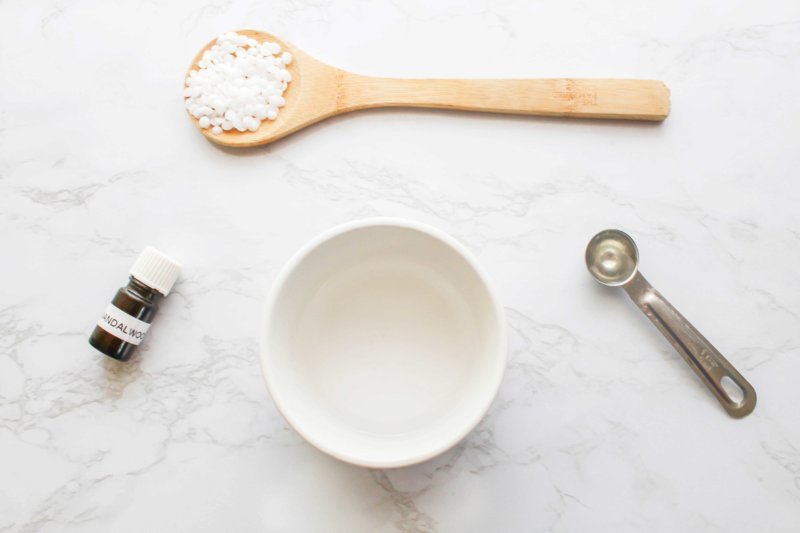
Scented products can be difficult to give up, especially when fragrance is part of your daily grooming routine. Who doesn’t want to smell nice? This recipe gives you control over the scent and the ingredients touching freshly shaved skin, all while using essential oils for a clean, woodsy aroma. Here’s an ingredient breakdown.
Emulsifying Wax: This is used as a go-between for this recipe’s watery liquids and oils. It helps everything to blend smoothly and creates a great texture. This unique ingredient helps the lotion spread evenly and sink into the skin, so emulsifying wax is a must.
Carrier Oil: Carrier oils are a must when using essential oils in skincare! A good carrier oil dilutes and disperses essential oils, reduces evaporation, improves topical safety, helps the blend spread over the skin, and adds moisture of its own. There are many different carrier oils, but I recommend using sweet almond oil or fractioned coconut oil in this recipe.
Vitamin E Oil: This oil isn’t just for hydrating skin! Vitamin E oil contains antioxidant compounds that help protect oils from oxidation and support skin care formulas. Research on vitamin E for scar healing is mixed, so I like to think of it as a nourishing antioxidant ingredient rather than a guaranteed scar remedy. (9)
Aloe Vera Juice: Aloe vera is an all-natural ingredient with a cooling effect that makes it perfect for sunburns or razor burns. Research reviews describe aloe’s traditional and modern use for burns, wounds, inflammation, and skin repair support. (6, 7) You’ll notice that this DIY calls for aloe juice, not gel. Aloe juice helps this recipe have a lotion consistency, while aloe gel would thicken it too much.
Unscented Witch Hazel: Witch hazel is an excellent natural astringent. If you have sensitive skin, you may want to avoid products that contain a lot of alcohol. Laboratory and ex vivo research supports antioxidant and anti-inflammatory activity from witch hazel extracts and formulas, although that is different from proving a specific homemade aftershave treats razor burn. (3, 4)
Vegetable Glycerin: Vegetable glycerin is a sugar alcohol made from plant oils. This ingredient is a humectant (5), which helps your skin retain its natural moisture. You can usually find it in the medicine section of your local big-box store.
Cedarwood Essential Oil: Cedarwood essential oil has, you guessed it, a woody scent that makes it a great addition to men’s products. Cedarwood EO can help support a calm mood through inhalation, and it makes a wonderful grounding oil for men’s skin care. A 2025 review found antimicrobial, anti-inflammatory, sedative, and dermatological activity across several oils sold as cedarwood, but most of that evidence is still preclinical and the chemistry varies significantly by species. (10)
Peppermint Essential Oil: When you put peppermint essential oil on your skin, you’ll instantly feel refreshed. The mint scent adds an exciting twist to this manly lotion. Just one whiff is enough to get you motivated! Because peppermint is strong, keep it away from your eyes and use it sparingly on the face.
Sandalwood Essential Oil: Sandalwood essential oil is a great choice for this blend. It’s excellent for prayer and meditation, and its rich woody aroma creates an entirely different aromatherapy experience than cedarwood. A dermatology review summarized anti-inflammatory, antimicrobial, and early clinical research on Santalum album oil for several skin concerns. That research used specific preparations and should not be treated as proof that this aftershave treats a skin disease. (11)
Homemade Aftershave Lotion Recipe
While I wish I could do an in-person DIY class with each of you, that’s just not possible. This step-by-step instruction guide is pretty close, though! Here’s how you make this fantastic homemade aftershave lotion.
Homemade Aftershave Lotion Recipe
Quantity
Ingredients
- ¼ ounce emulsifying wax
- ½ ounce carrier oil for skin care, such as fractionated coconut oil, jojoba oil, evening primrose oil, or argan oil
- 3 drops vitamin E oil
- 2 ounces aloe vera juice (not gel!)
- ¾ ounce unscented witch hazel
- 2 drops organic vegetable glycerin
- 15 drops cedarwood essential oil
- 10 drops peppermint essential oil
- 5 drops sandalwood essential oil
Supplies
Instructions
- Set a large glass jar in a saucepan filled with an inch of water. Combine emulsifying wax, carrier oil, and vitamin E oil in the jar and melt over low heat.
- While the wax and oils are melting, measure the aloe vera juice, witch hazel, and glycerin into a small glass cup or jar, warming them a little if needed, and stir to combine.
- Once the oils are melted, add the liquids and heat everything just enough to ensure everything is melted and mixed well.
- Remove from heat and whisk continually as the mixture cools. Continue whisking until the lotion is thick, creamy, and a little frothy.
- Whisk in the essential oils last. While the mixture is still warm, quickly pour it into your final jar for dispensing. Then, clean your utensils in hot water before the residue cools, making them hard to clean.
- Store this aftershave lotion in a little glass jar or a pump bottle for easy dispensing!
Natural Aftershave Lotion Step One: Melt Your Ingredients
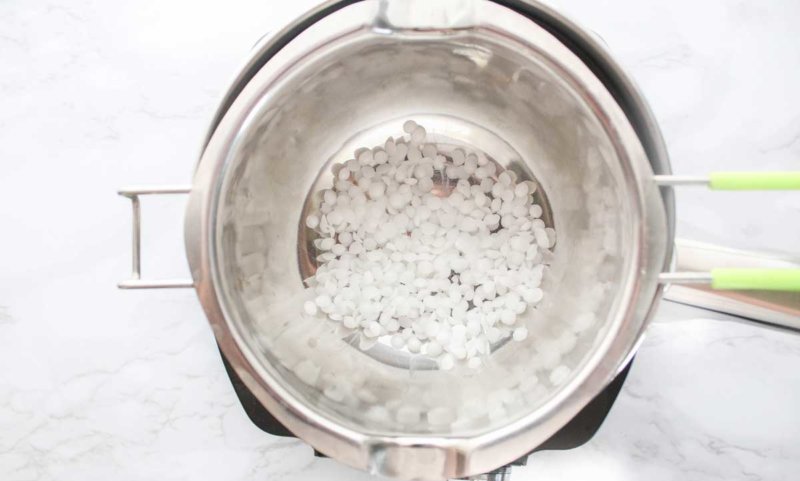
Fill a small saucepan with 1-2 inches of water and place over low heat. Put the emulsifying wax, carrier oil, and Vitamin E oil in a double boiler or glass jar, and place in the pan.
Step Two: Measure the Liquids
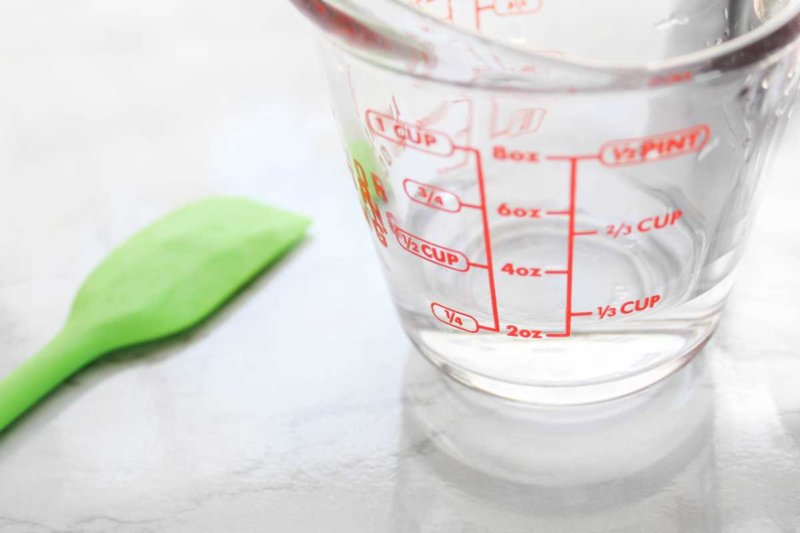
While your mixture is melting, measure the aloe vera juice, witch hazel, and glycerin into a small cup or jar. Stir the liquids to combine. The mixture needs to be at room temperature, so heat a little if necessary.
Step Three: Add Liquids to the Oils
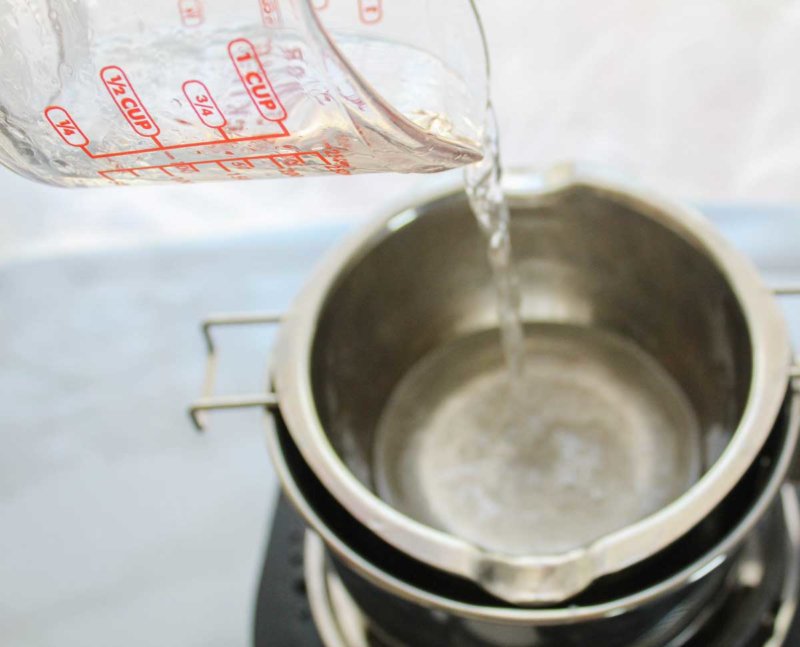
Once the oils have melted, add the liquids. Heat everything just enough to ensure that the mixture is melted and combined.
Step 4: Remove From Heat
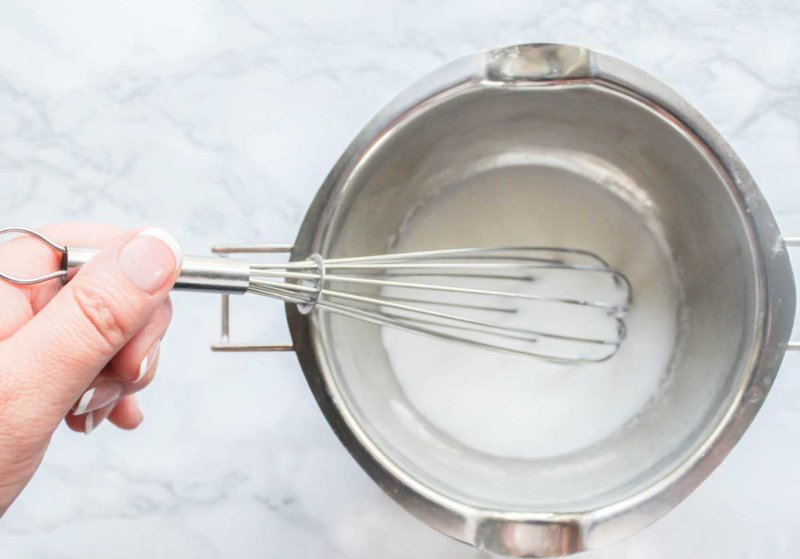
Remove your mixture from heat and whisk continually as the mixture cools. You’ll need to keep whisking until the lotion is thick, creamy, and a little frothy.
Step 5: Add Essential Oils
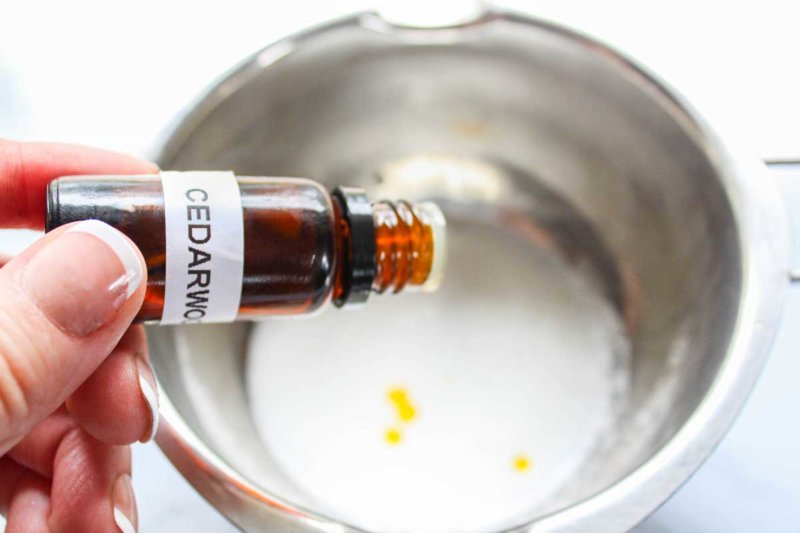
Last, whisk in your essential oils until well combined, and enjoy your mini aromatherapy session!
Things You Should Know
- Because this natural aftershave lotion has no additives, it has a shelf life of about two weeks. Make it in small batches!
- Store this lotion in the refrigerator to help it last longer. Chilled aftershave feels heavenly on the skin.
- Avoid the eye area, especially when using peppermint essential oil.
- If you have very sensitive skin, do a small patch test on your inner arm before using it on your face.
Because this is a water-containing DIY without a laboratory-validated preservative system, the two-week window is a practical household guideline rather than a guaranteed microbial shelf life. FDA notes that water, ineffective preservation, storage, packaging, and consumer handling can introduce microbial contamination into cosmetics. Keep your tools and container clean, refrigerate promptly, and discard the lotion sooner if its odor, color, or texture changes. (12)
Oily Skin Aftershave Variation
When you struggle with oily skin, your skin can look shiny. Heavier moisturizers may not be ideal in this case, but natural moisturizers will give your skin a healthy glow! If your skin is oily, you may want to try our Natural Aftershave Spray.
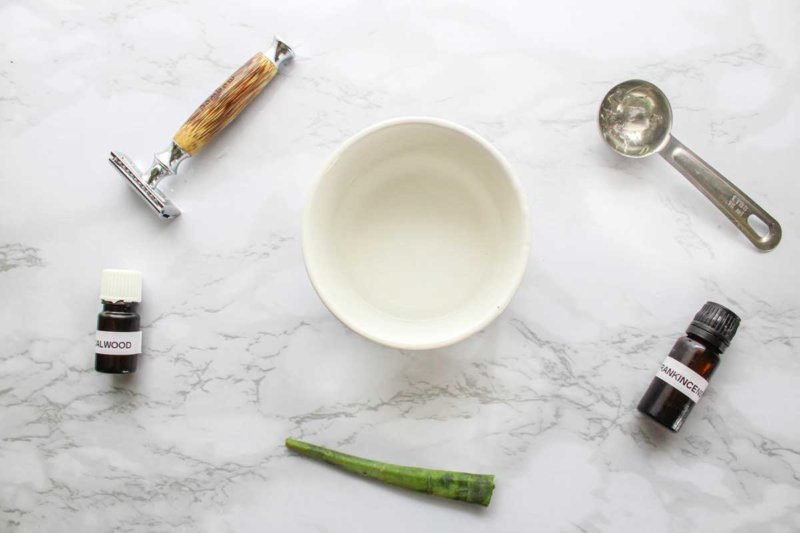
My aftershave spray has no moisturizers except for aloe vera gel. To make this recipe, you only need witch hazel, aloe vera gel, organic grain alcohol, sandalwood or cedarwood essential oil, and frankincense essential oil.
Frankincense is one of our favorite oils for skin care, prayer, and grounding aromatherapy. Combined with sandalwood or cedarwood, it creates a clean, woodsy aftershave spray that smells masculine without synthetic fragrance.
Homemade Aftershave Spray
Quantity
Ingredients
- 4 tablespoons unscented witch hazel
- 4 tablespoons aloe vera gel
- 2 tablespoons 190-proof grain alcohol (OR the highest-proof alcohol you can get)*
- 26 drops Hawaiian sandalwood OR cedarwood essential oil OR a combination of both
- 14 drops frankincense essential oil
Instructions
- Place all ingredients in a large glass measuring cup. Mix well with a whisk or use an immersion blender (once the bubbles have gone down.) Use a funnel to transfer the mixture to a large glass spray bottle.
- Spray onto hands and pat face after shaving to soothe skin.
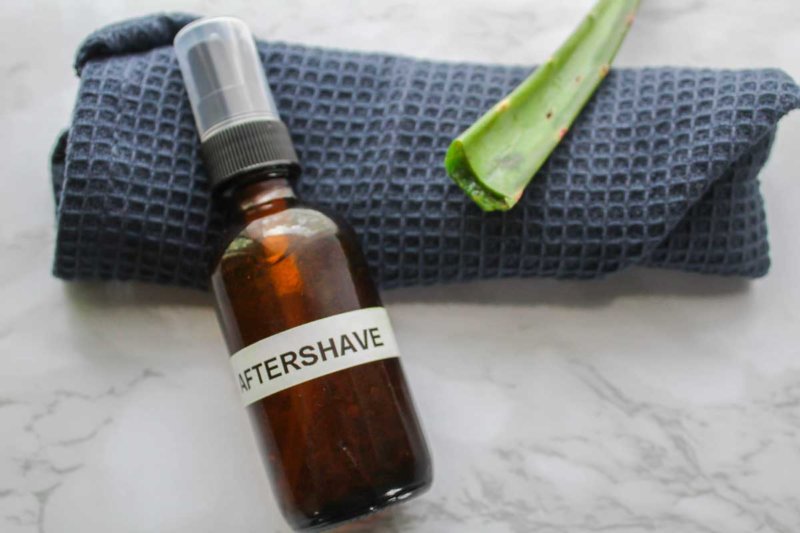
This spray is a one-step DIY! Place all the ingredients in a 2-ounce glass spray bottle and shake to combine.
After shaving, spray onto your hands and pat your face.
You can use both of these DIYs by spraying the aftershave first and following up with the moisturizing lotion if desired. Or just use one or the other as needed to care for sensitive skin after shaving.
Homemade Aftershave FAQs
What is the best homemade aftershave for sensitive skin?
The best homemade aftershave for sensitive skin is one that cleanses, calms, and moisturizes without harsh alcohol or synthetic fragrance. This homemade aftershave lotion uses aloe vera juice, witch hazel, carrier oil, vegetable glycerin, vitamin E oil, and essential oils to help soothe freshly shaved skin.
What does aftershave do?
Aftershave helps care for skin after shaving. A good natural aftershave can help cleanse tiny nicks, calm the look of redness, reduce the dry tight feeling that follows shaving, and leave skin lightly scented.
Can I use witch hazel as aftershave?
Yes, witch hazel can be used as a natural aftershave ingredient. It is astringent, cooling, and traditionally used for irritated skin. Choose unscented witch hazel and avoid high-alcohol formulas if your skin is dry or sensitive.
Is aloe vera good after shaving?
Yes, aloe vera is a wonderful post-shave ingredient because it feels cooling and soothing on irritated skin. Clinical research is stronger for burns and other wounds than for razor burn specifically, but reviews support aloe’s broader role in skin moisture, wound care, and inflammation research. (6, 7)
What essential oils are good for aftershave?
Cedarwood, sandalwood, frankincense, and peppermint essential oils are great options for aftershave when properly diluted. Cedarwood and sandalwood offer a woodsy aroma, frankincense is wonderful for mature-looking skin, and peppermint adds a fresh cooling sensation.
Can homemade aftershave help razor bumps?
Homemade aftershave can help soothe the look and feel of irritated skin around razor bumps, but it does not remove the ingrown hair that drives pseudofolliculitis barbae. For best results, pair aftercare with warm water, shaving cream or gel, gentle pressure, a sharp razor, and shaving in the direction of hair growth. (2)
How long does homemade aftershave last?
We use about two weeks as a practical maximum for the homemade aftershave lotion and keep it refrigerated, but this is not a laboratory-validated microbial shelf life. Make small batches, keep the container clean, and discard it sooner if the odor, color, or texture changes. The aftershave spray contains alcohol, but it is still best made in small amounts and refrigerated. (12)
Can women use this homemade aftershave?
Absolutely. Women can use this homemade aftershave lotion after shaving legs or underarms. Avoid sensitive mucous membranes, and reduce or omit peppermint essential oil if your skin is reactive.
Should aftershave burn?
No, aftershave does not need to burn to work. That burning feeling usually comes from alcohol-heavy formulas on freshly shaved skin. A natural aftershave can cleanse and refresh the skin while still feeling gentle.
Can I use the lotion and spray together?
Yes. Use the aftershave spray first, then follow with the lotion if your skin needs extra moisture. Oily skin may prefer the spray alone, while dry or sensitive skin may love the lotion.

- Cleveland Clinic. “Razor Burn.” Medically reviewed; updated July 30, 2022. https://my.clevelandclinic.org/health/diseases/23583-razor-burn
- Welch D, Usatine RP, Heath CR. “Beyond the Razor: Managing Pseudofolliculitis Barbae in Skin of Color.” J Fam Pract. 2025;42(4):1-2. https://pmc.ncbi.nlm.nih.gov/articles/PMC12360796/
- Thring TSA, Hili P, Naughton DP. “Antioxidant and potential anti-inflammatory activity of extracts and formulations of white tea, rose, and witch hazel on primary human dermal fibroblast cells.” J Inflamm (Lond). 2011;8:27. https://pmc.ncbi.nlm.nih.gov/articles/PMC3214789/
- Liu X, Hage TW, Chen LC, et al. “Revealing the Therapeutic Potential: Investigating the Impact of a Novel Witch Hazel Formula on Anti-Inflammation and Antioxidation.” J Cosmet Dermatol. 2025;24(2):e16662. https://pmc.ncbi.nlm.nih.gov/articles/PMC11845955/
- Chen HJ, Lee PY, Chen CY, et al. “Moisture retention of glycerin solutions with various concentrations: a comparative study.” Sci Rep. 2022;12:10232. https://pmc.ncbi.nlm.nih.gov/articles/PMC9205919/
- Hekmatpou D, Mehrabi F, Rahzani K, Aminiyan A. “The Effect of Aloe Vera Clinical Trials on Prevention and Healing of Skin Wound: A Systematic Review.” Iran J Med Sci. 2019;44(1):1-9. https://pmc.ncbi.nlm.nih.gov/articles/PMC6330525/
- Sánchez M, González-Burgos E, Iglesias I, Gómez-Serranillos MP. “Pharmacological Update Properties of Aloe Vera and its Major Active Constituents.” Molecules. 2020;25(6):1324. https://pmc.ncbi.nlm.nih.gov/articles/PMC7144722/
- U.S. Food and Drug Administration. “Fragrances in Cosmetics.” https://www.fda.gov/cosmetics/cosmetic-ingredients/fragrances-cosmetics
- Keen MA, Hassan I. “Vitamin E in dermatology.” Indian Dermatol Online J. 2016;7(4):311-315. https://pmc.ncbi.nlm.nih.gov/articles/PMC4976416/
- Gonçalves SD. “Cedarwood essential oil (Cedrus spp.): a forgotten pharmacological resource with emerging therapeutic potential.” Explor Drug Sci. 2025;3:1008131. https://www.explorationpub.com/Journals/eds/Article/1008131
- Moy RL, Levenson C. “Sandalwood Album Oil as a Botanical Therapeutic in Dermatology.” J Clin Aesthet Dermatol. 2017;10(10):34-39. https://pmc.ncbi.nlm.nih.gov/articles/PMC5749697/
- U.S. Food and Drug Administration. “Microbiological Safety and Cosmetics.” https://www.fda.gov/cosmetics/potential-contaminants-cosmetics/microbiological-safety-and-cosmetics