QUICK SUMMARY
To make Mama Z’s natural homemade hair detangler spray, add 32 drops of essential oils and 1 tablespoon of a light carrier oil (argan, jojoba, or castor) to a 4-ounce spray bottle, add ½ teaspoon of aloe vera gel if you like, and fill the rest with distilled water. Shake lightly before each use, mist the hair, and comb from the ends up. Her favorite hair blend is equal parts lavender, peppermint, rosemary, and tea tree.
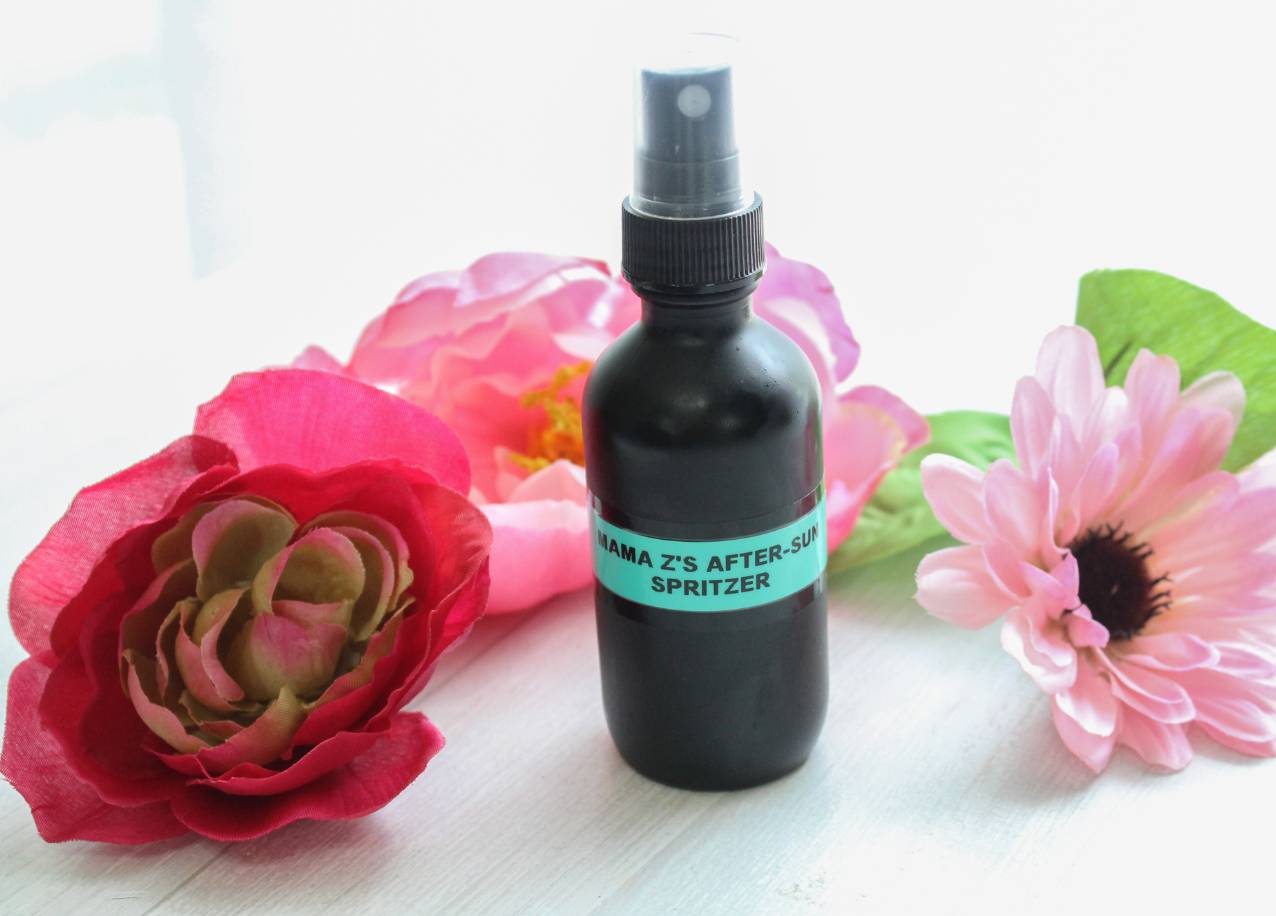
You know the drill. Bathtime has ended, but the struggle to comb the vicious knots out of your child’s hair has only just begun. My Homemade Hair Detangler Spray with Essential Oils comes in handy during moments like these!
Store-bought options can contain synthetic fragrance and other ingredients I would rather not spray around my child’s face, so I recommend making this simple DIY. This spray has saved me (and my children!) many tears. I always have a bottle in my cupboard. I know you’ll love it too!
Table of Contents

How to Make Homemade Hair Detangler Spray
This spray is simple to make. Much like my curl-boosting spray, it’s shake-and-go! I like to throw a bottle in my purse if I’m swimming or taking a shower at the gym.

Homemade Hair Detangler Spray
Quantity
Ingredients
- 32 drops essential oils*
- 1 tablespoon liquid carrier oil**
- Purified OR distilled water
- ½ teaspoon aloe vera gel (optional)
Supplies
Instructions
- Add the essential oils and carrier oil to the bottle.
- Fill the rest of the bottle with distilled water and shake to combine.
- Shake lightly before each use.
- Spray lightly on hair before combing or brushing.
- To make it last longer, store it in the refrigerator.
Step One: Add Essential Oils and Carrier Oil

Add the essential oils of choice and carrier oil into a 4-ounce spray bottle. If using aloe vera gel, add that too!
Step Two: Fill the Bottle

Fill the bottle the rest of the way with distilled water, replace the lid, and shake gently to mix.
Step Three: Detangle!

To use, spray lightly on hair before brushing or combing. To make your solution last longer, store it in the refrigerator.
Natural Hair Detangler Spray Ingredients

My favorite part about this homemade hair detangler spray recipe is that it’s mostly water! You use very little of the other ingredients, so your DIY stash lasts a long time. Here’s what you need.
Essential Oils: As with all my DIYs, essential oils are where the magic happens! I change the essential oils in this recipe to match my current season.
Sometimes, you’ll find my detangler spray to have a hint of mint. Other times, I’ll be sporting a floral scent. I encourage you to customize your detangler as well!
Carrier Oil: A suitable carrier oil moisturizes your hair, adds slip for detangling, and dilutes the essential oils before they are added to the bottle. I recommend using argan, jojoba, or castor oil. All of those oils can work beautifully in hair care without requiring a large amount.
Because oil and water naturally separate, the carrier oil does not permanently dissolve the essential oils into the water. That is why the recipe tells you to shake lightly before each use.
Distilled Water: Whenever possible, use distilled or filtered water. Starting with clean, consistent water keeps this DIY simple and avoids the mineral and treatment differences that can vary from one household water supply to another.
Aloe Vera Gel: Aloe vera is excellent for adding moisture and a smooth feel to the hair and scalp.
A 2026 review of natural treatments for dandruff and seborrheic dermatitis found that aloe vera and tea tree oil may reduce Malassezia, the yeast behind the flaking, and calm the inflammation that comes with it. A 2022 review likewise lists aloe, alongside tea tree and the mint oils, among the plant remedies reported to fight dandruff by disrupting the growth of the microbes behind it. That is why aloe has a place in this spray. (1, 2)
When purchasing aloe vera, be sure to get a pure kind with no fillers.
Mama Z’s Tips and Favorite Hair Oils
As a Mama of girls and a proud owner of long locks, I’ve faced many battles with knots. If you’re facing an intense detangling situation, try adding a little carrier oil to the tangle. Pick a small section, add some oil, and work your way up with a wide-tooth comb.
Starting at the bottom makes detangling less painful! After thoroughly detangling the hair, wash, and condition to remove any excess oil.
God created us to be unique, and our beauty products will work best when they embrace our specific needs. Keep in mind that you can customize this recipe if needed.
You can adjust everything from the carrier oil to the essential oils. You can even vary the amounts used! Just be sure to start on the low side and change it little by little until you reach your desired result.
My Favorite Essential Oils for Gorgeous Hair
Most of us have a pretty good idea of what our hair needs. After all, we’re the ones styling it every day! It can be difficult, especially if you’re new to natural living DIYs, to know just what non-toxic ingredients will benefit you. Here’s a cheat sheet to get you started!
For hair that’s fragile/needs help to grow: Lavender, peppermint, tea tree, and rosemary are my favorite blend for weak or fragile hair.
Rosemary has the strongest human research of the four. A 2024 review in Clinical, Cosmetic and Investigational Dermatology concluded that rosemary oil has “been shown to be an effective natural alternative, showing efficacy similar to that of 2% minoxidil.” (3) A 2025 review of controlled hair loss trials agreed: rosemary oil increased total hair density to a similar extent as minoxidil 2%. (4)
Both reviews rest on a landmark 2015 trial of 100 people with androgenetic alopecia. After six months, rosemary oil worked just as well as 2% minoxidil, and scalp itching was less frequent in the rosemary group. (5)
Peppermint and lavender have been shown to promote hair growth in mice. As the 2024 review summarizes, 3% peppermint oil produced 92 percent hair growth after four weeks, against 55 percent for minoxidil, and in a second study 3% and 5% lavender oil reached 90 and 95 percent, close to minoxidil’s 99.8 percent. (3)
If hair growth is your main goal, see our dedicated essential oils for hair growth and regrowth recipe.
For frizzy hair: Try geranium essential oil. It has a floral scent that’s better than any perfume! You can blend this oil with any of the oils for fragile hair.
For a healthy scalp: Consider thyme, ylang-ylang, cedarwood, lemon, grapefruit, clary sage, orange, lime, and ginger added to any of the above. Bonus: These oils add a wonderful scent to the detangling spray.
For dandruff: Any of the mint oils (peppermint, spearmint, wintergreen) are popular choices for a fresh-feeling scalp. You can also use thyme, tea tree, cypress, cedarwood, lavender, and rosemary essential oil.
Tea tree has the human evidence here. The 2026 review lists it among the natural ingredients that may reduce the dandruff yeast Malassezia and calm scalp inflammation. (1) In a 2002 randomized trial of 126 people with mild to moderate dandruff, a 5% tea tree oil shampoo improved the dandruff severity score by 41% after four weeks, compared with 11% for placebo, with no adverse effects. That wash-off shampoo study is one reason tea tree remains one of my favorite scalp oils. (6)
Safety note for kids: Leave wintergreen out of a spray for children or anyone on blood thinners; it is mostly methyl salicylate, an aspirin-like compound. For children three to ten, the standard 1 percent dilution is 24 drops of essential oil in this 4-ounce bottle, and with little ones under three, keep peppermint and the other mint oils away from the face. Our dilution guide has the full chart.
Why We Make Our Own Detangler
I’ll be honest. The simplest way to DIY hair detangler spray is to purchase an all-natural conditioner and dilute it in a spray bottle. You can place 1 tablespoon of natural conditioner in 6 ounces of distilled water if you want to do that.
However, natural conditioners can get expensive, especially if you use them often. In my home, we have several long-haired girls, and we go through a lot of detangler! This option wouldn’t be good for our budget.
My homemade hair detangler spray is cost-effective and non-toxic. As a busy Mom, I don’t always have time to read labels. I’ve found it’s so much easier for me to make personal care products myself. I’d be spending the same amount of time (or more!) researching the label anyway!
The best part about DIYs is that you have enough for multiple batches. Not running to the grocery store is a great enough reason to DIY! Many of my body care recipes use the same things, so you can make several different beauty products with one haul!
If you want to expand your DIY hair care skills, check out these great recipes for hair gel, hair spray, and dry shampoo!
Keep reading: Homemade Hair Gel With Flaxseed and Essential Oils · Essential Oils for Dry Scalp · Homemade Body Powder Recipe
References
- Wasim I, Mondal NS, Dey J, et al. Seborrheic dermatitis and dandruff: an overview of pathogenesis, role of Malassezia spp., and natural treatment approaches. Journal de Mycologie Médicale. 2026. Source.
- Kumari KMU, Yadav NP, Luqman S. Promising essential oils/plant extracts in the prevention and treatment of dandruff pathogenesis. Current Topics in Medicinal Chemistry. 2022. Source.
- Bin Rubaian NF, Alzamami HFA, Amir BA. An overview of commonly used natural alternatives for the treatment of androgenetic alopecia, with special emphasis on rosemary oil. Clinical, Cosmetic and Investigational Dermatology. 2024. Source.
- Gupta AK, Wang H, Wang T, Talukder M. Do non-prescription products help in managing androgenic alopecia? Skin Appendage Disorders. 2025. Source.
- Panahi Y, Taghizadeh M, Marzony ET, Sahebkar A. Rosemary oil vs minoxidil 2% for the treatment of androgenetic alopecia: a randomized comparative trial. Skinmed. 2015. Source.
- Satchell AC, Saurajen A, Bell C, Barnetson RS. Treatment of dandruff with 5% tea tree oil shampoo. Journal of the American Academy of Dermatology. 2002. Source.