QUICK SUMMARY
We adore our daily cup of matcha, but every so often, we like to spice it up with a cup of organic, low-acid LifeBoost coffee. These organic coffee latte recipes are creamy, comforting, and made without dairy or refined sugar.
A healthy coffee latte starts with high-quality organic coffee, dairy-free milk, a natural sweetener like stevia, and optional flavor boosters such as cinnamon, cacao, vanilla, or culinary essential oils used with wisdom.
The newest American Heart Association scientific statement, published in 2026, concludes that up to 400 mg of caffeine per day is generally safe for most adults and that moderate caffeinated coffee intake is associated with lower risks of several cardiovascular conditions in some people. Coffee is also associated with a lower risk of type 2 diabetes, while caffeine can improve alertness and several measures of exercise performance. (2, 3, 4)
The key is quality and moderation. Choose organic, carefully sourced coffee when possible, keep added sugar low, use essential oils only in the complete recipe as directed, and pay attention to your own caffeine tolerance.
We love a good healthy swap, and coffee-shop lattes are an easy one. You can keep the creamy texture, warm spices, seasonal flavors, and coffee ritual without turning your morning drink into a sugar-laden dessert.
These recipes give you four options: our hot organic coffee latte, an immune-support variation, an iced latte, and our Christmas-party favorite, peppermint mocha. The recipes themselves remain simple. Most of the benefit comes from choosing better ingredients and using them consistently.
Table of Contents

Great Reasons to Drink Coffee
Every morning, millions of people all over the globe open their eyes and indulge in their favorite drink: coffee. In fact, a 2013 Le Meridien survey famously reported that many respondents would rather give up sex than be denied coffee. (1) Whether you fall to that extreme or not, we can all agree that coffee is a big deal for many of us.
It turns out your body may appreciate coffee as much as you do. These benefits apply to coffee from a reliable source, not a giant cup of flavored syrup with a tiny hint of coffee.
Here’s the thing: coffee is not necessarily the problem. The problem is what many coffee-shop drinks have become. When your “coffee” is really a dessert loaded with sweetened dairy or creamer, flavored syrups, refined sugar, and heavily processed ingredients, you can easily bury the best parts of coffee under ingredients your body does not need.
Quick answer: A healthy coffee latte is made with organic coffee, unsweetened dairy-free milk, a natural sweetener, and optional flavor boosters like cinnamon, cacao, vanilla, or properly dispersed culinary essential oils. It should taste like a treat without acting like a sugar bomb.
Coffee Can Improve Alertness and Cognitive Performance
It’s not a myth. Coffee really can help you feel more awake.
Caffeine is a central nervous system stimulant. The FDA notes that caffeine can be part of a healthy diet for most adults, although sensitivity and metabolism vary widely. (2)
Human research shows that caffeine can improve vigilance, reaction time, attention, and the perception of wakefulness. Coffee also contains bioactive compounds beyond caffeine, including chlorogenic acids, trigonelline, diterpenes, and compounds produced or transformed during roasting. (5, 6)
This helps explain why decaf coffee can still have benefits. A large dose-response meta-analysis found that both caffeinated and decaffeinated coffee were associated with a lower risk of type 2 diabetes. (4)
For the best energy support, we recommend avoiding coffee drinks overloaded with refined sugar. A huge sugar hit may feel energizing at first, but it can work against steady blood sugar and leave you reaching for another pick-me-up.
Coffee and Heart Health: The 2026 Evidence Update
This is one of the most important updates to the article.
In July 2026, the American Heart Association published its first scientific statement devoted specifically to caffeine and cardiovascular disease. After reviewing the current evidence, the writing group concluded that up to 400 mg of caffeine per day, roughly 3 to 5 standard 8-ounce cups of caffeinated coffee, is generally safe for most adults. (3)
The statement also reports that moderate caffeinated coffee consumption is associated with lower risks of coronary heart disease, stroke, heart failure, and type 2 diabetes in some populations.
That does not mean five cups is the new daily goal. The same statement emphasizes individual differences and notes that caffeine may temporarily raise blood pressure, heart rate, blood sugar, or alertness and may cause palpitations, anxiety, or sleep disruption in sensitive people.
This is why our advice remains simple: listen to your body.
If one cup makes you shaky, wired, anxious, or unable to sleep, your personal limit is not 400 mg just because a population guideline says many adults tolerate that amount.
Filtered Coffee May Be Better When LDL Cholesterol Is a Concern
Brewing method matters too.
Coffee contains diterpenes, particularly cafestol, that can raise LDL cholesterol. Paper filters capture most of these compounds, while French press, Turkish coffee, boiled coffee, and espresso retain more. The 2026 American Heart Association statement specifically highlights this difference. (3)
That does not make an occasional espresso unhealthy. It simply means that someone drinking several cups every day while trying to improve an elevated LDL level may want to make paper-filtered coffee the daily default.
Coffee Can Support Your Weight-Loss and Fitness Goals
Coffee, in its proper form, can support your weight-loss goals. Black coffee is naturally low in calories, and caffeinated coffee can give you the pep you need to move your body, get through an early morning workout, or stay consistent with healthy routines.
This matters because coffee is not a magic weight-loss trick. It is a tool.
The International Society of Sports Nutrition position stand reports that caffeine can improve several types of exercise performance when consumed in an appropriate amount, with particularly consistent benefits for endurance performance. (7)
Coffee can also be a powerful swap. Replacing a 500-calorie sugar-laden coffee-shop drink with one of these homemade lattes can make a much bigger difference than obsessing over whether caffeine itself “burns fat.”
Current research also links moderate coffee or caffeine intake with lower risk of new-onset cardiometabolic multimorbidity, meaning the development of multiple conditions such as type 2 diabetes, coronary heart disease, and stroke. The 2024 UK Biobank study was observational, so it shows an association rather than proof that coffee caused the protection. (8)
When you add healthy ingredients to your coffee latte, it can become a nutritional powerhouse.
Coffee Is Rich in Bioactive Compounds
Coffee beans contain more than caffeine. They provide chlorogenic acids, trigonelline, diterpenes, melanoidins, and other antioxidant and bioactive compounds.
Chlorogenic acids are among the best-studied coffee compounds, with research exploring antioxidant, anti-inflammatory, glucose-regulating, vascular, and metabolic effects. (6)
This is why we treat coffee as a “choose wisely” food. The right coffee can be a beautiful part of a Biblical health lifestyle, but it works best within the bigger picture: hydration, prayer, real food, movement, sleep, stress management, and reducing your toxic burden.
Application: Enjoy coffee as a tool, not a crutch. If coffee replaces sleep, water, breakfast, or quiet time with the Lord, it’s time for a reset. If it helps you enjoy a clean, comforting drink while staying away from sugar-laden coffee-shop treats, that’s a win.
Why LifeBoost Coffee?

There are many good things about our favorite cup of joe, but there is also a dark side, pun intended, to poor-quality coffee.
Coffee crops may be exposed to agricultural chemicals, and fungal contamination can occur during growing, processing, transport, or storage when conditions allow it. Ochratoxin A is one mycotoxin that has been studied in coffee, although roasting and modern quality-control practices can substantially reduce exposure. (9, 10)
Organic certification does not mean a food is magically free of every possible contaminant. It does reduce or prohibit many synthetic agricultural inputs, and third-party testing can add another layer of quality assurance.
Thankfully, we’ve found a fantastic coffee that’s grown, washed, dried, roasted, and tested in a way we appreciate. We’ve even set up a private website so you can learn more about this coffee and start experiencing its many benefits.
SPECIAL PRICE JUST FOR NATURAL LIVING FAMILY READERS! Organic Low-Acid Lifeboost Coffee is one of our family’s favorite coffees, and new customers can enjoy the Natural Living Family 50% off Group Buy when you shop HERE.
Organic Coffee Latte Recipe & Variations
This warm latte is great to share with friends as it serves four people. Thanks to essential oils, it has a unique flavor. Need to strengthen your body against seasonal “bugs”? Try our Immune-Boosting variation.
Quick answer: To make a healthy organic coffee latte, blend organic coffee with dairy-free milk, stevia, and your flavor boosters until frothy. For essential oil variations, follow the recipe quantity for the entire batch. Do not casually increase the oil because you prefer a stronger flavor.

Organic Coffee Latte (Vegan)
Servings
Ingredients
- 2 cups organic low-acid coffee OR espresso, freshly brewed
- 11-12 ounces organic unsweetened almond OR coconut milk beverage*
- 4-6 droppersful vanilla OR coconut-flavored liquid stevia**
- ½ teaspoon organic ground Ceylon cinnamon OR organic pumpkin pie spice powder, PLUS more to garnish
- 1 drop cinnamon bark essential oil (optional)
- 1 drop peppermint essential oil (optional)
- Hot purified OR distilled water
Supplies
Instructions
- Pour ingredients into a high-powered blender, add hot water until you have 4 cups of coffee latte and mix on high until frothy. Adding cinnamon and/or pumpkin pie spice powder helps reduce excess foam on top of the beverage.
- Pour into a mug and garnish with additional cinnamon and/or organic pumpkin pie spice powder.
- Serve immediately.
Step One: Blend Ingredients

Pour ingredients into a high-powered blender, add hot water until you have 4 cups of coffee latte, and mix on high until frothy. Adding cinnamon and/or pumpkin pie spice powder helps reduce excess foam on top of the beverage.
Mama Z Pro Tip: Be careful when blending hot liquids. Make sure your blender is rated for hot drinks, don’t overfill it, and allow steam to vent according to your blender’s instructions.
Step Two: Garnish and Serve

Pour into a mug and garnish with additional cinnamon and/or organic pumpkin pie spice powder. Serve immediately.
Immune-Boosting Variation

Our immune-boosting variation is a delicious way to help your body stay resilient when seasonal “bugs” are going around. For this recipe, you’ll need to make a bottle of our Immune-Boosting Blend.
This blend uses powerhouse essential oils like cinnamon bark, clove, eucalyptus, lemon, orange, and rosemary. These are bold oils, so a little goes a long way.
Essential Oil Safety: This is culinary internal use, not a medicinal ingestion protocol. The recipe uses only a tiny amount of essential oil in a complete multi-serving beverage. Essential oils should be distributed through the full recipe rather than dropped into plain water or taken neat.
The fat-containing dairy-free milk and full blending process help disperse the oils throughout the latte. Keep to the recipe amount. More is not better, especially with potent oils such as cinnamon bark and clove.
To make this essential oil blend, add 10 drops each of cinnamon bark, clove, eucalyptus, lemon, orange, and rosemary EO to a 5 ml glass bottle. Shake gently to mix. Use this blend in your lattes, diffuser, and in cleaning products as directed.
Step One: Add Immune-Boosting Essential Oils

Make the hot latte recipe as listed, but add 1 drop of our Immune-Boosting Blend and 1 drop of peppermint essential oil. Enjoy!
That amount is for the entire four-cup recipe, so each serving contains only a fraction of a drop of each essential oil. Do not scale the essential oils up simply because you are using a larger mug.
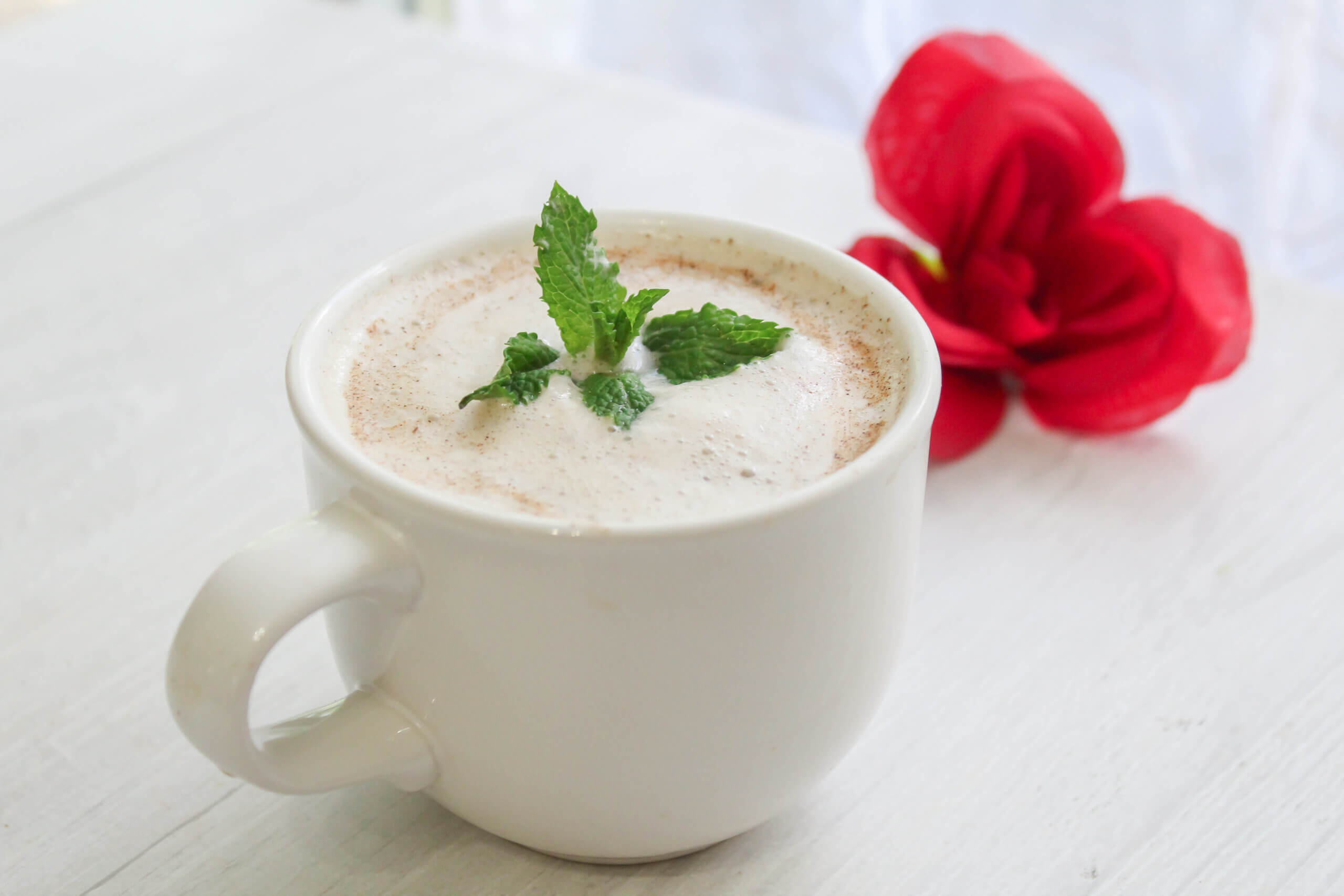
Immune-Boosting Coffee Latte (Vegan)
Servings
Ingredients
- 2 cups organic low-acid coffee OR espresso, freshly brewed
- 11-12 ounces organic unsweetened almond OR coconut milk beverage*
- 4-6 droppersful vanilla OR coconut-flavored liquid stevia
- ½ teaspoon organic ground Ceylon cinnamon OR organic pumpkin pie spice powder, PLUS more to garnish
- 1 drop Immune-Boosting Essential Oil Blend**
- 1 drop peppermint essential oil
- Hot purified OR distilled water
Supplies
Instructions
- Pour ingredients into a high-powered blender, add hot water until you have 4 cups of coffee latte, and mix on high until frothy. Adding cinnamon and/or pumpkin pie spice powder helps reduce excess foam on top of the beverage.
- Pour into a mug and garnish with additional cinnamon and/or organic pumpkin pie spice powder.
- Serve immediately.
Iced Organic Coffee Latte

Iced coffee fans, rejoice! We’ve developed an incredibly healthy option you can enjoy whenever the mood strikes. It’s delightfully creamy, even without dairy. This recipe also serves 4 people generously.
Quick answer: To make an iced organic coffee latte, combine cooled organic coffee, dairy-free milk, and stevia in a 32-ounce glass bottle, then add ice and purified or distilled water as needed. Refrigerate leftovers and shake before serving.
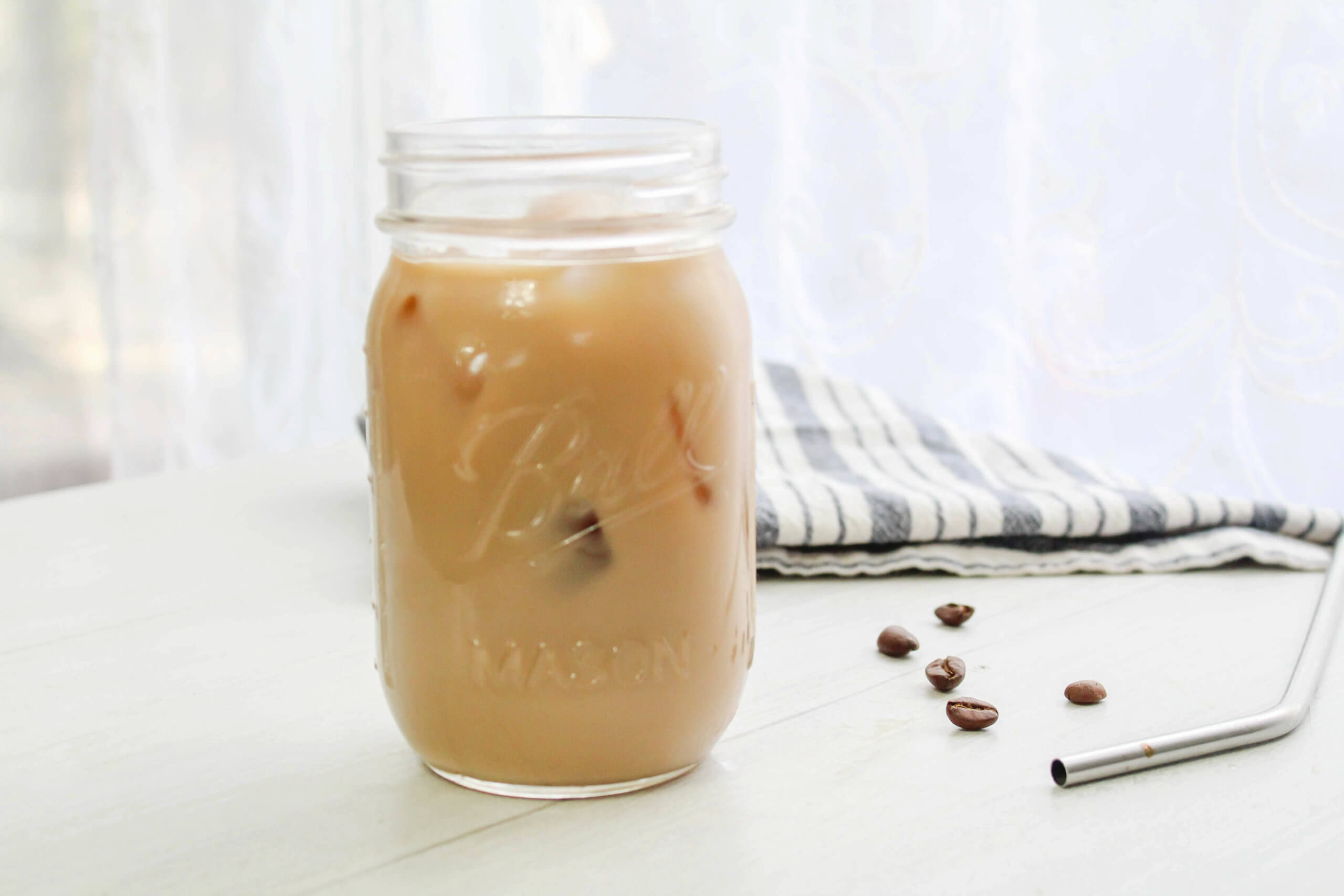
Iced Organic Coffee Latte (Vegan)
Servings
Ingredients
- 10-16 ounces organic low-acid coffee OR espresso, freshly brewed
- 11-12 ounces organic unsweetened almond OR coconut milk beverage, chilled*
- 4-6 droppersful vanilla- OR hazelnut-flavored liquid stevia**
- Ice cubes AND/OR additional cold purified OR distilled water
Supplies
Instructions
- Add the coffee, almond milk, and stevia to a 32-ounce glass bottle.
- Fill to the top with ice.
- Serve immediately or refrigerate.
Step One: Combine Ingredients

Add the coffee, almond milk, and stevia to a 32-ounce glass bottle.
Step Two: Add Ice

Fill the bottle the rest of the way with ice and/or additional purified or distilled water. Serve immediately or refrigerate. Enjoy!
For food safety, refrigerate a prepared latte promptly and use it according to the storage life of the dairy-free milk you used. When in doubt, make a fresh batch.
Peppermint Mocha

We serve this variation at our Christmas party each year, and it’s always a huge hit. There’s nothing better than the richness of chocolate paired with refreshing peppermint!
This is the kind of healthy swap that makes the abundant life feel joyful. You don’t have to miss out on seasonal favorites. You just learn how to make them with better ingredients.
Peppermint Mocha (Vegan)
Servings
Ingredients
- 2 cups organic, low-acid coffee OR espresso, freshly brewed
- 11-12 ounces organic unsweetened almond OR coconut milk beverage*
- 4-6 droppersful chocolate-flavored liquid stevia
- 2-3 drops peppermint essential oil (depending on preference)
- Hot purified OR distilled water
Supplies
Instructions
- Pour ingredients into a high-powered blender, add hot water until you have 4 cups of coffee latte, and mix on high until frothy. Pour into a mug and serve immediately.
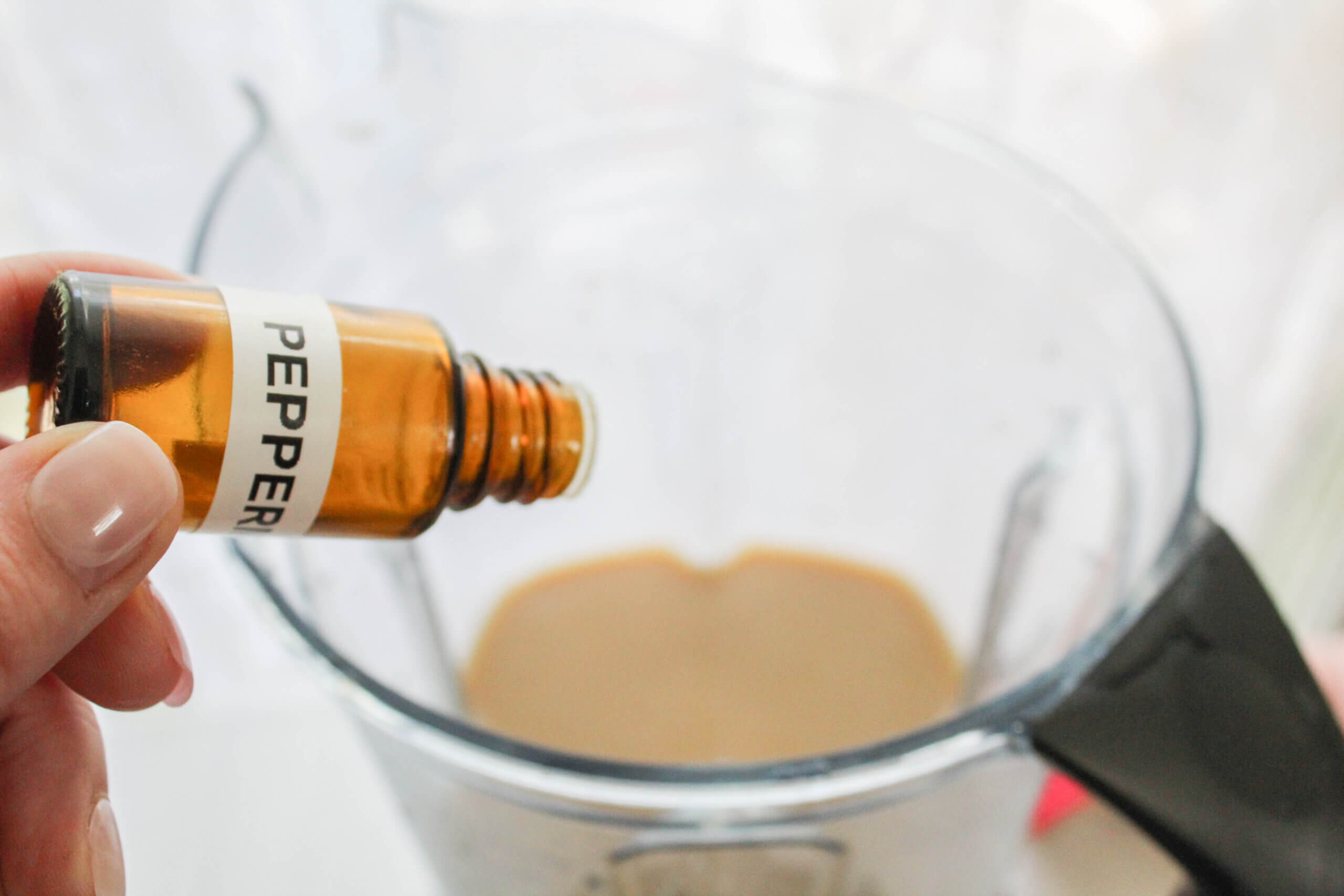
Step One: Add Peppermint Essential Oil

Place ingredients into a high-powered blender and mix on high until frothy. Pour into mugs. Serve immediately.
Why We Love LifeBoost Coffee

When done right, coffee can be a rich source of antioxidant and bioactive compounds. Sadly, not all coffee is created equal. Quality depends on the bean, growing practices, processing, storage, roasting, brewing, freshness, and testing.
Acidity isn’t our only concern with conventional coffee. Coffee can be affected by pesticide residues, mold, or mycotoxins when growing and storage conditions allow them. That is why we care about sourcing and testing rather than assuming every bag of coffee is identical.
According to LifeBoost’s current 2026 materials, its core coffees are:
- Third-party tested: The company says its finished products are screened for mycotoxins, heavy metals, pesticides, glyphosate, and more than 450 potential contaminants through its TrustPure process. (11)
- Low acid: LifeBoost says its beans are pH tested and grown and processed to produce a lower-acid cup.
- Single-origin Arabica: Its flagship beans come from one Central American region rather than anonymous blends.
- USDA certified organic at origin: This is one of our biggest priorities when coffee is a daily habit.
- Shade grown at high elevation: LifeBoost currently describes its core beans as grown around 5,700 feet under a canopy.
- Naturally processed without chemical solvents: The company describes hand selection, mountain-spring-water washing, sun drying, and small-batch roasting.
These are current company claims, and product lines can change, so check the package and current product page for the exact coffee you order.
You may remember older claims on our site about “7-46X more antioxidants” or an exact percentage difference in acidity. We are not relying on those figures here because the current LifeBoost materials emphasize third-party contaminant screening, organic certification, high-altitude shade growing, single-origin sourcing, and low-acid testing instead.
Application: Choose coffee the same way you choose food for your family. Look for organic, carefully sourced options, learn how the company handles testing and storage, and don’t undo the benefits by loading the cup with refined sugar and artificial syrups.
We are so grateful that we found coffee we genuinely enjoy. The current Natural Living Family offer provides 50% off for qualifying new customers through our LifeBoost Coffee link. (12)
Healthy Coffee Latte Tips
A healthy coffee latte should be creamy, satisfying, and nourishing without leaving you jittery, crashing, or craving sugar all afternoon.
Use these simple tips to keep your latte aligned with a Biblical health lifestyle.
- Choose organic coffee: Organic certification is one practical way to reduce exposure to many synthetic agricultural chemicals.
- Keep it low sugar: Use stevia or another natural sweetener instead of refined sugar and flavored syrups.
- Go dairy-free when needed: Unsweetened almond milk, coconut milk, or coconut creamer can make a creamy vegan latte without conventional dairy.
- Use essential oils wisely: Follow the complete recipe. One or two drops can flavor an entire multi-serving batch. More is not better.
- Consider paper-filtered coffee when LDL is high: Paper filters remove most cafestol, a coffee compound associated with higher LDL cholesterol. (3)
- Watch your timing: Caffeine can interfere with sleep even when you do not feel obviously stimulated. If coffee affects sleep, keep it earlier in the day.
- Know your caffeine limit: The FDA and the 2026 AHA statement both use 400 mg per day as an amount generally tolerated by most adults, but your personal limit may be much lower. (2, 3)
- Count the whole day: Tea, chocolate, energy drinks, supplements, and some medications can also contribute caffeine.
- Hydrate first: Start your morning with water before coffee, especially if you wake up thirsty or sluggish.
- Use decaf when it serves you: Decaf still contains coffee polyphenols and usually only a small amount of caffeine.
Who May Need Less Caffeine?
Some people metabolize caffeine slowly or react strongly even at modest doses.
Use extra care when you:
- Are pregnant or trying to become pregnant
- Are breastfeeding and notice infant irritability or sleep changes
- Have severe or poorly controlled high blood pressure
- Have palpitations or a known rhythm disorder that worsens with caffeine
- Experience panic, tremor, reflux, insomnia, or migraines after coffee
- Take medications that alter caffeine metabolism
A commonly used pregnancy guideline is less than 200 mg of caffeine per day. (13) That is not a blanket claim that coffee is dangerous during pregnancy. It is a reason to know the caffeine content of your specific brew because one large specialty coffee can contain more caffeine than several smaller cups.
Reality check: A healthy latte is still only one part of the picture. Coffee cannot make up for chronic sleep deprivation, a processed diet, unmanaged stress, or a lack of movement. But when you use it well, it can be a joyful part of your healthy routine.
Organic Coffee Latte FAQs
What is an organic coffee latte?
An organic coffee latte is a coffee drink made with organic coffee and milk or dairy-free milk. Our version is vegan, dairy-free, refined sugar-free, and made with ingredients like almond milk, coconut milk, stevia, cinnamon, cacao, and optional culinary essential oils.
How do you make a vegan coffee latte?
To make a vegan coffee latte, blend organic coffee with unsweetened almond milk, coconut milk, or another dairy-free milk, then sweeten lightly with stevia. For a hot latte, blend until frothy. For an iced latte, combine the ingredients in a glass bottle with ice and shake well.
How do you make a coffee latte without dairy or sugar?
Use organic coffee, unsweetened dairy-free milk, and stevia instead of refined sugar. Cinnamon, pumpkin pie spice, cacao, vanilla, or a tiny amount of properly dispersed culinary essential oil can add flavor without conventional syrups.
Is coffee healthy?
For many adults, yes. Coffee provides caffeine and numerous bioactive plant compounds. Moderate consumption is associated with lower risks of several cardiovascular outcomes and type 2 diabetes in observational research, while the newest AHA scientific statement concludes that up to 400 mg of caffeine per day is generally safe for most adults. (3, 4)
How much caffeine is safe per day?
For most adults, the FDA cites 400 mg of caffeine per day as an amount not generally associated with negative effects. The 2026 AHA statement reaches a similar conclusion for cardiovascular health. Individual sensitivity still matters. (2, 3)
How many cups of coffee is 400 mg of caffeine?
It varies tremendously. The FDA reports that a 12-ounce brewed non-specialty coffee can contain roughly 113 to 247 mg of caffeine. The AHA translates 400 mg to roughly 3 to 5 standard 8-ounce cups, but strength and serving size can change that quickly. Check the actual product or brewing information when caffeine matters. (2, 3)
Can coffee help with weight loss?
Coffee can support weight-loss goals when it replaces sugary drinks, helps you feel alert, and supports exercise consistency. Caffeine can improve several types of exercise performance, but coffee is not a magic weight-loss fix. It works best with whole foods, movement, sleep, stress relief, and a healthy home lifestyle. (7)
Is decaf coffee healthy?
Yes. Decaf coffee still contains many coffee-derived bioactive compounds. A large meta-analysis found inverse associations between type 2 diabetes risk and both caffeinated and decaffeinated coffee. Decaf is not completely caffeine-free, but it usually contains far less. (2, 4)
Is filtered coffee healthier than French press coffee?
For someone concerned about LDL cholesterol, paper-filtered coffee may be the better everyday choice. Cafestol, a diterpene associated with higher LDL, is found in greater amounts in unfiltered coffee such as French press, Turkish, boiled coffee, and espresso. Paper filters remove most of it. (3)
Why make a coffee latte without refined sugar?
A sugar-free coffee latte lets you enjoy the comfort and flavor of coffee without turning the drink into dessert. It can also make it easier to keep blood sugar and total daily added sugar under control.
What dairy-free milk works best in coffee lattes?
Unsweetened almond milk, coconut milk, and coconut creamer all work well. Coconut milk makes a richer latte, almond milk keeps it lighter, and a blend of both gives a creamy texture without dairy.
Can I put essential oils in coffee?
Yes, when the recipe is designed for culinary internal use and the oil is appropriate for that purpose. Follow the exact recipe amount, distribute the oil through the complete batch, and do not casually add extra drops to a single mug.
Can I ingest essential oils?
Do not casually ingest essential oils in water or neat (undiluted). Internal use of essential oils requires proper dilution, product quality, dosing knowledge, and safety guidance. Learn more about how to ingest essential oils here.
Why do essential oils need to be dispersed in recipes?
Essential oils and water do not mix. Fat-containing ingredients and appropriate carriers or dispersing ingredients help distribute the oil through the complete recipe instead of allowing concentrated oil to sit on top of the beverage or directly contact the mouth.
In topical use, carrier oils dilute and disperse essential oils, reduce evaporation, improve topical safety, help penetration, and can amplify therapeutic effects.
Can kids drink these coffee lattes?
These coffee latte recipes are designed for adults. Children and teens are more sensitive to caffeine, and the FDA notes that excessive caffeine can cause increased heart rate, palpitations, blood pressure changes, anxiety, digestive problems, and sleep disruption in younger people. Make a caffeine-free version for children rather than simply serving a smaller adult latte. (2)
Can I drink these lattes during pregnancy?
Pregnancy does not automatically mean coffee is off-limits, but total caffeine matters. A commonly used guideline is less than 200 mg per day during pregnancy. Choose decaf or half-caff when needed and count caffeine from coffee, tea, chocolate, and other sources. These recipes also contain optional essential-oil variations, so use a pregnancy-appropriate version rather than assuming every oil in every variation is right for you. (13)
Can I make the iced organic coffee latte ahead of time?
Yes. Combine the coffee, almond milk, and stevia in a glass bottle and refrigerate. Add ice right before serving for the best flavor and texture. Shake well before pouring and follow the storage guidance for the dairy-free milk you use.
What is the best coffee for a healthy latte?
The best coffee for a healthy latte is fresh, carefully sourced, cleanly processed, and smooth enough to enjoy without lots of sugar. We prefer organic and third-party-tested coffee, which is why our family loves LifeBoost Coffee.
What is the healthiest way to flavor coffee?
Use real-food ingredients such as cinnamon, cacao, vanilla, pumpkin pie spice, coconut milk, almond milk, or a tiny amount of properly dispersed culinary essential oil. Avoid making highly sweetened flavored syrups the everyday default.


- Le Meridien. Global Coffee and Travel Survey. 2013.
- U.S. Food and Drug Administration. Spilling the Beans: How Much Caffeine Is Too Much? Updated 2024.
- Marcus GM, et al. Caffeine and Cardiovascular Disease: A Scientific Statement From the American Heart Association. Circulation. 2026.
- Ding M, et al. Caffeinated and Decaffeinated Coffee Consumption and Risk of Type 2 Diabetes: A Systematic Review and Dose-Response Meta-analysis. Diabetes Care. 2014.
- Cappelletti S, et al. Caffeine: Cognitive and Physical Performance Enhancer or Psychoactive Drug? Current Neuropharmacology. 2015.
- Coffee Bioactive Compounds and Health Effects: Current Review. 2024.
- Guest NS, et al. International Society of Sports Nutrition Position Stand: Caffeine and Exercise Performance. Journal of the International Society of Sports Nutrition. 2021.
- Ke C, et al. Habitual Coffee, Tea and Caffeine Consumption and Cardiometabolic Multimorbidity. Journal of Clinical Endocrinology & Metabolism. 2024.
- Review of Pesticide Residues and Contaminants in Coffee. 2022.
- World Health Organization. Mycotoxins Fact Sheet.
- LifeBoost Coffee. How It’s Made and TrustPure Testing. Accessed 2026.
- Natural Living Family. LifeBoost Coffee Review and Current Group Buy Offer. Accessed 2026.
- ACOG Committee Opinion No. 462. Moderate Caffeine Consumption During Pregnancy. Obstetrics & Gynecology. 2010.