QUICK SUMMARY
Essential oils for depression and emotional wellness can be useful complementary tools for mood, stress, anxiety, relaxation, and creating intentional moments of calm. They are not replacements for psychotherapy, prescribed medication, or other professional mental health care when those are needed.
A 2023 meta-analysis of randomized controlled trials found that aromatherapy reduced depressive symptoms overall, with inhalation showing the strongest effect among the delivery methods studied. The trials used different oils, populations, and treatment settings, so this evidence supports aromatherapy as an adjunct, not as a stand-alone treatment for clinical depression.
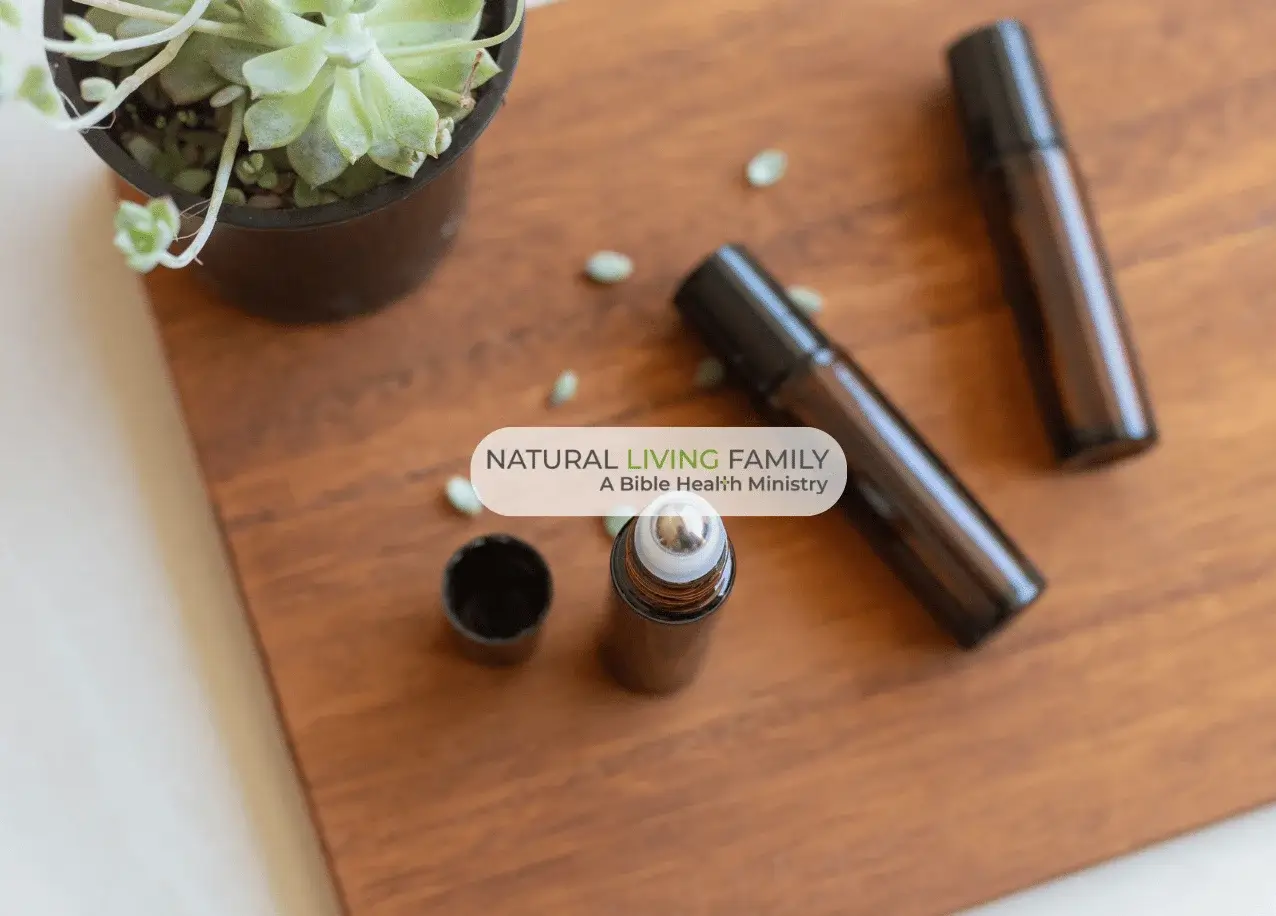
Our mood-support roll-on combines orange, lavender, ylang ylang, and frankincense in one simple blend. Orange brings a bright, uplifting aroma, lavender has the strongest human research for anxiety and depressive symptoms, ylang ylang supports relaxation, and frankincense adds the grounding aromatic note we value in emotional and spiritual wellness.
If you or a loved one is experiencing thoughts of self-harm or suicide, call or text 988 immediately. Help is available 24 hours a day.
Depression is much more than feeling sad. It can affect your energy, sleep, relationships, work, physical health, and spiritual well-being. For some people, depression feels like hopelessness. For others, it shows up as irritability, fatigue, anxiety, emotional numbness, or a loss of joy in things they once loved.
Essential oils can be one practical tool for supporting emotional wellness, especially through inhalation and properly diluted topical use. But depression deserves a whole-person response that includes faith, community, healthy daily rhythms, and professional support when needed.
On a serious note, if you or a loved one struggles with depression, it is crucial to find safe, effective support. If at any time you have thoughts of harming yourself or others, please do not wait. Call or text 988 through the Suicide & Crisis Lifeline immediately. In a life-threatening emergency, call 911.
Table of Contents:
Important Note About Depression
You were never meant to walk through depression alone.
Trust me, I understand depression. I struggled with it for years and even battled suicidal thoughts. Then, when I met Christ, I discovered what the Bible says about depression and prayed that God would lift the burden from my shoulders. Then, “Poof!” it literally vanished instantly. Today, I can confidently boast in the Lord that I am still free.
Our hope and prayer is that you and your loved ones experience that same type of freedom. But healing journeys look different for everyone. Sometimes healing is immediate. Other times it comes through a combination of faith, community, counseling, lifestyle changes, medication when appropriate, and natural tools that support the body and mind.
If low mood is connected with pregnancy or the postpartum season, see our dedicated Joyful Body Oil for Sadness, Postpartum Depression & More for that more specific context.
This is important: seeking help is not weakness. Whether that help comes through a pastor, counselor, physician, trusted friend, support group, or family member, reaching out can be one of the most courageous steps you ever take.
The National Institute of Mental Health notes that clinical depression involves persistent symptoms that interfere with daily life, and diagnosis generally requires depressed mood or loss of interest most of the day, nearly every day, for at least two weeks. Psychotherapy, medication, or both are established treatments, depending on the person’s needs and severity of symptoms.
Mood Support Roll-On for Emotional Wellness
The cheery citrus essential oils in this blend help create a bright, uplifting aroma. Lavender and ylang ylang bring calming notes, while frankincense adds the grounding aromatic quality we love for emotional and spiritual wellness.
This exact blend has not been tested as a clinical treatment for depression. We use it as an aromatic and topical support tool that can become part of a bigger routine of prayer, breathing, movement, rest, connection, and appropriate mental health care.

Essential Oils for Mood & Depression Relief Roll-On Recipe
Quantity
Ingredients
- 1 drop lemon essential oil
- 1 drop bergamot essential oil
- 1 drop ylang ylang essential oil
- 1 drop frankincense essential oil
- 1 drop lemon balm (Melissa) essential oil
- 1 drop lavender essential oil
- Carrier oil of your choice
Supplies
Instructions
- Add one drop of each essential oil for mood balance to your amber glass roll-on bottle.
- Add your favorite carrier oil to fill the rest of the bottle and apply to pulse points as needed.
- Mix the essential oils and carrier oil by rolling gently between your palms to combine.
- Apply to pulse points whenever you need a pick-me-up.
Can Essential Oils Help Depression?
Yes, aromatherapy may help support depressive symptoms and emotional wellness, but it should be viewed as complementary care rather than a replacement for evidence-based treatment.
A 2023 meta-analysis of 32 randomized clinical trials found that aromatherapy had a moderate overall effect on reducing depressive symptoms in adults. Inhalation was the most effective delivery method in the analysis, and blended essential oils performed better than lavender or other single oils. The studies still varied in population, oils, dose, duration, and clinical setting, so the results do not prove that any one blend treats major depressive disorder.
Lavender has some of the strongest oil-specific evidence. A systematic review and meta-analysis of randomized trials found reductions in depression scores with lavender, while also noting substantial differences between studies and the need for larger, better-designed trials.
Here’s the thing: emotional health is rarely about one single solution.
Essential oils work best alongside healthy nutrition, regular exercise, restorative sleep, meaningful relationships, prayer, Scripture meditation, stress management, time outdoors, and professional care when necessary.
This aligns perfectly with our biblical health philosophy. Essential oils are not magic bullets. They are God-given plant compounds that can become one supportive part of caring for the whole person.
Best Essential Oils for Depression and Mood Support
This roll-on uses four oils that bring different aromatic qualities to the blend.
Orange Essential Oil
One of the most popular oils for emotional wellness is orange essential oil.
Often described as a liquid ray of sunshine, orange has a bright aroma that many people associate with cheerfulness and energy. Human clinical research has focused more on anxiety and acute mood than on diagnosed depression. In one clinical trial, women exposed to ambient orange aroma before dental treatment reported lower state anxiety, more positive mood, and greater calm than women in the control setting.
Why we use it: Orange gives this blend its bright, uplifting top note and is especially useful when emotional heaviness comes with fatigue or discouragement.
Lavender Essential Oil
Lavender essential oil is one of the most researched oils in aromatherapy.
Systematic reviews and meta-analyses support lavender aromatherapy for anxiety, and a separate meta-analysis of randomized trials found reductions in depression scores with lavender preparations. The evidence is promising, but the studies used different routes and populations, so this does not mean a topical lavender roll-on should replace depression treatment.
Why we use it: Lavender supports relaxation, anxious feelings, sleep, and emotional calm.
Ylang Ylang Essential Oil
Ylang ylang essential oil has a rich floral aroma traditionally associated with relaxation, emotional comfort, and stress reduction.
Small human studies have explored ylang ylang through inhalation and topical exposure. Findings have included relaxation-related effects, changes in blood pressure and heart rate, and in a pilot study, improvements in self-esteem. These are useful clues for emotional wellness, but they are not evidence that ylang ylang treats clinical depression.
Why we use it: Ylang ylang brings a calming, floral note that helps balance the brighter citrus aroma.
Frankincense Essential Oil
Frankincense essential oil has been treasured for thousands of years for spiritual and emotional use.
Its grounding aroma helps many people create a sense of stillness during prayer, reflection, and intentional breathing. Direct human evidence for frankincense essential oil as a depression treatment is limited, so we present its role honestly as traditional, aromatic, and ministry experience rather than proven antidepressant therapy.
Why we use it: Frankincense gives the blend depth and a grounding aroma that fits beautifully into prayer and emotional-wellness routines.
For a deeper dive into additional oils and the research behind them, be sure to read our complete guide to the best essential oils for depression.
Why Aromatherapy Affects Mood
Many people wonder why simply smelling an essential oil can create such a noticeable emotional shift.
Odor molecules activate receptors in the nose, and that sensory information travels through the olfactory system to brain networks involved in emotion, memory, attention, and autonomic responses. The familiar phrase “limbic system” is often used as shorthand, but mood and emotion involve interconnected brain regions rather than one simple emotional center.
Put simply, scent is closely tied to emotional processing and memory. That helps explain why a familiar aroma can quickly remind you of a person, place, season, or feeling.
This is one reason God designed plants with such remarkable aromatic compounds. From walking through a pine forest to smelling fresh citrus peels, nature itself contains powerful sensory experiences that can influence how we feel.
For many people, using essential oils becomes a practical cue to pause, breathe, pray, and create an intentional moment of peace.
Alternative Uses for This Blend
For an alternative use, try mixing 4 drops of each of the essential oils above into a 2 oz spritzer bottle and filling it up with 190-proof alcohol for an uplifting, mood-boosting room spray.
Spritz it in:
- Your bedroom before sleep
- Your office during stressful workdays
- Your prayer room or devotional space
- Your vehicle during long commutes
- Your living room during emotionally challenging seasons
Keep the alcohol-based spray away from flames, heat, eyes, and children, and allow sprayed surfaces to dry as appropriate.
You will find that this blend captures some of our favorite essential oils for mood-boosting and depression support.
One citrus-safety clarification: not every citrus essential oil is phototoxic. Sweet orange is generally considered non-phototoxic, while some expressed citrus oils, including bergamot, lemon, lime, and grapefruit, can increase UV sensitivity above oil-specific dermal limits. For any topical variation, check the exact citrus oil, extraction method, and dilution before sun exposure.
Use this blend as a cue to take positive steps toward supporting your mental health and emotional well-being. If dark moods are persistent, worsening, or interfering with daily life, reach out for professional support rather than relying on aromatherapy alone.
Essential Oils for Depression FAQs
What is the best essential oil for depression?
Lavender has some of the strongest human evidence for anxiety and depressive symptoms, while orange is one of our favorite oils for bright, uplifting aromatic support. Frankincense and ylang ylang bring grounding and relaxation to this particular blend.
Can essential oils replace depression medication?
No. Essential oils should be viewed as complementary support tools, not replacements for prescribed medications or professional mental health treatment. Do not stop or change a prescribed antidepressant without working with the clinician who manages your care.
How do you use essential oils for depression support?
The most practical methods include inhalation, diffusion, room sprays, personal inhalers, and properly diluted topical applications such as roll-ons. This article focuses on the preserved roll-on recipe plus the room-spray variation above.
How quickly do mood-supporting essential oils work?
Aroma can influence perceived mood or calm within minutes for some people, but that immediate sensory response is not the same thing as treating clinical depression. Long-term emotional wellness usually requires a broader approach.
Can prayer and essential oils be used together?
Absolutely. Many families use essential oils during prayer, Bible study, worship, journaling, and quiet devotional time. Aromatherapy can help create a peaceful environment, while our hope remains firmly in God rather than in the oil itself.
What should I do if I am having suicidal thoughts?
Seek help immediately. Call or text 988 through the Suicide & Crisis Lifeline. You are not alone, and there are people ready to help you right now. In a life-threatening emergency, call 911.

References
- Lee M-S, Lee HW, Khalil M, Lim H-S, Lim H-J. Effects of aromatherapy on depression: A meta-analysis of randomized controlled trials. Journal of Affective Disorders. 2023. PubMed.
- Koulivand PH, Khaleghi Ghadiri M, Gorji A. The antidepressant effects of lavender (Lavandula angustifolia Mill.): A systematic review and meta-analysis of randomized controlled clinical trials. Complementary Therapies in Medicine. 2021. PubMed.
- Donelli D, Antonelli M, Bellinazzi C, Gensini GF, Firenzuoli F. Effects of lavender on anxiety: A systematic review and meta-analysis. Phytomedicine. 2019. PubMed.
- Lehrner J, Eckersberger C, Walla P, Pötsch G, Deecke L. Ambient odor of orange in a dental office reduces anxiety and improves mood in female patients. Physiology & Behavior. 2000;71(1-2):83-86. PubMed.
- Gnatta JR, et al. Aromatherapy with ylang ylang for anxiety and self-esteem: a pilot study. Revista da Escola de Enfermagem da USP. 2014. PubMed.
- National Institute of Mental Health. Depression. NIMH.
- Tisserand Institute. Phototoxicity: Essential Oils, Sun and Safety. Tisserand Institute.