QUICK SUMMARY
Clove oil benefits start with toothache and gum pain, because its main compound, eugenol, numbs nerves and fights the germs that live in the mouth, and lab research also shows antibacterial, antifungal and anti-inflammatory activity. In a 2026 randomized trial, a 5 percent clove oil gel numbed children’s gums before a dental shot as well as two standard numbing gels.
To use it at home, mix 15 drops of clove oil into 2 teaspoons of coconut or olive oil (a 5 percent blend) and dab a little on the sore gum with a cotton swab, never undiluted. Clove also shines in immune, anti-inflammation and oral-care blends, but skip clove capsules if you take warfarin or another blood thinner.
Primarily because of its eugenol content, clove essential oil benefits the body in powerful ways. This warm, spicy oil has been used in wellness traditions across cultures and generations, especially for oral care and seasonal blends.
Clove oil is concentrated plant medicine, and it is one of the “hot” oils that deserves respect. Used the right way, it is one of the most useful bottles in your medicine cabinet, starting with that throbbing tooth.
In this article, you will learn about:

Clove Oil for Toothache and Gum Pain
Clove has a long history in dental care, and this is where its traditional reputation and modern research most clearly meet. Dentists still use eugenol, clove’s main compound, in materials such as zinc oxide-eugenol paste and temporary dressings because it calms an irritated nerve and fights germs.
The newest trial comes from pediatric dentists in India. In 2026, they randomly assigned 48 children ages 7 to 10 to one of three numbing agents before a dental shot: a 5 percent clove oil gel made with glycerin, a lidocaine-prilocaine numbing cream, or a 2 percent lidocaine gel. Each was rubbed on the gum for one minute, and there was no significant difference in pain between the three groups. In the researchers’ words, “Clove oil can serve as a viable herbal alternative.” (1)
That matches a landmark 2006 study of 73 adults, where a homemade clove gel lowered needle-stick pain as well as 20 percent benzocaine gel, and both beat placebo. (2)
Clove works deeper in the tooth, too. In a 2023 randomized trial of 100 patients with irreversible pulpitis, one of the most painful conditions in dentistry, dentists placed either eugenol or the numbing drug articaine inside the tooth after emergency treatment. Both relieved pain, and eugenol worked better on day one, dropping pain scores by 6.24 points versus 4.89 on a 10-point scale. The researchers concluded that “eugenol should be the first choice.” (3)
Dry socket, the painful complication that can follow a tooth extraction, is another place clove has earned its keep. A 2026 review of herbal treatments for dry socket notes that clove oil is a key ingredient in the eugenol dressings dentists pack into the socket and says clove “may serve as a reliable baseline treatment.” (4)
The big picture agrees. A 2025 systematic review of 21 studies on plant-based remedies for dental pain named clove oil (eugenol) among the agents with the strongest pain-relieving properties, (5) and a 2024 meta-analysis of 62 randomized trials on mouth and face pain listed clove among the herbal extracts that eased pain. (6)
Clove helps the gums, too. A 2026 systematic review of 31 studies found that herbal toothpastes and mouthwashes made with clove, neem, turmeric and ginger were as effective as fluoride products at reducing plaque and gum inflammation. (7) And in a 2023 triple-blind trial of 168 intensive care patients on ventilators, a clove extract mouthwash used twice a day for five days cut the rate of ventilator pneumonia nearly in half compared with the standard chlorhexidine rinse (20.2 percent versus 41.7 percent). (8)
This is part of the reason we often mention using carefully diluted clove oil in your oil-pulling base for more dental hygiene benefits.
Learn more about essential oils for oral health in our report here.
Application: For a toothache, mix 15 drops of clove essential oil into 2 teaspoons (10 ml) of coconut or olive oil. That is a 5 percent blend, the same strength as the gel in the 2026 trial. Dab a small amount on the sore gum with a cotton swab, and use it for no more than a week at a time, the book’s limit for acute-strength blends.
Safety Tip: As we write in The Essential Oils Apothecary, “Never put undiluted essential oils in your mouth. Doing so could burn your mucous membranes.” The 2026 dry socket review notes that applying 100 percent clove oil directly can burn the inside of the mouth. (4)
Clove numbs the pain while you get help; it does not fix a cracked tooth or an abscess. Facial swelling, fever, a bad taste from drainage, or pain that lasts more than a couple of days means it is time to see your dentist.
For children, the 5 percent gel in the 2026 trial was applied by dentists for one minute before a shot. At home, follow the children’s dilutions from The Essential Oils Apothecary: “0.5 percent is for children under three years old. 1 percent is for children three to ten years old.” For a baby who is teething, clove oil does not go on the gums at all; our guide to natural teething relief for babies covers the gentle options that work.
What Is Clove Essential Oil?
For millennia, clove trees, now most commonly identified as Syzygium aromaticum, have been harvested for their fragrant flower buds. Cloves are native to the Maluku Islands of Indonesia and became prized throughout Asia and the global spice trade.
Each unopened flower bud is picked and dried until it turns from pink to deep brown. From there, the dried buds can be used whole, ground into a culinary spice, made into an herbal extract, or distilled to produce clove bud essential oil.
Distillation concentrates the volatile compounds and leaves the fiber and minerals of the whole spice behind. Eugenol makes up at least half of clove oil, and most of the rest is eugenyl acetate, beta-caryophyllene and alpha-humulene. (9)
Learn more about how to use essential oils safely and effectively with our exclusive essential oil dilution guide.
Antioxidant Power of Clove
Antioxidants help regulate reactions involving unstable molecules commonly called free radicals. Oxidative stress occurs when the production of reactive molecules overwhelms the body’s antioxidant defenses and repair systems.
Clove and eugenol show strong antioxidant activity in laboratory research. Reviews of clove essential oil from 2021 and 2024 describe antioxidant, antimicrobial, anti-inflammatory and pain-relieving activity, linked largely to eugenol and to the way clove’s compounds work together. (9, 10)
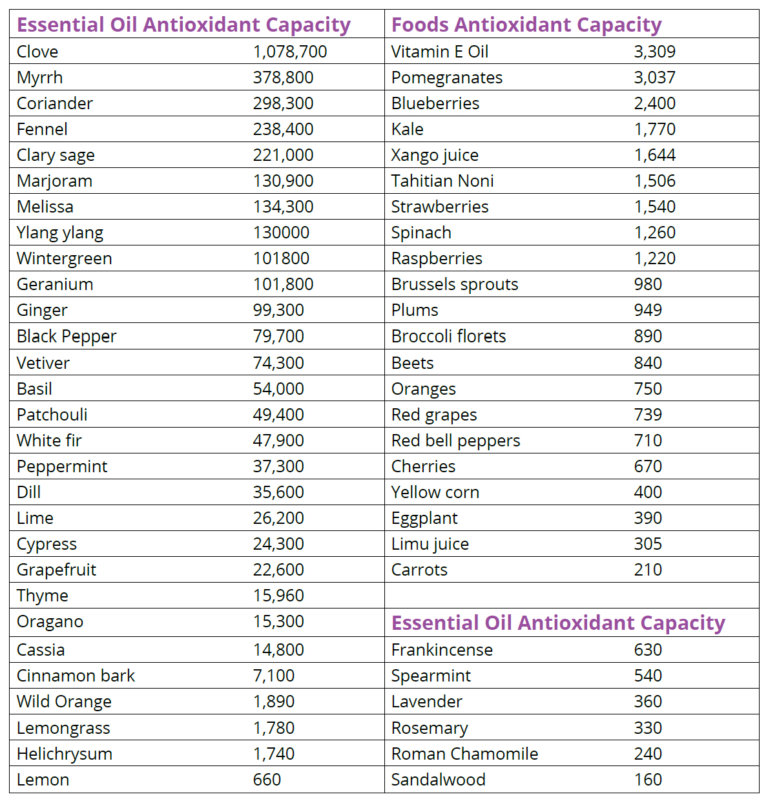
This chart shows the ORAC (Oxygen Radical Absorbance Capacity) values that once circulated widely online, with clove near the top. ORAC is a test-tube score, so we share it as a picture of clove’s antioxidant chemistry, not as a ranking of health benefits in people.
Eugenol has also shown anticancer activity in the laboratory. A 2024 systematic review of 13 studies found that eugenol killed oral cancer cells and slowed their growth in a petri dish. These are cell studies, not human cancer patients, so they point researchers toward future treatments rather than telling us what clove oil does in the body. (11)
4 More Clove Essential Oil Benefits
Clove bud essential oil is rich in eugenol, and its exact makeup varies with the plant part, growing conditions, distillation and storage. The same eugenol that makes clove so useful is why clove is always diluted.
1. Antibacterial Activity
Clove essential oil is widely recognized for antibacterial activity in laboratory research. A 2024 review from Italian researchers describes clove oil acting against E. coli, Pseudomonas, Staphylococcus aureus, Streptococcus mutans, Porphyromonas gingivalis and other germs, including drug-resistant strains, and notes that clove’s compounds “synergize with each other.” (12)
A 2025 review of clove against multidrug-resistant bacteria reported biofilm inhibition of up to about 90 percent in lab studies, and found that clove compounds lowered the amount of antibiotic needed against resistant germs by roughly 4 to 128 times. (13) For the mouth, a 2026 lab study found that a clove oil nanoemulsion blocked 82 percent of biofilm formation by Streptococcus mutans, the main cavity-causing germ. (14)
Application: Use clove as one measured part of a diluted household, oral-care or seasonal blend. Signs of a spreading or serious infection, such as fever or red streaks, need your doctor.
2. Antifungal Activity
Clove essential oil and eugenol have inhibited Candida, Aspergillus and ringworm-type fungi in laboratory studies.
In a 2022 study from the Medical University of Lublin in Poland, clove oil and eugenol inhibited every Candida strain tested, including strains taken from the mouths of patients with blood cancers, by binding to ergosterol in the fungal cell membrane. They also worked together with common antiseptics such as chlorhexidine. (15)
Human evidence is starting to follow. In a 2025 Egyptian study, eugenol packed into a skin-penetrating carrier completely resolved symptoms in every treated patient with skin candidiasis or ringworm-type infections, while a plain eugenol solution brought only partial improvement. (16) Read more about clove alongside thyme, oregano and others in our guide to antifungal essential oils for Candida.
Application: In The Healing Power of Essential Oils, we share Candida Capsules: 2 drops clove and 2 drops thyme in a size 00 capsule (time-release preferred) filled with olive, grapeseed or coconut oil. Start with clove topically at 1 percent first to see how your body responds, and never apply clove to genital tissue (see the hot oil rule in the safety section below).
3. Pain and Inflammation
Clove’s local numbing effect is strongly tied to eugenol, and its anti-inflammatory action reaches beyond the mouth. In a 2026 Moroccan study, clove oil and eugenol calmed the overactive white blood cells that damage joints, and in mice with arthritis they markedly reduced paw swelling and tissue damage without harming the liver. (17) These are lab and animal results, but they fit what we see in the dental trials above.
Application: From The Essential Oils Diet, our Anti-inflammation Diffuser Blend is 1 drop each of clove, copaiba, eucalyptus, orange and rosemary, diffused daily. The Anti-inflammation Inhaler is 7 drops clove, 7 drops eucalyptus and 7 drops orange on the cotton pad of an aromatherapy inhaler, to breathe through the day. For more oils that help, see our guide to essential oils for pain and inflammation.
4. Heart and Circulation
Eugenol calms platelets, the blood cells that clump together to form clots. In a 2024 study from researchers in Taiwan, eugenol at a low concentration blocked human platelets from clumping in the lab, and in mice it reduced blood clots in the lungs without lengthening bleeding time. (18) A 2025 review adds that eugenol helps lower cardiovascular risk factors such as high blood lipids, insulin resistance and high blood pressure in experimental research. (19)
Application: The cardioprotective capsule in The Essential Oils Apothecary uses 2 drops of one oil (lavender, cinnamon bark, clove bud or fennel seed) in a capsule filled with black seed or olive oil, once or twice daily, with your cardiologist in the loop. Our article on essential oils for heart health covers the full protocol.
“Note: If you’re currently taking warfarin or other blood thinners, avoid ingesting clove bud oil because of its antiplatelet aggregation effects. It could cause internal bleeding.” (The Essential Oils Apothecary)
Recommended Clove Essential Oil Uses
Clove bud oil works well when blended with other oils. Personally, I enjoy an immunity blend of equal parts cinnamon, clove, eucalyptus, rosemary, orange, and lemon essential oils.
That is the Immune-Boosting Blend from The Essential Oils Apothecary: 10 drops each of cinnamon bark, clove bud, eucalyptus, lemon, orange and rosemary in a 5 ml bottle. It is a master blend, so you measure it into a diffuser, inhaler or diluted roll-on rather than using it straight.
When using clove, always dilute. Clove bud oil is rich in eugenol and can burn or sensitize the skin when used too strongly. With that said, don’t be afraid of using it. Clove is highly versatile when handled with respect.
Here are some oral-health applications using clove bud essential oil:
- Oil Pulling: Stir the clove oil thoroughly through the full coconut-oil base of your oil-pulling recipe.
- DIY Toothpaste: Follow a tested formula that keeps clove at a low concentration.
- DIY Mouthwash: Essential oil and water do not mix, so use the complete recipe with its dispersing ingredients rather than dropping clove oil into plain water.
For oral-care blends, The Healing Power of Essential Oils pairs clove with orange, peppermint and spearmint, or with cinnamon bark or leaf and orange.
More ways we use clove from our books:
- Tummy Ache Roll-On (The Essential Oils Diet): 3 drops cardamom, 2 drops fennel, 2 drops ginger, 1 drop thyme, 1 drop clove and 1 drop tarragon in a 10 ml roller bottle topped with carrier oil. Roll it on the abdomen as needed.
- In the kitchen (The Essential Oils Diet): clove oil goes in by the drop. Our Spiced Butternut Squash Soufflé uses 2 drops clove with 2 drops cinnamon, 1 drop ginger and 2 drops nutmeg, and Mama Z’s Pumpkin Dip uses 4 drops cinnamon, 2 drops clove and 1 drop ginger.
- Garden Pest Spray (The Healing Power of Essential Oils): 20 drops peppermint, 20 drops rosemary and 20 drops clove with 1/4 teaspoon natural dish soap, topped with distilled water. Spray the leaves, and test a small portion of the plant first.
For inhalation, use clove sparingly because its aroma is intense. Add it as one small part of a diffuser blend, diffuse in a well-ventilated room, and keep the diffuser away from a baby’s crib.
Immunity Boosting Shot
For seasonal wellness support, make my Immunity Boosting Shot! Follow the recipe card exactly, including the oil, amount, carrier and how often to take it.

Immunity Boosting Shot
Quantity
Ingredients
- 1 packet Lypo-Spheric Vitamin C
- 1 teaspoon raw honey
- 1 teaspoon unrefined coconut oil
- 1-2 drops Immune Boost Blend Essential Oils*
- ¼ teaspoon organic pumpkin pie spice
- tiny pinch pink Himalayan salt
Instructions
- Add the EO to the coconut oil first and mix.
- Mix with the remaining ingredients in a glass bowl and enjoy twice daily at the onset of a cold for up to two weeks at a time.
- Wash down with pure, filtered water.
- Be sure to not use for more than two weeks at a time.
- Note – This can be enjoyed straight or with a little bit of water to wash it down.
Recipe note: It is not recommended to add this mixture to boiling tea because high heat can alter delicate components in honey and essential oils. If you want to add it to tea, let the tea cool until it is comfortably warm.
Can I ingest essential oils?
Yes, the right way: always diluted in an edible carrier oil, honey or a capsule, never neat and never floated in plain water. Learn more about how to ingest essential oils here.
Capsule note: “Do not make and store these capsules for future use. Also, this is not a long-term solution, and using it for more than four weeks at a time is not advisable. Be sure to switch up your protocol monthly and consult with your health-care provider first if you’re currently taking medications. Discontinue if adverse reactions occur.” (The Essential Oils Apothecary)
Clove Essential Oil Safety
Clove is one of the essential oils that demands careful dosing. The same eugenol that makes it so effective can irritate skin and mucous membranes when it is too strong.
Keep these safeguards in mind:
- Always dilute: Undiluted clove oil can burn or sensitize skin and the inside of the mouth. For skin and gums, mix it into a carrier oil first, and patch test on the back of your hand.
- Hot oil rule: Clove is a “hot” oil. In the book’s words, “When applying essential oils around or in sensitive areas like the vagina and rectum, remember to never use more than a 1 percent dilution,” and “Just steer clear of the caustic ones like cinnamon, oregano, thyme, and clove.” Never put clove in a suppository, douche or pessary.
- Blood thinners: If you take warfarin or another blood thinner, do not ingest clove oil, because of its antiplatelet effect. Tell your surgeon or dentist you use clove before a procedure.
- Medications: A 2024 study in human liver cells found that eugenol slowed four drug-processing enzymes (CYP1A2, CYP2C9, CYP2D6 and CYP3A4), and the authors flagged potential herb-drug interactions. (20) If you take prescription drugs, talk with your doctor before starting clove capsules.
- Keep the bottle locked away from children: Swallowing a bottle of clove oil is an emergency. In a 2005 case, a 15-month-old boy developed liver failure after drinking 10 ml of clove oil and recovered after treatment. (21)
- Pregnancy and nursing: Clove as a kitchen spice is a different thing from clove capsules. Skip the capsule remedies on this page while pregnant or nursing unless your doctor or midwife says otherwise.
- Stop for adverse reactions: Discontinue use for burning, rash, swelling, coughing, nausea, unusual bleeding or dizziness.
Call Poison Control at 1-800-222-1222 in the United States if someone swallows an unintended amount. Call emergency services for trouble breathing, a seizure, loss of consciousness or severe vomiting.
Clove Essential Oil FAQs
What is clove oil good for?
Clove oil is best known for toothache, gum pain and oral care, where a 2026 trial found a 5 percent clove gel numbed gums as well as standard numbing gels. Lab and animal research also shows antibacterial, antifungal, anti-inflammatory and antiplatelet activity, and we use it in immune, anti-inflammation and tummy blends from our books.
What is clove bud essential oil?
Clove bud essential oil is distilled from the dried, unopened flower buds of the clove tree, Syzygium aromaticum. Eugenol makes up at least half of the oil, which is why it numbs, fights germs, and must always be diluted.
Can I put clove oil directly on a toothache?
Not undiluted. Mix 15 drops of clove oil into 2 teaspoons of coconut or olive oil (a 5 percent blend, the strength used in the 2026 children’s trial) and dab it on the sore gum with a cotton swab. Undiluted clove oil can burn the inside of the mouth, and a tooth that keeps hurting needs your dentist.
How fast does clove oil numb a tooth?
Within minutes. In the 2026 trial, dentists rubbed the 5 percent clove gel on the gum for one minute and waited two minutes before giving the shot, and it numbed as well as the standard gels. (1)
Is clove oil good for your gums?
Yes. A 2026 systematic review found that toothpastes and mouthwashes made with clove and other herbs reduced plaque and gum inflammation as well as fluoride products. (7) Use it diluted, in a toothpaste, mouthwash or oil-pulling recipe.
Can I use clove oil for a teething baby?
No. Essential oils, clove included, never go on a baby’s gums or inside a baby’s mouth. For children, use clove only on the skin, at the book’s children’s dilutions: 0.5 percent under age three and 1 percent from three to ten.
Can clove essential oil be used internally?
Yes, in small, measured amounts: a drop or two in a recipe, or 2 drops in a capsule as in our Candida Capsules. Never swallow it neat, and never float it in water.
The more you learn about clove essential oil, the more you will appreciate both its power and its limits. Its eugenol-rich chemistry makes it a valuable ingredient in oral-care, seasonal and topical remedies.
God has given us powerful plant-based tools, and wisdom is part of stewardship. Use clove in the right preparation, at the right amount, for the right purpose, and for more on living out God’s design for your health, visit Bible Health.
Keep reading: 10 Best Antibacterial Essential Oils: Benefits & Uses · Oregano Essential Oil Benefits: 6 Uses, Research & Safety · Homemade DIY Stomach Ache Roller Recipe With Essential Oils
References
- Awasthi N, Singh Y, Singh S, et al. Comparative evaluation of pain perception following topical application of clove oil, [lidocaine-prilocaine cream] 5%, and lignocaine hydrochloride gel 2% as a pre-anesthetic agent in children aged 7-10 years: a randomized controlled study. International Journal of Clinical Pediatric Dentistry. 2026. Source.
- Alqareer A, Alyahya A, Andersson L. The effect of clove and benzocaine versus placebo as topical anesthetics. Journal of Dentistry. 2006. Source.
- De Grado GF, Clément B, Florence F, et al. Efficacy of articaine or eugenol for pain relief after emergency coronal pulpotomy in teeth with irreversible pulpitis: a randomized clinical trial. Dentistry Journal. 2023. Source.
- Siriwattanadom S, Kheawfu K, Laosuwan K, et al. An update on herbal remedies for treatment of alveolar osteitis: a narrative review. European Journal of Dentistry. 2026. Source.
- Reddy MS, Ramachandra SS, Shetty SR, et al. Analgesic efficacy of phytotherapeutic agents in dental pain management: a systematic review. International Journal of Dentistry. 2025. Source.
- Barrera SD, Cepeda LJB, Báez DAD, et al. Herbal extracts in orofacial pain: a systematic review and direct and indirect meta-analysis. Scientific Reports. 2024. Source.
- Shahzad M, Ahmad HA, Ambadi S, et al. Traditional oral hygiene practices and their effectiveness: a systematic review of the evidence. Oral Health and Preventive Dentistry. 2026. Source.
- Jahanshir M, Nobahar M, Ghorbani R, et al. Effect of clove mouthwash on the incidence of ventilator-associated pneumonia in intensive care unit patients: a comparative randomized triple-blind clinical trial. Clinical Oral Investigations. 2023. Source.
- Haro-González JN, Castillo-Herrera GA, Martínez-Velázquez M, et al. Clove essential oil (Syzygium aromaticum L. Myrtaceae): extraction, chemical composition, food applications, and essential bioactivity for human health. Molecules. 2021. Source.
- Liñán-Atero R, Aghababaei F, García SR, et al. Clove essential oil: chemical profile, biological activities, encapsulation strategies, and food applications. Antioxidants. 2024. Source.
- Wulan SN, Anggraini JA, Hidayat W. In vitro anticancer potential of eugenol on oral cancer cell lines: a systematic review. Malaysian Journal of Medical Sciences. 2024. Source.
- Maggini V, Semenzato G, Gallo E, et al. Antimicrobial activity of Syzygium aromaticum essential oil in human health treatment. Molecules. 2024. Source.
- Tariq H, Alhudhaibi AM, Abdallah EM. Syzygium aromaticum (clove buds) as a natural antibacterial agent: a promising alternative to combat multidrug-resistant bacteria. Frontiers in Microbiology. 2025. Source.
- Gupta AD, Ghosal D, Ghosh D, et al. Clove oil nanoemulsion as a novel therapeutic strategy against Streptococcus mutans-induced dental caries and periodontitis. Natural Product Research. 2026. Source.
- Biernasiuk A, Baj T, Malm A. Clove essential oil and its main constituent, eugenol, as potential natural antifungals against Candida spp. alone or in combination with other antimycotics due to synergistic interactions. Molecules. 2022. Source.
- Salah Eleleemy M, Ragaie MH, Hamdy Amin B, et al. Enhanced skin penetration and clinical antifungal activity of eugenol encapsulated in aspasomes. Pharmaceutical Development and Technology. 2025. Source.
- El Faqer O, Ouadghiri Z, Wahnou H, et al. Dual anti-inflammatory and immunomodulatory effects of clove essential oil and eugenol: targeting neutrophil functions and experimental arthritis. Inflammopharmacology. 2026. Source.
- Huang WC, Shu LH, Kuo YJ, et al. Eugenol suppresses platelet activation and mitigates pulmonary thromboembolism in humans and murine models. International Journal of Molecular Sciences. 2024. Source.
- Liu XY, Nie YK, Liu Y, et al. Cardiovascular protective properties of the natural product eugenol. European Journal of Pharmacology. 2025. Source.
- Alharbi NFM, Ahad A, Bin Jardan YA, et al. Effect of eugenol on cytochrome P450 1A2, 2C9, 2D6, and 3A4 activity in human liver microsomes. Saudi Pharmaceutical Journal. 2024. Source.
- Janes SE, Price CS, Thomas D. Essential oil poisoning: N-acetylcysteine for eugenol-induced hepatic failure and analysis of a national database. European Journal of Pediatrics. 2005. Source.