QUICK SUMMARY
Homemade dish soap is one of the easiest non-toxic kitchen swaps you can make. This recipe uses organic unscented liquid Castile soap, vegetable glycerin, distilled water, and essential oils to clean dishes by hand without synthetic fragrance.
The Castile soap does the actual cleaning by lifting grease and food residue, while glycerin improves the texture and suds. Lemon, tea tree, and lemon eucalyptus or lemon myrtle essential oils add the fresh plant-based scent we prefer and bring useful botanical chemistry.
Use this recipe for hand-washing dishes only, rinse dishes thoroughly, and keep any vinegar rinse separate from the Castile soap.
Dish soap is one of my favorite places to start when creating a non-toxic kitchen because it is such an easy swap.
You do not need a complicated formula or artificial fragrance. You just need a few simple ingredients and good washing technique.
This homemade dish soap comes together in minutes, so the recipe is first. After that, I’ll show you how to get the best results with Castile soap, especially if you have hard water.
Table of Contents

How to Make Dish Soap With Essential Oils
This dish soap comes together in minutes! I always have a batch of this homemade dish soap recipe on hand, and I’ve even gifted it to loved ones.
It makes a beautiful housewarming gift when paired with a new scrubbing brush, gloves, and sponge.

Homemade Dish Soap Recipe With Essential Oils
Quantity
Ingredients
- ½ cup organic unscented liquid castile soap
- 2 teaspoons organic vegetable glycerin
- 6 drops lemon essential oil
- 4 drops tea tree essential oil
- 4 drops lemon eucalyptus OR lemon myrtle essential oil (or 2 drops each)
- Purified OR distilled water, as needed
Supplies
- 1 (16-ounce) Glass jar OR bottle with pump
Instructions
- Pour the organic unscented liquid castile soap and vegetable glycerin into the glass bottle. I recommend using a glass bottle with a pump or a foaming soap dispenser.
- Add the essential oils of choice to the bottle. If you don’t have the essential oils listed, any citrus oil works beautifully.
- Fill the bottle the rest of the way with distilled water. Be sure to allow room for the pump, or your mixture will overflow! Replace the top and close tightly.
Step One: Add Soap and Glycerin to the Bottle
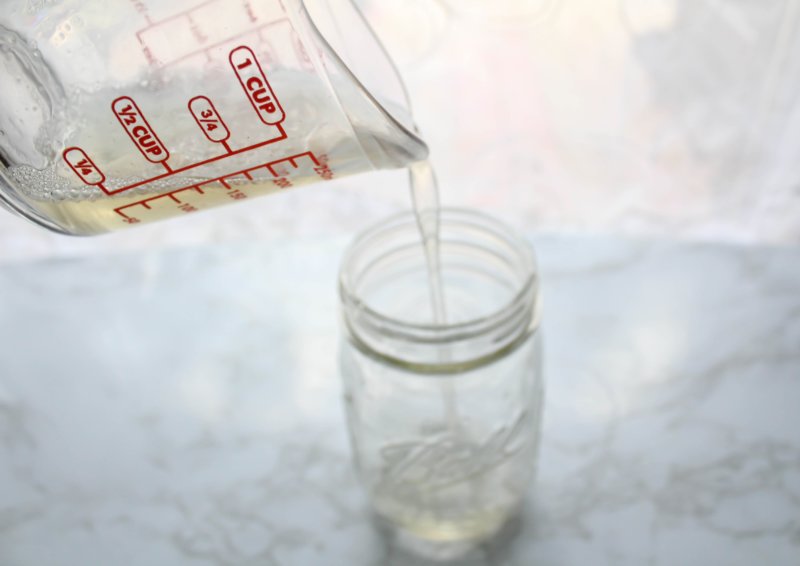
Pour the organic unscented liquid Castile soap and organic vegetable glycerin into the glass bottle.
I recommend storing your homemade dish soap recipe in a glass bottle with a pump or a foaming soap dispenser. You can purchase lids that turn any mason jar into a foaming dispenser.
Step Two: Add Essential Oils
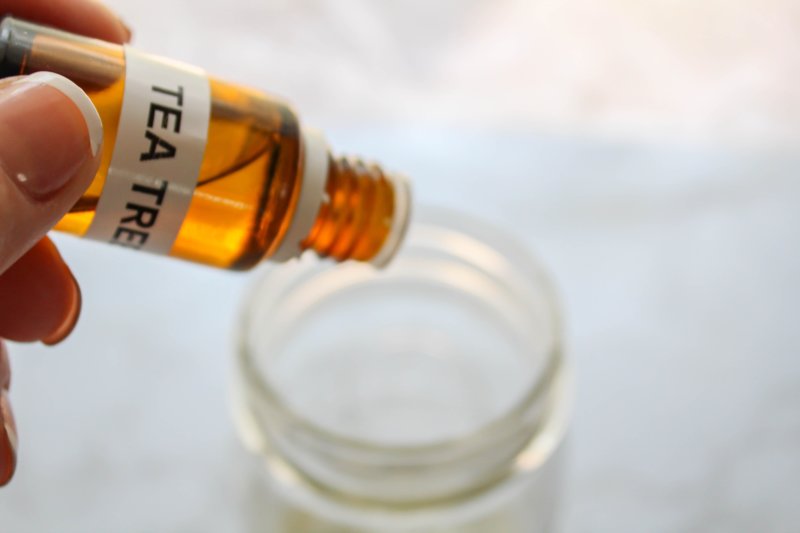
Add the essential oils of choice to the bottle.
If you don’t have the essential oils listed, another citrus oil can work beautifully for scent.
Changing the essential oil changes the safety profile too, so avoid casually substituting strongly irritating oils such as cinnamon bark, oregano, or clove just because they smell “clean.”
Step Three: Fill With Water
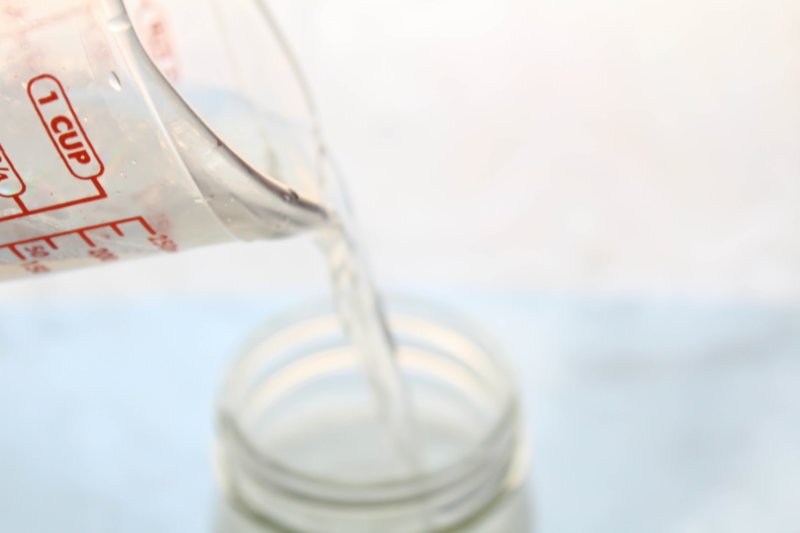
Fill the bottle the rest of the way with distilled water. Be sure to allow room for the pump, or your mixture will overflow!
Replace the top and close tightly.
Use as you would any other hand dish soap.
Important: Do Not Put This in the Dishwasher
This recipe is for hand-washing dishes in the sink. Automatic dishwashers require low-foaming detergent formulas designed for the machine.
Putting hand dish soap or Castile soap into a dishwasher can create excessive suds, leaks, and a giant mess.
Can Kids Help?
Absolutely. Doing dishes is a wonderful family chore and an easy way to teach children to “work heartily, as for the Lord” (Colossians 3:23).
Just keep normal soap safety in place:
- An adult should make the recipe and handle the concentrated essential oils.
- Young children should not pump soap into their mouths or play with the bottle.
- Keep suds away from the eyes.
- Rinse dishes thoroughly.
- Do not let children mix the soap with bleach or other cleaners.
- Use nonbreakable items when little ones are learning to wash.
Poison Control notes that hand dish soap usually causes irritation rather than severe poisoning in small accidental exposures, but swallowing it can cause nausea, vomiting, or diarrhea, and eye splashes can hurt. (1)
Homemade Dish Soap Ingredients
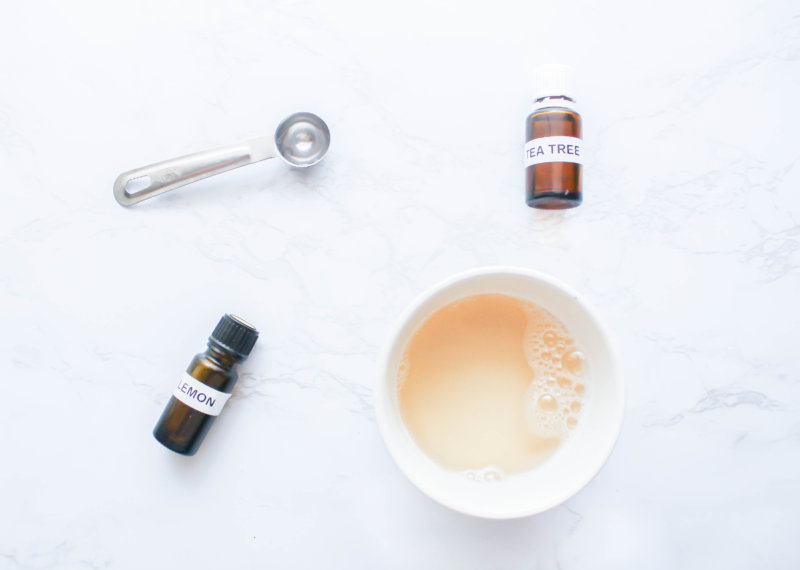
This recipe uses a short ingredient list that is easy to keep on hand.
Organic Unscented Liquid Castile Soap
Organic unscented liquid Castile soap is the cleaning base.
True Castile soap is made from saponified vegetable oils rather than synthetic detergent surfactants. It lifts grease and food residue so they can be rinsed away.
Current Castile-soap guidance recommends it for hand-washing dishes and notes that hard water may require extra rinsing or hand drying to avoid film. (2, 3)
Organic Vegetable Glycerin
Organic vegetable glycerin improves the texture and bubble stability of the soap.
Bubbles are not a measure of cleaning power, though. The Castile soap is doing the cleaning.
Essential Oils
Lemon essential oil gives this DIY its bright citrus aroma.
Tea tree essential oil is another favorite for natural cleaning. A 2026 review describes how tea tree oil and its main constituents break down microbial membranes, which explains its antibacterial and antifungal activity in laboratory research. (4)
Lemon eucalyptus or lemon myrtle adds another fresh botanical note. In a 2025 laboratory study, lemon eucalyptus oil showed clear antibacterial activity against Listeria, Salmonella, and other bacteria. (5)
That research helps explain why we like these oils in cleaning formulas.
This is a wash-off cleaning formula, not an internal-use recipe. For questions about culinary or internal essential-oil use, see our guide to how to ingest essential oils.
Distilled or Purified Water
Distilled or purified water dilutes the Castile soap to a practical consistency.
Distilled water is especially helpful when your tap water is hard. Because this DIY is water-based and does not use a commercial preservation system, keep the dispenser clean and make a fresh batch if the soap develops an unusual odor, color, texture, or visible contamination.
Tips for Sparkling Clean Dishes
A natural dish soap works best when you use good washing technique.
- Scrape first. Remove leftover food before washing.
- Start with the cleanest items. Wash glasses first and greasy pans last.
- Use warm water. It helps loosen grease and dried food.
- Change dirty water. Do not keep washing clean dishes in greasy water.
- Soak stubborn food. Give dried-on messes time to soften.
- Use baking soda when needed. Baking soda can add gentle scrubbing power to appropriate dishes and pans.
- Rinse thoroughly. Soap belongs in the sink, not on the plate.
- Air dry when practical. A clean drying rack keeps things simple.
What If Castile Soap Leaves a Film?
Hard-water minerals can react with true soap and leave glasses looking cloudy.
Rinse well and dry glassware by hand when needed.
You can put a small amount of organic white distilled vinegar in clean rinse water to help with mineral film.
Do not pour vinegar directly into the Castile-soap bottle.
Acid and true soap work against each other chemically, which is why current Castile-soap guidance recommends keeping acidic rinses separate. (2)
Why We Make Our Own Dish Soap
The biggest reason is ingredient control.
Conventional dish soaps can contain surfactants, fragrance blends, preservatives, dyes, and other ingredients we prefer to limit in our home.
For example, sodium lauryl sulfate is a surfactant with known irritation potential at sufficient concentrations and contact times. Researchers even use it experimentally to study irritant contact dermatitis and skin-barrier damage. (6, 7)
Synthetic fragrance is another easy place for us to simplify. Fragrance compounds are among the common causes of allergic contact dermatitis in susceptible people. (8)
We simply prefer a formula we understand.
If fragrance of any kind bothers your family, skip the essential oils and let the unscented Castile soap do the cleaning.
For a broader kitchen cleanup, see our guides to tap-water quality, non-toxic cookware, and synthetic fragrance.
Homemade Dish Soap FAQs
Does homemade dish soap really work?
Yes. Castile soap is a true soap that helps lift grease and food residue so they can be rinsed away. Technique and water hardness can affect the results.
Why doesn’t it make as many bubbles as store-bought soap?
Foam depends on surfactant chemistry, water hardness, grease load, and concentration. More bubbles do not automatically mean cleaner dishes.
Can I mix vinegar into this dish soap?
I do not recommend it. Vinegar is acidic and Castile soap is alkaline. Keep vinegar separate and use it only as a rinse when needed.
Does tea tree oil make this soap antibacterial?
Tea tree oil has antimicrobial activity in laboratory research, but that does not turn this DIY into a validated disinfectant or sanitizer. (4)
Can I put this in the dishwasher?
No. This is hand dish soap. Automatic dishwashers require a low-sudsing detergent designed for the machine.
Can kids help wash dishes?
Yes, with supervision. Adults should make the recipe and handle concentrated essential oils. Keep soap away from eyes and mouths, rinse dishes well, and let little ones practice on nonbreakable items.
How should I store homemade dish soap?
Use a clean, closed pump bottle away from direct sunlight and heat. Do not keep topping off an old batch indefinitely. Replace it if the smell, color, or texture changes.
Keep reading: Non-Toxic Homemade Oven Cleaner With Essential Oils · Homemade Carpet Spot Cleaner: How to Remove Carpet Stains · Best Washing Machine Cleaner: TrulyFree Product Review
References
- Poison Control (National Capital Poison Center). What to Know About Dish Soap. Source.
- Dr. Bronner’s. Using Castile Soap in Hard Water. Source.
- Dr. Bronner’s. Pure-Castile Soap Dilutions Cheat Sheet: Hand Dishwashing. Source.
- Ebrahimi N, Shokouhi H, Omrani M, et al. Phytochemistry and pharmacology of Melaleuca alternifolia: Bridging aboriginal heritage with contemporary science. Biochimica et Biophysica Acta: General Subjects. 2026. Source.
- Al-Mijalli SH, El Hachlafi N, Khalil Z, et al. Unlocking the Antibacterial Potential of Eucalyptus citriodora Hook: Essential Oil on Some Bacterial Pathogens with a Focus on Antiadhesive, Antibiofilm, and Mechanisms of Action Against Pseudomonas aeruginosa. Foodborne Pathogens and Disease. 2025. Source.
- Salomon G, Giordano-Labadie F. Surfactant irritations and allergies. European Journal of Dermatology. 2022. Source.
- Kezic S, de Boer F, Metwally NKA, et al. Skin Barrier Biomarkers in Patch-Induced and Clinical Allergic and Irritant Contact Dermatitis. Contact Dermatitis. 2026. Source.
- Botvid S, Bennike NH, Simonsen AB, et al. Contact sensitization to fragrance mix I and fragrance mix II among European dermatitis patients: A systematic review. Contact Dermatitis. 2024. Source.