QUICK SUMMARY
Mama Z’s homemade gluten-free gnocchi recipe makes tender potato dumplings that have become one of our favorite New Year’s Day traditions. The dough uses potatoes, dairy-free cheese, egg or egg replacer, potato starch, and gluten-free flour, with sweet potatoes as an easy variation.
The secret to soft gnocchi is simple: start with tender potatoes, rice them while warm, let them cool, and add only as much flour as the dough needs. Too much flour makes gnocchi dry and heavy.
Serve the finished gnocchi with Mama Z’s red Sun-Dried Tomato Basil Pesto, green Parsley Pesto with Basil, homemade marinara, or the sweet Cinnamon “Not” Sugar variation. The pesto recipes include optional culinary essential-oil use, so follow the recipe-card amounts exactly and keep those amounts tied to the complete pesto batch.
This savory Gnocchi Recipe is our favorite New Year’s Day treat. It’s cheesy, tender, gluten-free, dairy-free when made with the recommended cheese alternatives, and easy to adapt for several dietary needs.
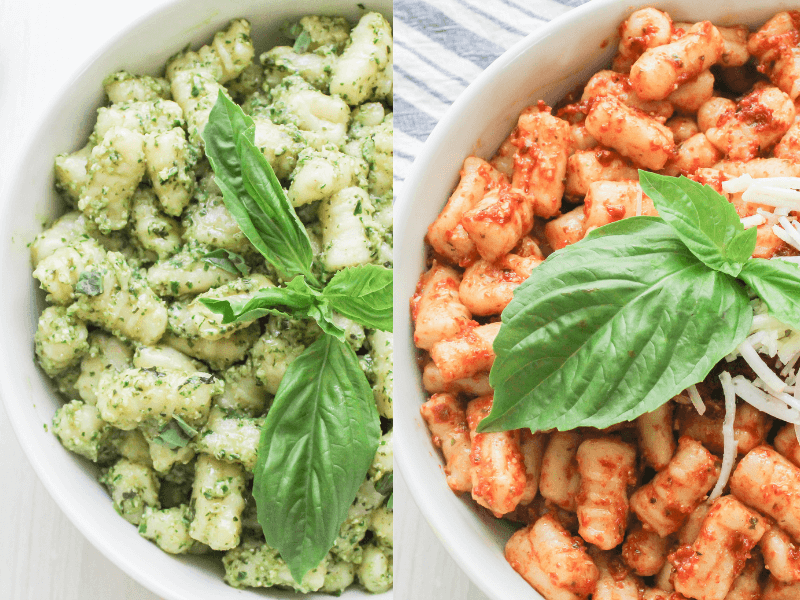
We love smothering our gnocchi in my Sun-Dried Tomato Basil Pesto and Parsley Pesto, also known as “Red and Green Pesto.” You can also serve it with homemade marinara or the sweet Cinnamon “Not” Sugar variation.
For us, the best part of gnocchi is making it together. Everyone pitches in to get the job done! Even the littlest ones can make “snakes” and cut gnocchi pieces. If homemade pasta sounds intimidating, don’t let it. Gnocchi is wonderfully forgiving once you learn what the dough should feel like, and the whole process is much more fun when everyone gets involved.
Table of Contents:

Make My Gnocchi Recipe
This recipe takes a little time to make, but it’s well worth the effort. If your kids like Play-Doh, they’ll love helping you to roll gnocchi!
Classic Gnocchi (With Vegan Option)
Servings
Ingredients
- 2 pounds organic Idaho potatoes (about 3 large), OR organic red skin OR organic sweet potatoes (about 2 medium), scrubbed AND boiled in skins until tender
- ½ cup Homemade Parmesan Cheese OR vegan Parmesan cheese OR shredded dairy-free mozzarella OR Parmesan-style cheese alternative*
- 1 pasture-raised organic egg OR 1½ teaspoons egg replacer PLUS 2 tablespoons purified OR distilled water
- 1 teaspoon pink Himalayan salt OR sea salt, ground
- ½ teaspoon organic white pepper, ground
- ½ cup organic potato starch (may need more)
- 2-3 cups gluten-free all-purpose flour OR rice flour, divided
- Extra-virgin olive oil, for pasta water
Supplies
- Gnocchi tool OR fork
- Slotted spoon OR skimmer
Instructions
- Place the potatoes with skins on in a large pot and cover them with water. Add salt to the water and bring to a boil over high heat. Reduce heat to medium-low, cover, and simmer until fork-tender, 15-20 minutes.
- Drain, fill with cold water, and add ice cubes. Rest for 10 minutes. Allow cooked potatoes to cool slightly, then carefully peel the skins off with your fingers. Puree the still-warm potatoes through a potato ricer into a large mixing bowl and allow them to cool completely before proceeding.
- Prepare 2 baking sheets with cooking spray and flour. Add cheese, egg, salt, and pepper to the potatoes and mix well. Gradually add enough flour and potato starch to form a smooth, pliable ball of dough. You may not need all the flour. The dough should stick to itself but not to your hands. Avoid making it too dry.
- Knead the dough to incorporate the flour for a few minutes, being careful not to overwork. Bring a large pot of salted water to a rolling boil. Cut the dough into 10 equal pieces and place 1 piece on a lightly floured work surface. Roll the piece into a long rope, about ½-inch in diameter, flouring lightly if needed. Cut the ropes into ½-inch cubes.
- Press with the curve of the fork and roll it slightly. The result will be gnocchi with an indent on one side from your finger and the pattern of the fork on the other side. Handle carefully to preserve their shape. Repeat with each piece of dough, setting formed gnocchi on the floured baking sheet. Keep them apart, so they don’t touch one another, or they might stick together. Have your pesto or sauce ready to coat the gnocchi as they come out of the boiling water in the following steps. Add a generous dollop of olive oil to the water and add the gnocchi to the boiling water, so it falls through the oil.
- Cook for 2-3 minutes, lightly stirring to keep them from sticking to the pot. When they are finished cooking, they will rise to the top.
- Remove the cooked gnocchi with a slotted spoon or skimmer. Serve with Garlic-Lovers Basil Pesto or Sun-Dried Tomato Basil Pesto, or Mama Z’s Spaghetti Sauce. I like to serve this dish with two cheese options. For a sweet option, take ½ cup of grass-fed butter, softened, and mix it with my Cinnamon “Not” Sugar until the consistency is runny, not firm.
Homemade Parmesan Cheese (Vegan)
Supplies
- Food processor OR blender
Ingredients
- ¾ cup organic raw cashews
- 2 tablespoons organic raw pine nuts
- 1 tablespoon organic hemp hearts/seeds
- ¼ cup organic nutritional yeast
- 1 teaspoon pink Himalayan salt OR sea salt, ground
- ¼ teaspoon organic garlic powder
Instructions
- Add the cashews, pine nuts, hemp seeds, nutritional yeast, sea salt, and garlic powder to a food processor or blender. Pulse until the mixture reaches the consistency of Parmesan cheese.
- Use in your favorite Italian recipes, or as you would traditional cheese.
Notes
Step One: Boil the Potatoes

Place the potatoes with skins on in a large pot and cover them with water. Add salt to the water and bring to a boil over high heat. Reduce heat to medium-low, cover, and simmer until fork-tender, 15-20 minutes.
Drain, fill with cold water, and add ice cubes. Rest for 10 minutes. Allow cooked potatoes to cool slightly, then carefully peel the skins off with your fingers.
Step Two: Rice the Potatoes
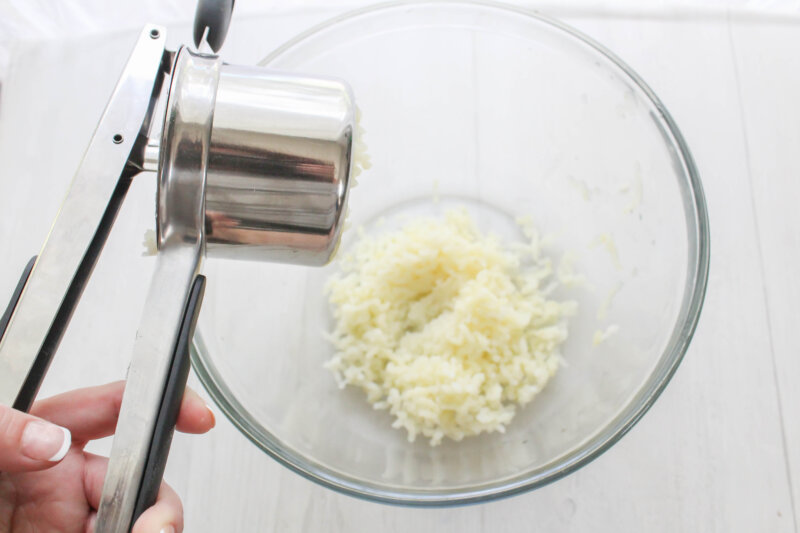
Puree the still warm potatoes through a potato ricer into a large mixing bowl and allow to cool completely before proceeding.
Step Three: Prep the Dough
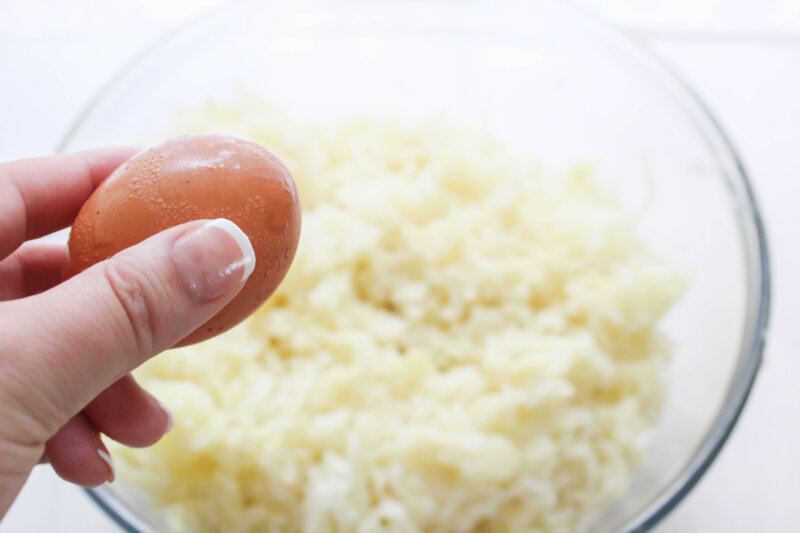
Prepare 2 baking sheets with cooking spray and flour, which works better than parchment-lined baking sheets in my experience. Add cheese, egg, salt, and pepper to the potatoes and mix well. Gradually add enough flour and potato starch to form a smooth, pliable ball of dough. You may not need all the flour.
The dough should stick to itself but not to your hands. Avoid making it too dry. Knead the dough to incorporate the flour for a few minutes, being careful not to overwork. Bring a large pot of salted water to a rolling boil.
Step Four: Cut the “Snakes”
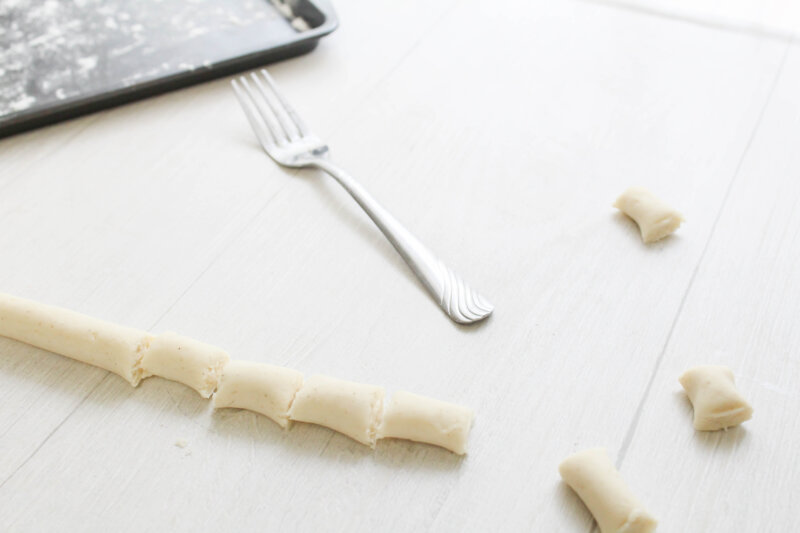
Cut the dough into 10 equal pieces and place 1 piece on a lightly floured work surface. Roll gnocchi piece into a long rope, about ½-inch in diameter, flouring lightly if needed. Cut the ropes into ½-inch cubes.
Step Five: Form the Gnocchi Fork Method
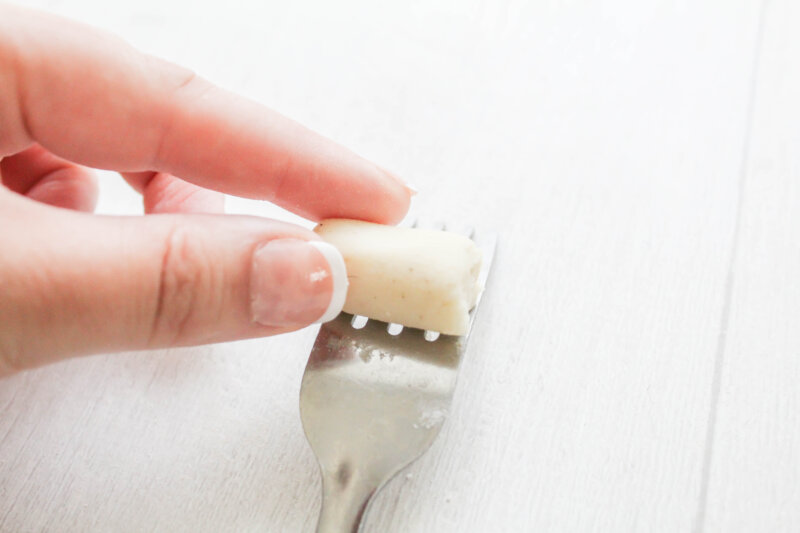
Press with the curve of the floured fork and roll it slightly. The result will be gnocchi with an indent on one side from your finger and the pattern of the fork on the other side.
Handle carefully to preserve their shape. Repeat with each piece of dough, setting formed gnocchi on the floured baking sheet. Keep them apart, so they don’t touch one another, or they might stick together.
Have your pesto or sauce ready to coat the gnocchi as they come out of the boiling water in the following steps.
Step Six: Cook the Homemade Pasta
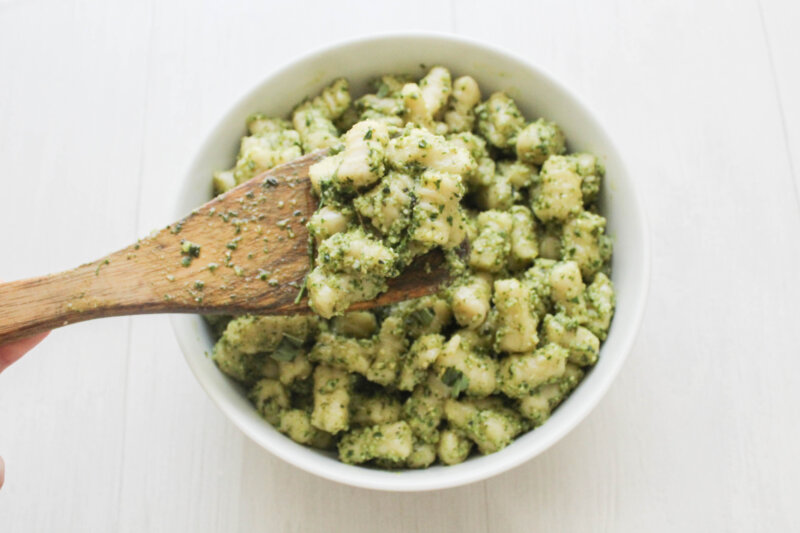
Add a generous dollop of olive oil to the water and add the gnocchi to the boiling water, so it falls through the oil. Cook for 2-3 minutes, lightly stirring to keep them from sticking to the pot. When they are finished cooking, they will rise to the top.
Remove the cooked gnocchi with a slotted spoon or skimmer. Some people will cover the gnocchi with marinara sauce, which you can use our homemade Mama Z’s Spaghetti Sauce if you want. However, for a fun twist, try one of my favorite sauces and serve it with Garlic-Lovers Basil Pesto or Sun-Dried Tomato Basil Pesto. I like to serve this dish with two cheese options.
For a sweet option, take ½ cup of grass-fed butter, softened, and mix it with my Cinnamon “Not” Sugar until the consistency is runny, not firm.
A Quick Note When Kids Help
Rolling and shaping gnocchi is a wonderful kitchen job for little hands. Just save the taste-testing for after cooking because the dough can contain raw egg and raw flour. FDA continues to advise against eating uncooked dough or batter because raw flour and eggs can carry foodborne pathogens. (6)
Indispensable Gnocchi Tips
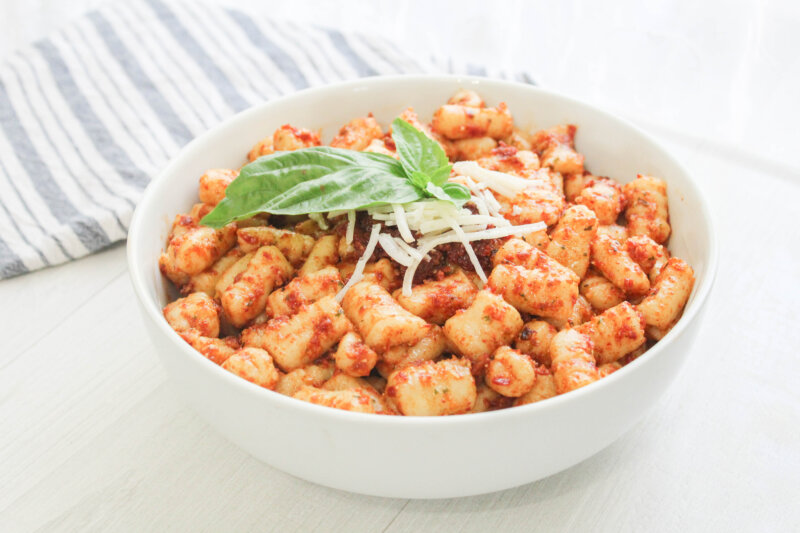
Homemade pasta is so much fun to make! Gluten-free cooking has a bit of a learning curve, but once you get the hang of it, you’ll be creating beautiful Italian recipes your family will adore.
Over the years, I’ve compiled a general list of tips that help me make perfect gnocchi every time.
- A steamer is an excellent tool for cooking potatoes. I set the timer for 30 minutes and place large potatoes on the bottom of the steamer. Smaller potatoes can go on the top rack. This cooking method helps them steam evenly.
- This recipe calls for a specific weight of potatoes. If you don’t have a scale, you can use 3 large organic potatoes or 3 medium-sized organic sweet potatoes.
- Be sparing with the flour to avoid overly dry pasta. No one wants dry gnocchi! I like to incorporate a little bit of flour at a time until the dough reaches the right consistency.
- If your “snakes” fall apart, you need more flour. This is a great test to ensure your dough is perfect!
- A floured fork is the best tool for cutting the gnocchi, and it doubles as a gnocchi maker! Of course, you can always purchase a bona fide gnocchi maker. I asked for one last Christmas, and it makes the prettiest designs.
- Salt your pasta water to add flavor. The gnocchi dough will absorb just the right amount of salt water and give you a balanced taste.
- Right before cooking the gnocchi, add a glug of extra-virgin olive oil to your pot of water. Then, allow the pasta to pass through the oil as it falls into the pot. This step keeps the gnocchi from sticking together or to the pan.
- When the gnocchi recipe is done, it will “pop” to the top of the pan. It’s like magic!
The Most Important Gnocchi Rule: Watch the Dough, Not Just the Measuring Cup
Potatoes do not all contain the same amount of moisture. Sweet potatoes, russets, red potatoes, and Idaho potatoes can behave a little differently, and even two potatoes of the same variety can vary.
That is why the recipe wisely gives you a flour range.
Add the flour gradually. You want a dough that holds together, feels pliable, and no longer sticks aggressively to your hands. Stop before it becomes stiff or dry.
This one habit does more for tender homemade gnocchi than trying to force every batch to absorb exactly the same quantity of flour.
Healthy Italian Ingredients 101
This delicious gnocchi is highly cost-effective, as it’s potato-based. You’ll be surprised to learn that most healthy cooking involves swapping one ingredient for another!
In my experience, this is the best way to create meals that taste just as good as their unhealthy cousins. Here’s a quick rundown of what you’ll need to make my gnocchi recipe.
Organic Potatoes
For traditional gnocchi, use organic red-skin potatoes, Idaho, or russet potatoes. If you want a tasty twist, you can use sweet potatoes to add a hint of sweetness.
Potatoes are incredibly filling and create a moist pasta that pairs well with many sauces. They also contribute useful nutrients, including potassium and vitamin C, with exact amounts depending on the variety and preparation. USDA FoodData Central tracks substantial nutrient variability among potato types. (1)
Potatoes also contain polyphenols, including phenolic acids such as chlorogenic acid. Colored potato varieties can contain especially high levels of anthocyanins and other polyphenols. (2)
Potatoes contain antioxidant plant compounds that contribute to an overall nutrient-rich diet.
Vegan, Dairy-Free Cheese
Every gnocchi needs cheese! Vegan cheese melts perfectly and keeps our gnocchi tender.
You can use my Homemade Vegan Parmesan or your favorite dairy-free, vegan, plant-based cheese. Great brands of dairy-free cheese include Daiya, Kite Hill, Follow Your Heart, Forager, Miyokos, So Delicious, and Violife.
Formulas change, so read the ingredient label every time if you are avoiding a specific allergen. “Dairy-free” does not automatically mean “allergy-free,” and plant-based cheeses may contain nuts, soy, coconut, or other ingredients depending on the product. FDA currently recognizes nine major food allergens and recommends checking ingredient and allergen statements carefully. (3)
Pasture-Raised Organic Eggs
Eggs boost protein and help our gnocchi recipe bind together. In traditional Italian pasta, eggs are a staple!
When purchasing eggs, I’ve found that pasture-raised organic eggs make me feel the best. If buying from a local farmer, ask about their feeding processes to ensure you get truly pasture-raised eggs.
For a vegan version, you can make gnocchi without eggs, but I find it cooks better using eggs. The protected recipe card includes the egg-replacer option and exact liquid amount, so follow that formula rather than guessing at a substitution.
Pink Himalayan Salt or Sea Salt and Organic White Pepper, Ground
We recommend using hand-harvested sea salt from Colima. I love its flavor, sourcing, and the way it fits into our kitchen.
Sea salt and Himalayan salt can contain trace minerals, but they are still primarily sodium chloride. Those trace minerals are not a reason to count salt as a major mineral supplement.
One practical distinction matters: specialty salts such as sea salt and Himalayan salt are usually not iodized. If your family does not use iodized salt, make sure iodine comes reliably from other foods or an appropriate source because iodine is essential for thyroid hormone production. (4)
If you don’t have sea salt, you can use freshly ground pink Himalayan salt. White pepper is one of my favorite spices; it has a milder flavor than black pepper and tastes so gourmet!
Organic Non-GMO Potato Starch and Gluten-Free All-Purpose Flour
I use a combination of non-GMO potato starch and gluten-free flour to create the perfect dough. Potato starch is a great gluten-free thickener, and its flavor complements the gnocchi perfectly. Gluten-free flour makes pasta with a traditional texture, so you don’t miss out on your old favorites.
I recommend using a cup-for-cup blend because it’s formulated for cooking and baking. Be sure to read the back of your packages, as some brands may ask you to include an ingredient you aren’t comfortable with.
If you are making this for someone with celiac disease, use ingredients labeled gluten-free and consider cross-contact from shared equipment or work surfaces. FDA’s gluten-free labeling rule requires foods using that claim to contain less than 20 parts per million of gluten. (5)
Pesto
My homemade pestos are a staple in the Z house. We use them in our Pesto Stuffed Mushrooms, Brown Rice Wraps, and Gnocchi.
The red pesto is my Sun-Dried Tomato Basil Pesto, which contains a fresh flavor. This pesto pairs well with pasta as it’s tomato-based!
Our green pesto sauce is my Parsley Pesto with Basil. This impressive pesto includes essential oils. Essential oils are a great addition to recipes, but you need to use wisdom.
In this pesto, the healthy fats act as a dispersant and help distribute the essential oils throughout the complete batch. You never want to consume an essential oil neat, and you should not increase the recipe-card amount just because you want stronger flavor.
Either homemade basil pesto option is a beautiful addition to this recipe. If you prefer a marinara sauce variation, you can also coat the gnocchi in my Homemade Spaghetti sauce.
Red and Green Pestos
Making your own basil pesto is easy and so delicious. These pesto recipe variations are full of extra-virgin olive oil, one of our favorite healthy fats.
Evidence supporting olive oil is strongest when it is part of an overall Mediterranean-style eating pattern. In the PREDIMED randomized trial, a Mediterranean diet supplemented with extra-virgin olive oil was associated with fewer major cardiovascular events than a reduced-fat control diet in adults at high cardiovascular risk. (7)
A 2024 umbrella review also found the strongest benefits of olive oil intake in cardiovascular outcomes and risk factors, with additional evidence involving mortality and metabolic health. (8)
Sun-Dried Tomato Pesto
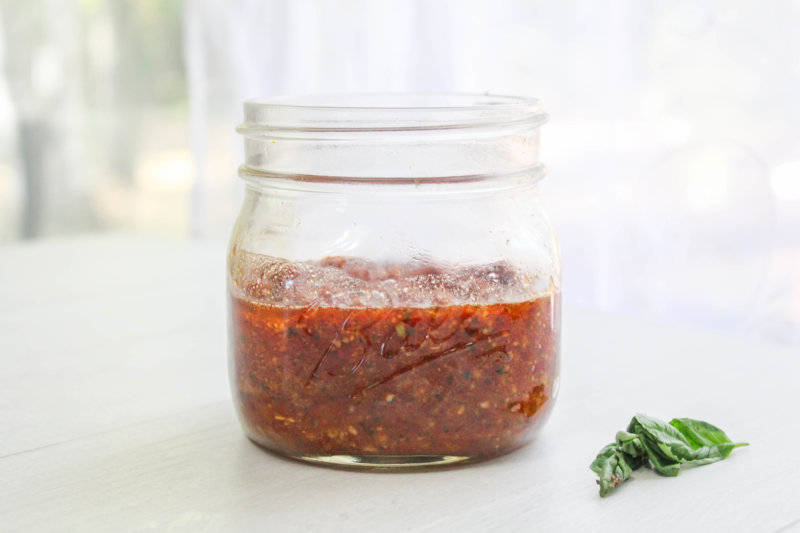
This delicious pesto has such a bright flavor! It’s a bright pesto that soaks into the gnocchi, making it taste like Tuscan perfection. Go beyond a simple tomato sauce, and taste for yourself how delicious this fresh tomato pesto is!
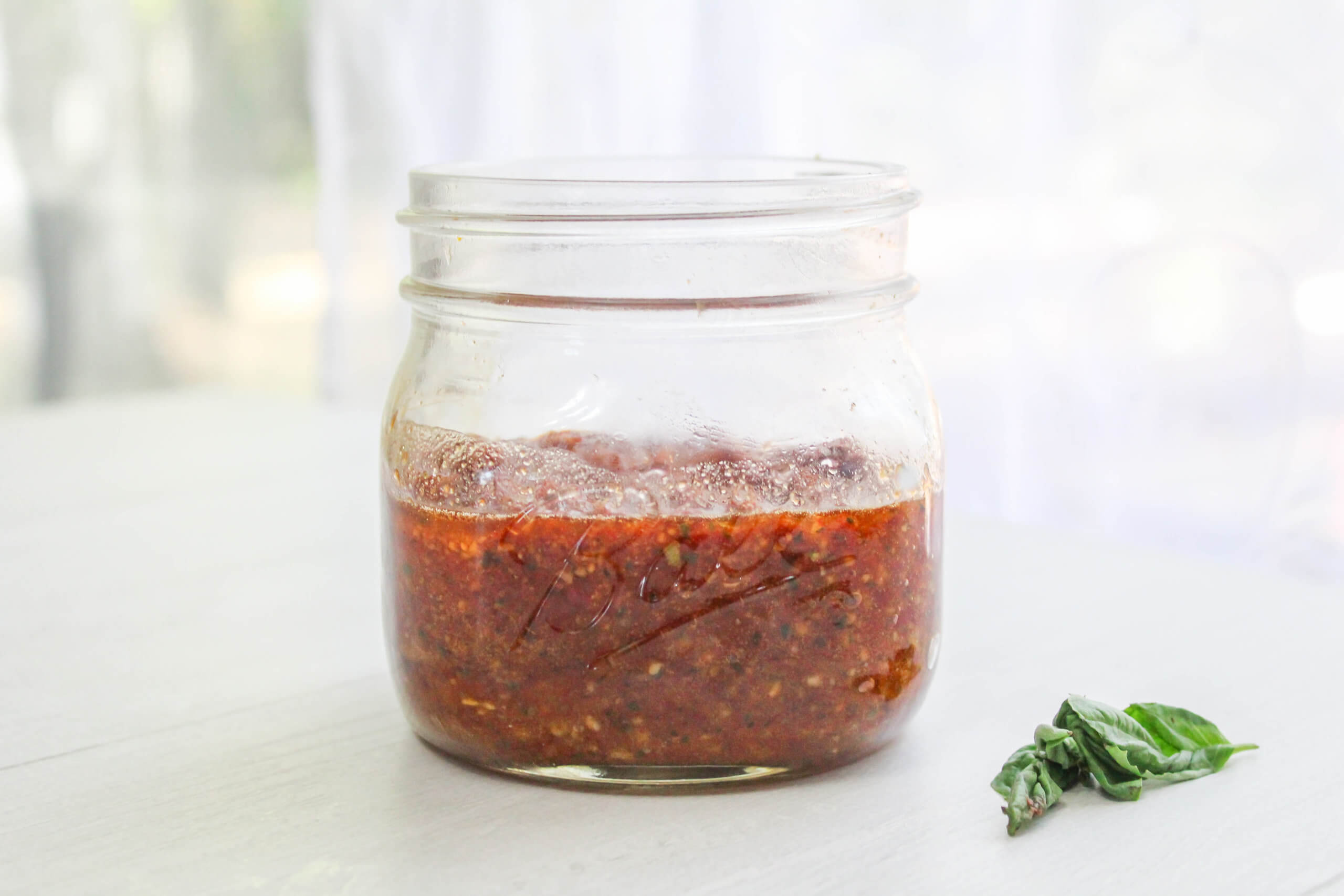
Sun-Dried Tomato Basil Pesto (Vegan)
Servings
Ingredients
- ¾ cup organic oil-packed sun-dried tomatoes*
- Extra-virgin olive oil
- 8 medium organic garlic cloves
- ¼ cup organic raw pine nuts, organic raw slivered almonds, OR organic raw Marcona almonds
- ¼ cup organic fresh basil, snipped OR 1 tablespoon dried, crushed
- 3 drops basil essential oil (optional)
- ½ teaspoon pink Himalayan salt OR sea salt, ground
Supplies
- Blender OR food processor
Instructions
- Drain the tomatoes, reserving the oil. Add enough olive oil to the drained oil to make ½ cup and set it aside.
- Combine the drained tomatoes, garlic, pine nuts, basil, basil essential oil, and salt in a food processor or blender. Cover and process until finely chopped. With the machine running, gradually add the reserved oil, processing until almost smooth, stopping to scrape down the sides of the bowl as needed. Serve over gluten-free pasta/gnocchi, most simply used as a dip for gluten-free crackers or pretzels. Divide any leftover pesto into small containers to freeze or refrigerate.
Parsley Pesto With Basil and Essential Oils
If you’re looking for a traditional pesto made from fresh parsley and basil leaves, I’ve got you covered! This delicious combination of herbs creates a thick, tasty pesto you will love.
Bonus: Parsley contains a wide range of plant compounds, and laboratory research has found antimicrobial activity from parsley essential oil against several tested bacteria. (9)
That does not mean eating parsley pesto treats an infection. It simply gives us a more accurate way to describe the interesting plant chemistry behind an herb we already love to use in food.
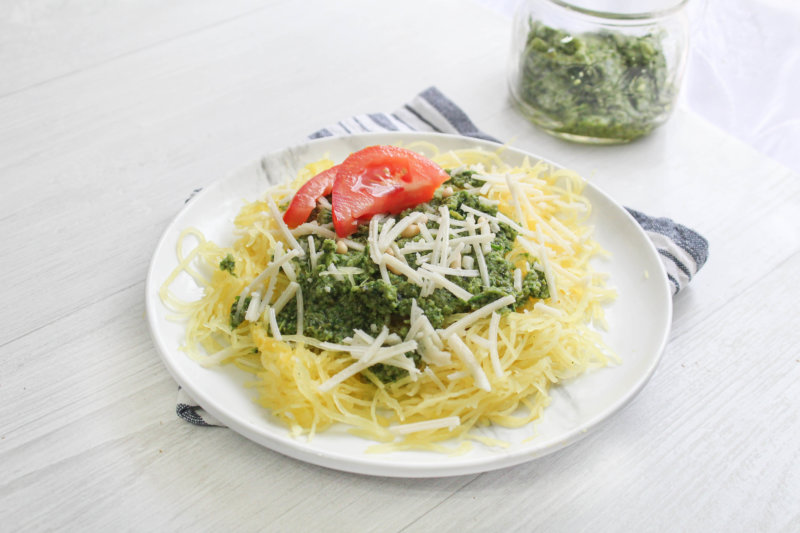
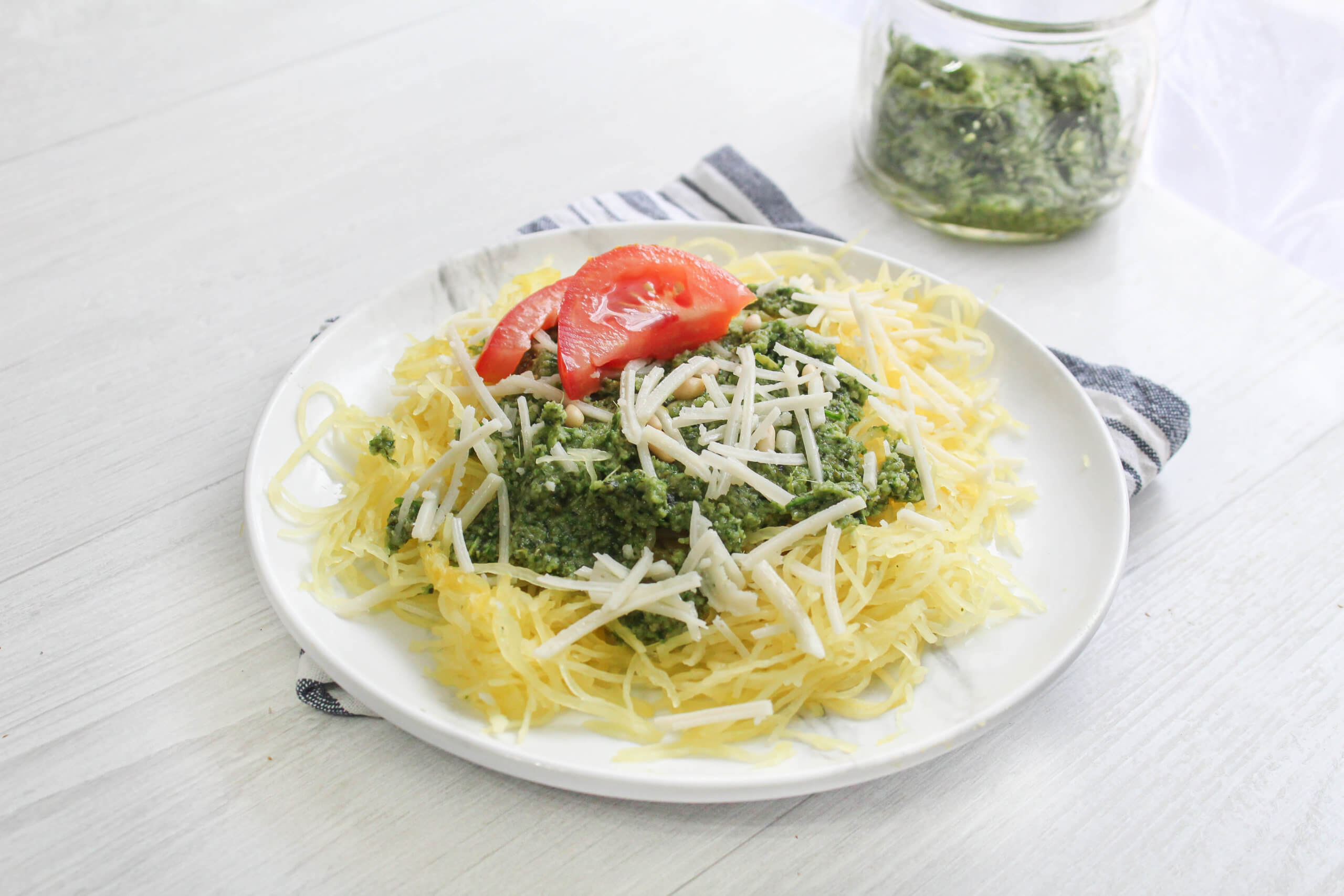
Basil and Parsley Super Pesto (Vegan)
Servings
Ingredients
- 2 cups firmly packed fresh organic basil leaves
- ½ cup fresh organic parsley leaves, preferably flat-leaf
- 3 medium organic garlic cloves
- ¼ cup organic raw pine nuts, raw walnuts, OR raw pistachios
- ½ cup extra-virgin olive oil
- ¾ cup shredded dairy-free mozzarella OR Parmesan-style cheese alternative*
- 6 drops basil essential oil
- 3 drops parsley essential oil, optional
- Pink Himalayan salt OR sea salt, ground, to taste
- Organic white pepper, ground, to taste
Supplies
- Blender OR food processor
Instructions
- Combine the basil, parsley, garlic, pine nuts, olive oil, cheese-alternative shreds, essential oils, sea salt, and white pepper in a food processor or blender. Cover and process until almost smooth, stopping to scrape down the sides of the bowl as needed. Divide any leftover pesto into containers to freeze or refrigerate.
Culinary Essential Oil Use in Pesto
The basil and parsley essential oils in these pesto recipes are culinary internal use, not a medicinal protocol.
Keep the exact number of drops tied to the complete pesto recipe as written in each protected recipe card. The olive oil, nuts, and other fats help distribute the essential oils throughout the finished pesto. Do not casually add more essential oil for a stronger taste and do not consume the oils neat.
Gnocchi Recipe FAQs
What is gnocchi?
Gnocchi are small Italian dumplings traditionally made with potatoes and flour. Mama Z’s version uses gluten-free flour and potato starch, with dairy-free cheese and an egg or egg-replacer option.
Is this gnocchi recipe gluten-free?
Yes, when you use the gluten-free flour or rice flour specified in the recipe card and make sure the rest of your ingredients are gluten-free. For celiac disease, also consider cross-contact from shared flour containers, utensils, counters, or cooking equipment.
Can I make vegan gnocchi?
Yes. The protected recipe includes an egg-replacer option and dairy-free cheese alternatives. Mama Z notes that she prefers the way the egg version cooks, but the vegan option is built directly into the recipe.
Can I make gnocchi with sweet potatoes?
Yes. Sweet potatoes are one of Mama Z’s original substitutions. Because their moisture can differ from white potatoes, add flour gradually and stop when the dough is smooth, pliable, and no longer too sticky.
Why is my gnocchi dough sticky?
It probably needs a little more flour or potato starch. Add only a small amount at a time. The goal is to make the dough workable without drying it out.
Why is my homemade gnocchi tough?
Too much flour or overworking the dough can make gnocchi dense. Use the minimum flour needed to hold the dough together and knead only enough to incorporate it.
How do I know when gnocchi is cooked?
Follow the recipe timing and watch for the pieces to rise to the surface. Mama Z cooks them for about 2-3 minutes, lightly stirring to keep them from sticking.
What sauce goes best with gnocchi?
Our New Year’s Day favorite is the red-and-green combination of Sun-Dried Tomato Basil Pesto and Parsley Pesto with Basil. Homemade marinara is another great option, and the article also includes Mama Z’s sweet Cinnamon “Not” Sugar variation.
Is this recipe allergy-friendly?
It is designed to be gluten-free and dairy-free and can be made without egg, but no single recipe is allergy-friendly for everyone. The pestos may contain pine nuts or other nuts, and dairy-free cheeses can contain soy, nuts, coconut, or other ingredients. Check every label against the needs of the person you are serving.
Can I ingest essential oils?
Do not casually ingest essential oils in water or neat (undiluted). Internal use of essential oils requires proper dilution, product quality, dosing knowledge, and safety guidance. Learn more about how to ingest essential oils here.
Final Thoughts on Homemade Gnocchi
This is one of those recipes that gives you more than dinner.
You get soft homemade gnocchi, red and green pesto, plenty of ways to customize the meal, and a kitchen full of people rolling little dough “snakes” together.
That is why it has earned a place in our New Year’s Day tradition.
Start with the classic potato version or switch it up with sweet potatoes. Use the egg or vegan option. Serve it savory with pesto or marinara, or finish some with the sweet Cinnamon “Not” Sugar variation.
Most importantly, invite the family into the kitchen.
The best recipes are the ones that feed everyone and make memories at the same time.

References
- U.S. Department of Agriculture, Agricultural Research Service. FoodData Central. Current food-composition database for potatoes and other foods. Source.
- Rasheed H, Ahmad D, Bao J. “Genetic Diversity and Health Properties of Polyphenols in Potato (Solanum tuberosum L.).” Antioxidants (Basel). 2022;11(4):603. PubMed.
- U.S. Food and Drug Administration. “Frequently Asked Questions: Food Allergen Labeling Guidance for Industry.” Updated March 26, 2025. Source.
- National Institutes of Health Office of Dietary Supplements. “Iodine: Fact Sheet for Health Professionals.” Updated November 5, 2024. Source.
- U.S. Food and Drug Administration. “Gluten and Food Labeling.” Source.
- U.S. Food and Drug Administration. “Handling Flour Safely: What You Need to Know.” Source.
- Estruch R, et al. “Primary Prevention of Cardiovascular Disease with a Mediterranean Diet Supplemented with Extra-Virgin Olive Oil or Nuts.” New England Journal of Medicine. 2018;378:e34. Source.
- Chiavarini M, Rosignoli P, Giacchetta I, Fabiani R. “Health Outcomes Associated with Olive Oil Intake: An Umbrella Review of Meta-Analyses.” Foods. 2024;13(16):2619. PubMed.
- Linde GA, Gazim ZC, Cardoso BK, Jorge LF, Tešević V, Glamočlija J, Soković M, Colauto NB. “Antifungal and antibacterial activities of Petroselinum crispum essential oil.” Genetics and Molecular Research. 2016;15(3). PubMed.