QUICK SUMMARY
This homemade fettuccine Alfredo is creamy, comforting, and family-friendly without relying on wheat pasta, heavy cream, or conventional dairy cheese. It uses gluten-free brown rice fettuccine, unsweetened coconut or almond milk, garlic, sea salt, white pepper, and dairy-free cheese to create a rich Alfredo-style sauce that tastes like a classic Italian favorite.
For the richest texture, use full-fat canned coconut milk. For a fully dairy-free version, use extra-virgin, unrefined coconut oil instead of butter and add a little extra sea salt for balance.
The key to great gluten-free Alfredo is timing: cook the pasta gently, have the sauce ready, toss everything together right away, and serve immediately while the noodles are hot and the sauce is silky. If you are cooking for someone with celiac disease or a serious food allergy, verify every package label and prevent cross-contact in your kitchen.
My Homemade Fettuccine Alfredo is the kind of recipe that proves healthy eating does not have to mean giving up the family meals you love. It’s rich, creamy, satisfying, and made with better-for-you ingredients that support the way our family eats today.
Dr. Z is of Italian heritage, and I studied Italian cooking with my Mom and a family friend, Guisy Fisher. Authentic recipes are part of who we are! So when we started making healthier swaps in our home, I knew I didn’t want to lose those familiar flavors that bring everyone running to the dinner table.
Through lots of recipe testing and tweaking, I learned how to recreate comfort-food favorites in an allergy-friendly way. This homemade fettuccine Alfredo is one of those wins. It tastes indulgent, but it’s made with intentional ingredients you can feel good about serving.
This is an Alfredo-style recipe rather than a traditional Italian Alfredo, which is typically built around pasta, butter, and cheese. Our version keeps the cozy flavor and creamy texture while making room for gluten-free and dairy-free families.
Table of Contents

Gluten-Free Pasta Hacks

Cooking with gluten-free pasta has a learning curve, but once you get the hang of it, you can create a plate of pasta that tastes just as comforting as the original. The trick is to respect the noodles. Gluten-free pasta can be more delicate than traditional wheat pasta, and it needs the right water temperature, the right timing, and a gentle hand.
Here are my best hacks for perfect gluten-free fettuccine Alfredo.
- Choose the pasta that works for your family. Brown rice pasta is my favorite because it has a satisfying texture and is easy to find. Corn, quinoa, chickpea, lentil, almond flour, and blended gluten-free pastas can also work, depending on your family’s preferences and sensitivities.
- Read the gluten-free label. The FDA requires packaged foods labeled “gluten-free” to contain less than 20 parts per million of gluten. If you are cooking for someone with celiac disease, also check the full ingredient list and the manufacturer’s cross-contact information. (1)
- Use plenty of water. A large pot gives the noodles room to move and helps dilute the starch released during cooking.
- Salt the water generously. Use freshly ground pink Himalayan salt or sea salt. The noodles absorb some of that salted water as they cook, which gives the pasta better flavor before the sauce even touches it.
- Stir early and gently. Stir as soon as the pasta softens enough to move, then stir occasionally so the strands do not settle into a clump.
- Skip oil in the cooking water. Oil mostly floats on top and may coat the drained noodles, making it harder for the Alfredo sauce to cling. Use enough water, stir the pasta, and sauce it promptly instead.
- Handle the noodles gently. Gluten-free fettuccine can be fragile. Stir only as needed, add the sauce as soon as possible, and gently toss to coat.
- Don’t let cooked pasta sit in the colander. This is where clumps happen! Have your Alfredo sauce ready when the noodles are done so you can drain, return them to the pot, and sauce them immediately.
- Try almond flour pasta for a hearty option. If you don’t want to use brown rice fettuccine, almond flour pasta has a great texture and works well with creamy sauces. Check the label carefully if tree nuts are a concern.
- Use shirataki or konjac noodles for a lighter meal. These noodles take on the flavor of whatever sauce you add. The key is to rinse, rinse, rinse before using them, then dry them well so they do not water down the sauce.
- Follow the package temperature and timing. Most gluten-free pasta needs actively boiling water, but brands vary. Test the noodles a minute or two before the package time ends because they can go from pleasantly firm to gummy fast.
Application: Start your sauce while the pasta water heats. That way, the Alfredo is ready when the noodles are done, and you won’t have to fight sticky pasta.
Healthy Fettuccine Ingredients 101
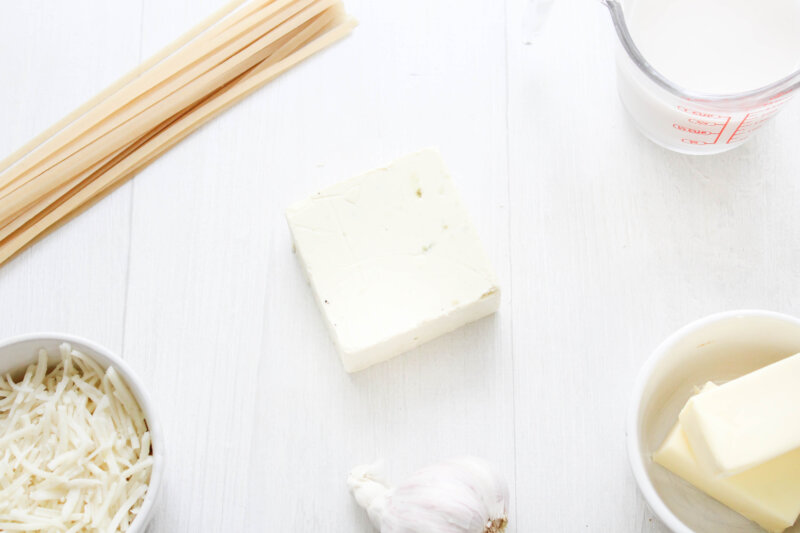
With the right ingredients, your kitchen will smell like a cozy Italian dinner night. This recipe keeps the comfort of Alfredo while making intentional swaps for gluten-free and dairy-free families.
Gluten-Free Brown Rice Fettuccine Pasta: Times are changing, and healthy pasta options are everywhere! Brown rice fettuccine is a great pantry staple because it holds up well and has a nice “tooth” when cooked properly. If you like fresh pasta, try Cappello’s or Taste Republic brand noodles. We find these at Whole Foods and, occasionally, health food stores. Shelf-stable options include Tinkyada noodles, which have a great texture, or shirataki “Miracle” noodles for a lighter option.
Always verify the current ingredient and allergen label. Some gluten-free pastas contain eggs, nuts, legumes, corn, or other ingredients that may not fit every household.
Organic Unsweetened Coconut or Almond Milk Beverage: You’d never guess this homemade fettuccine Alfredo doesn’t include cream! For the most decadent result, use full-fat canned coconut milk. It gives the sauce body, richness, and that velvety texture we want from Alfredo. You can also use unsweetened almond milk for a lighter sauce. Always check the label to make sure your milk is unsweetened and unflavored. Vanilla almond milk and Alfredo do not belong in the same saucepan!
Coconut milk will give the sauce the fullest body. Almond milk has more water, so the final sauce may need a little more dairy-free cheese or a few extra minutes over gentle heat to thicken.
Grass-Fed Organic Sea-Salted Butter and Coconut Oil, Extra-Virgin and Unrefined: Grass-fed organic butter gives this recipe a more traditional Alfredo flavor. This recipe also gives you a dairy-free option with coconut oil. Coconut oil contains medium-chain fatty acids, but it is not nutritionally identical to purified MCT oil and it is also high in saturated fat. Use either fat for flavor and texture, according to your family’s dietary needs and overall eating pattern. (2)
If you’d like to make this recipe dairy-free, use only coconut oil and add the extra salt listed in the recipe for flavor balance. If you use butter, remember that the finished dish is not dairy-free.
Pink Himalayan Salt or Sea Salt: Traditional table salt is refined to create a uniform product and is often iodized. I prefer using Colima sea salt, which is hand-harvested and full of natural flavor. If you don’t have sea salt on hand, pink Himalayan salt is another flavorful option.
Organic Garlic Powder: You can’t have Italian food without garlic! This recipe uses garlic in two forms for the ultimate burst of flavor. When purchasing granulated garlic or garlic powder, buy from a manufacturer that provides clear sourcing, quality controls, and current allergen information.
Spice contamination is a supply-chain issue that can affect products from many countries, not one nation alone. The FDA has identified pathogens and other contaminants as a broader spice-industry concern and recommends established food-safety practices rather than avoiding spices from a single country. (3)
Mincing fresh garlic can be a hassle, so I regularly use my garlic press. Peel the garlic and press it through the tool. Voila! Minced garlic in no time. When in doubt, use a tool!
Dairy-Free Cheese: This ingredient thickens the sauce and gives it that traditional Alfredo flavor. I use shredded dairy-free mozzarella or Parmesan-style cheese alternative and Daiya jalapeno-garlic Havarti-style cheese. It’s the best combination, and the spice in the Havarti pairs beautifully with mild mozzarella.
Great brands of dairy-free cheese include Daiya, Kite Hill, Follow Your Heart, Forager, Miyokos, So Delicious, and Violife. Formulas change, so read the current label for milk, soy, coconut, cashew, almond, gluten, and other ingredients that matter to your family.
Is This Alfredo Truly Allergy-Friendly?
It can be adapted for many common dietary needs, but “allergy-friendly” does not mean free from every allergen. Choose products that fit the specific person you are serving, verify labels each time you buy them, and prevent cross-contact with wheat, milk, tree nuts, soy, or other problem foods in your kitchen.
Make Homemade Fettuccine Alfredo
Making homemade fettuccine Alfredo is easier than you think. If you can boil noodles and stir a sauce, you can make this delicious dinner. And once you taste homemade Alfredo, you’ll never want to go back to jarred sauces again.
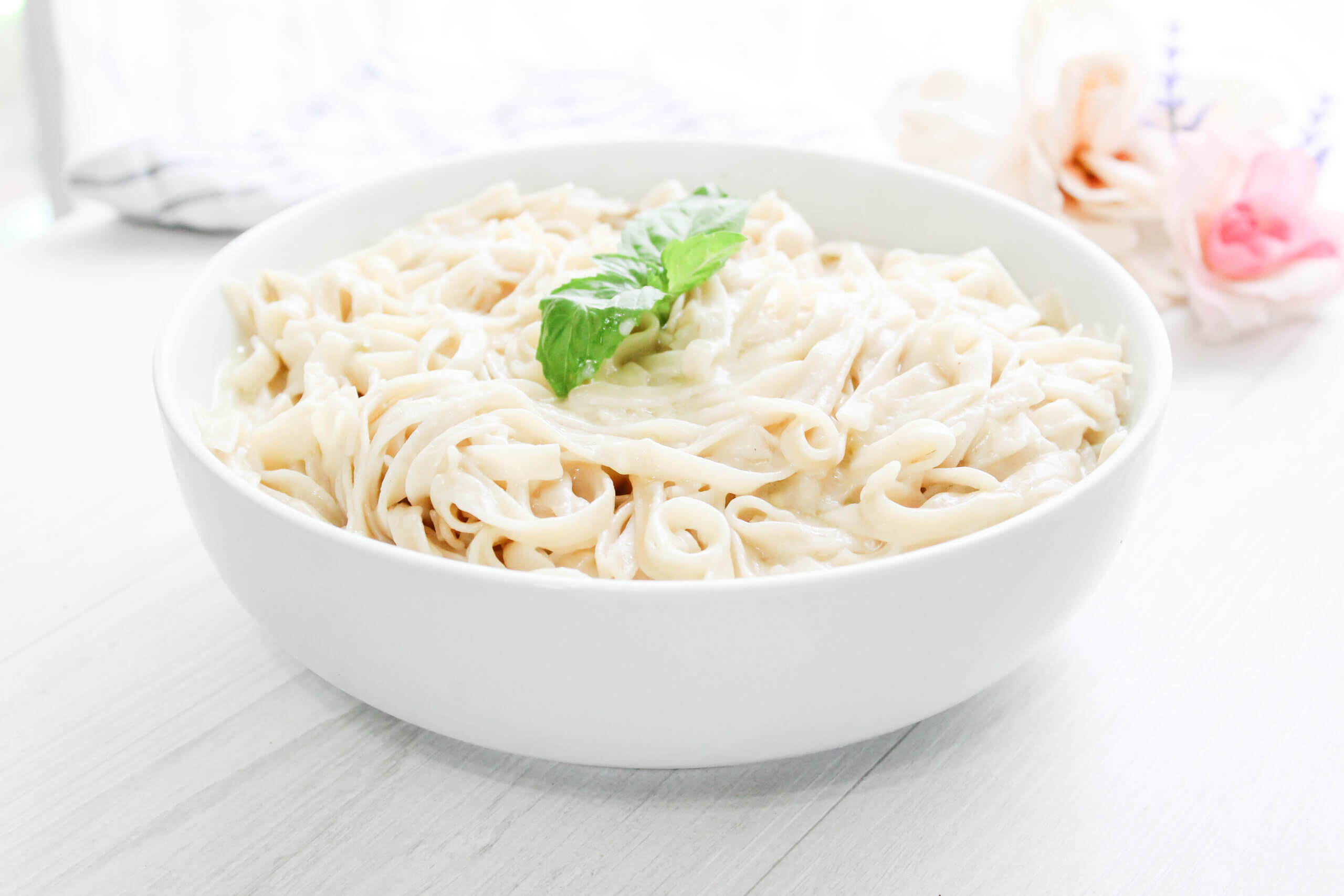
Homemade Fettuccine Alfredo (Vegan)
Servings
Ingredients
- Extra-virgin olive oil
- 1 (12-16 ounce) package gluten-free brown rice fettuccine pasta
- ¾ cup organic full-fat unsweetened coconut milk OR organic unsweetened almond OR coconut milk beverage
- ½ cup grass-fed organic sea-salted butter OR ½ cup coconut oil extra-virgin and unrefined, PLUS ¼ teaspoon pink Himalayan salt OR sea salt, ground
- 1 teaspoon pink Himalayan salt OR sea salt, ground
- ½ teaspoon organic white pepper, ground
- 2-3 pinches organic garlic powder OR 1 additional organic garlic clove, peeled AND pressed OR minced
- 3 organic garlic cloves, peeled AND pressed OR minced
- ⅓ cup shredded dairy-free mozzarella OR Parmesan-style cheese alternative*
- 3.65 oz. dairy-free Daiya jalapeno garlic Havarti style wedge cheese (½ of the 7.1-ounce wedge package)
Supplies
- Immersion blender OR whisk
Instructions
- Bring a large pot of lightly salted water to a boil. Add olive oil to the water before adding pasta to prevent it from sticking together.
- Add the fettuccine without breaking and cook until al dente; drain.
- In a separate saucepan, melt the coconut milk and butter over low heat. Add the sea salt, pepper, and garlic. Mix well. Turn the heat to medium-low and stir in both kinds of cheese. I recommend using an immersion blender or whisk to homogenize the mixture.
- Strain the pasta and return it to the pot. Immediately add the cheese sauce to the pasta and gently incorporate it so that you don’t break the pasta. If your sauce isn’t done at the same time as your noodles, drizzle olive oil over the pasta so it doesn’t stick together. Your pasta should be thoroughly coated with cheese sauce. Serve immediately.
Step One: Boil the Pasta
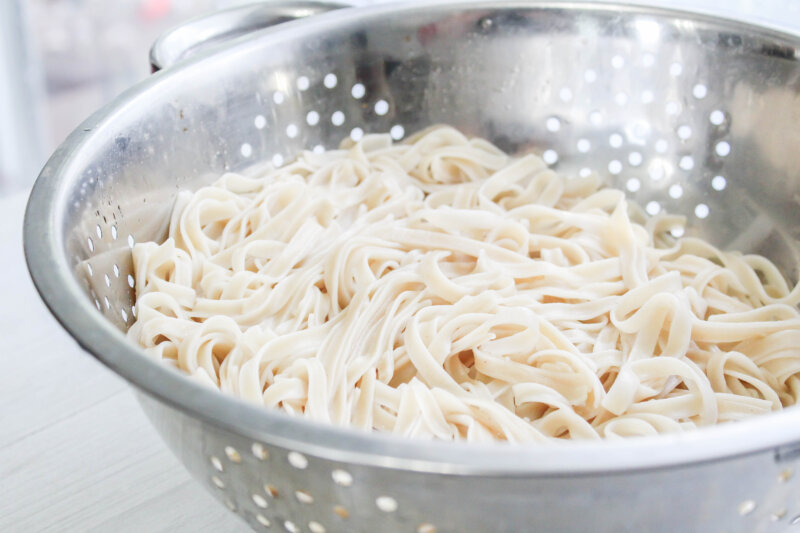
Bring a large pot of lightly salted water to a boil.
Add the fettuccine noodles without breaking them. Stir gently as they begin to soften, then cook until al dente according to package directions and drain promptly. Do not rinse unless the package specifically instructs you to do so.
Reality check: don’t overcook gluten-free pasta. It can go from perfect to gummy fast. Watch it closely, test early, and drain as soon as it reaches the texture you like.
Step Two: Make the Sauce
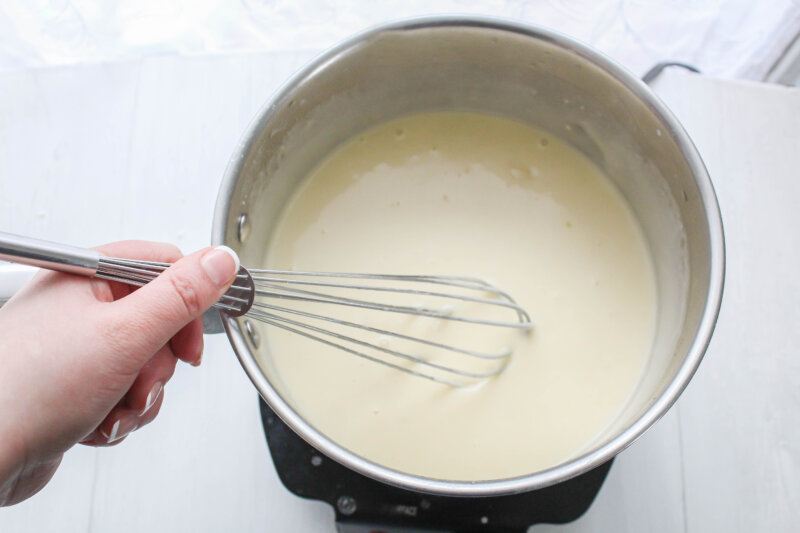
In a separate saucepan, melt the coconut milk and butter over low heat. Add the sea salt, pepper, and garlic. Mix well. Turn the heat to medium-low and stir in both kinds of cheese. I recommend using an immersion blender or whisk to homogenize the mixture.
Put simply, low and slow is your friend. Dairy-free cheese melts best when you give it time and keep stirring. An immersion blender helps the sauce become smooth, creamy, and evenly combined.
If the sauce seems too thick, whisk in a small splash of unsweetened milk. If it seems thin, keep it over low heat for another minute or two and add a little more dairy-free cheese. Different brands melt differently, so let the texture guide you.
Step Three: Serve the Homemade Fettuccine Alfredo
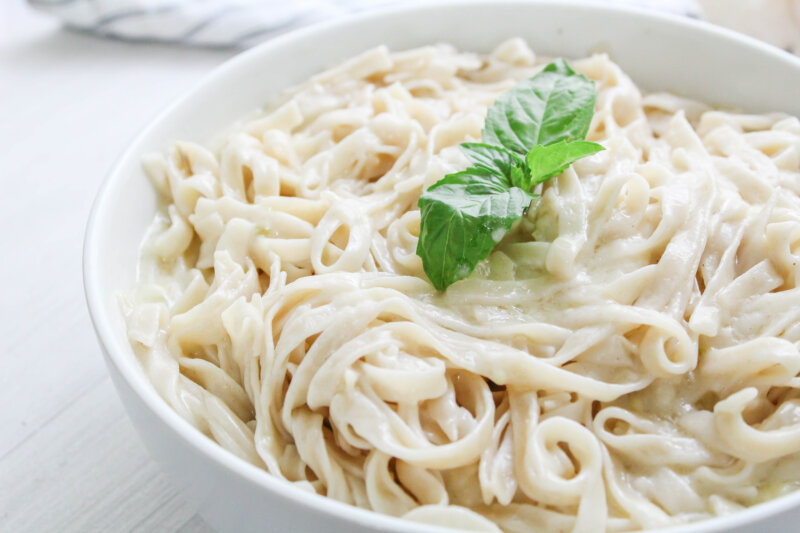
Strain the pasta and return it to the pot. Immediately add the cheese sauce to the pasta and gently incorporate it so that you don’t break the pasta. Your pasta should be thoroughly coated with cheese sauce. Serve immediately.
If the sauce is delayed, toss the drained noodles very lightly with a small amount of olive oil as a last resort, but expect the sauce to cling a little less readily.
I recommend serving this delicious dinner with my Caesar salad. The crisp greens and tangy dressing balance the creamy pasta perfectly, making this a complete family-style meal.
Storage, Reheating, and Allergy Notes
Homemade Alfredo is best served fresh because gluten-free pasta continues absorbing sauce as it sits. Still, leftovers can make a wonderful lunch the next day.
- Refrigerate promptly: Transfer leftovers to a covered container and refrigerate within two hours.
- Use within 3 to 4 days: Reheat only the portion you plan to eat.
- Reheat gently: Warm the pasta over low heat or in short intervals, stirring in a splash of unsweetened coconut or almond milk to loosen the sauce.
- Do not expect the exact same texture: Dairy-free cheese and gluten-free noodles can thicken or separate after chilling, but gentle heat and extra milk usually bring the sauce back together.
- Check every label: Gluten-free pasta, plant milk, dairy-free cheese, seasonings, and butter alternatives may contain or share equipment with common allergens.
Homemade Fettuccine Alfredo FAQs
Can fettuccine Alfredo be made gluten-free?
Yes! Use pasta clearly labeled gluten-free, such as brown rice, almond flour, corn, quinoa, chickpea, lentil, or another gluten-free variety. Brown rice pasta is a great choice because it holds up well with creamy Alfredo sauce and gives you that classic fettuccine texture. For celiac disease, avoid cross-contact from shared water, colanders, utensils, and serving dishes.
Can this recipe be made dairy-free?
Yes. Use extra-virgin, unrefined coconut oil instead of butter and choose dairy-free mozzarella or Parmesan-style cheese plus dairy-free jalapeno-garlic Havarti-style cheese. Add the extra salt listed in the recipe to help balance the flavor. Verify that every cheese alternative is actually milk-free because formulations can change.
What milk works best for dairy-free Alfredo sauce?
Full-fat canned coconut milk creates the creamiest sauce. Unsweetened almond milk also works, but the sauce will be lighter. Be sure to avoid sweetened or vanilla-flavored milk. An unsweetened oat or cashew beverage may also work when it fits your dietary needs, but the thickness and allergen profile will vary.
How do you keep gluten-free pasta from sticking?
Use a large pot with plenty of boiling salted water, stir the noodles early and occasionally, drain promptly, and toss them with sauce right away. Adding oil to the cooking water is not the most effective solution because the oil floats and may make the sauce cling less well.
Why did my dairy-free Alfredo sauce turn grainy?
The heat may have been too high, or the cheese alternative may not melt smoothly. Keep the sauce over low to medium-low heat, add the cheese gradually, and whisk continuously. An immersion blender can help smooth the mixture.
How can I thicken dairy-free Alfredo sauce?
Use full-fat canned coconut milk, add a little more dairy-free cheese, or simmer gently for another minute or two. Avoid a hard boil because high heat can make some plant-based cheeses separate.
Does gluten-free automatically mean allergy-friendly?
No. A gluten-free product may still contain milk, eggs, soy, tree nuts, peanuts, sesame, corn, or legumes. “Dairy-free” products may also contain other allergens. Read every ingredient and allergen statement and contact the manufacturer when the label is unclear.
What should I serve with homemade fettuccine Alfredo?
Serve this creamy pasta with Caesar salad, roasted vegetables, steamed broccoli, sautéed spinach, or a fresh green salad. A crisp side dish helps balance the richness of the Alfredo sauce.

- U.S. Food and Drug Administration. “‘Gluten-Free’ Means What It Says.” Updated May 4, 2023. FDA.
- American Heart Association. “Saturated Fats.” Updated August 23, 2024. American Heart Association.
- U.S. Food and Drug Administration. “Questions & Answers on Improving the Safety of Spices.” Updated March 2, 2018. FDA.