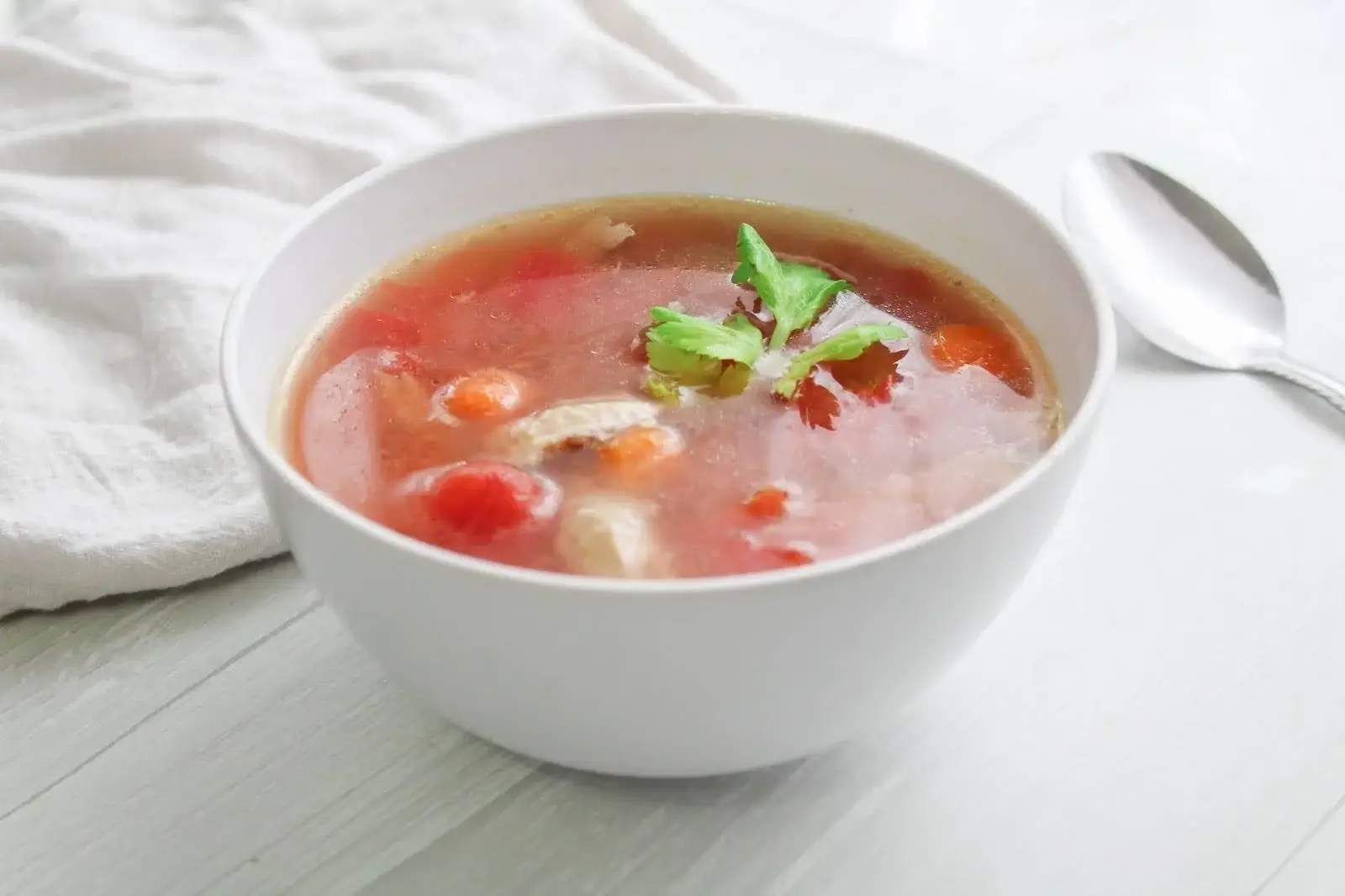
QUICK SUMMARY
What is basil pasta with garlic and pine nuts? It is a simple Italian-inspired pasta tossed with extra-virgin olive oil, fresh garlic, toasted pine nuts, fresh basil, vegan cheese, sea salt, and white pepper.
Mama Z's version is gluten-free and dairy-free and comes together in about 30 minutes. The olive oil and reserved pasta water create a silky coating, the garlic and basil bring fresh flavor, and the toasted pine nuts add buttery crunch.
If you came for the recipe, it is immediately below. Afterward, you'll find Mama Z's best cooking tips, ingredient notes, gluten-free pasta options, and easy variations.
This Basil Pasta with Garlic and Pine Nuts is one of those recipes that proves simple food can still feel special.
With gluten-free noodles, silky olive oil, fresh garlic, toasted pine nuts, vegan cheese, and garden-fresh basil, it works as a quick lunch, an easy dinner, or a beautiful side dish without relying on gluten or dairy.
Table of Contents
How to Make Basil Pasta with Garlic and Pine Nuts
This basil pasta recipe comes together in about half an hour. It will be your new favorite addition to pasta night for family meals and simple entertaining.
It serves 4 people generously.
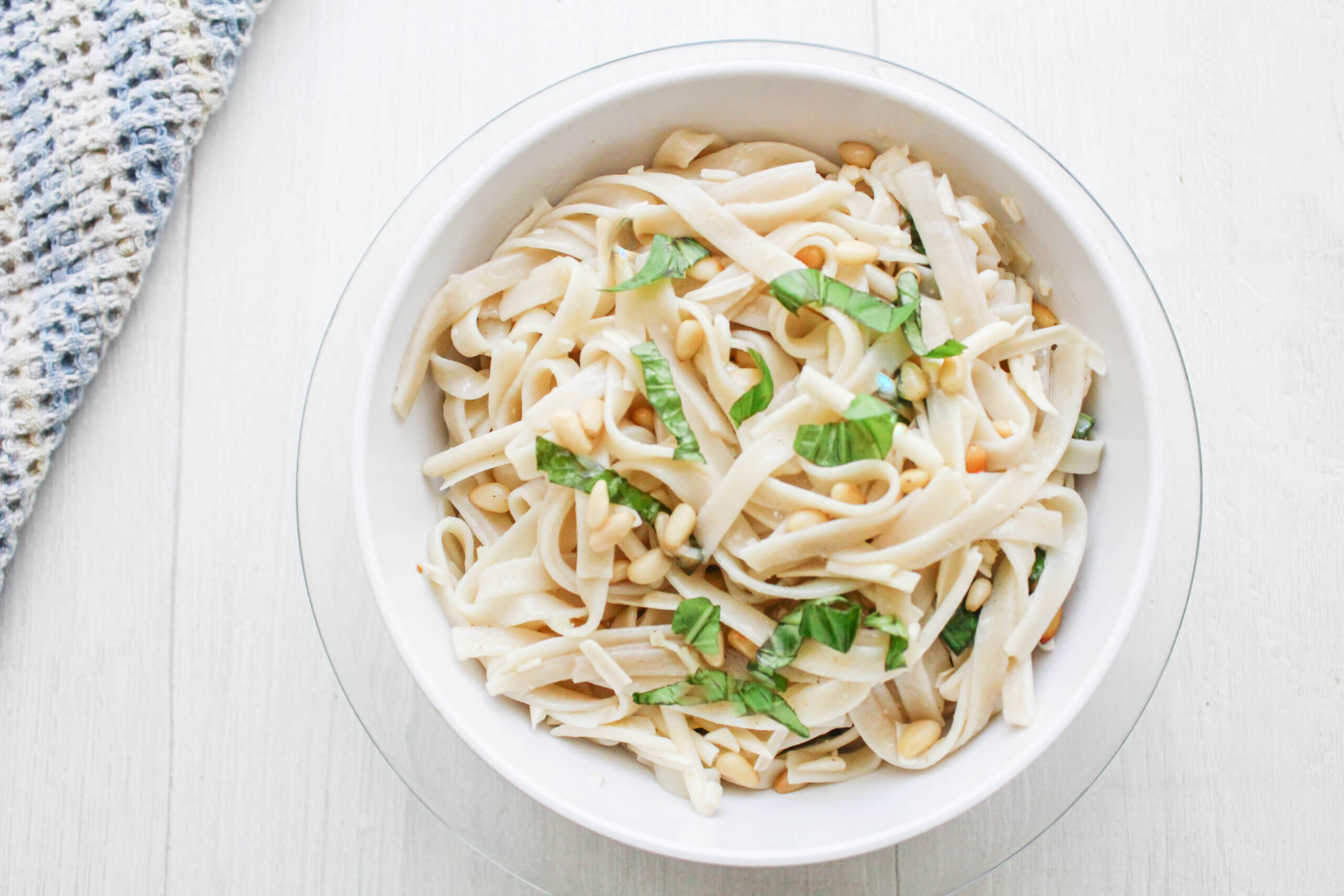
Basil Pasta With Garlic and Pine Nuts (Vegan)
Servings
Ingredients
- Purified OR distilled water
- 4 medium organic garlic cloves, minced
- 3 tablespoons extra-virgin olive oil, PLUS more as needed
- 1 teaspoon Himalayan pink salt OR sea salt, ground, PLUS more for the pot
- 1 (9-ounce) package organic brown rice fettuccine OR linguine pasta*
- ½ teaspoon organic white pepper, ground
- ½ cup organic pine nuts, lightly toasted**
- 1 cup shredded dairy-free mozzarella OR Parmesan-style cheese alternative OR Homemade Parmesan Cheese
- 10-12 large organic basil leaves, shredded
Instructions
- Fill a large pot with cold water and bring it to a boil over high heat. Meanwhile, soften the garlic in the olive oil in a large sauté pan over low heat.
- Remove the pan from the heat, cover it, and set it aside to keep warm. When the water boils, salt it well, add fresh pasta with a bit of olive oil, and cook. Stir the pasta and boiling water every few seconds, until it is al dente, about 3 minutes. Drain the pasta, reserving ¾ cup of the cooking water, rinse, and drain again. Add the drained pasta to the sauté pan with ½ cup of the reserved cooking water, season with salt (1 teaspoon or so should do it), and white pepper.
- In a serving bowl, toss the pasta with the pine nuts, ¾ cup of vegan cheese, and shredded basil. The sauce should coat the pasta.
- If desired, add a little more pasta water or drizzle lightly with extra-virgin olive oil. Sprinkle with the remaining cheese substitute. Serve hot.
Step One: Sauté the Garlic in Olive Oil
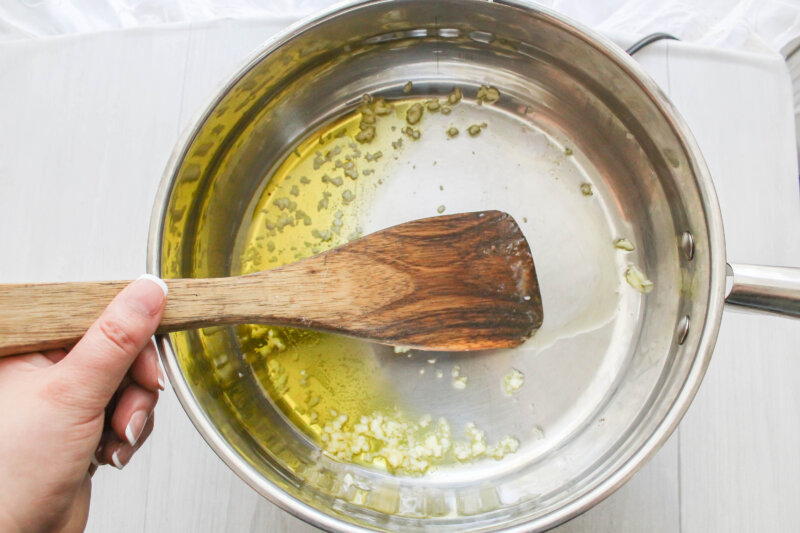
Fill a large pot with water and bring to a boil over high heat.
While the pot of water is boiling, sauté the garlic in olive oil. To do this, place a large pan over low heat and add the olive oil and garlic.
Stir every so often until the garlic is soft and fragrant.
Remove from heat and set aside to keep warm.
Step Two: Prepare the Pasta
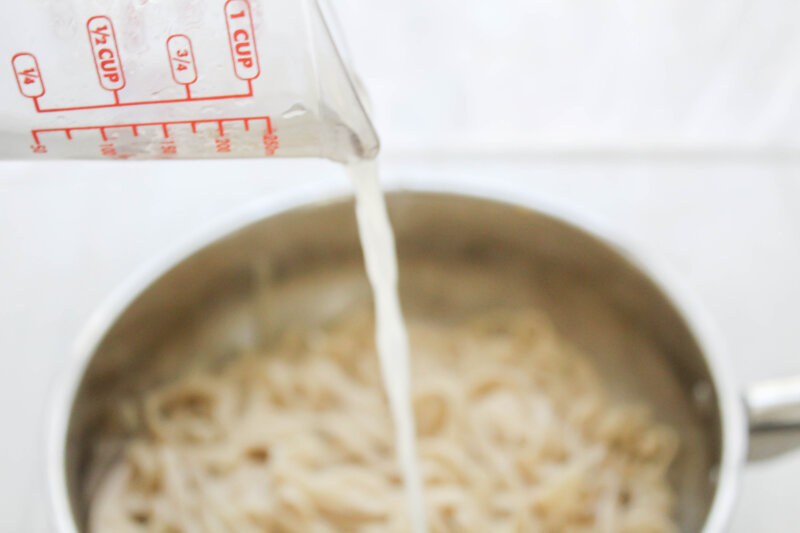
When the water boils, salt it generously and add the fresh or dry pasta with a little olive oil.
Salty water is a must for flavorful pasta!
Stir the pasta every few minutes until al dente, about 3 minutes if using fresh pasta.
If you are using dried pasta, follow the instructions on the back of the package, but turn off the heat at the lower end of the cooking time and continue stirring until you reach the higher number. Otherwise, you may end up with mushy gluten-free pasta.
Example: If the package says to cook the pasta for 7 to 10 minutes, turn off the heat at 7 minutes but continue stirring and cooking for 3 more minutes.
When the pasta is done cooking, drain excess water, but reserve 3/4 cup of the cooking water.
Rinse the pasta and drain again.
Add the cooked pasta to the sauté pan with the reserved cooking water, salt, and white pepper.
Step Three: Add the Pine Nuts, Cheese, and Herbs

In a large serving bowl, toss the pasta with the pine nuts, 3/4 cup of vegan cheese, and fresh herbs.
The olive oil sauce should coat the pasta. Add a little more pasta water or drizzle the dish lightly with olive oil if desired.
Sprinkle with the remaining cheese substitute and season with salt and pepper to taste.
Serve hot and enjoy all those fresh Italian flavors.
How to Toast Pine Nuts
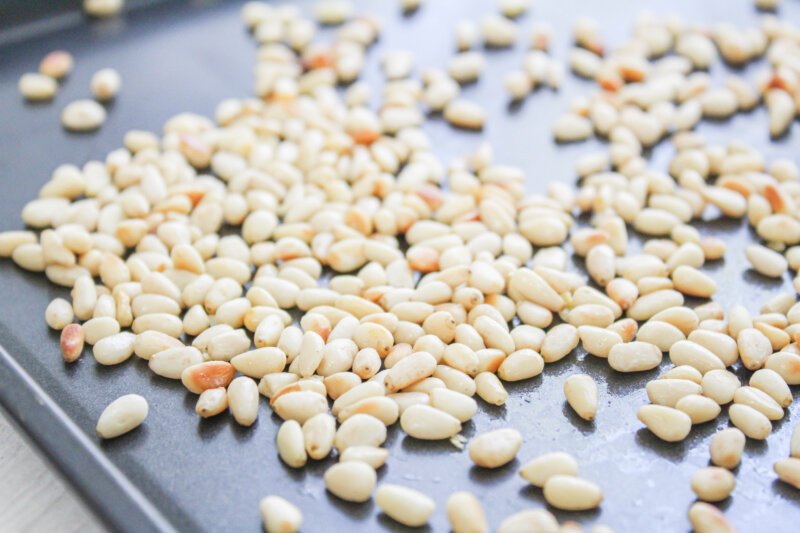
To toast pine nuts, place them in a small dry skillet and cook over medium-low heat, stirring constantly, until fragrant and lightly browned, about 2 to 4 minutes.
Watch them closely. Pine nuts can go from golden to burned quickly.
Whether you are hosting a get-together or just want to dress up family meals, this basil pasta recipe is a crowd-pleaser.
Recipe Tips & Variations
This basil pasta is simple, but a few small details make it restaurant-worthy.
Do Not Burn the Garlic
Garlic should be soft and fragrant, not brown and bitter. Keep the heat low and stir often.
Reserve Pasta Water
Pasta water helps the olive oil cling to the noodles. This gives you a silky sauce without cream or dairy.
Use Fresh Basil
Dried basil will not give the same bright flavor. Use fresh basil leaves and add them near the end so they stay vibrant.
Make It More Filling
Add grilled chicken, sautéed shrimp, white beans, chickpeas, or roasted vegetables for a heartier meal.
Add More Vegetables
Try spinach, zucchini, cherry tomatoes, roasted red peppers, asparagus, mushrooms, or artichoke hearts.
Make It Nut-Free
Replace pine nuts with toasted pumpkin seeds or sunflower seeds, or simply omit them.
Add Lemon
A squeeze of fresh lemon juice or a little lemon zest makes the dish extra bright.
Serve It as a Side Dish
This pasta pairs beautifully with grilled chicken, roasted vegetables, fresh salad, or a simple soup.
Basil Pasta Ingredients
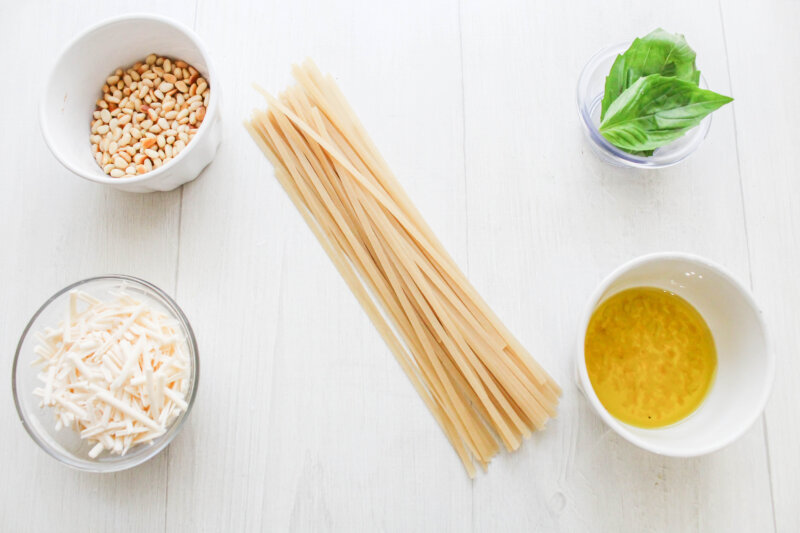
To make this basil pasta recipe, you need 8 simple, fresh ingredients, all of which are readily available at most grocery stores.
It is the combination of flavors that upgrades this dish from a basic pasta meal to something special.
Organic Garlic Cloves
This recipe contains lots of fragrant garlic cloves.
I am sure you have heard your grandparents share remedies centered around this vegetable. They were onto something! Fresh garlic pairs beautifully with basil and also contains organosulfur compounds that have been studied for a variety of health effects.
One older clinical trial found fewer common-cold episodes in people taking a specific garlic supplement than in those taking placebo, but a later Cochrane review found that evidence was too limited for firm conclusions. That research tested a supplement, not the fresh garlic in this pasta. (2, 7)
For this recipe, garlic's biggest job is flavor, and it does that beautifully.
Extra-Virgin Olive Oil
Pasta and olive oil are a match made in heaven.
Not all olive oils are created equal, though. We recommend using extra-virgin olive oil because it retains antioxidants and beneficial polyphenols.
Extra-virgin olive oil is a key part of Mediterranean-style eating and has been studied extensively for cardiometabolic and inflammatory outcomes. Recent meta-analyses of randomized trials show benefits for some markers, while other outcomes remain mixed or inconsistent. Research has also explored olive oil in relation to colorectal-cancer pathways, but that is very different from saying one pasta dish prevents disease. (3, 8)
Many olive oils have been adulterated, so we recommend researching before purchasing a bottle. Here is our favorite kind of EVOO that is high-quality and delicious.
Pink Himalayan Salt or Sea Salt
We prefer using Colima sea salt because we love its hand-harvested tradition and flavor.
You can also use pink Himalayan salt. Specialty salts contain trace minerals, but they are still primarily sodium chloride, so I use them for flavor and ingredient preference rather than as a meaningful mineral supplement.
Salt is especially important in pasta water. Properly salted water helps flavor the noodles from the inside out.
Organic White Pepper
White pepper has a deeper, earthier flavor than black pepper. You will find this ingredient in many of my recipes.
White pepper and black pepper contain piperine, a bioactive compound studied in laboratory and animal models for anti-inflammatory and other biological effects. The study cited here included human cells and a rat arthritis model, not a clinical trial showing that culinary white pepper treats inflammation. (4)
A little white pepper gives this pasta subtle warmth without overpowering the basil.
Organic Raw Pine Nuts
If you have made one of my amazing pestos, you know just how delicious pine nuts are.
Toasting them takes this dish to a whole new level.
Pine nuts provide mostly unsaturated fats along with protein, minerals, and a distinctive fatty acid called pinolenic acid. Research on pine nut oil and pinolenic acid includes laboratory, animal, and limited human work, so I would not turn those findings into a therapeutic claim for the handful of pine nuts in this recipe. (5, 9)
In this recipe, pine nuts add buttery crunch and make the dish feel elegant.
Vegan Cheese
To keep this recipe dairy-free, we use vegan cheese.
Over the years, we have found a few options we like. Great brands of dairy-free cheese include Daiya, Kite Hill, Follow Your Heart, Forager, Miyoko’s, So Delicious, and Violife.
We also make our own Parmesan-style cheese, or you can use fresh mozzarella-style vegan cheese from the store if you prefer.
Organic Fresh Basil
Fresh basil is a must for this Italian-inspired dish.
Basil is part of the mint family, and I grow it yearly in my garden. It contains aromatic and phenolic compounds that have made Ocimum species interesting to researchers.
One important distinction: the older study cited in this article tested Ocimum gratissimum in rats, not the fresh culinary Ocimum basilicum leaves used in this pasta. That makes it preclinical evidence from a related species, not proof that this recipe lowers blood sugar. (6)
Here, fresh basil earns its place first because of its bright flavor and aroma.
Usually, dried basil is an acceptable substitute, but this recipe truly needs fresh basil leaves to shine.
How to Chiffonade Basil
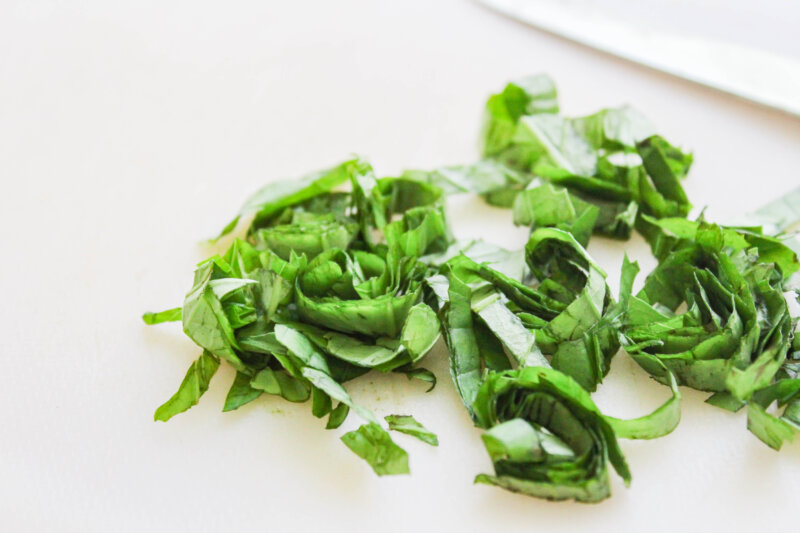
Create gorgeous basil pieces using the cigar method.
Place basil leaves in a stack and roll them tightly. Use a sharp knife to cut them vertically into thin ribbons. This creates the prettiest shavings that are the perfect size for garnish.
Best Gluten-Free Pasta Alternatives
Not all gluten-free pasta is created equal. Some options hold together beautifully, while others turn mushy if you blink too long.
Here is a quick rundown of our favorite pasta alternatives.
Organic Brown Rice Pasta
Organic brown rice pasta is very close to white pasta in flavor and texture. Just like the name says, it is made from ground brown rice.
Brown rice pasta provides carbohydrate for energy and has a mild flavor that works well in Italian-style dishes. Older nutrition research has explored how carbohydrate intake can influence brain serotonin pathways, but that does not make a serving of brown rice pasta a mood treatment. (1)
Bonus: Brown rice pasta is readily available in most grocery stores.
Organic Almond Flour Pasta
Almond flour pasta can be a great option if you want a different macronutrient profile than rice- or wheat-based pasta. In my opinion, this alternative pasta can be nearly identical to traditional pasta when cooked properly.
Depending on the brand, it may provide more protein and fat and fewer carbohydrates than many grain-based noodles. Check the label because formulations vary.
Organic Shirataki or “Miracle” Noodles
Shirataki noodles, often called miracle noodles, are made from glucomannan, a fiber that comes from the konjac plant.
Glucomannan contains soluble fiber that can help you feel fuller. These noodles are usually very low in calories and carbohydrates.
Of course, there is a trade-off. Miracle noodles do not have a traditional pasta texture. They do, however, blend well with whatever sauce you put on them.
Organic Veggie Alternatives
To get an extra serving of vegetables, swap your noodles for one of these options.
The fastest choice is simply putting greens, such as spinach, on your plate and topping them with a sauce. If you have a little more time, spiralize fresh zucchini into zoodles.
Most stores also carry pre-made vegetable noodles. Just watch out for fillers, preservatives, and starchy blends that are not as vegetable-forward as they look.
Can Pasta Be Healthy?
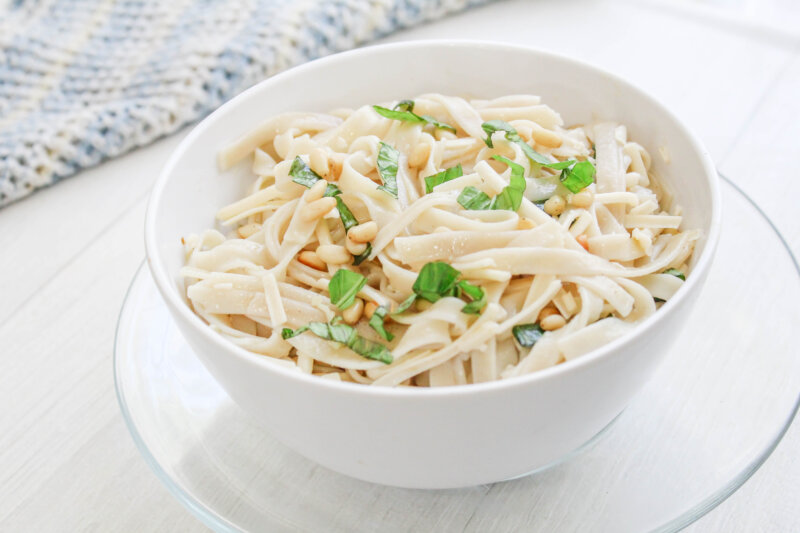
Are you looking for a fast lunch, simple dinner, or healthy side dish?
Check out my Basil Pasta Dish with Garlic and Pine Nuts. This recipe features silky olive oil, toasted pine nuts, lots of fresh basil, and all the Italian flavor you love without gluten or dairy.
This is the kind of pasta night I love because I can choose the ingredients myself and make it fit our family's gluten-free, dairy-free way of eating.
But let's answer the big question first: Can pasta truly be part of a healthy life?
Yes. Pasta can fit into a healthy eating pattern, but the type of noodle and the rest of the meal matter. Traditional wheat pasta is not appropriate for someone who needs to avoid gluten, which is why we reach for alternatives such as brown rice, almond flour, shirataki, or vegetable noodles.
Blood-sugar response also depends on the pasta itself, portion size, cooking method, and what you eat with it. Pairing noodles with olive oil, pine nuts, herbs, vegetables, and an appropriate protein can make pasta night more balanced and satisfying.
Healthy eating does not mean giving up the foods your family loves. It means choosing ingredients that fit your family's needs and letting real food shine.
Basil Pasta FAQs
Can pasta be healthy?
Yes. Pasta can be part of a healthy eating pattern. In our home, we choose gluten-free noodles and build the dish around extra-virgin olive oil, garlic, fresh herbs, nuts, vegetables, and protein as desired.
What is the best gluten-free pasta for this recipe?
Organic brown rice pasta is a great choice because it has a mild flavor and texture similar to traditional pasta. Almond flour pasta and veggie noodles can also work.
Can I make this basil pasta dairy-free?
Yes. This recipe is dairy-free when made with vegan cheese or homemade vegan Parmesan-style cheese.
Can I make this recipe nut-free?
Yes. Omit the pine nuts or replace them with toasted pumpkin seeds or sunflower seeds.
Can I use dried basil instead of fresh basil?
Fresh basil is strongly recommended for this recipe. Dried basil will not provide the same bright flavor or texture.
How do I keep gluten-free pasta from getting mushy?
Cook gluten-free pasta at the lower end of the package directions, then turn off the heat and let it finish gently while stirring. Rinse and drain well. Be careful not to overcook it.
Why reserve pasta water?
Reserved pasta water helps the olive oil sauce cling to the pasta. It creates a silky texture without cream or dairy.
Can I serve basil pasta cold?
Yes. This pasta is best served hot, but leftovers can be enjoyed chilled as a pasta salad. Add a little extra olive oil and fresh basil before serving.
What protein goes well with basil pasta?
Grilled chicken, shrimp, salmon, white beans, chickpeas, or turkey meatballs all pair well with basil pasta.
How long does basil pasta last in the fridge?
Store leftovers promptly in an airtight container in the refrigerator and enjoy them within 3 days. USDA guidance allows most safely refrigerated cooked leftovers for 3 to 4 days. Reheat gently with a splash of water or olive oil. (10)


Resources & References
- Wurtman RJ, Wurtman JJ. Brain serotonin, carbohydrate-craving, obesity and depression. Obesity Research. 1995;3 Suppl 4:477S-480S. https://pubmed.ncbi.nlm.nih.gov/8697046/
- Josling P. Preventing the common cold with a garlic supplement: A double-blind, placebo-controlled survey. Advances in Therapy. 2001;18(4):189-193. https://www.ncbi.nlm.nih.gov/pubmed/11697022
- Borzi AM, Biondi A, Basile F, Luca S, Vicari ESD, Vacante M. Olive oil effects on colorectal cancer. Nutrients. 2019;11(1):32. https://www.ncbi.nlm.nih.gov/pmc/articles/PMC6357024/
- Bang JS, Oh DH, Choi HM, et al. Anti-inflammatory and antiarthritic effects of piperine in human interleukin 1β-stimulated fibroblast-like synoviocytes and in rat arthritis models. Arthritis Research & Therapy. 2009;11(2):R49. https://www.ncbi.nlm.nih.gov/pmc/articles/PMC2688199/
- Sugano M, Ikeda I, Wakamatsu K, Oka T. Influence of Korean pine (Pinus koraiensis)-seed oil containing cis-5,cis-9,cis-12-18:3 on polyunsaturated fatty acid metabolism, eicosanoid production and blood pressure of rats. British Journal of Nutrition. 1994;72(5):775-783. https://pubmed.ncbi.nlm.nih.gov/7850042/
- Aguiyi JC, Obi CI, Gang SS, Igweh AC. Hypoglycaemic activity of Ocimum gratissimum in rats. Fitoterapia. 2000;71(4):444-446. https://pubmed.ncbi.nlm.nih.gov/10925017/
- Lissiman E, Bhasale AL, Cohen M. Garlic for the common cold. Cochrane Database of Systematic Reviews. 2014;(11):CD006206. https://pubmed.ncbi.nlm.nih.gov/25386977/
- Morvaridzadeh M, Cohen AA, Heshmati J, et al. Effect of extra virgin olive oil on anthropometric indices, inflammatory and cardiometabolic markers: a systematic review and meta-analysis of randomized clinical trials. Journal of Nutrition. 2024;154(1):95-120. https://pubmed.ncbi.nlm.nih.gov/37977313/
- Baker EJ, Miles EA, Calder PC. A review of the functional effects of pine nut oil, pinolenic acid and its derivative eicosatrienoic acid and their potential health benefits. Progress in Lipid Research. 2021;82:101097. https://pubmed.ncbi.nlm.nih.gov/33831456/
- U.S. Department of Agriculture Food Safety and Inspection Service. How do I handle leftovers safely? Updated December 20, 2024. https://ask.fsis.usda.gov/article/How-do-I-handle-leftovers-safely