QUICK SUMMARY
Gluten free lemon bars are a sweet, tangy dessert made with a golden gluten-free crust and a thick lemon filling. Mama Z’s version uses three citrus elements: fresh lemon juice, lemon zest, and lemon essential oil for layers of bright citrus flavor.
The recipe uses 3 drops of lemon essential oil for 32 bars, so this is culinary use, not a medicinal internal-use protocol. Lemon essential oil is rich in d-limonene and other aromatic compounds that have been studied for antioxidant, anti-inflammatory, antimicrobial, and mood-related effects. Most of those health findings come from inhalation studies, laboratory research, or animal models, so they should not be interpreted to mean that a serving of these baked bars delivers a therapeutic dose. (1, 2, 6, 7)
These lemon squares are naturally sweetened with coconut sugar, maple syrup or raw honey, and finished with Natural Confectioners’ Sugar. They serve a crowd, store beautifully in the fridge or freezer, and can easily become orange bars with orange juice, zest, and orange essential oil.
Need a crowd-pleasing lemon dessert recipe that tastes bright, fresh, and special enough for company? Try my Gluten Free Lemon Bars! These bars have a gooey, thick lemon filling, a buttery shortbread-style crust, and just the right sweet-tart balance.
This recipe uses organic lemon juice and fresh lemon zest to create that classic lemon bar tang. But what makes Mama Z’s baked lemon bars stand out from traditional lemon squares?
Essential oils, of course!
Lemon essential oil is the cherry on top of this fantastic recipe, adding a concentrated citrus note that makes every bite sing. And because the recipe uses only 3 drops throughout a full 32-bar batch, a little truly goes a long way.
I love recipes like this because healthy living is not about never enjoying dessert. It is about learning how to remake family favorites with ingredients we feel better about serving: gluten-free flours, natural sweeteners, quality fats, pasture-raised eggs, fresh citrus, and essential oils used with wisdom.
Table of Contents

Benefits of Lemon Essential Oil
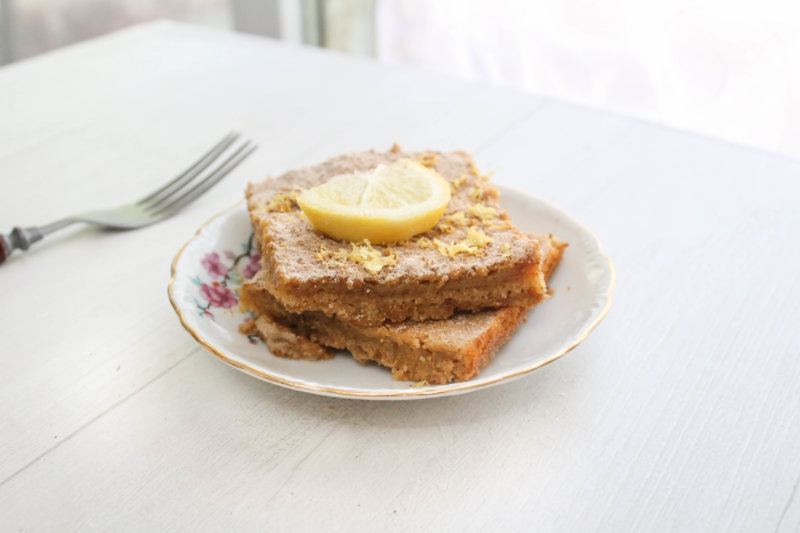
Lemons are fantastic for your health and seem to pop up everywhere. Slices of lemon brighten sparkling water, keep fruit looking fresh, and bring a burst of sunshine to our famous Lemon Abundance Tea Bread.
For our gluten-free lemon bars, we use fresh organic lemon juice, grated lemon zest, and lemon essential oil to make this one of the best lemon desserts ever.
Here’s the thing: lemon juice, lemon zest, and lemon essential oil each bring something different to the recipe. The juice gives tang, the zest adds fresh peel flavor, and the essential oil contributes a concentrated burst of volatile aromatic compounds from the rind.
Lemon essential oil is typically rich in d-limonene, although its exact chemistry varies with the fruit, growing conditions, and extraction method. D-limonene and lemon essential oil have been studied for antioxidant, anti-inflammatory, antimicrobial, immune-modulating, and nervous-system effects. The strength of that evidence varies widely, so I want to separate what has been shown in people from what has only been demonstrated in cells or animals. (2, 6, 7)
Lemon Essential Oil May Support Mood and Relaxation
If you were to take a survey, most people would say they’ve felt extra stress and anxiety over the past few years. It’s essential to take advantage of the tools God gave us, including food, plant-based medicine, prayer, rest, and a healthy home environment, to give our bodies a chance to come back into balance.
I notice that citrus oils are instant mood boosters in my own home. That happy, clean aroma is one reason lemon oil is a favorite in the diffuser, kitchen, and cleaning cabinet.
We now have human research that makes this section stronger. In a randomized study of 46 first-year nursing students, the 22 students assigned to smell lemon essential oil for 15 minutes had significant reductions in test-anxiety scores after inhalation. The control group did not receive the lemon-oil inhalation. (1)
A broader review of citrus essential oils also describes human and preclinical evidence for relaxing, calming, and mood-related effects, while a classic lemon-oil study found anti-stress effects in mice through serotonergic and dopaminergic pathways. (2, 3)
That distinction matters: the strongest direct human evidence here is for inhalation. Eating a lemon bar is not the same exposure and should not be described as an anxiety treatment.
Application: Next time you’re restless, make a hot cup of organic herbal tea with a squeeze of fresh lemon. Then diffuse a drop or two of lemon essential oil with lavender or frankincense while you wind down. Proper sleep habits can improve your quality of life!
Lemon Essential Oil Has Antifungal Properties
Lemon essential oil has a fresh, bright scent that instantly deodorizes a space. We love using it in our Odor-Eating Powder because it helps tackle stubborn odors naturally.
Lemon essential oil has demonstrated antifungal activity, but the evidence here is mostly preclinical.
A 2014 laboratory study tested six commercial lemon essential oils against several Candida strains. Four of the six oils showed antifungal activity against at least some of the tested yeasts, and activity varied with oil chemistry and organism. (4)
A later study used a rat model of oral Candida albicans infection. Lemon-peel essential-oil gel at 0.39%, 0.78%, and 1.56% was applied twice daily for two days, with the 1.56% preparation producing the strongest inhibition of fungal morphology and biofilm formation. (5)
Those studies support antifungal potential. They do not prove that eating lemon essential oil treats candidiasis in people or that these lemon bars provide an antifungal dose.
I still keep lemon oil in my medicine caddy and natural cleaning cabinet because it is one of our most versatile oils, especially when I want a fresh, deodorizing, plant-powered option.
Lemon Essential Oil Can Support Immune and Inflammatory Balance
Did you know lemons are a powerful source of plant compounds that can support a healthy lifestyle? We even include lemon in our Immune Boost Blend.
Lemon juice is where you get the classic tang along with water-soluble nutrients. Lemon zest contributes fiber and nonvolatile plant compounds. Lemon essential oil brings concentrated volatile compounds from the rind, especially d-limonene.
One frequently cited 2022 study gave lemon essential oil or d-limonene orally to mice for seven days at doses of 300, 600, or 1,200 mg/kg before an E. coli challenge. Certain doses reduced inflammatory markers and oxidative-stress markers and improved expression of intestinal tight-junction proteins. (6)
That is promising animal research, not a human clinical trial. The route and dose are also completely different from the 3 drops baked into 32 lemon bars.
A 2024 review of d-limonene summarizes a much larger body of laboratory and animal research involving anti-inflammatory, antioxidant, antimicrobial, metabolic, and other pharmacological effects. Again, promising does not mean proven treatment in humans. (7)
Put simply, this is why we love using the whole lemon-inspired trio in recipes: juice, zest, and essential oil. You get layered flavor, a beautiful aroma, and a reminder that God’s plant kingdom is full of practical gifts for abundant living.
Healthy Lemon Dessert Ingredients 101
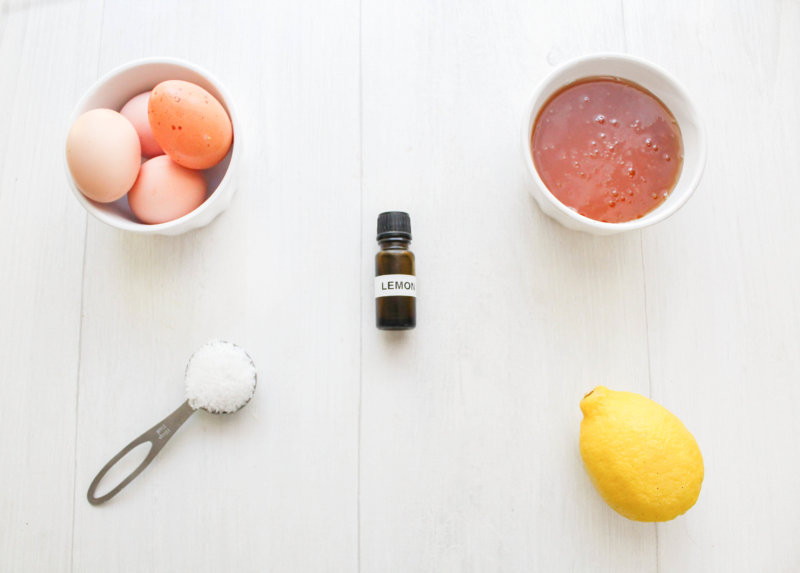
You’ll notice these lemon bars contain a few alternative ingredients. Here is a quick run-down of the elements we used and why.
Gluten-Free All-Purpose Flour: Regular refined wheat flour is a deal-breaker for families who need or choose to avoid gluten. For this recipe, we recommend using gluten-free flour. We promise you’ll never notice the difference with our flour blend when it comes to that classic lemon-bar texture.
One clarification: gluten-free flour is not automatically lower-glycemic than wheat flour. Many commercial blends rely heavily on refined rice, tapioca, or potato starch. Our reason for choosing it here is the gluten-free foundation of the recipe, not because every gluten-free flour is automatically better for blood sugar.
Organic Coconut Flour: Coconut flour is a fiber-rich flour that adds a gorgeous texture to baked goods. You’ll notice I add a little to most of my baked goods.
A small randomized crossover study involving 10 participants without diabetes and 10 with diabetes tested bakery foods made with different amounts of coconut flour. Glycemic index tended to fall as the coconut-flour and dietary-fiber content increased. The study did not test this lemon-bar recipe specifically, but it supports why coconut flour can change the glycemic response of a baked food. (8)
Coconut flour tends to soak up liquid, so you only want to use a little at a time! It works beautifully in the flour blend for this crust recipe.
Organic Coconut Sugar: This alternative sweetener makes healthy baked goods taste amazing. Coconut sugar gives baked goods body and caramel-like depth.
A 2023 review found that coconut sugar contains carbohydrates along with smaller amounts of minerals, amino acids, vitamins, aromatic compounds, and phenolics. (9) It is still an added sugar, so I do not treat it as a metabolic free pass. We use it because we prefer its source, flavor, and less-refined character over conventional white sugar.
Pink Himalayan Salt or Sea Salt: Regular table salt is highly refined, so we prefer mineral salts for flavor and minimal processing. Our favorite comes from Colima. They have a unique harvesting process that we love. You can also use pink Himalayan salt.
Trace minerals are present in these salts, but the amount used in a dessert is too small to make salt a meaningful mineral supplement. The recommendation is about quality, taste, and our preference for less-refined ingredients.
Grass-Fed Organic Sea-Salted Butter: Breaking news! Butter can be part of a healthy kitchen…in moderation, of course. When choosing butter, try to find an organic, grass-fed variety. Quality matters when a recipe calls for rich, buttery flavor.
Coconut Oil, Extra-Virgin and Unrefined: To decrease the butter content in this recipe, we use half butter and half coconut oil. Coconut oil contains medium-chain fatty acids, especially lauric acid, along with smaller amounts of caprylic and capric acids. Coconut oil is not the same thing as purified MCT oil, so I would not use MCT research to make exaggerated claims about ordinary coconut oil. (12) It adds so much smoothness to our lemon bars' golden crust!
Pasture-Raised Organic Eggs: Eggs are an excellent source of protein, choline, vitamins, minerals, and carotenoids. Pasture-raised eggs can have a different nutrient profile depending on what the hens actually eat.
In a controlled comparison of pastured hens with caged sister hens eating commercial mash, the pastured eggs contained about twice as much vitamin E and long-chain omega-3 fat, 2.5 times as much total omega-3, and a lower omega-6-to-omega-3 ratio. Vitamin A concentration was also higher, although total vitamin A per egg did not differ significantly. (11)
This filling is custard-like, and eggs are the perfect base! If you can, purchase cage-free, pasture-raised, or farm-fresh eggs. I prefer using whole eggs rather than egg yolks alone.
Grade A Dark Amber Maple Syrup or Organic Raw Local Honey: These options are our favorite sweeteners. Adding a syrup-type sweetener creates a gooey filling more than granulated sugar alone.
Maple syrup contains phenolic compounds, and darker grades can show greater antioxidant activity than lighter grades in laboratory testing. (10) Human evidence showing that ordinary dietary amounts produce major health benefits is still limited, and maple syrup and honey are still added sugars. We choose them because we prefer their flavor and minimally processed character over conventional corn syrup or refined white sugar.
Pro Tip: Try using two or three different sweeteners. I find that it gives body and a more full-bodied flavor. If you don’t have access to all these sweeteners, use more of one than of the others.
Lemon Essential Oil: Mood-booster by aroma, citrus-bright flavor enhancer, cleaning helper, and one of my favorite oils for the kitchen…lemon does so much! Bonus: This oil is a must for any homeowner as it helps get glue and other sticky substances off surfaces.
Safety Note: Culinary use of essential oils can be safe when done correctly. This recipe contains ingredients like coconut oil, eggs, and syrup that help disperse the essential oil throughout the filling. Stir thoroughly so the oil is evenly distributed. You never want to ingest an EO neat, and you should only use a pure essential oil from a trusted company that labels the oil for culinary or internal use.
The recipe uses 3 drops of lemon essential oil for 32 bars. That is less than one-tenth of a drop per bar before accounting for normal mixing and baking losses. This is culinary flavoring distributed through an entire recipe, not medicinal internal dosing.
Natural Confectioners' Sugar: This is my healthy alternative to white powdered sugar. It consists of my Christmas Cookie Blend and non-GM starch. It thickens icings beautifully and is a garnishing sugar for dusting over lemon bars.
Make Mama Z’s Gluten Free Lemon Bars
This recipe feeds a crowd! You get 32 lemon squares, and it only takes 10 to 15 minutes to prepare the lemon bar recipe. This is a favorite dessert that looks beautiful and tastes delicious.
Culinary essential-oil note: Follow the recipe amount exactly. The lemon essential oil is mixed through the complete filling and the finished recipe yields 32 bars. Do not increase the number of drops because you want a stronger medicinal effect. This is a dessert recipe, not an internal-use protocol.
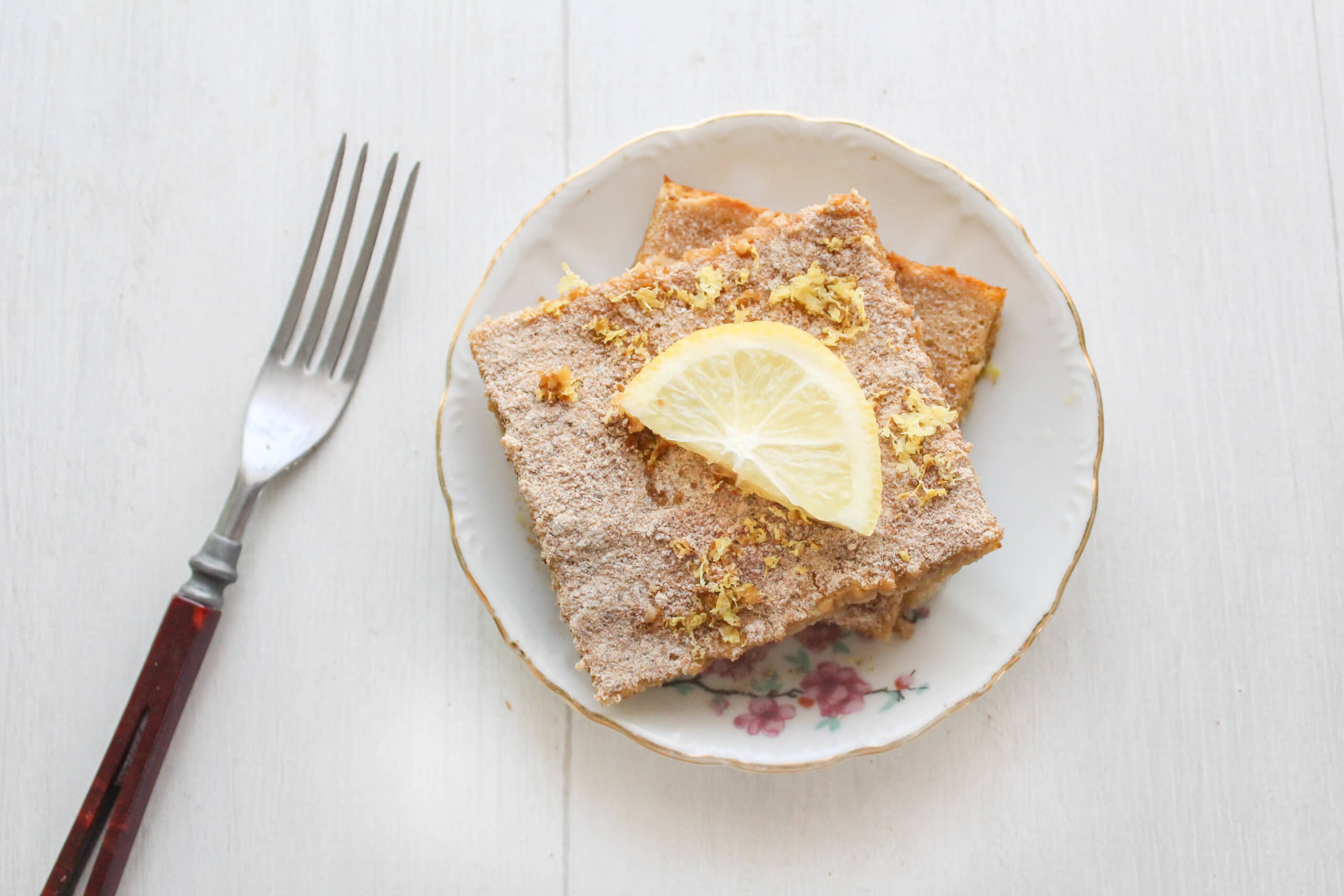
Triple Lemon Bars With Orange Variation
Servings
Ingredients
Crust
- 1½ cups gluten-free all-purpose flour
- ½ cup organic coconut flour
- ½ cup organic coconut sugar
- ¼ teaspoon pink Himalayan salt OR sea salt, ground
- ½ cup cold grass-fed organic unsalted butter, diced OR ½ cup coconut oil, extra-virgin AND unrefined AND ¼ teaspoon pink Himalayan salt or sea salt, ground
- ½ cup coconut oil, extra-virgin AND unrefined
Filling
- 4 large pasture-raised organic eggs
- 6 tablespoons gluten-free all-purpose flour
- ½ cup organic coconut sugar
- 1 teaspoon non-aluminum baking powder
- 1 pinch pink Himalayan salt OR sea salt, ground
- 1 cup Grade A Dark Amber maple syrup, organic OR raw organic local honey
- ½ cup purified OR distilled water OR organic unsweetened almond OR coconut milk beverage
- ½ cup freshly squeezed organic lemon juice
- 3 drops lemon essential oil
- 1 tablespoon Natural Confectioners’ Sugar (optional)
- Finely grated organic lemon zest for garnish (optional)
Supplies
- Powdered sugar shaker OR stainless steel sieve (for sifting Natural Confectioners’ Sugar)
Instructions
For the crust:
- Preheat the oven to 350°F. In a large bowl, mix both flours, coconut sugar, and sea salt. Using a knife, cut the butter and coconut oil into the dry ingredients to form a dough with a fine-crumb consistency. Press the mixture in an even layer in the bottom of a 9 x 13 x 2-inch pan. Bake for 20 minutes, until pale golden.
For the filling:
- In a medium bowl, beat the eggs. In a separate medium bowl, stir together the flour, coconut sugar, baking powder, and sea salt.
- Add the flour mixture to the eggs and stir until smooth. Gradually stir in the maple syrup, distilled water, lemon juice, and lemon essential oil. Pour the mixture over the baked crust and return to the oven. Bake for about 30 minutes, or until set.
- Cool completely (15-30 minutes) before sifting the Natural Confectioners’ Sugar over the top, if desired. Garnish with lemon zest, if desired.
- Cut into 32 pieces. Place in an airtight container and store in fridge or freezer (for longer).
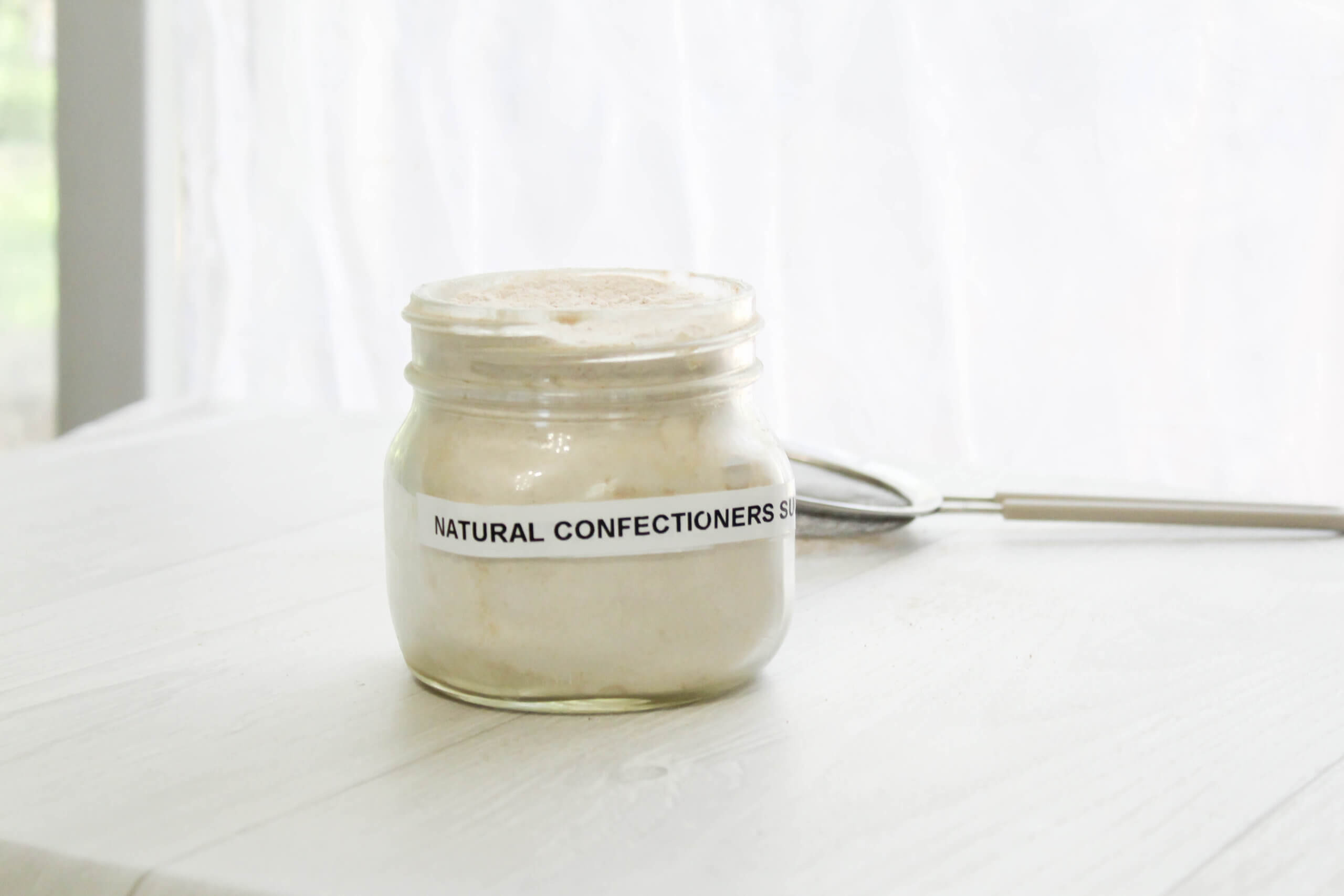
Natural Confectioners' Sugar (Vegan)
Servings
Ingredients
- 2 rounded cups Christmas Cookie Blend
- 2 cups organic arrowroot powder OR organic non-GMO cornstarch
Supplies
- Blender OR food processor
Instructions
- Place the Christmas Cookie Blend and cornstarch in a gallon-size Ziploc bag. Shake to mix.
- Blend in a high-powered blender or food processor until well-mixed. I prefer milling this recipe in the dry goods container of a Vitamix. You may have to divide your mixture in half depending on the size of your blender. Then, I open the blender, stir and repeat the process. The final color of your product will differ based on the brand of sweetener you use. Store in quart and pint-sized glass jars at room temperature. Use as directed in desserts and dips.
Step One: Prepare the Crust
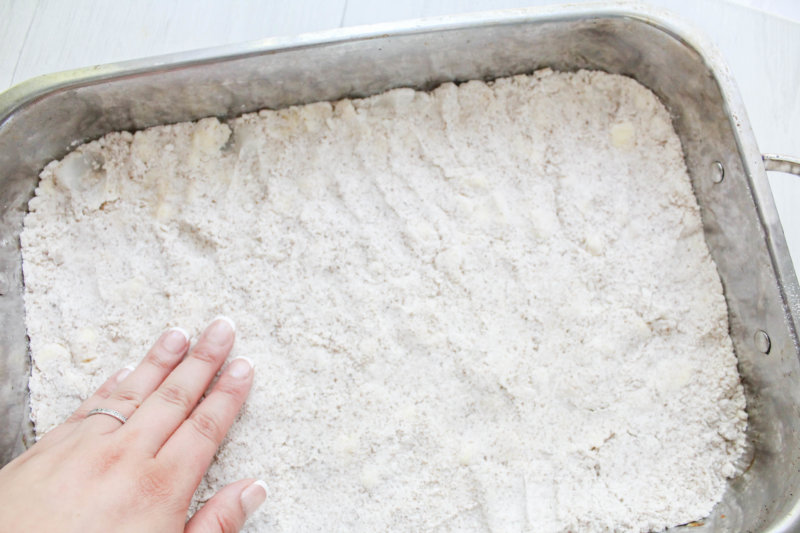
These lemon bars have a delicious, buttery shortbread crust. Preheat the oven to 350°F. In a large bowl, mix both kinds of flour, coconut sugar, and sea salt. Using a knife, cut the butter and coconut oil into the dry ingredients to form a dough with a fine-crumb texture.
Press the mixture into an even layer in the bottom of a 9 x 13 x 2-inch pan to make the crust firm. Bake in the preheated oven for 20 minutes or until light golden.
Step Two: Combine the Lemon Filling Ingredients
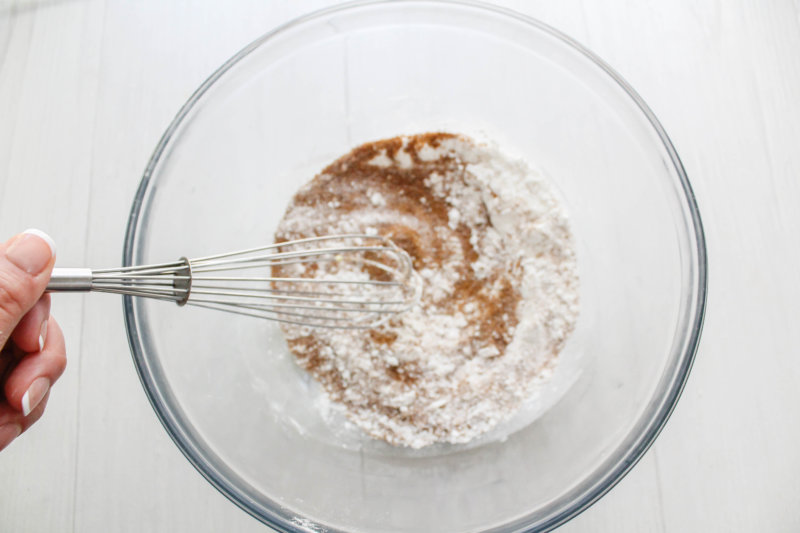
While the crust is baking, you can make your lemony filling. Beat the eggs until light and fluffy in a medium bowl. In a separate bowl, stir together the flour, coconut sugar, baking powder, and sea salt.
Step Three: Add Essential Oils
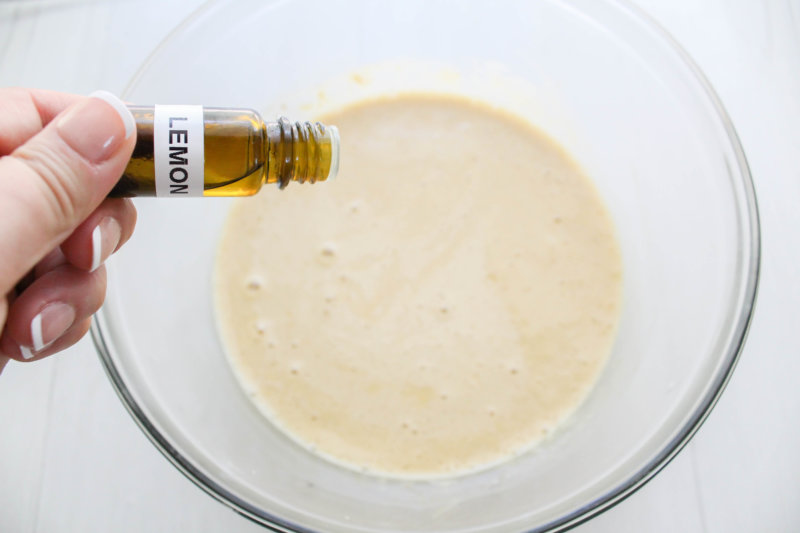
Add the flour mixture to the eggs and stir until smooth. Slowly stir in the maple syrup, distilled water, lemon juice, and essential oil. Pour the soft lemon filling mixture over the baked crust and return it to the oven for about 30 minutes, or until the lemon layer is set.
Pro Tip: Keep freshly squeezed lemon or lime juice in the fridge to speed up recipe prep. I prefer fresh lemon juice over bottled lemon juice because the flavor is brighter and cleaner.
Step Four: Garnish the Lemon Bars
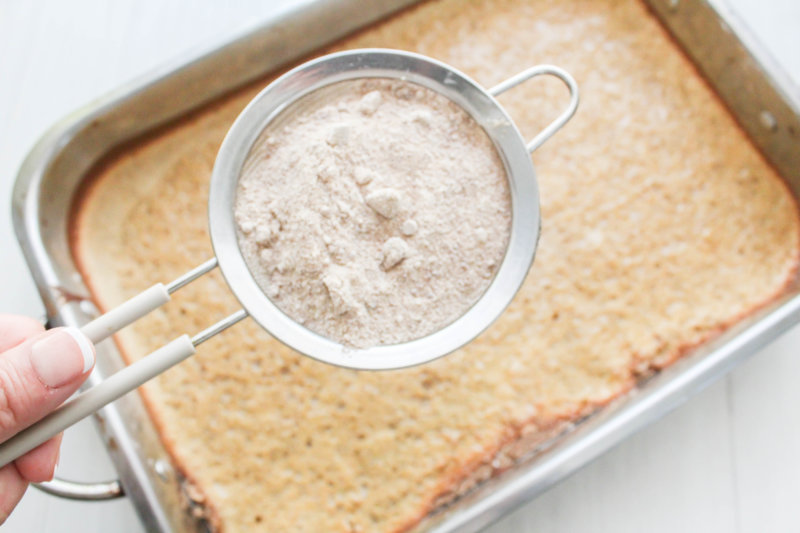
Let the gluten-free lemon bars cool completely. This should take about 15-30 minutes. Then, you can decorate! I like to sift some Natural Confectioners' Sugar over the top. You can also garnish the finished lemon bars with fresh lemon zest.
Cut the lemon squares into 32 pieces. Place leftover lemon bars in an airtight container and store them in the fridge. You can store gluten free lemon bars in the freezer for up to 3 months. Enjoy!
Mama Z’s Triple Orange Bars Variation
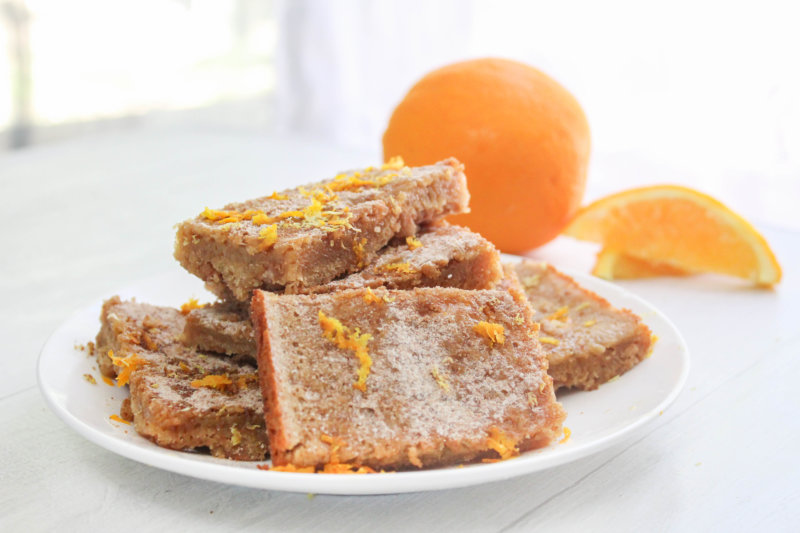
Are you an orange fanatic? We are too! We call orange essential oil our “liquid antidepressant” because it brings us joy. That is our family nickname for its bright, happy aroma, not a claim that orange essential oil treats clinical depression.
To turn this gluten-free lemon bar recipe into orange bars with ease, follow the recipe card for the lemon squares above, but swap freshly squeezed orange juice for lemon juice, orange essential oil for lemon EO, and orange zest for the lemon zest.
Now you've transformed your lemony flavor profile into a delicious, summery orange dessert. Enjoy!
Gluten Free Lemon Bars FAQs
What makes these gluten free lemon bars different?
These are triple lemon bars because they use fresh lemon juice, lemon zest, and lemon essential oil. That gives you a fuller citrus flavor than lemon juice alone. The crust is gluten-free, the filling is gooey and custard-like, and the sweeteners are upgraded from white sugar to coconut sugar, maple syrup, or raw honey.
Can you put lemon essential oil in lemon bars?
Yes, lemon essential oil can be used in lemon bars when it is a pure, high-quality oil appropriate for culinary use and is thoroughly mixed into the filling. This recipe uses only 3 drops for 32 bars, so the oil is dispersed throughout the entire batch rather than swallowed as a concentrated dose.
That amount is part of this specific recipe. Do not assume that more drops would make the dessert healthier or turn it into a medicinal protocol.
Can I ingest essential oils?
Do not casually ingest essential oils in water or neat (undiluted). Internal use of essential oils requires proper dilution, product quality, dosing knowledge, and safety guidance. Learn more about how to ingest essential oils here.
Can I make these lemon bars dairy-free?
Yes. The recipe uses butter and coconut oil for the crust, but you can use the coconut oil option if you need a dairy-free dessert. Follow the dairy-free option in the recipe card exactly so the crust keeps the intended texture.
Do gluten free lemon bars need to be refrigerated?
Yes. Because these lemon bars have an egg-based filling, store them in an airtight container in the refrigerator. They also freeze well for up to 3 months, which makes them a wonderful make-ahead dessert for holidays, showers, potlucks, and family gatherings.
Can I use bottled lemon juice instead of fresh lemon juice?
Fresh lemon juice is best because it gives these bars a brighter flavor. Bottled lemon juice can taste flat or bitter, and this recipe is all about that fresh citrus sparkle.
Are these lemon bars healthy?
These lemon bars use the ingredient standards we prefer for a healthier homemade dessert: gluten-free flours, coconut sugar, maple syrup or raw honey, quality fats, pasture-raised eggs, and real citrus flavor.
They are still dessert. Coconut sugar, maple syrup, honey, and Natural Confectioners' Sugar all contribute sweetness, so enjoy them as a special treat rather than treating the word “natural” as permission to ignore portions.
Does baking destroy the benefits of lemon essential oil?
Heat can cause volatile essential-oil compounds to evaporate or change, and the exact amount retained after baking has not been established for this recipe. That is another reason not to calculate the health effects of these bars as though each serving delivers a known therapeutic amount of d-limonene. We use the 3 drops primarily for culinary flavor and aroma.
Can I use lime or orange essential oil instead?
Yes. Lime essential oil can create a key-lime-style bar, and orange essential oil makes Mama Z’s Triple Orange Bars variation. Use the matching juice and zest so the flavor stays balanced, and follow the recipe amount rather than increasing the essential oil.


Resources & References
- Bahçecik AN, et al. “Effectiveness of Lemon Essential Oil in Reducing Test Anxiety in Nursing Students.” Explore. 2022. doi:10.1016/j.explore.2022.02.003.
- Mahato N, et al. “Citrus Essential Oils in Aromatherapy: Therapeutic Effects and Mechanisms.” Antioxidants. 2022;11(12):2374. doi:10.3390/antiox11122374.
- Komiya M, Takeuchi T, Harada E. “Lemon Oil Vapor Causes an Anti-Stress Effect via Modulating the 5-HT and DA Activities in Mice.” Behavioural Brain Research. 2006;172(2):240-249. doi:10.1016/j.bbr.2006.05.006.
- Białoń M, Krzyśko-Łupicka T, Koszałkowska M, Wieczorek PP. “The Influence of Chemical Composition of Commercial Lemon Essential Oils on the Growth of Candida Strains.” Mycopathologia. 2014;177(1-2):29-39. doi:10.1007/s11046-013-9723-3.
- Radithia D, Tanjungsari R, Ernawati DS, Parmadiati AE. “The Effectiveness of Essential Oil From Citrus limon Peel on Candida albicans Biofilm Formation: An Experimental In Vivo Study.” Journal of Taibah University Medical Sciences. 2023;18(1):190-195. doi:10.1016/j.jtumed.2022.07.011.
- Zhao C, Zhang Z, Nie D, Li Y. “Protective Effect of Lemon Essential Oil and Its Major Active Component, D-Limonene, on Intestinal Injury and Inflammation of E. coli-Challenged Mice.” Frontiers in Nutrition. 2022;9:843096. doi:10.3389/fnut.2022.843096.
- Chen X, Ding Y, Guan H, et al. “The Pharmacological Effects and Potential Applications of Limonene From Citrus Plants: A Review.” Natural Product Communications. 2024. doi:10.1177/1934578X241254229.
- Trinidad TP, Valdez DH, Loyola AS, et al. “Glycaemic Index of Different Coconut (Cocos nucifera)-Flour Products in Normal and Diabetic Subjects.” British Journal of Nutrition. 2003;90(3):551-556. doi:10.1079/BJN2003944.
- Saraiva A, Carrascosa C, Ramos F, et al. “Coconut Sugar: Chemical Analysis and Nutritional Profile; Health Impacts; Safety and Quality Control; Food Industry Applications.” International Journal of Environmental Research and Public Health. 2023;20(4):3671. doi:10.3390/ijerph20043671.
- Mohammed F, Sibley P, Abdulwali N, Guillaume D. “Nutritional, Pharmacological, and Sensory Properties of Maple Syrup: A Comprehensive Review.” Heliyon. 2023;9(9):e19216. doi:10.1016/j.heliyon.2023.e19216.
- Karsten HD, Patterson PH, Stout R, Crews G. “Vitamins A, E and Fatty Acid Composition of the Eggs of Caged Hens and Pastured Hens.” Renewable Agriculture and Food Systems. 2010;25(1):45-54. doi:10.1017/S1742170509990214.
- Mumme K, Stonehouse W. “Triglycerides of Medium-Chain Fatty Acids: A Concise Review.” PMCID: PMC9217113.