


QUICK SUMMARY
This essential oil sleep spray is a simple DIY way to make your bedtime routine feel calmer and more consistent. Aromatherapy does not force the body to sleep like a sedative medication, but inhaled essential oils can support relaxation, ease anxious or restless feelings, and become a familiar sensory cue that it is time to wind down.
Lavender has the strongest direct human sleep research among the oils featured here. Human studies also support relaxing or anxiety-reducing effects from sweet orange and ylang ylang, while newer research has explored vetiver and chamomile oil for sleep. The evidence is not equally strong for every oil or every blend, so this article separates direct sleep research from relaxation research and traditional use.
Use the Sleep Spray with Essential Oils recipe exactly as written. If you want to customize the aroma, choose from the original blend combinations below while staying within the recipe's stated total amount of essential oil. Pair your spray with a dark, quiet bedroom, a consistent sleep schedule, prayer, and a peaceful wind-down routine.
For a deeper guide to insomnia, nighttime routines, and the research behind individual oils, see our best essential oils for sleep article.
Getting a good night's rest is imperative. A healthy lifestyle balance is dependent on your body recharging at night, and one of your best natural resources is using essential oils.
This homemade essential oil sleep spray recipe can aid in relaxation and help create the peaceful atmosphere you need to settle down for the night.
I love a simple DIY like this because sleep is not only about what happens after your head hits the pillow. Your body responds to rhythms and cues. Dim lights, quieter activity, prayer, a familiar bedtime, and the same calming aroma can all become signals that the day is ending.
That is where a sleep spray shines.
It is easy to make, easy to keep near your bedtime routine, and simple to personalize with the essential oils you already love.
Table of Contents

How Do Essential Oils Help With Rest?
Essential oils can help create the conditions that make rest easier.
When you inhale an essential oil, volatile aromatic compounds interact with the olfactory system, which is closely connected with brain regions involved in memory, emotion, and autonomic regulation. The aroma itself can also become part of a learned bedtime routine.
That does not mean every calming essential oil is a proven insomnia treatment.
It means certain oils have human evidence for improving sleep quality, reducing anxiety, or promoting relaxation, while others have a long history of traditional use that makes them beautiful additions to an evening blend.
Lavender is the clearest example.
A 2026 randomized controlled trial involving 80 people with chronic heart failure found that nightly lavender essential-oil inhalation for four weeks improved sleep quality and fatigue compared with placebo inhalation. Earlier randomized research in adults with type 2 diabetes and insomnia also found improved sleep quality and quantity with inhaled lavender. (1, 2)
A sleep spray is not a sleeping pill.
Think of it as one part of a healthy wind-down rhythm: the aroma says, “The work is done. The lights are going down. It is time to rest.”
Sleep, Anxiety, Stress and the Busy Mind
These issues overlap, but I do not want this DIY article trying to answer every emotional-health question.
If racing thoughts, panic, or persistent anxiety are the primary reason you cannot settle, see our full guide to essential oils for anxiety and panic attacks.
If chronic mental and emotional pressure, burnout, or tension is the bigger issue, use our dedicated essential oils for stress relief resource.
Here, the goal is simple: build a peaceful bedtime cue around the sleep spray recipe below.
Best Essential Oils for a Sleep Spray
The original sleep spray recommendations include sweet orange, lavender, vetiver, Roman chamomile, and ylang ylang.
I still love these oils, but the research behind each one is different.
Lavender Essential Oil
Lavender is one of the best overall essential oils for mood, relaxation, and sleep.
It also has the strongest direct sleep evidence in this group.
The 2026 heart-failure trial is especially useful because participants inhaled lavender nightly over four weeks rather than receiving only a one-time exposure. The earlier diabetes and insomnia trial likewise reported better sleep quality and quantity after lavender inhalation. (1, 2)
Why I like it in a sleep spray: Lavender has a soft, familiar aroma that works beautifully alone or as the foundation of a more complex bedtime blend.
Sweet Orange Essential Oil
Sweet orange may seem like an odd choice because citrus aromas are often described as cheerful and uplifting.
That can actually be helpful when the emotional atmosphere at bedtime feels heavy.
In a controlled human experiment, inhaled sweet orange aroma reduced measures of anxiety during an anxiety-provoking situation. The study was about acute anxiety rather than insomnia, so I would not call sweet orange a proven sleep treatment. It does support the original reason we included it: helping create a calmer emotional transition into rest. (3)
Why I like it in a sleep spray: It keeps a bedtime blend from smelling too heavy and pairs beautifully with lavender, geranium, patchouli, and sweet marjoram.
Vetiver Essential Oil
Vetiver is rich, earthy, and deep. We have long used it when thoughts feel scattered and the mind needs a more grounded aroma.
The human evidence for vetiver and sleep used to be much thinner than the traditional claims suggested. That is beginning to change.
A newer study examining lavender, vetiver, and orange-blossom essential oils found significant improvements in Pittsburgh Sleep Quality Index scores after four to six weeks in the vetiver and orange-blossom groups. The study was relatively small and does not establish vetiver as a sedative medication, but it gives the traditional sleep use more direct human support. (4)
Why I like it in a sleep spray: Vetiver adds a grounding base note that pairs especially well with Roman chamomile.
Roman Chamomile Essential Oil
Roman chamomile has a soft apple-like aroma and is one of our favorite oils when nervousness, irritability, or a busy mind is getting in the way of rest.
Newer randomized research found that chamomile oil inhalation for 10 minutes before bedtime over 15 days improved sleep quality and insomnia severity in young adults with insomnia. That study supports chamomile oil as a category, although the published paper should not automatically be treated as proof that every chamomile species, chemotype, or preparation works identically. (5)
Why I like it in a sleep spray: Roman chamomile softens stronger oils and works beautifully in evening blends with lavender, rose, palmarosa, vetiver, and valerian.
Ylang Ylang Essential Oil
Pretty and balancing, ylang ylang essential oil has a rich floral aroma that can be deeply relaxing in small amounts.
Human research has found lower blood pressure and greater subjective calm and relaxation after ylang ylang exposure. That is relaxation evidence rather than direct proof of improved sleep, but it supports ylang ylang as a useful evening aroma. (6)
Why I like it in a sleep spray: A little ylang ylang gives a blend depth and softness without needing synthetic fragrance.
What If Another Problem Is Keeping You Awake?
Not every restless night has the same root.
If seasonal discomfort or congestion is making it hard to rest comfortably, see our essential oils for allergy symptoms guide.
If anxiety is the bigger issue, use our essential oils for anxiety resource instead of expecting a bedtime spray to carry the entire burden.
And if hormone changes are affecting sleep, mood, or the way you feel at night, our essential oils to balance hormones guide can help you look at that piece separately.
The sleep spray can still be part of the routine.
You simply want to address the root issue too.
Sleep Spray With Essential Oils
This is the original Natural Living Family sleep spray recipe. Use the recipe exactly as written, including the stated amounts and instructions.
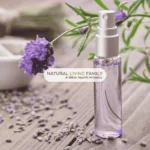
Sleep Spray with Essential Oils
Quantity
Ingredients
- 20 drops essential oils*
- 190-proof alcohol OR the highest-proof alcohol you can find
Supplies
Instructions
- Add essential oils to your glass spray bottle.
- Fill the remaining space in the bottle with the alcohol.
- Shake well.
- Mist your pillow before bedtime to help aid sleep and provide a restful night.
Best Essential Oil Blends for Relaxation
We have shared a few of our favorite sleep essential oil blends, but you can personalize the aroma within the amount of essential oil specified in the sleep spray recipe.
These are the original blend combinations from this article:
- *Patchouli & Cedarwood
- *Lavender & Vanilla Absolute
- *Vetiver & Roman Chamomile
- *Ylang ylang, bergamot, lavender, sweet marjoram, roman chamomile, valerian
- *Lavender, clary sage, ylang ylang, vanilla
- *Geranium, sweet marjoram, patchouli, sweet orange
- * Roman chamomile, rose, palmarosa
Do not interpret that list as permission to add every oil at full strength or increase the recipe's total essential-oil amount.
Choose the aroma combination you want and keep the complete blend within the recipe as written.
Aroma preference matters more than people sometimes realize. A blend can have beautiful research behind it and still be a poor bedtime choice for you if you dislike the smell.
The goal is to create an aroma your mind begins associating with peace, prayer, quiet, and sleep.
Use the Same Blend Consistently
There is something powerful about ritual.
Spraying the same familiar aroma at roughly the same point in your evening routine can turn scent into a cue.
You do not need a different “sleep hack” every night.
Often the better strategy is consistency.
Use your favorite blend long enough to learn whether it actually helps you wind down.
Make Your Sleep Spray Part of a Bedtime Routine
Essential oils work best when the rest of the evening is moving in the same direction.
Your body has a circadian rhythm, an internal timing system strongly influenced by light and darkness. Bright artificial light late in the evening can interfere with the body's normal sleep-wake signals, while a consistent schedule helps reinforce them. (7)
Keep the routine simple:
- Lower the lights. Give your brain a clear signal that daytime is ending.
- Put away stimulating media. Endless scrolling is not a bedtime routine.
- Use your sleep spray as directed. Let the familiar aroma become your cue to slow down.
- Pray and release the day. You do not have to solve tomorrow tonight.
- Keep a consistent bedtime and wake time. Your body responds well to rhythm.
- Keep the bedroom cool, quiet, and dark. Protect the environment you are asking your body to sleep in.
NHLBI guidance similarly emphasizes a regular sleep schedule, quiet time before bed, reduced bright artificial light, and a quiet, cool, dark bedroom. (7)
This is also where the DIY becomes more than a nice-smelling spray.
It becomes part of a repeated pattern of rest.
Another Way to Bring the Aroma Into Your Bedroom
These oils can also be added to your wool dryer balls when washing bedding.
Follow the dryer-ball instructions carefully and do not saturate fabric with essential oil. Our current dryer-ball guidance recommends allowing the oil to absorb and using it thoughtfully so you get a light natural scent without creating an oil-heavy load.
You do not need your sheets to smell like perfume.
A subtle aroma is enough.
Essential Oil Sleep Spray Safety Tips
Essential oils are concentrated plant compounds, even when we are using them for something as gentle as bedtime.
Keep these basics in mind:
- Follow the recipe exactly. Do not increase the essential-oil amount because you want a stronger effect.
- Avoid spraying directly toward the eyes, nose, mouth, or face.
- Patch-test delicate fabrics and finished surfaces if the recipe is being used where overspray may land. Dark oils and absolutes can discolor some materials.
- Use less aroma when needed. Strong fragrance can be counterproductive for people prone to headache, nausea, asthma symptoms, or scent sensitivity.
- Use age-appropriate essential oils around children. A family bedroom does not automatically mean every adult-strength blend is appropriate for a baby or young child.
- Give pets room to leave the area. Do not spray essential oils directly on pets, their faces, or their bedding unless you are following pet-specific guidance.
- Store the spray according to the recipe instructions and keep it out of reach of small children.
When a Sleep Spray Is Not Enough
A DIY sleep spray is for supporting relaxation and a healthy bedtime routine.
It should not become a way to ignore a persistent sleep disorder.
If you routinely struggle to fall asleep, wake repeatedly and cannot get back to sleep, feel excessively sleepy during the day, or have loud snoring, gasping, choking, or pauses in breathing during sleep, talk with a qualified healthcare professional. Those patterns can point to insomnia, sleep apnea, restless legs, or another issue that deserves evaluation. (8)
For chronic insomnia, behavioral and psychological treatments such as cognitive behavioral therapy for insomnia have an established evidence base. (9)
You can love your sleep spray and still investigate why you are not sleeping.
Those two things are not in conflict.
Essential Oil Sleep Spray FAQs
What is the best essential oil for a sleep spray?
Lavender is the best-supported starting point because it has the strongest direct human evidence for sleep among the oils in this recipe. Vetiver and chamomile oil also have newer human sleep research, while sweet orange and ylang ylang have useful human relaxation or anxiety evidence.
Does essential oil sleep spray really work?
It can support relaxation and become part of a consistent bedtime routine. Research on inhaled lavender and some other essential oils has found improvements in sleep quality in specific populations. That does not mean every sleep spray cures insomnia or works equally well for everyone.
How does an essential oil sleep spray help you relax?
Inhaled aromatic compounds interact with the olfactory system, and scent can influence emotional and autonomic responses. Repeatedly using the same calming aroma during a quiet bedtime routine can also turn the scent into a familiar signal that it is time to wind down.
Can I change the essential oils in this sleep spray recipe?
Use the recipe exactly as written. If the recipe allows you to choose your essential oils, select one of the original blend combinations above or another appropriate sleep blend while keeping the total essential-oil amount specified in the recipe unchanged.
What essential oils blend well with lavender for sleep?
The original combinations in this article include lavender with vanilla absolute, as well as larger blends containing lavender with ylang ylang, bergamot, sweet marjoram, Roman chamomile, valerian, or clary sage. Use those combinations within the complete recipe amount rather than adding extra drops.
Is vetiver good for sleep?
Vetiver has long been used as a grounding bedtime aroma, and newer human research found improved sleep-quality scores after several weeks of vetiver essential-oil use. The study was relatively small, so vetiver should be described as promising rather than a proven sedative treatment.
Is Roman chamomile good for sleep?
Roman chamomile is traditionally used in calming evening blends. A newer randomized trial found that chamomile oil inhalation before bedtime improved sleep quality and insomnia severity in young adults, although that finding should not be generalized automatically to every chamomile species or preparation.
Can I use a sleep spray every night?
Follow the recipe's use instructions. For many people, consistency is one of the advantages of a bedtime aroma because it becomes part of the nightly wind-down routine. Stop or reduce use if the scent causes headache, nausea, coughing, irritation, or another unwanted response.
What should I do if essential oils are not helping me sleep?
Look at the larger sleep picture. Keep a regular schedule, reduce bright light and stimulating media before bed, keep the bedroom cool and dark, and address anxiety, chronic stress, pain, hormonal changes, breathing problems, or another issue that may be disturbing sleep. Persistent insomnia or symptoms such as loud snoring and gasping deserve professional evaluation.
Make Rest a Rhythm
A good night's rest is not a luxury.
Your body needs the opportunity to recharge.
This homemade essential oil sleep spray is one simple way to make the transition from a busy day to a peaceful night feel more intentional.
Choose an aroma you love.
Use the recipe exactly as written.
Lower the lights.
Quiet the house.
Pray.
Release what can wait until tomorrow.
Then let that familiar aroma become part of the rhythm that reminds your body and mind it is time to rest.


References
- Hu J, Chong MS, Jia Y, Wu Y, Li J, Wang W. “Effects of Lavender Essential Oil Inhalation on Sleep Quality and Fatigue in Patients With Chronic Heart Failure: A Randomized Controlled Trial.” European Journal of Cardiovascular Nursing. 2026;25(3):619-629. doi:10.1093/eurjcn/zvag006.
- Nasiri Lari Z, Hajimonfarednejad M, Riasatian M, et al. “Efficacy of Inhaled Lavandula angustifolia Mill. Essential Oil on Sleep Quality, Quality of Life and Metabolic Control in Patients With Diabetes Mellitus Type II and Insomnia.” Journal of Ethnopharmacology. 2020;251:112560. PubMed.
- Goes TC, Antunes FD, Alves PB, Teixeira-Silva F. “Effect of Sweet Orange Aroma on Experimental Anxiety in Humans.” Journal of Alternative and Complementary Medicine. 2012;18(8):798-804. doi:10.1089/acm.2011.0551.
- Chang KM, Whu YW, Chen YH, et al. “Vetiver and Orange Blossom Aid in Lowering Blood Pressure and Heart Rate and Improving Sleep Quality.” Holistic Nursing Practice. 2025. PubMed.
- Deepa Y, Vijay A, Nivethitha L, Nandhakumar G, Sathiya S, Mooventhan A. “Effects of Chamomile Oil Inhalation on Sleep Quality in Young Adults With Insomnia: A Randomized Controlled Trial.” International Journal of Psychiatry in Medicine. 2025;60(5). doi:10.1177/00912174241301279.
- Hongratanaworakit T, Buchbauer G. “Relaxing Effect of Ylang Ylang Oil on Humans After Transdermal Absorption.” Phytotherapy Research. 2006;20(9):758-763. PubMed.
- National Heart, Lung, and Blood Institute. “Healthy Sleep Habits.” NHLBI.
- National Heart, Lung, and Blood Institute. “In Brief: Your Guide to Healthy Sleep.” NHLBI.
- Edinger JD, Arnedt JT, Bertisch SM, et al. “Behavioral and Psychological Treatments for Chronic Insomnia Disorder in Adults: An American Academy of Sleep Medicine Clinical Practice Guideline.” Journal of Clinical Sleep Medicine. 2021;17(2):255-262. Full text.


