


QUICK SUMMARY
Homemade magnesium oil spray is a concentrated mixture of magnesium chloride flakes and water. Despite the name, it contains no actual oil; the solution simply feels slightly silky or oily on the skin.
Many people spray it on tight calves, tired feet, sore muscles, or tense shoulders as part of an evening or post-workout routine. Magnesium itself is essential for normal nerve signaling, muscle function, energy production, bone health, blood-glucose regulation, and heart rhythm.
The important limitation is absorption. Current evidence does not show that topical magnesium reliably corrects a whole-body magnesium deficiency or treats restless legs syndrome or insomnia. Think of this as a soothing topical body-care recipe, while using magnesium-rich foods and appropriately selected oral supplements when your goal is to improve magnesium intake.
If your legs feel restless at night or your shoulders and calves are tight after a long day, a homemade magnesium oil spray is an easy addition to your natural body-care routine.
It is inexpensive, simple to make, and easy to customize with the optional essential oils already included in our recipe. Use it for massage and relaxation, not as a substitute for evaluating persistent cramps, restless legs, sleep problems, or suspected magnesium deficiency.
Table of Contents

Homemade Magnesium Oil Spray
Making magnesium spray at home is simple and budget-friendly.
The recipe uses magnesium chloride flakes and water, with lavender or Roman chamomile essential oil as optional aromatic additions. Those essential oils are included for their calming aromas and traditional use in bedtime body-care routines, not because they have been proven to increase magnesium absorption.
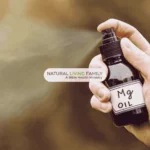
Homemade Magnesium Oil Spray
Quantity
Ingredients
- 1 cup purified OR distilled water
- 1 cup magnesium chloride flakes
- 5 drops lavender essential oil (optional)*
- 5 drops Roman chamomile (optional)*
Instructions
- Boil the water.
- Pour the water over the magnesium flakes in a glass container.
- Stir until the flakes are dissolved.
- Add essential oils and stir.
- Does not need to be refrigerated.
- It can last up to 6 months.
And now you know how to make magnesium oil!
For the best results:
- Use magnesium chloride flakes rather than Epsom salt.
- Use distilled or previously boiled water.
- Allow the solution to cool before adding essential oils.
- Store it in a clean spray bottle.
- Label the bottle with the ingredients and preparation date.
Magnesium Chloride vs. Epsom Salt
Magnesium chloride and Epsom salt are not the same ingredient.
- Magnesium chloride is typically used to make magnesium oil spray.
- Epsom salt is magnesium sulfate and is most often dissolved in bathwater.
Do not substitute one for the other in the recipe unless the formula has been specifically designed for that ingredient.
Optional Essential Oils
Lavender and Roman chamomile can help turn the spray into a calming aromatic ritual.
The essential oils will not dissolve fully in plain water or magnesium brine, so shake the bottle well before every use to redistribute the droplets. Do not increase the essential-oil concentration simply because you cannot smell it strongly after application.
How to Use Magnesium Oil Spray
Begin with a small amount so you can see how your skin responds.
Spray once or twice onto intact skin over areas such as your calves, feet, shoulders, upper back, or thighs, then massage it in gently.
You may leave it on or rinse it away after approximately 20–30 minutes if the residue feels uncomfortable.
There is no reliable universal recommendation such as “5–10 sprays daily” because spray pumps release different amounts, homemade concentrations vary, skin sensitivity differs, and systemic absorption remains uncertain.
Start small and increase only as tolerated. More tingling does not mean you are more deficient, and more spray does not guarantee more benefit.
I especially like using it:
- After an evening shower
- Before gentle stretching
- After exercise
- During a nighttime foot massage
- As part of a prayer and relaxation routine
Avoid spraying immediately after shaving, exfoliating, or irritating the skin because concentrated magnesium chloride can sting.
For a full-body option, follow a properly measured detox bath recipe rather than adding a few random sprays to bathwater.
Does Magnesium Oil Absorb Through the Skin?
This is the biggest question surrounding magnesium oil.
The skin is designed to be a protective barrier, and magnesium is a charged mineral that does not easily cross it in large quantities. A scientific review concluded that claims of superior transdermal magnesium absorption were not supported by robust evidence. (2)
One small human pilot study tested a magnesium cream for two weeks. Researchers observed only limited changes in serum and urinary magnesium, with statistical significance appearing only in a subgroup analysis. The study was too small to establish topical magnesium as a reliable way to correct deficiency. (3)
So the evidence-based answer is simple: some topical absorption may occur, but we do not know that a homemade spray delivers enough magnesium to reliably improve whole-body magnesium status.
That does not make the spray useless. Massage, a cooling topical sensation, a quiet nighttime rhythm, and optional calming aromas can all make it a soothing body-care practice.
What Magnesium Oil May Help With
Magnesium oil is commonly used for muscle tightness, restless legs, sleep, and relaxation. The evidence is not equally strong for each use.
Sore Muscles and Tightness
Many people enjoy applying magnesium spray to tired calves, feet, shoulders, or post-workout muscles. High-quality clinical evidence does not yet show that magnesium chloride spray consistently treats muscle pain, but gentle massage can feel soothing and pairs well with stretching, hydration, heat, and rest.
Application: Use the spray after a warm shower, massage it gently into tired muscles, and follow with comfortable stretching.
Restless Legs
Restless legs syndrome, or RLS, causes an uncomfortable urge to move the legs, usually during rest and often at night.
Magnesium is frequently recommended, but research has not established topical magnesium spray as an effective RLS treatment. Reviews of magnesium supplementation remain limited, and current American Academy of Sleep Medicine guidance emphasizes checking iron status in people with clinically significant RLS. (4, 5, 8)
If restless legs repeatedly disrupt your sleep, especially during pregnancy or after a medication change, do not assume magnesium is the whole answer.
Sleep and Relaxation
Magnesium supports normal nervous-system function, but it is not a universal sleeping pill.
A 2026 systematic review of randomized controlled trials found that oral magnesium may modestly improve selected subjective sleep outcomes in some adults, but results were inconsistent and the certainty of evidence was low to very low. The evidence did not support routine magnesium supplementation as a treatment for insomnia. (9)
Research on topical magnesium for sleep is even less developed. The value of a nighttime spray may come partly from the ritual itself: massage, slower breathing, dim lights, prayer, and intentionally releasing the day.
Joint Pain
Joint pain can come from many causes, including arthritis, injury, inflammation, gout, infection, autoimmune disease, or overuse. There is not enough evidence to say magnesium oil treats those underlying causes.
Massage around a tired area may feel soothing, but swelling, warmth, redness, loss of movement, or severe persistent pain deserves evaluation.
What Magnesium Does in the Body
Magnesium is essential. NIH notes that it functions as a cofactor in more than 300 enzyme systems and contributes to protein synthesis, muscle and nerve function, blood-glucose control, blood-pressure regulation, energy production, bone structure, and normal heart rhythm. (1)
Most adult women need about 310–320 milligrams per day, while most adult men need about 400–420 milligrams. Pregnancy needs vary by age. These recommendations refer to magnesium from food and supplements, not an amount delivered through a homemade skin spray. (1)
Good food sources include pumpkin seeds, chia seeds, leafy greens, beans, almonds, cashews, whole grains, and other minimally processed foods.
If you want the deeper discussion of symptoms, testing, food sources, and oral supplementation, see our dedicated guide to magnesium deficiency rather than trying to make this simple DIY spray do everything.
Are You Deficient in Magnesium?
It is often claimed that nearly everyone is magnesium deficient, but that is too broad.
Many people consume less magnesium than recommended, but low dietary intake is not the same thing as a clinically significant deficiency. NIH notes that symptomatic deficiency from low intake alone is uncommon in otherwise healthy people because the kidneys help conserve magnesium. Risk rises with gastrointestinal disease, type 2 diabetes, alcohol-use disorder, older age, excessive losses, and certain medications. (1)
Possible deficiency symptoms can include fatigue, weakness, nausea, muscle cramps, numbness or tingling, and, in more severe cases, abnormal heart rhythms or seizures. Those symptoms are not specific to magnesium.
Serum magnesium is the most common clinical test, but because most magnesium is stored in bone and soft tissue, no single test perfectly captures total magnesium status. Symptoms, diet, medications, health history, kidney function, and laboratory results may all matter. (1)
Magnesium Oil Safety
Magnesium spray is generally used on intact skin, but concentrated magnesium chloride can sting or irritate.
Rinse the area and stop using it if you develop strong burning, persistent redness, swelling, hives, blisters, or worsening itching. Diluting the spray with more water may improve tolerance.
Do not spray it in the eyes, inside the mouth or nose, on open wounds, infected skin, freshly shaved skin, or other severely irritated areas.
People with significant kidney disease should discuss magnesium products with a clinician because the kidneys are responsible for clearing excess magnesium. Skin absorption from a spray is uncertain, but kidney impairment is not a situation where we assume more magnesium is automatically harmless.
During pregnancy, persistent cramps or restless legs deserve a conversation with your prenatal clinician because iron status and other causes may matter. If the optional essential oils are included, confirm that the specific oil and dilution are appropriate for pregnancy, breastfeeding, and infant contact.
Children have smaller bodies and more sensitive skin. Do not use an adult-strength homemade spray on a child without appropriate pediatric guidance, and keep the bottle where children cannot spray it into their eyes or swallow it.
Magnesium Oil FAQs
What is magnesium oil?
Magnesium oil is magnesium chloride dissolved in water. It contains no true oil but feels slippery or silky when applied to the skin.
Can magnesium oil correct a magnesium deficiency?
Do not rely on it for that purpose. Current evidence does not show that topical magnesium reliably raises whole-body magnesium levels enough to correct a deficiency. Food and appropriately selected oral or medical magnesium have better-established roles. (2, 3)
Can magnesium oil help restless legs or sleep?
Some people enjoy the spray as part of a calming bedtime routine, but topical magnesium has not been established as a treatment for RLS or insomnia. Persistent restless legs deserve evaluation, including consideration of iron status. (8)
Why does magnesium oil sting?
Magnesium chloride creates a concentrated salt solution that can irritate dry, freshly shaved, or sensitive skin. Stinging is not proof that you are magnesium deficient.
What oral magnesium is best?
The best form depends on your goal, dose, digestive tolerance, medications, and health conditions. NIH notes that citrate, chloride, lactate, and aspartate forms tend to be more bioavailable than magnesium oxide. (1)
For broad magnesium support, we use Mag10. Anyone with kidney disease, significant medical conditions, or multiple medications should discuss supplementation with a clinician.
Can magnesium supplements interact with medication?
Yes. Magnesium supplements can reduce absorption of certain antibiotics and osteoporosis medications, while diuretics and long-term acid-suppressing drugs can alter magnesium status. Follow pharmacist or clinician guidance on timing. (1)
Is store-bought magnesium spray better than homemade?
A commercial product may provide more consistent concentration, filtration, packaging, and directions. A homemade spray is inexpensive and customizable but requires clean preparation and careful labeling.
The Pure Magnesium Oil Spray available in our Amazon shop is a convenient option for families who prefer a ready-made formula.
Final Thoughts on Homemade Magnesium Oil Spray
We do not need to exaggerate a natural remedy to appreciate it.
Homemade magnesium oil is simple, affordable, and easy to include in a relaxing body-care routine. Massage it into tired legs, tense shoulders, or hardworking feet. Add the optional lavender or Roman chamomile from the recipe. Pair it with stretching, hydration, nourishing food, prayer, and a peaceful bedtime rhythm.
Use food and appropriately selected oral supplements when your goal is to improve whole-body magnesium intake, and seek medical guidance when cramps, weakness, restless legs, heart palpitations, or insomnia persist.
The Lord designed our bodies with wisdom and balance. Caring for them well means listening to their signals without jumping to conclusions, using His creation thoughtfully, and seeking help when symptoms point to something deeper.


- National Institutes of Health Office of Dietary Supplements. Magnesium: Fact Sheet for Health Professionals. https://ods.od.nih.gov/factsheets/Magnesium-HealthProfessional/
- Gröber U, Werner T, Vormann J, Kisters K. Myth or Reality – Transdermal Magnesium? Nutrients. 2017. https://pmc.ncbi.nlm.nih.gov/articles/PMC5579607/
- Kass L, Rosanoff A, Tanner A, Sullivan K, McAuley W, Plesset M. Effect of Transdermal Magnesium Cream on Serum and Urinary Magnesium Levels in Humans: A Pilot Study. PLOS ONE. 2017. https://pmc.ncbi.nlm.nih.gov/articles/PMC5389641/
- Marshall NS, et al. Magnesium Supplementation for the Treatment of Restless Legs Syndrome and Periodic Limb Movement Disorder: A Systematic Review. Sleep Medicine Reviews. 2019. https://pubmed.ncbi.nlm.nih.gov/31678660/
- González-Parejo P, et al. Effects of Dietary Supplementation in Patients With Restless Legs Syndrome: A Systematic Review. Nutrients. 2024. https://pubmed.ncbi.nlm.nih.gov/39064758/
- Rawji A, et al. Examining the Effects of Supplemental Magnesium on Self-Reported Anxiety and Sleep Quality: A Systematic Review. 2024. https://pmc.ncbi.nlm.nih.gov/articles/PMC11136869/
- MedlinePlus. Magnesium in Diet. Updated 2025. https://medlineplus.gov/ency/article/002423.htm
- Winkelman JW, et al. Treatment of Restless Legs Syndrome and Periodic Limb Movement Disorder: An American Academy of Sleep Medicine Clinical Practice Guideline. Journal of Clinical Sleep Medicine. 2025. https://pubmed.ncbi.nlm.nih.gov/39324694/
- Magnesium Supplementation for Sleep in Adults: A Systematic Review of Randomized Controlled Trials. 2026. https://pubmed.ncbi.nlm.nih.gov/42661485/


