


QUICK SUMMARY
Clove essential oil is a powerful, eugenol-rich oil best known for its warm aroma, oral-care history, temporary topical numbing action, and strong antimicrobial and antioxidant activity in laboratory research. Human evidence is most relevant to temporary dental numbing, while many infection-fighting, anti-inflammatory, and anticancer findings remain laboratory or animal research.
Clove is also one of the essential oils where more is definitely not better. It can irritate skin and mucous membranes, interact with medications, and cause serious harm when swallowed in excessive amounts. Use it well diluted, follow recipe-specific internal-use directions, and do not use ORAC scores as proof that it detoxifies the body or prevents disease.
Primarily because of its eugenol content, clove essential oil benefits the body in powerful ways. This warm, spicy oil has been used in wellness traditions across cultures and generations, especially for oral care and seasonal blends.
Clove oil is concentrated plant medicine. Its antioxidant, antimicrobial, and anti-inflammatory activity is impressive in the laboratory, but that does not mean every test-tube result becomes a proven treatment in people. This is one of those oils that calls for confidence and caution at the same time.
Let’s look at what clove essential oil can realistically do, where the research is strongest, how ORAC values have been misunderstood, and how to use this potent oil with wisdom.
In this article, you will learn about:
Clove Spice Uses
For millennia, clove trees, now most commonly identified as Syzygium aromaticum, have been harvested for their fragrant flower buds. Cloves are native to the Maluku Islands of Indonesia and became prized throughout Asia and the global spice trade.
Each unopened flower bud is picked and dried until it turns from pink to deep brown. From there, the dried buds can be used whole, ground into a culinary spice, made into an herbal extract, or distilled to produce clove bud essential oil.
Whole and ground cloves contain fiber, minerals, and plant compounds that are not present in the same proportions in the distilled essential oil. According to USDA food-composition data, ground cloves are particularly concentrated in manganese. That does not make clove spice or clove oil a treatment for osteoporosis, anemia, or premenstrual syndrome. It simply means that culinary cloves can contribute manganese as part of a varied diet. (1)
Clove essential oil is a different preparation. Distillation concentrates volatile compounds, especially eugenol, but leaves behind fiber and most nonvolatile nutrients. That distinction matters whenever we talk about nutrition, antioxidant activity, or internal use.
Learn more about our favorite healthy herbs and spices.
Learn more about how to use essential oils safely and effectively with our exclusive essential oil dilution guide.
Antioxidant Power of Clove
Antioxidants help regulate reactions involving unstable molecules commonly called free radicals. Oxidative stress occurs when the production of reactive molecules overwhelms the body’s antioxidant defenses and repair systems.
Clove and eugenol demonstrate strong antioxidant activity in chemical assays and preclinical research. Reviews of clove essential oil describe antioxidant, antimicrobial, anti-inflammatory, and other biological activities linked largely to eugenol and to the way clove’s constituents work together. (2, 3)
That is meaningful, but we need to say exactly what it means.
A laboratory antioxidant test measures how a substance behaves under specific experimental conditions. It does not tell us how much of that substance reaches human tissues, how the body metabolizes it, whether it improves a clinical outcome, or whether a larger dose is better.
Clove essential oil should not be called the strongest antioxidant in the world. Different assays measure different reactions, and a high test-tube value cannot be turned into a universal ranking of health benefits.
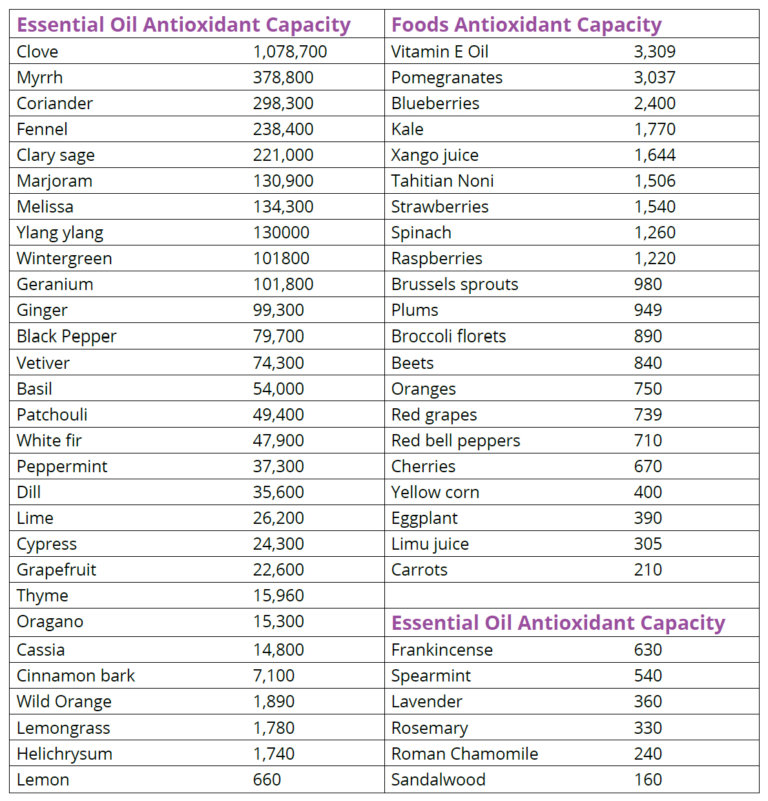
Historical note: This chart reflects ORAC values that circulated widely online. The USDA later withdrew its ORAC database because these laboratory values were being misused to imply health effects they could not establish. The chart is preserved for context, not as a current clinical ranking.
A Note about ORAC Values in Clove
ORAC stands for Oxygen Radical Absorbance Capacity. The test was developed to measure how well a food or compound neutralized a particular free radical in a laboratory system.
The USDA once published a database of ORAC values for selected foods. It later withdrew that database after concluding that ORAC numbers were routinely being misused by marketers and consumers and were not established measures of what specific foods or compounds do inside the human body. (4)
That does not mean antioxidants are useless. It means ORAC is not a shortcut to a health claim.
Antioxidants do not simply enter the body, hunt down every free radical, reverse all cellular damage, and prevent disease. Human antioxidant biology includes enzymes, nutrients, signaling pathways, immune responses, repair systems, and the normal production of reactive molecules for useful functions.
The practical takeaway is this:
- Clove has strong antioxidant chemistry.
- Eugenol helps explain some of its laboratory effects.
- ORAC values do not prove detoxification, slowed aging, cancer prevention, or superior human health outcomes.
- Laboratory and animal findings can identify promising mechanisms, but controlled human research is needed before making treatment claims.
Clove and eugenol have shown anticancer activity in cell studies, including research involving oral cancer cell lines. These findings can help researchers identify possible mechanisms and future drug candidates, but they do not establish clove essential oil as a cancer treatment in people. (5)
4 Common Clove Essential Oil Benefits
Clove bud essential oil, Syzygium aromaticum, is usually rich in eugenol. Exact composition varies with plant part, growing conditions, extraction, storage, and product identity.
With great power comes great responsibility. Eugenol may demonstrate antioxidant and anti-inflammatory effects at appropriate experimental amounts, while excessive exposure can become irritating or toxic. High-dose ingestion has caused severe liver injury, particularly in children. (6)
This is both good news and a warning:
- Clove essential oil is a powerful substance.
- Powerful substances should be handled carefully, with knowledge, wisdom, and common sense.
With this caution in mind, we can explore the benefits of clove bud essential oil when used safely and appropriately.
What Does the Most Recent Clove Research Show?
Research published in 2024 and 2025 continues to confirm that clove and eugenol have meaningful biological activity. A 2025 systematic review of plant-based agents for dental pain identified clove oil and eugenol among the options with the strongest analgesic evidence. The included studies used different products and methods, so the review does not establish neat clove essential oil as a safe home substitute for dental treatment. (15)
A separate 2025 review examined clove compounds against multidrug-resistant bacteria. It described promising antibacterial and antibiofilm mechanisms while emphasizing the need for standardized formulations, toxicity testing, dosing research, and human clinical trials. (16)
Modern evidence continues to validate why clove has earned such a powerful reputation, while showing why product identity, route, concentration, and human clinical evidence matter.
1. Antibacterial Activity
Clove essential oil is widely recognized for antibacterial activity in laboratory research.
One study evaluated clove oil against Escherichia coli, Staphylococcus aureus, and Pseudomonas aeruginosa. The oil inhibited all three organisms under laboratory conditions, with activity affected by concentration, temperature, and the amount of organic material present. (7)
More recent research continues to explore clove essential oil against bacterial strains, biofilms, and foodborne organisms. A 2024 study found antimicrobial activity from Syzygium aromaticum essential oil and emphasized that the complete oil contains multiple active molecules that may work together. (8)
These findings do not mean a homemade clove blend can prevent pneumonia, cure a skin infection, sterilize the body, or replace antibiotics. Laboratory antimicrobial activity is best understood as evidence of biological potential and as support for carefully formulated food, oral-care, hygiene, or medical products.
Application: Use clove as one carefully measured component of a properly diluted household, oral-care, or seasonal blend. Seek medical care for signs of a bacterial infection rather than relying on essential oils alone.
2. Antifungal Activity
Candida remains a major topic in natural-health conversations, but we need to separate Candida colonization, local yeast infections, and invasive candidiasis. They are not the same condition, and they do not have the same cause or treatment.
Clove essential oil and eugenol have inhibited Candida, Aspergillus, and dermatophyte species in laboratory studies. Some experiments have also compared clove oil with conventional antifungal agents in vitro. (9, 10)
In vitro means the organisms were tested outside the human body. It does not prove that applying or swallowing clove essential oil safely treats vaginal candidiasis, oral thrush, ringworm, athlete’s foot, or an invasive fungal infection.
Nystatin is an established antifungal medication used for susceptible Candida infections. It is not accurate to say that it never addresses the root cause or that laboratory findings make clove oil an equivalent natural replacement.
Application: Do not apply undiluted clove oil to genital tissue, broken skin, or a suspected fungal infection. Persistent itching, discharge, mouth lesions, spreading rash, fever, or symptoms in an immunocompromised person need appropriate evaluation.
3. Oral Health
Clove has a long history in dental care, and this is where its traditional reputation and modern use most clearly meet.
Eugenol has been used in dentistry in materials such as zinc oxide-eugenol cement and temporary dressings. Its local numbing and antiseptic actions help explain why clove has historically been used for tooth discomfort.
In a randomized human study of 73 adults, a homemade clove gel reduced needle-insertion pain similarly to 20% benzocaine gel, and both performed better than placebo. The study evaluated a specific clove gel applied by researchers. It did not test undiluted clove essential oil placed directly on a tooth or gum. (11)
A separate laboratory study examined clove oil and eugenol against enamel decalcification caused by apple juice. The experiment suggested possible protective or remineralization-related effects under laboratory conditions. It did not prove that clove essential oil reverses cavities or replaces fluoride, dental cleanings, fillings, or other professional care. (12)
This is part of the reason we often mention using carefully diluted clove oil in your oil-pulling base for more dental hygiene benefits.
Learn more about essential oils for oral health in our report here.
Application: Use clove only in a properly formulated oral-care recipe. Do not place neat clove oil on a tooth, gum, canker sore, or sensitive oral tissue. Tooth pain, swelling, fever, facial swelling, trauma, or a bad taste from drainage requires prompt dental care because numbing pain does not correct the cause.
4. Analgesic and Topical Comfort
Clove’s local numbing effect is strongly associated with eugenol.
The human dental study described above found that a clove gel and benzocaine gel produced similar reductions in needle-insertion pain compared with placebo. This supports a temporary topical analgesic effect from the tested preparation. (11)
Animal studies and reviews also describe pain-relieving and anti-inflammatory activity from clove, clove preparations, or eugenol. These findings suggest possible mechanisms but do not prove that clove oil can replace over-the-counter pain medication for every condition or avoid all side effects. (13)
Clove itself can cause burning, sensitization, irritation, or tissue injury when used too strongly. Temporary numbing can also mask a condition that needs treatment.
Application: Reserve clove for low-concentration, short-term, localized blends with clear directions. Stop if burning, redness, swelling, numbness beyond the intended area, nausea, dizziness, or another reaction occurs.
Recommended Clove Essential Oil Uses
Clove bud oil works well when blended with other oils. Personally, I enjoy an immunity blend of equal parts cinnamon, clove, eucalyptus, rosemary, orange, and lemon essential oils.
The equal-parts master blend is a concentrate, not a ready-to-apply body oil or an automatic internal-use formula. Every route needs its own final amount, carrier, and safety limits.
When using clove, always dilute. Clove bud oil is rich in eugenol and can burn or sensitize the skin when used too strongly. With that said, don’t be afraid of using it. Clove is highly versatile when handled with respect.
Here are some oral-health applications using clove bud essential oil:
- Oil Pulling: Use only the amount specified in a complete oil-pulling recipe and disperse it thoroughly through the full coconut-oil base.
- DIY Toothpaste: Follow a tested formula that keeps clove at a low concentration and does not irritate oral tissue.
- DIY Mouthwash: Essential oil and water do not mix. Use the complete recipe with its approved dispersing ingredients rather than dropping clove oil into plain water.
For inhalation, use clove sparingly because its aroma is intense. Add it as one small part of a diffuser blend, follow your diffuser instructions, diffuse intermittently in a ventilated room, and use extra caution around children, pets, and anyone with respiratory sensitivity.
For topical use, clove is not an oil to estimate casually. Use a professionally calculated or established recipe, patch test when appropriate, and avoid damaged skin, eyes, mouth tissue, and other sensitive areas.
Immunity Boosting Shot
For antioxidant activity and seasonal wellness support, make my Immunity Boosting Shot!
This is a medicinal internal-use preparation, not a beverage to sip casually or a formula to increase according to taste. Follow the preserved recipe exactly, including the specified oil or blend, amount, carrier, timing, frequency, and duration. Use only products labeled for dietary use, and do not substitute a diffuser blend.
Immunity Boosting Shot
Quantity
Ingredients
- 1 packet Lypo-Spheric Vitamin C
- 1 teaspoon raw honey
- 1 teaspoon unrefined coconut oil
- 1-2 drops Immune Boost Blend Essential Oils*
- ¼ teaspoon organic pumpkin pie spice
- tiny pinch pink Himalayan salt
Instructions
- Add the EO to the coconut oil first and mix.
- Mix with the remaining ingredients in a glass bowl and enjoy twice daily at the onset of a cold for up to two weeks at a time.
- Wash down with pure, filtered water.
- Be sure to not use for more than two weeks at a time.
- Note – This can be enjoyed straight or with a little bit of water to wash it down.
Recipe note: It is not recommended to add this mixture to boiling tea because high heat can alter delicate components in honey and essential oils. If you want to add it to tea, allow the tea to cool until it is comfortably warm and follow the recipe’s complete dispersion and dosing directions.
Can I ingest essential oils?
Do not casually ingest essential oils in water or neat (undiluted). Internal use of essential oils requires proper dilution, product quality, dosing knowledge, and safety guidance. Learn more about how to ingest essential oils here.
Clove Essential Oil Safety
Clove is one of the essential oils that demands careful dosing. The same eugenol that contributes to its biological activity can irritate skin and mucous membranes and become toxic at excessive internal amounts.
Keep these safeguards in mind:
- Do not use it neat: Undiluted clove oil can burn or sensitize skin and oral tissue.
- Do not improvise internal doses: Culinary use and medicinal internal use require different formulas. Follow a verified, recipe-specific amount and duration.
- Keep it away from children: Accidental swallowing can be a medical emergency. High-dose eugenol exposure has caused severe liver injury, seizures, low blood sugar, and other complications.
- Use caution with blood-thinning concerns: Eugenol may affect platelet activity. Ask a qualified professional before medicinal internal use if you take anticoagulant or antiplatelet medication, have a bleeding disorder, or are preparing for surgery.
- Use caution with liver disease: Avoid unsupervised medicinal internal use if you have liver disease or take medication that affects the liver.
- Consider medication metabolism: A 2024 laboratory study using human liver microsomes found that eugenol inhibited CYP1A2 and CYP2C9 activity at the tested concentrations. This does not prove a clinically important interaction in people, but it strengthens the case for professional guidance before medicinal internal use with prescription drugs, especially medicines with narrow safety margins. (17)
- Pregnancy and breastfeeding: Culinary amounts of clove spice are different from concentrated essential-oil protocols. Get individualized guidance before medicinal internal use.
- Children: Do not give a medicinal internal clove-oil protocol to a child without qualified, oil-specific guidance.
- Stop for adverse reactions: Discontinue use for burning, rash, swelling, coughing, nausea, vomiting, abdominal pain, unusual bleeding, dizziness, or other concerning symptoms.
Call Poison Control at 1-800-222-1222 in the United States if someone swallows an unintended amount. Call emergency services for trouble breathing, seizure, loss of consciousness, severe vomiting, or another life-threatening reaction.
Clove Essential Oil FAQs
What is clove essential oil good for?
Clove essential oil is best supported for its antimicrobial and antioxidant activity in laboratory research, its long history in oral care, and temporary local numbing in a tested dental gel. It is also commonly used in seasonal diffuser blends and carefully formulated oral-care products.
Is clove essential oil the strongest antioxidant?
No single substance can be responsibly declared the strongest antioxidant in the world based on an ORAC number. Clove performs strongly in several laboratory antioxidant assays, but those scores do not rank human health benefits.
Why did the USDA remove the ORAC database?
The USDA withdrew the database because ORAC values were being misused to market foods and supplements and were not established measures of biological effects in people. (4)
Can clove essential oil kill Candida?
Clove oil and eugenol have inhibited Candida species in laboratory studies. That does not prove that homemade clove-oil use safely treats oral, vaginal, skin, or invasive candidiasis in people. (9, 10)
Can I put clove oil directly on a toothache?
Do not place undiluted clove essential oil directly on a tooth or gum. It can burn oral tissue, and pain relief can delay treatment of decay, infection, fracture, or another dental problem. Use a properly formulated product and contact a dentist for persistent or severe pain.
Does clove oil replace benzocaine?
A small human study found that a specific clove gel reduced needle-insertion pain similarly to benzocaine. That does not mean any clove essential oil preparation is an interchangeable substitute for benzocaine or professional dental anesthesia. (11)
Can clove essential oil prevent cavities?
Laboratory findings suggest possible antimicrobial and enamel-related effects, but clove oil has not been proven to replace brushing, flossing, fluoride when chosen, a low-sugar diet, professional dental care, or treatment of existing decay.
Can I diffuse clove essential oil?
Yes, but use it sparingly as part of a blend. Diffuse intermittently in a ventilated room and stop if the aroma causes coughing, headache, nausea, breathing discomfort, or irritation.
Can clove essential oil be used internally?
Clove oil has recognized culinary flavoring uses, and the ministry also teaches carefully formulated medicinal internal use. The route, product, amount, carrier, timing, frequency, duration, and individual cautions must be specified. Do not swallow neat drops or improvise from a diffuser recipe.
Is clove essential oil safe for children?
Safety depends on the child’s age, route, concentration, health, and exact product. Keep the bottle locked away, avoid unsupervised internal use, and obtain individualized guidance for medicinal use in children.
The more you learn about clove essential oil, the more you will appreciate both its power and its limits. Its eugenol-rich chemistry makes it a valuable ingredient in carefully designed oral-care, seasonal, and topical preparations.
God has given us powerful plant-based tools, but wisdom is part of stewardship. Use clove in the right preparation, at the right amount, for the right purpose. Let research sharpen your confidence rather than tempt you into treating a potent oil casually.


- U.S. Department of Agriculture. “FoodData Central: Spices, Cloves, Ground.” USDA FoodData Central.
- Haro-González JN, Castillo-Herrera GA, Martínez-Velázquez M, Espinosa-Andrews H. “Clove Essential Oil (Syzygium aromaticum L. Myrtaceae): Extraction, Chemical Composition, Food Applications, and Essential Bioactivity for Human Health.” Molecules. 2021;26(21):6387. https://pmc.ncbi.nlm.nih.gov/articles/PMC8588428/
- Liñán-Atero R, et al. “Clove Essential Oil: Chemical Profile, Biological Activities, Encapsulation Strategies, and Food Applications.” Antioxidants. 2024;13(4):488. https://pmc.ncbi.nlm.nih.gov/articles/PMC11047511/
- Cunningham E. “What Has Happened to the ORAC Database?” Journal of the Academy of Nutrition and Dietetics. 2013;113(5):740. https://www.jandonline.org/article/S2212-2672(13)00242-6/fulltext
- Wulan SN, et al. “In Vitro Anticancer Potential of Eugenol on Oral Cancer Cell Lines: A Systematic Review.” 2024. https://pubmed.ncbi.nlm.nih.gov/39416730/
- National Institute of Diabetes and Digestive and Kidney Diseases. “Eugenol (Clove Oil).” LiverTox: Clinical and Research Information on Drug-Induced Liver Injury. Updated October 28, 2019. https://www.ncbi.nlm.nih.gov/books/NBK548326/
- Nuñez L, D’Aquino M. “Microbicide Activity of Clove Essential Oil (Eugenia caryophyllata).” Brazilian Journal of Microbiology. 2012;43(4):1255-1260. https://pmc.ncbi.nlm.nih.gov/articles/PMC3769004/
- Maggini V, et al. “Antimicrobial Activity of Syzygium aromaticum Essential Oil and Its Main Component Eugenol.” 2024. https://pubmed.ncbi.nlm.nih.gov/38474510/
- Pinto E, Vale-Silva L, Cavaleiro C, Salgueiro L. “Antifungal Activity of the Clove Essential Oil From Syzygium aromaticum on Candida, Aspergillus and Dermatophyte Species.” Journal of Medical Microbiology. 2009;58(Pt 11):1454-1462. https://pubmed.ncbi.nlm.nih.gov/19589904/
- Marchese A, et al. “Antimicrobial Activity of Eugenol and Essential Oils Containing Eugenol: A Mechanistic View.” Critical Reviews in Microbiology. 2017;43(6):668-689. https://pubmed.ncbi.nlm.nih.gov/28346030/
- Alqareer A, Alyahya A, Andersson L. “The Effect of Clove and Benzocaine Versus Placebo as Topical Anesthetics.” Journal of Dentistry. 2006;34(10):747-750. https://pubmed.ncbi.nlm.nih.gov/16530911/
- Chaudhari LK, Jawale BA, Sharma S, Sharma H, Kumar CDM, Kulkarni PA. “Antimicrobial Activity of Commercially Available Essential Oils Against Streptococcus mutans.” Journal of Contemporary Dental Practice. 2012;13(1):71-74. https://pmc.ncbi.nlm.nih.gov/articles/PMC3432374/
- Asl MK, Nazariborun A, Hosseini M. “Analgesic Effect of the Aqueous and Ethanolic Extracts of Clove.” Avicenna Journal of Phytomedicine. 2013;3(2):186-192. https://pmc.ncbi.nlm.nih.gov/articles/PMC4075701/
- U.S. Food and Drug Administration. “Substances Added to Food: Clove Bud Oil.” Accessed July 26, 2026. FDA Food Substances Database.
- Reddy MS, Ramachandra SS, Shetty SR, et al. “Analgesic Efficacy of Phytotherapeutic Agents in Dental Pain Management: A Systematic Review.” International Journal of Dentistry. 2025;2025:5614623. https://pmc.ncbi.nlm.nih.gov/articles/PMC12659986/
- Tariq H, Alhudhaibi AM, Abdallah EM. “Syzygium aromaticum (Clove Buds) as a Natural Antibacterial Agent: A Promising Alternative to Combat Multidrug-Resistant Bacteria.” Frontiers in Microbiology. 2025;16:1674590. https://doi.org/10.3389/fmicb.2025.1674590
- Alharbi NFM, Ahad A, Bin Jardan YA, Al-Jenoobi FI. “Effect of Eugenol on Cytochrome P450 1A2, 2C9, 2D6, and 3A4 Activity in Human Liver Microsomes.” Saudi Pharmaceutical Journal. 2024;32(7):102118. https://doi.org/10.1016/j.jsps.2024.102118


