QUICK SUMMARY
Lemon essential oil, pressed or distilled from the peel of Citrus limon, eases nausea, calms anxiety, lowers pain after surgery, freshens the air, and fights bacteria and fungi, and its main compound, d-limonene, is one of the most studied citrus compounds in natural health. In a 2026 triple-blind trial of 104 heart surgery patients, inhaling lemon oil lowered pain, nausea, delirium, and inflammation markers, and a 2026 systematic review found that lemon inhalation reduced nausea and vomiting in pregnancy in most of the studies.
Diffuse it or use it in an inhaler, dilute it to 2 percent (12 drops per ounce of carrier oil) for the skin, and disperse it in honey, coconut milk, or liquid stevia before it goes into any drink. Cold-pressed lemon is phototoxic, so choose steam-distilled lemon for leave-on products on sun-exposed skin.
Lemon essential oil proves that some of God’s most powerful gifts come in the simplest packages. From supporting a positive mood and freshening your home to enhancing healthy recipes and reducing your family’s toxic burden, this bright citrus oil has earned its place as a staple in natural living.
Here is what the research says it does, how we use it in our home by inhaling it, applying it, and taking it in food, and the few safety rules that make all the difference.
Table of Contents

What Is Lemon Essential Oil?
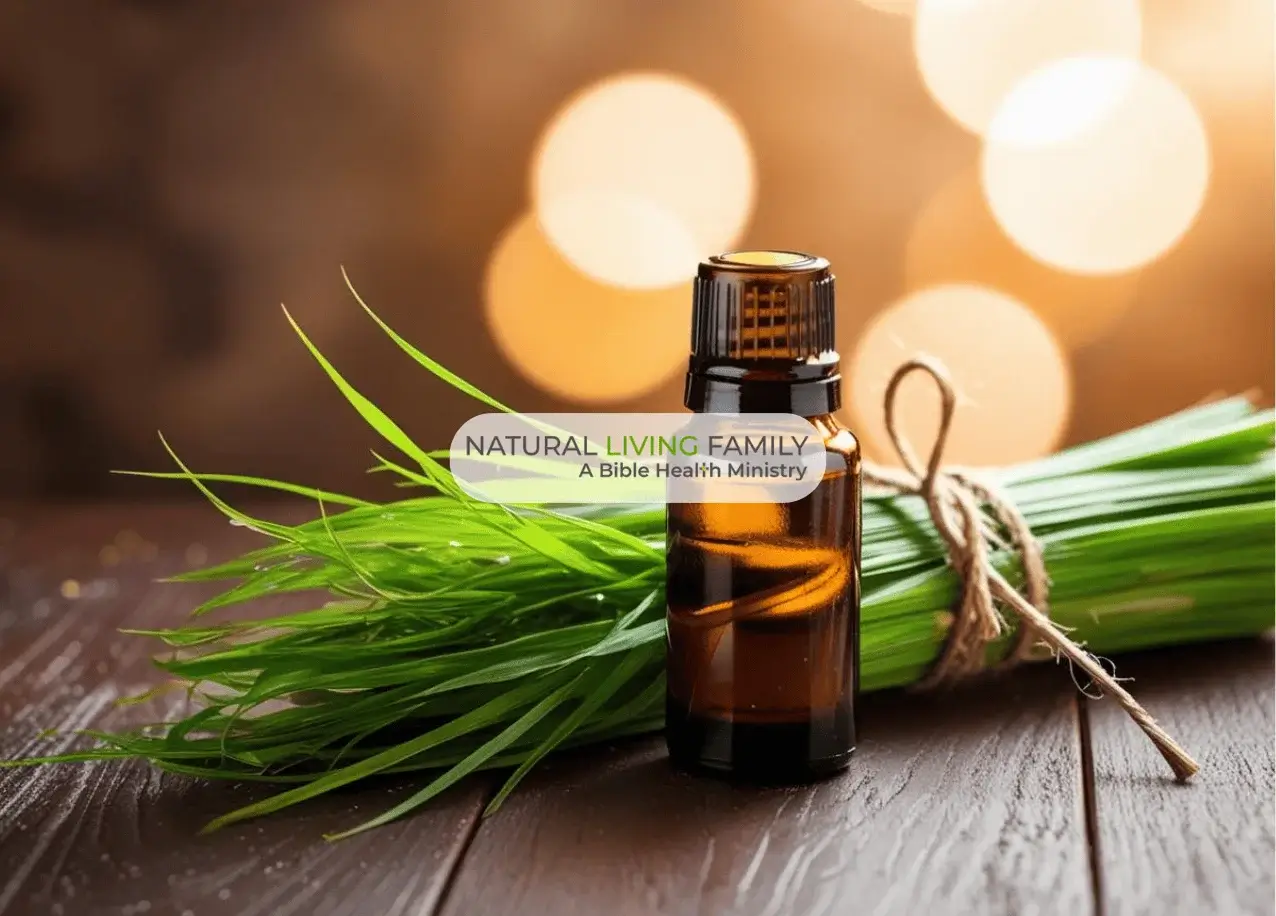
Lemon essential oil comes from the peel of the Citrus limon fruit, not the juice. That matters because the peel is where the concentrated aromatic compounds live, especially d-limonene. This is one reason lemon essential oil smells so bright, clean, energizing, and unmistakably citrusy.
Historically, lemons have a somewhat mysterious origin story. When Chinese and American scientists assembled a complete lemon genome in 2023, they found that about 53.5 percent of it came from citron, 23.3 percent from mandarin, and 23.2 percent from pummelo, so the lemon is a hybrid rather than a simple stand-alone ancient species. (1) However you trace the history, lemon has been used for centuries in food, cleaning, fragrance, and traditional wellness practices.
Lemon oil is either cold-pressed (expressed), which squeezes the oil out of the rind and gives the fullest peel aroma, or steam distilled, which changes the chemistry in one important way: the distilled oil is not phototoxic. More on that in the safety section below.
Lemon oil is one of those essential oils that families reach for again and again because it is so practical. It can freshen the air, lift the mood, help remove sticky residue, deodorize laundry, add a bright note to diffuser blends, and bring concentrated citrus flavor to recipes when used correctly.
But lemon oil is not just “smelly good” oil. A 2021 review in the Journal of Food Biochemistry lists antioxidant, antidiabetic, anticancer, anti-inflammatory, cardioprotective, gastroprotective, liver-protective, and immune-modulating effects for d-limonene, lemon oil’s main compound. (2)
Why d-Limonene Makes Lemon Oil So Powerful
The key to many lemon essential oil benefits is d-limonene, a natural terpene found in citrus peels. Here is how lemon compares with other citrus oils in d-limonene content, according to a widely cited 2018 review of citrus oils (3):
- Sweet orange: 83.9% to 95.9%
- Grapefruit: 84.8% to 95.4%
- Lemon, expressed: 56.6% to 76.0%
- Mandarin: 65.3% to 74.2%
- Lemon, distilled: 64.0% to 70.5%
A 2025 review in the International Journal of Nanomedicine pulled together the preclinical and clinical research on limonene and described significant antioxidant, anti-inflammatory, wound-healing, antidiabetic, anticancer, and immunomodulatory activity, calling it “an unparalleled terpenoid with numerous therapeutic benefits.” (4)
The cancer research is still mostly cells in a petri dish and animals, and that is how we present it. The human work is small but fascinating: a 2021 University of Arizona review describes a study of 43 women with newly diagnosed, operable breast cancer who took 2 grams of d-limonene a day for two to six weeks before surgery. The d-limonene concentrated in their breast tissue, and a marker of tumor cell growth (cyclin D1) went down, while the compound was well tolerated. (5) That was a d-limonene supplement, not lemon oil, and no one should treat it as a cancer protocol, but it shows why scientists keep studying this citrus compound.
That is one reason citrus oils are such a beautiful picture of God-given plant medicine. They are simple, familiar, affordable, and family-friendly when used wisely, yet chemically complex enough to keep researchers busy for decades.
8 Lemon Essential Oil Benefits
1. Eases Nausea and Vomiting
Lemon essential oil is one of the best-studied oils for nausea. A 2026 systematic review in the Journal of Midwifery & Women’s Health gathered five studies on lemon aromatherapy in pregnancy, and most of them found significant drops in both how often and how badly women felt sick. (6)
One of those studies was a 2014 double-blind trial in which 100 pregnant women with nausea and vomiting inhaled either lemon oil or a placebo whenever they felt nauseated. By the second and fourth days, the lemon group’s nausea and vomiting scores were significantly lower. (7)
Lemon works after surgery, too. In a 2023 trial of 90 patients having leg fracture surgery, lemon inhalation from the morning of surgery through 16 hours afterward lowered pain, nausea, vomiting, and retching, and the lemon group needed anti-nausea drugs less often. (8) And in an Austrian palliative care unit, lemon oil on a cotton pad gave adequate relief of nausea and vomiting for patients with advanced cancer in 73 percent of the applications with recorded results (149 of 205). (9)
The method in every one of these studies was simple: smell the oil when you need it. Inhalation is the route the pregnancy studies used, and it is the one we recommend for morning sickness.
Application: Add 15 to 20 drops lemon essential oil to a blank aromatherapy inhaler. When nausea hits, open the inhaler and take a few slow breaths. You can also place 1 drop on a tissue and inhale gently. Avoid touching the oil to your eyes, nose, or lips.
2. Calms Anxiety and Lifts Mood
Lemon essential oil has the kind of aroma that can change a room in seconds. It smells fresh, bright, clean, and hopeful. That is not just poetic language; scent travels through the olfactory system, which is directly connected to the limbic system, the part of the brain involved in mood, memory, and emotional response.
A 2022 study from Turkey put that to the test with first-year nursing students facing exams. The 22 students who smelled lemon essential oil for 15 minutes had significantly lower test anxiety scores than the 24 who did not, and the researchers calculated that lemon oil reduced test anxiety by 43.3 percent. (10) This makes lemon oil a beautiful choice for morning routines, homeschool spaces, office work, cleaning days, and those moments when the whole house needs an emotional reset.
Application: Diffuse 3 drops lemon, 2 drops sweet orange, and 1 drop peppermint in the morning for an energizing start. For a softer emotional support blend, diffuse 3 drops lemon, 2 drops lavender, and 1 drop frankincense.
3. Lowers Pain and Inflammation
The largest and most rigorous lemon trial on this page comes from cardiac surgery. In a 2026 triple-blind trial, 104 adults having coronary artery bypass surgery inhaled lemon oil or an odorless placebo from the evening before surgery through 72 hours after their breathing tube came out. The lemon group had significantly lower pain at all eight measurements, less nausea and vomiting, fewer vomiting episodes, and less need for rescue anti-nausea drugs. (11)
The inflammation markers moved too. At 72 hours, C-reactive protein and the neutrophil-to-lymphocyte ratio were both significantly lower in the lemon group, and no side effects from the aromatherapy were seen. In the researchers’ words, lemon inhalation was “a safe, low-cost, and non-invasive complementary intervention.” (11)
As always, essential oils work best alongside the basics that calm oxidative stress: clean food, regular movement, restorative sleep, prayer, stress reduction, and wise stewardship of the body.
Application: Diffuse 3 to 5 drops in a bedroom or recovery space, or keep a personal inhaler close, the way the surgery patients did.
4. Supports Orientation and Memory
The 2026 heart surgery trial above found something striking: delirium after surgery was far less common in the lemon group at 24 hours (11.8 percent vs. 28.8 percent) and at 72 hours (7.8 percent vs. 23.1 percent), with better scores for attention and orientation. (11) Smell is wired into the parts of the brain that handle emotion, memory, and orientation.
Lemon is also part of a well-known dementia routine from a 2009 Japanese study, in which 28 elderly people, 17 of them with Alzheimer’s disease, smelled rosemary and lemon in the morning and lavender and orange in the evening for 28 days. All of them improved significantly in personal orientation, the patients with Alzheimer’s improved in their total cognitive scores, and routine lab tests showed no side effects. (12)
Lemon shares the credit with three other oils in that routine, so we treat it as a gentle helper, not a dementia treatment.
Application: For a gentle morning brain-support blend, diffuse 2 drops rosemary and 2 drops lemon for 20 to 30 minutes in a well-ventilated room. For more ideas, see our guide to essential oils for brain health.
5. Fights Bacteria and Fungi
Lemon essential oil has been tested against some of the germs families worry about most. In a 2021 study from Bulgaria, lemon zest oil stopped the growth of E. coli, Salmonella, Staphylococcus aureus, Pseudomonas aeruginosa, and the yeast Candida albicans, along with several molds, in lab tests. (13)
Food scientists are paying attention. In a 2024 study, lemon oil prepared as a nanoemulsion killed E. coli within five hours by damaging the bacteria’s cell membrane and cell wall, and the researchers concluded it has “potential application as a natural antibacterial agent for the control of E. coli in the food industry.” (14)
These are lab results, so in our home lemon oil works as a booster alongside other proven natural cleaning ingredients, not as the only line of defense.
Application: For everyday cleaning, combine lemon oil with other strong natural cleaning ingredients such as vinegar, alcohol, castile soap, or other essential oils. For food-prep surfaces, follow safe cleaning practices and rinse when appropriate.
6. Freshens Breath
Bad breath comes mostly from sulfur gases made by mouth bacteria. In a 2023 study from Tianjin Medical University, lemon essential oil slowed the growth of salivary bacteria from people with halitosis, blocked biofilm, and cut the sulfur gases they produced. When 48 volunteers were then split into four rinse groups, the ones who gargled with lemon oil saw their sulfur gas levels drop within an hour, and the researchers concluded that lemon oil “can inhibit the growth of salivary bacteria and reduce VSC production of patients with halitosis.” (15)
The volunteers used a prepared rinse, not a drop of oil floating on water, so if you add lemon to a homemade mouthwash, disperse it properly first.
7. Cleaner Laundry and Odor Control
Lemon oil shines in the laundry room. It can help freshen musty clothes, brighten stale odors, and make laundry smell clean without synthetic fragrances.
This is one of the easiest swaps for families trying to reduce toxic burden. Artificial fragrances in dryer sheets, detergents, and fabric softeners can be overwhelming, especially for sensitive people. Lemon oil gives you a simple way to enjoy a clean scent without bringing more chemical fragrance into the home.
Application: Add 1 to 2 drops lemon oil to wool dryer balls, let the oil absorb first, then toss them in the dryer. For stinky shoes, gym bags, or sports gear, try our deodorizing essential oils recipes.
8. Sticky Mess, Grease, Leather, and Silver
Every family needs practical remedies. Lemon oil is one of my favorite oils for “real life” messes: sticky labels, gum, sap, greasy hands, scuffed leather, and tarnished silver.
Natural living becomes sustainable when it actually works. If a God-given plant extract helps you replace harsh cleaners in daily life, that is stewardship in action.
Application: Add 1 drop lemon oil to a cloth and test a small hidden area first. Use it to loosen sticky residue, remove sap, or freshen leather. For greasy hands, add 1 drop to natural soap and wash well. Avoid using lemon oil on delicate surfaces without testing because citrus oils can affect some finishes.
How to Use Lemon Essential Oil at Home
Lemon essential oil is one of the most versatile oils you can keep in your home. You can inhale it, apply it topically with proper dilution, take it in carefully prepared food and drink, and clean with it.
Diffusion: Add 3 to 5 drops to your diffuser, depending on room size and sensitivity. Lemon blends well with lavender, peppermint, rosemary, frankincense, tea tree, eucalyptus, orange, grapefruit, lime, bergamot, cedarwood, basil, ginger, and ylang ylang.
Inhalation: Add lemon oil to a personal inhaler, cotton ball, tissue, or diffuser jewelry. This is the route the nausea, anxiety, and surgery studies used, and the easiest for focus, emotional uplift, and travel.
Topical use: Dilute in a carrier oil such as jojoba, coconut oil, sweet almond oil, avocado oil, or olive oil. For leave-on products on skin that will see the sun, the IFRA safety limit for cold-pressed lemon oil is 2 percent, which is 12 drops per ounce of carrier oil. (16) That ceiling exists because of the furocoumarins in the peel, and a 2025 toxicology review found the current cosmetic limits on these compounds (1 to 5 parts per million, depending on the product) to be suitably protective. (17)
Safety Tip: Cold-pressed lemon oil is known to be phototoxic, so if you apply this to your skin, choose steam-distilled lemon or avoid direct sunlight for at least 12 hours if your skin is prone to a photosensitive reaction.
Internal use: Lemon oil is wonderful in recipes when used properly, especially in smoothies, dips, frostings, teas, dressings, and drinks. Use a high-quality oil labeled for dietary use and start with 1 drop in an entire recipe; one to three drops per dish is plenty. The one rule never to break is the water rule. In The Essential Oils Apothecary, we put it this way: “Do remember that oil and water do not mix, so simply adding a drop to water will leave that drop undiluted. Some oils are irritants, and all oils are very strong, so it’s best to be safe and dilute it first into some coconut milk, honey, or liquid stevia extract.”
I learned this one the hard way, as I wrote in The Healing Power of Essential Oils: “When I was an essential oil newbie, I dropped lemon essential oil directly into my water and developed acid reflux. Once I discontinued use temporarily, I was fine and my heartburn quickly went away.” For a lemon drink done right, make our Healing Lemon Oil Cooler, and for doses, capsules, and the research behind taking oils internally, read our guide on whether you can ingest essential oils.
Cleaning: Add lemon oil to natural cleaning sprays, sink scrubs, laundry blends, and odor-control powders. Lemon pairs beautifully with tea tree, eucalyptus, lavender, peppermint, orange, and rosemary.
Simple diffuser blend: 3 drops lemon, 2 drops lavender, 1 drop rosemary.
Fresh cleaning blend: 10 drops lemon, 5 drops tea tree, 5 drops orange in your favorite homemade all-purpose cleaner.
Morning focus inhaler: 10 drops lemon, 5 drops rosemary, 5 drops peppermint in a blank aromatherapy inhaler.
Lemon oil works best as part of a Biblical health lifestyle that includes clean food, movement, sleep, stress relief, prayer, and reducing toxic burden at home. For more on living that way, visit us at Bible Health.
Lemon Essential Oil Safety & Phototoxicity
Cold-pressed lemon essential oil can be phototoxic. Compounds in the peel called furocoumarins, such as bergapten, make the skin more sensitive to sunlight and tanning beds, which can lead to a sunburn-like reaction or dark spots where the oil was applied. The National Association for Holistic Aromatherapy lists expressed lemon among photosensitizing oils and distilled lemon among non-phototoxic citrus oils. (18)
This does not mean you need to avoid lemon oil. It means you use it wisely: choose distilled lemon for daytime skin care, and keep cold-pressed lemon at or below its 2 percent safety limit on skin that will see the sun. (16)
Fresh oil only: Citrus oils oxidize as they age, and oxidized limonene forms hydroperoxides, which a 2022 review in Contact Dermatitis describes as a frequent cause of positive allergy patch tests. (19) Store lemon oil tightly capped in a cool, dark place and discard it when it smells stale, harsh, or “off.”
Children: Use 0.5 percent for children under three, 1 percent for children three to ten, and the standard 2 percent for older children and adults, and keep cold-pressed lemon off sun-exposed skin in summer.
Pregnancy: NAHA lists lemon among the oils that appear safe for use during pregnancy, and inhalation is the route the morning sickness studies used. (18)
Application: Use cold-pressed lemon oil in nighttime body oils, wash-off products, diffuser blends, cleaning recipes, or on covered skin. Use steam-distilled lemon for daytime leave-on products.
Lemon Essential Oil FAQs
Can I put lemon essential oil in water?
Not by itself. Oil and water do not mix, so a drop of lemon oil in plain water stays undiluted, floats on top, and can irritate your mouth, throat, and stomach. Dilute it first in a little honey, coconut milk, or liquid stevia, then stir that into your drink, or use a recipe like our lemon cooler.
Is lemon essential oil phototoxic?
Cold-pressed (expressed) lemon oil is phototoxic; steam-distilled lemon oil is not. For leave-on products on sun-exposed skin, use distilled lemon, keep cold-pressed lemon at 2 percent or less, or avoid direct sunlight for at least 12 hours after applying it.
Can you put lemon essential oil directly on your skin?
No. Dilute lemon essential oil in a carrier oil before topical use, at 2 percent (12 drops per ounce) for adults. It can irritate the skin, especially if old or oxidized, and cold-pressed lemon also needs the sun precautions above.
Is lemon essential oil safe around pets?
Diffuse it in a well-ventilated room where animals can leave, and never apply it to your pets. Cats are especially sensitive to oils rich in d-limonene, including lemon, orange, lime, grapefruit, and tangerine. In The Essential Oils Apothecary we explain that “because of the d-limonene content, it’s not safe to apply on pets in case they lick their fur.”
Is lemon essential oil the same as lemon juice?
No. Lemon juice comes from the fruit and contains water-soluble nutrients such as vitamin C. Lemon essential oil comes from the peel and contains concentrated volatile compounds such as d-limonene. They are not interchangeable in safety, chemistry, or dosing.
Keep reading: 12 Healing Oils of the Bible: Uses & Anointing Oil Recipe · Lime Essential Oil Benefits, Uses & Safety Tips · Citrus Essential Oil Benefits: Uses for Immunity, Mood, Metabolism & Home
References
- Bao Y, Zeng Z, Yao W, et al. A gap-free and haplotype-resolved lemon genome provides insights into flavor synthesis and huanglongbing (HLB) tolerance. Horticulture Research. 2023. Source.
- Anandakumar P, Kamaraj S, Vanitha MK. D-limonene: a multifunctional compound with potent therapeutic effects. Journal of Food Biochemistry. 2021. Source.
- Dosoky NS, Setzer WN. Biological activities and safety of Citrus spp. essential oils. International Journal of Molecular Sciences. 2018. Source.
- Sanshita, Devi N, Bhattacharya B, et al. From citrus to clinic: limonene’s journey through preclinical research, clinical trials, and formulation innovations. International Journal of Nanomedicine. 2025. Source.
- Chebet JJ, Ehiri JE, McClelland DJ, Taren D, Hakim IA. Effect of d-limonene and its derivatives on breast cancer in human trials: a scoping review and narrative synthesis. BMC Cancer. 2021. Source.
- Rafiei Z, Radkhah N, Dehghan P, Karimi E. The effect of lemon aromatherapy on nausea and vomiting during pregnancy: a systematic review. Journal of Midwifery & Women’s Health. 2026. Source.
- Yavari Kia P, Safajou F, Shahnazi M, Nazemiyeh H. The effect of lemon inhalation aromatherapy on nausea and vomiting of pregnancy: a double-blinded, randomized, controlled clinical trial. Iranian Red Crescent Medical Journal. 2014. Source.
- Rambod M, Pasyar N, Karimian Z, Farbood A. The effect of lemon inhalation aromatherapy on pain, nausea, as well as vomiting and neurovascular assessment in patients for lower extremity fracture surgery: a randomized trial. BMC Complementary Medicine and Therapies. 2023. Source.
- Kreye G, Wasl M, Dietz A, et al. Aromatherapy in palliative care: a single-institute retrospective analysis evaluating the effect of lemon oil pads against nausea and vomiting in advanced cancer patients. Cancers. 2022. Source.
- Özer Z, Teke N, Turan GB, Bahçecik AN. Effectiveness of lemon essential oil in reducing test anxiety in nursing students. Explore. 2022. Source.
- Sangi S, Amouzegar Zavareh SM, Sahraei H, Sepandi M, Moradi A. Effect of lemon inhalation aromatherapy on postoperative pain, nausea and vomiting, delirium, and inflammatory markers after coronary artery bypass grafting: a triple-blind randomized trial. Iranian Journal of Pharmaceutical Research. 2026. Source.
- Jimbo D, Kimura Y, Taniguchi M, Inoue M, Urakami K. Effect of aromatherapy on patients with Alzheimer’s disease. Psychogeriatrics. 2009. Source.
- Denkova-Kostova R, Teneva D, Tomova T, et al. Chemical composition, antioxidant and antimicrobial activity of essential oils from tangerine (Citrus reticulata L.), grapefruit (Citrus paradisi L.), lemon (Citrus lemon L.) and cinnamon (Cinnamomum zeylanicum Blume). Zeitschrift für Naturforschung C. 2021. Source.
- Xiao W, Gao Z, Liu T, et al. Lemon essential oil nanoemulsions: potential natural inhibitors against Escherichia coli. Food Microbiology. 2024. Source.
- Ma L, Pang C, Yan C, et al. Effect of lemon essential oil on halitosis. Oral Diseases. 2023. Source.
- Tisserand R. Dilution for essential oils. Tisserand Institute. 2024. Source.
- Irizar A, Boislève F, Gautier F, et al. Phototoxicity and skin damage: a review of adverse effects of some furocoumarins found in natural extracts. Food and Chemical Toxicology. 2025. Source.
- National Association for Holistic Aromatherapy. Safety information. NAHA. Accessed 2026. Source.
- Ogueta IA, Brared Christensson J, Giménez-Arnau E, et al. Limonene and linalool hydroperoxides review: pros and cons for routine patch testing. Contact Dermatitis. 2022. Source.