QUICK SUMMARY
This easy homemade tomato bisque is a creamy, gluten-free soup made with tomatoes, herbs, coconut milk, butter or coconut oil, and small culinary amounts of dill, oregano, and lemon essential oils.
The recipe serves 5-6 people. Add the essential oils after simmering, then blend them thoroughly into the soup so the concentrated flavor is evenly dispersed. Use coconut oil for the dairy-free and vegan option.
For a strictly gluten-free meal, verify every packaged ingredient. Refrigerate leftovers promptly and use them within 3-4 days.
My Easy Homemade Tomato Bisque With Essential Oils is rich, creamy, and easy enough for a weeknight. It gives you classic bisque texture without heavy cream and can be made with fresh or canned tomatoes.
Serve it hot on a cold night, chilled in warm weather, or with an organic gluten-free baguette for a simple family meal.
Table of Contents:

How to Make Easy, Creamy Tomato Bisque
The best part about making this favorite soup recipe is that it’s virtually effortless. This recipe serves 5-6 people. We love to do leftovers cold, as you would with gazpacho.
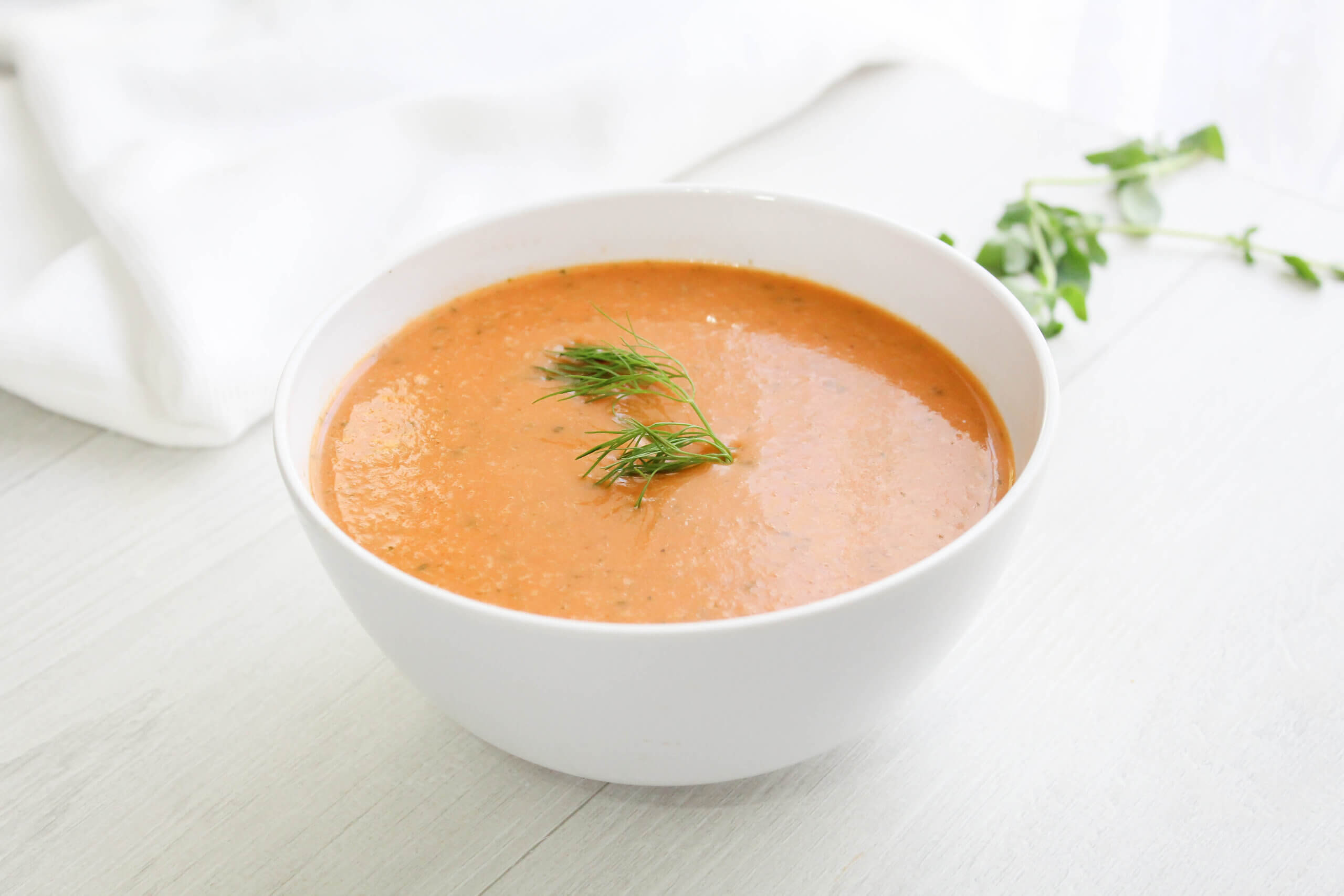
Tasty Tomato Bisque (With Vegan Option)
Servings
Ingredients
- ¼ cup organic dried minced onion OR ¾ cup organic yellow onion, chopped
- ½ cup grass-fed organic sea-salted butter OR ½ cup coconut oil extra-virgin AND unrefined AND ¼ teaspoon pink Himalayan salt OR sea salt, ground*
- ¾ teaspoon organic dried dill seed
- 1 tablespoon chopped fresh organic dill OR 1 teaspoon dried
- 1 tablespoon chopped fresh oregano OR 1 teaspoon dried
- ¼ cup gluten-free all-purpose flour**
- 3-4 cups organic fresh OR canned diced tomatoes
- 3 cups organic vegetable broth OR Homemade Vegetable Broth
- 1½ teaspoons pink Himalayan salt OR sea salt, ground
- ½ teaspoon organic white pepper, ground
- ¼ cup organic fresh parsley, chopped
- 2 drops dill essential oil
- 2 drops oregano essential oil
- 2 drops lemon essential oil
- ¼ cup raw organic local honey***
- 1 (13.5-ounce) can organic full-fat unsweetened coconut milk (1½ cups)
Supplies
Instructions
- In a medium saucepan over low heat, sauté the onions with the butter, dill seed, chopped dill and oregano. Add the flour, stirring for 2 minutes. Gradually stir in the tomatoes, alternating with the vegetable stock. Add the sea salt, white pepper, and parsley. Raise to medium heat and bring to a gentle boil; reduce the heat and simmer for 15 minutes.
- Add the essential oils, honey, and coconut milk. Mix well using an immersion blender until you achieve a creamy consistency. Heat through and ladle the soup into bowls. Serve hot or cold. Refrigerate leftovers for up to four days.

Homemade Vegetable Broth (Vegan)
Servings
Ingredients
- 3 tablespoons organic tomato paste
- 2 organic medium onions, halved (can leave the skin on)
- 3 organic carrots chopped
- 4 organic celery stalks chopped
- 1 whole organic garlic bulb, halved (can leave the skin on)
- 1 cup organic mushrooms, sliced
- 2 organic bay leaves
- ⅛ cup fresh organic parsley, chopped OR 1 tablespoon dried
- 1 (2-inch) organic ginger root, chopped (can leave peel on)
- ½ tablespoon organic turmeric
- 2 teaspoons organic white pepper, ground
- 10 cups purified OR distilled water
- 2 tablespoons pink Himalayan salt OR sea salt, ground
- 1 tablespoon organic unfiltered apple cider vinegar
- 1 dropperful plain liquid stevia
- 2 drops thyme essential oil
- 2 drops oregano essential oil
Instructions
- Place the tomato paste, chopped onions, carrots, celery, garlic, mushrooms, bay leaves, parsley, ginger, turmeric, and white pepper in a large pot over low heat. Stir to combine.
- Pour water over the vegetable mixture.
- In a small bowl, combine the sea salt, essential oils, apple cider vinegar, and stevia. Mix well and add to the soup pot. For best results, simmer for at least 1 hour and up to 2 hours.
- Scoop the vegetables and herbs out of the broth. If you want a smoother broth, filter it through a fine-mesh strainer.
- Freeze the broth in food-grade containers or store it in freezer bags. You can refrigerate the broth for up to 5 days.
Step One: Sauté the Onions and Create a Roux
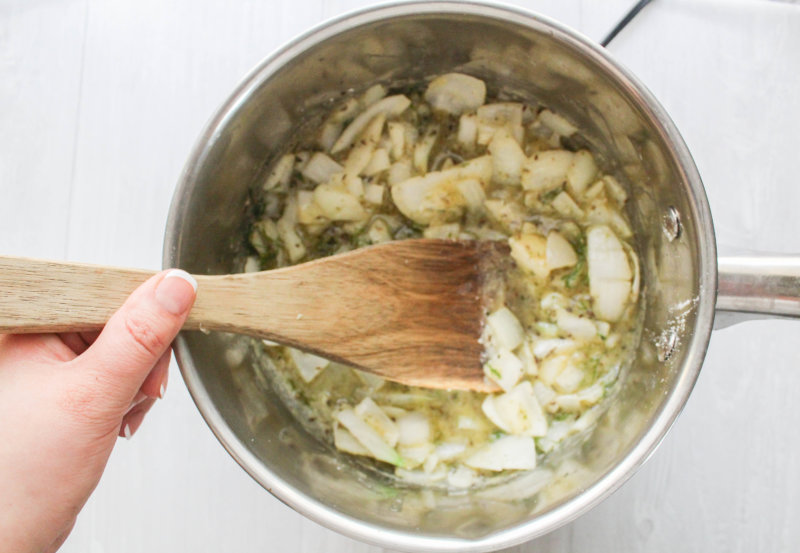
In a medium saucepan over low heat, sauté the diced onions and butter, dill seeds, and chopped herbs. Add the flour, stirring for 2 minutes. Then, stir in the tomatoes, alternating with the broth.
Add the salt, pepper, and parsley. Raise the heat to medium and bring it to a gentle boil. Reduce the heat and simmer the soup for 15 minutes.
Do not rush the roux. Those two minutes help coat the flour with fat and remove the raw flour taste. Add the broth gradually and keep stirring so the soup thickens smoothly instead of forming lumps.
Step Two: Add Essential Oils
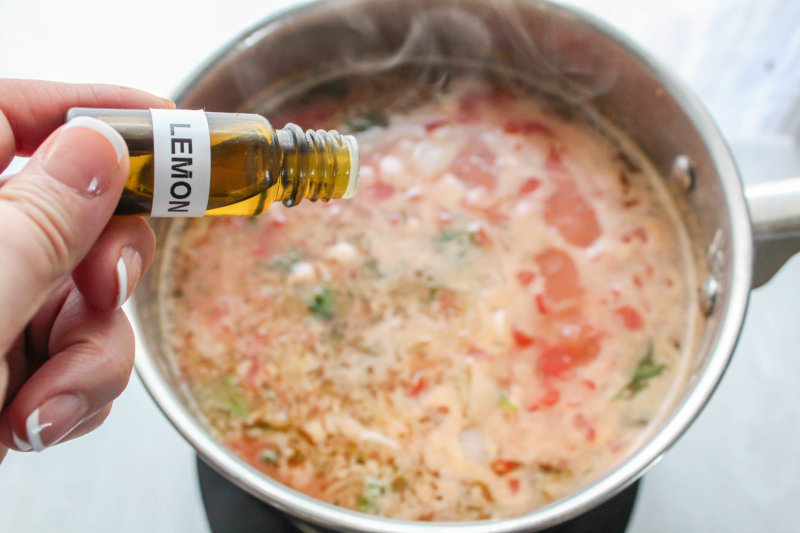
Add the essential oils, honey, and coconut milk. Use an immersion blender to mix the soup well. Heat through and serve in bowls. You can eat this soup hot or cold; it tastes great either way!
Keep the head of the immersion blender submerged before turning it on so hot soup does not splash. If you use a countertop blender, work in small batches, vent the lid according to the manufacturer’s instructions, and protect your hands from steam.
These are some of our favorite recipes, and either version can make the perfect starter for a party or gathering.
Best Ingredients for Tomato Bisque
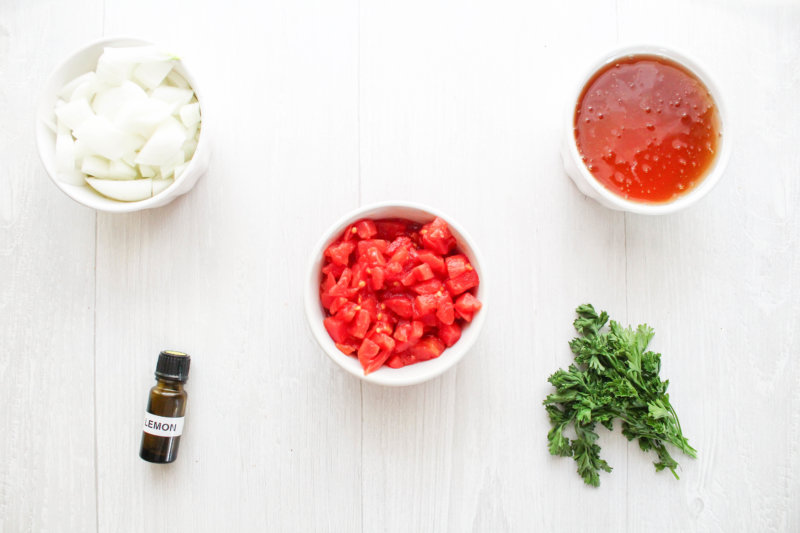
This recipe uses simple ingredients to create a smooth, creamy soup without relying on heavy cream.
Tomatoes: Use garden-fresh tomatoes when they are in season or canned tomatoes for an easy year-round option.
Butter or Coconut Oil: Butter gives the soup a rich, traditional flavor. Coconut oil keeps it vegan and dairy-free. Coconut oil contains some medium-chain fatty acids, but it is not the same as concentrated C8/C10 MCT oil, so we use it here for flavor and texture rather than making fat-burning claims. (8)
Herbs: Dill, dill seed, oregano, parsley, and white pepper give the soup its savory flavor. Oregano and several of its compounds have demonstrated antimicrobial activity in laboratory research, but culinary oregano is not a treatment for infection. (9)
Gluten-Free Flour: A little gluten-free flour creates the roux that thickens the soup. For celiac disease, verify the flour, stock, herbs, spices, and other packaged ingredients are labeled gluten-free and protected from cross-contact.
Vegetable Stock: Vegetable stock forms the savory base. Homemade broth works beautifully too.
Salt: We love Colima sea salt, though pink Himalayan salt also works. Specialty salts contain trace minerals, but the main reasons to choose them are taste and sourcing.
Essential Oils: The full 5-6 serving batch uses 2 drops each of dill, oregano, and lemon essential oil. Add them after simmering and blend thoroughly with the soup’s fats and liquid. Use only oils intended for culinary use, never increase the amount casually, and never swallow these oils neat.
Lemon aroma has improved positive mood measures in controlled human research, though that study evaluated aroma rather than this soup recipe. (10)
Sweetener: Raw organic local honey balances tomato acidity. Honey is still an added sugar. Use liquid stevia if you prefer that option.
Do not serve the honey-sweetened version to a baby younger than 12 months. (11)
Customize, Store, and Reheat Tomato Bisque
Fresh or Canned Tomatoes?
Both work. Fresh heirloom tomatoes give seasonal flavor; canned diced tomatoes make the recipe faster. If canned tomatoes contain salt, taste before adding the full recipe amount.
How Do I Make It Vegan and Dairy-Free?
Use extra-virgin, unrefined coconut oil instead of butter and verify that every packaged ingredient is dairy-free.
How Do I Make It Grain-Free?
Use the almond-flour option included in the protected recipe notes. This version is not nut-free.
How Long Does Tomato Bisque Last?
Refrigerate within two hours of cooking in shallow, covered containers at 40°F or below. Use within 3-4 days. For longer storage, freeze meal-size portions. (12)
How Should I Reheat It?
Warm only what you plan to serve. USDA guidance recommends reheating leftovers to 165°F; soups and sauces may also be reheated to a boil. (12)
Why Tomatoes Work So Well in Bisque
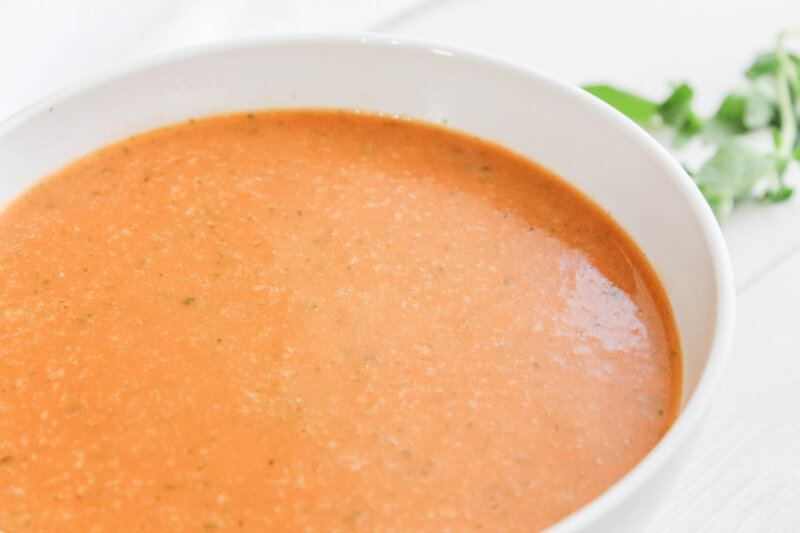
Tomatoes bring acidity, sweetness, color, and body to a blended soup. They also supply carotenoids, including lycopene.
Cooking tomatoes with fat can improve lycopene absorption. In a human feeding study, tomatoes cooked with olive oil produced a greater rise in blood lycopene than tomatoes eaten without added oil. (1)
That does not make tomato bisque a heart-health treatment. Human intervention research on lycopene and cardiovascular risk markers has produced mixed results. (2) Tomatoes simply fit well into an overall colorful, plant-rich eating pattern.
Tomatoes also provide beta-carotene and other carotenoids involved in normal vision and antioxidant protection. (4) Human studies have also explored tomato products and lycopene for skin responses to ultraviolet exposure. (5, 6)
For us, that is enough reason to enjoy them as good food, not turn a bowl of soup into a medical claim. We can receive God’s provision with gratitude and still keep the evidence in its proper place.
For more on a heart-supportive lifestyle, see our heart health guide. And if you prefer cooking with olive oil, we often use extra-virgin olive oil in tomato-based meals.
Homemade Tomato Bisque FAQs
What is the difference between tomato soup and tomato bisque?
Tomato soup can be chunky, brothy, or creamy. Bisque is typically blended smooth and finished with ingredients that give it a richer texture. This version uses coconut milk plus butter or coconut oil.
Is this tomato bisque gluten-free?
Yes, when made with gluten-free flour and verified gluten-free packaged ingredients.
Is this tomato bisque dairy-free?
It can be. Use coconut oil instead of butter.
Can I make it without honey?
Yes. Use the liquid stevia option in the recipe or adjust the sweetness to taste.
Why are the essential oils added after simmering?
Essential oils contain volatile aromatic compounds. Adding them near the end preserves more aroma, while blending helps distribute the six total drops throughout the full 5-6 serving batch.
Can I ingest essential oils?
Do not casually ingest essential oils in water or neat. Culinary internal use is recipe-specific and depends on the oil, product identity, amount, and formulation. Learn more in our guide to how to ingest essential oils.
What should I serve with tomato bisque?
Try an organic gluten-free baguette, green salad, roasted vegetables, clean protein, or a grilled sandwich made with ingredients that fit your family’s needs.

References
- Fielding JM, Rowley KG, Cooper P, O’Dea K. “Increases in plasma lycopene concentration after consumption of tomatoes cooked with olive oil.” Asia Pacific Journal of Clinical Nutrition. 2005;14(2):131-136. PubMed.
- Tierney AC, Rumble CE, Billings LM, George ES. “Effect of Dietary and Supplemental Lycopene on Cardiovascular Risk Factors: A Systematic Review and Meta-Analysis.” Advances in Nutrition. 2020;11(6):1453-1488. doi:10.1093/advances/nmaa069.
- Centers for Disease Control and Prevention. “Heart Disease Facts.” Updated October 24, 2024. CDC.
- National Institutes of Health Office of Dietary Supplements. “Vitamin A and Carotenoids: Fact Sheet for Health Professionals.” Updated March 10, 2025. NIH ODS.
- Stahl W, Heinrich U, Wiseman S, Eichler O, Sies H, Tronnier H. “Dietary tomato paste protects against ultraviolet light-induced erythema in humans.” Journal of Nutrition. 2001;131(5):1449-1451. PubMed.
- Zhang X, Zhou Q, Qi Y, Chen X, Deng J, Zhang Y, Li R, Fan J. “The effect of tomato and lycopene on clinical characteristics and molecular markers of UV-induced skin deterioration: A systematic review and meta-analysis of intervention trials.” Critical Reviews in Food Science and Nutrition. 2024;64(18):6198-6217. doi:10.1080/10408398.2022.2164557.
- Turati F, Pelucchi C, Guercio V, et al. “Allium vegetable intake and gastric cancer: a case-control study and meta-analysis.” Molecular Nutrition & Food Research. 2015;59(1):171-179. doi:10.1002/mnfr.201400496.
- Jayawardena R, Swarnamali H, Lanerolle P, Ranasinghe P. “Health effects of coconut oil: Summary of evidence from systematic reviews and meta-analysis of interventional studies.” Diabetes & Metabolic Syndrome: Clinical Research & Reviews. 2021;15(2):549-555. PubMed.
- Jiang TA. “Health Benefits of Culinary Herbs and Spices.” Journal of AOAC International. 2019;102(2):395-411. PubMed.
- Kiecolt-Glaser JK, Graham JE, Malarkey WB, Porter K, Lemeshow S, Glaser R. “Olfactory influences on mood and autonomic, endocrine, and immune function.” Psychoneuroendocrinology. 2008;33(3):328-339. doi:10.1016/j.psyneuen.2007.11.015.
- U.S. Department of Agriculture Food Safety and Inspection Service. “Clostridium botulinum & Botulism.” Accessed July 29, 2026. USDA FSIS.
- U.S. Department of Agriculture Food Safety and Inspection Service. “Leftovers and Food Safety.” Updated July 31, 2020. USDA FSIS.