QUICK SUMMARY
Some of the best essential oils for Alzheimer’s support, dementia care, and natural brain health include cinnamon bark, rosemary, lavender, lemon balm (Melissa), and ginger CO2. These oils are most commonly used through inhalation, diffusion, aromatherapy inhalers, and properly diluted topical application.
Research suggests that essential oils and their constituents may influence several Alzheimer’s-related pathways, including oxidative stress, inflammation, amyloid beta, tau, and acetylcholinesterase activity in preclinical research. Human aromatherapy studies have focused more on symptoms such as agitation, mood, and other behavioral and psychological symptoms of dementia. The evidence is promising in some areas but still developing.
Essential oils are not a stand-alone Alzheimer’s protocol. They work best as part of a bigger biblical health lifestyle that includes movement, clean nutrition, sleep, stress relief, prayer, reducing toxic burden, caregiver connection, and wise medical care. Used correctly, they can be a powerful, practical tool for families seeking natural support for dementia, agitation, sundowning, sleep, focus, and brain health.
Essential oils are being studied as supportive tools for dementia care and brain health, especially for behavioral and psychological symptoms such as agitation. The human evidence is still mixed, but newer research gives families good reason to keep watching this field closely.
One literature review summarized the broad preclinical interest in essential oils by stating that “EOs are effective on almost all currently known pathological targets of AD.” As encouraging as that sounds, this conclusion draws heavily from laboratory and animal research and should not be read as proof that essential oils treat Alzheimer’s disease in people.
Read on to get more insights from that study and others to help you use essential oils for Alzheimer’s, dementia, and brain disease…
Table of Contents
- Serious Public Health Considerations
- No Known Medical Cure?
- 4 Alzheimer’s Risk Factors & Lifestyle Considerations
- Digging Deeper into Aluminum
- Natural Alzheimer’s Treatment & DIY Tips
- Essential Oils Research & Mechanism
- Essential Oils for Alzheimer’s Treatment & Brain Health
- Essential Oils for Alzheimer’s FAQs

Serious Public Health Considerations
Dementia occurs when brain nerve cells become damaged. Being that this affects several areas of the brain, people experience dementia quite differently. There are various types of dementias, and they are often categorized by the part of the brain damaged and whether the condition worsens. Alzheimer’s disease, the most common cause of dementia, has been researched extensively, and essential oils can be of great help.
The most recent CDC mortality data ranks Alzheimer’s disease as the #6 leading cause of death in the United States, with 116,022 deaths in 2024. (1) Globally, 57 million people were living with dementia in 2021, and there are nearly 10 million new cases each year. Alzheimer’s disease is the most common form of dementia and may contribute to 60-70% of cases. (2)
Some other facts you may not know about Alzheimer’s include: (1,2,3,4)
- An estimated 7.4 million Americans age 65 and older are living with Alzheimer’s dementia in 2026.
- By 2050, nearly 13 million Americans age 65 and older are projected to be living with Alzheimer’s dementia.
- Alzheimer’s disease caused 116,022 deaths in the United States in 2024.
- Every year, there are nearly 10 million new dementia cases worldwide.
- More than 60% of people living with dementia worldwide live in low- and middle-income countries.
- Alzheimer’s disease is the fifth-leading cause of death among Americans age 65 and older.
- Nearly two-thirds of Americans with Alzheimer’s dementia are women.
- Older Black and Hispanic Americans are at higher risk of Alzheimer’s and other dementias compared with older White Americans.
- Behavioral and psychological symptoms of dementia may include agitation, aggression, anxiety, depression, sleep disturbance, wandering, hallucinations, and social withdrawal.
- Antipsychotic drugs may have a limited role in severe cases, but research continues to raise concerns about serious risks and modest benefits in dementia care.
This is why natural Alzheimer’s treatment support matters so much. Families need practical tools that honor the whole person: body, mind, spirit, home environment, caregiver rhythms, and the God-given design of the brain. Essential oils fit beautifully into this bigger picture because they can help calm the environment, support sleep routines, promote relaxation, and provide targeted brain-health support when used wisely.
No Known Medical Cure?
It is widely claimed that Alzheimer’s is the only disease among the top 10 causes of death in America that cannot be prevented, cured, or even slowed. Yet, nothing could be further from the truth! New York Times bestselling author Dale Bredesen, MD, has published work and two books outlining his findings on preventing and reversing cognitive decline through a multi-factor lifestyle and systems-based approach.
Reality check: the medical landscape has changed since this article was first written. The FDA has approved anti-amyloid drugs such as lecanemab and donanemab for adults with Alzheimer’s disease, specifically for people in the mild cognitive impairment or mild dementia stage of disease. These drugs can slow decline in carefully selected early-stage patients, but they are not cures, require IV infusions, and carry serious risks such as brain swelling and bleeding. (5,6)
So what does this mean for you?
It means we should be honest about both sides. Modern medicine has made progress, and we thank God for every tool that helps families. At the same time, medicine is not the end-all solution to our healthcare problems. Alzheimer’s and dementia are multi-factor conditions, and a wise plan should look at the whole person: nutrition, movement, inflammation, blood sugar, sleep, stress, toxins, infections, social connection, prayer, and daily rhythms.
More on that below… It seems that the medical community is still wrestling with how to prevent and treat dementia, especially when so many people are prescribed drugs for difficult behaviors.
The problem is that many people who have dementia will exhibit non-cognitive symptoms and what are known as behavioral and psychological symptoms of dementia (BPSD): agitation, aggression, psychosis, sleep disturbance, and wandering. These side effects, especially the prevalence of agitation and aggression in those living in nursing homes, become significant issues for caregivers who all too often choose to “drug” their patients instead of trying to find Alzheimer’s natural treatment options.
The consideration must be made that the person with dementia may be exhibiting these behaviors as a way of communicating distress, fear, pain, hunger, thirst, overstimulation, loneliness, medication side effects, or frustration at not being able to properly communicate.
Please keep this in mind if you are a home caregiver before too many people are prescribed drugs or transferred to institutional care prematurely. Remember this: antipsychotics are not the first answer for every behavior. Alzheimer’s natural treatment options like essential oils frankincense, lavender, chamomile, vetiver, and especially citrus oils can help!
4 Alzheimer’s Risk Factors & Lifestyle Considerations
Scientists and researchers still don’t fully understand everything that causes dementias like Alzheimer’s. Age and genetics matter, and so do modifiable risk factors. The 2024 Lancet Commission reports that about 45% of dementia cases may be preventable or delayable by addressing 14 modifiable risk factors, including physical inactivity, diabetes, high blood pressure, obesity, depression, smoking, hearing loss, social isolation, air pollution, traumatic brain injury, excessive alcohol, low education, high LDL cholesterol, and untreated vision loss. (7)
The four issues below are not a complete list of established causes. They are practical lifestyle and environmental considerations we want families to understand as part of a bigger brain-health picture.
1. Sanitation Overkill
Research published in Evolution, Medicine, and Public Health reported an ecological association between national sanitation measures and Alzheimer’s prevalence across 192 countries. The authors proposed that reduced microbial exposure could be one factor influencing immune development and inflammation. (8) Because this was a country-level observational analysis, it cannot prove that sanitation causes Alzheimer’s disease. Still, it raises an interesting question about the human microbiome and immune health:
- Countries with a greater degree of sanitation have a lower degree of microbial exposure.
- Alzheimer’s disease shares certain inflammatory characteristics with immune dysregulation.
- Microbial diversity plays a key part in the development and function of the immune system.
- Healthy exposure to natural environments, soil, animals, plants, fermented foods, and outdoor living may help support microbial diversity.
So, what’s the solution? Eat dirt once in a while, and watch out for what you put on your skin. Especially hand sanitizer! Because essential oils are antimicrobial, the natural response from all of us would be to DIY and make our hand sanitizer and body care products that don’t wipe out our skin microbiome unnecessarily!
2. Sedentary Lifestyle
Did you know that sitting down too much has been associated with shorter life expectancy, and one population-level analysis estimated that reducing excessive sitting could increase life expectancy? (9)
Yep.
Imagine what the ramifications of excessive sitting are on the brain! We are designed to move, which is why regular exercise is so important. According to a study published in the British Journal of Sports Medicine, regular physical activity, especially later in life, is associated with healthy aging and lower risk of chronic disease and cognitive impairment. (10)
This is the key: moderate exercise is enough to reap the benefits.
You don’t have to be a marathon runner or do crazy stuff like CrossFit in your 60s! Just be sure to make some of these activities part of your daily regimen.
- Walking
- Gardening
- Supervised weightlifting
- Swimming
- Water Aerobics
Application: Start where you are. Ten minutes after meals, gentle stretching, chair exercises, dancing in the kitchen, and walking outdoors all count. The goal is daily movement, not perfection.
3. Over Stimulation
Our society woefully lacks peace and calm. Like never before, we need to get away, find our quiet place, and let our minds and emotions take a break. Taking a mental break is so powerful that a pilot study from Beth Israel Deaconess Medical Center found that mindfulness-based stress reduction may positively affect brain regions related to mild cognitive impairment and Alzheimer’s disease. (11)
Put simply: chronic stress is not brain-friendly.
This is where biblical health becomes practical. Prayer, Scripture meditation, worship, breathing exercises, quiet walks, restful routines, and calming essential oils are not luxuries. They are stewardship. Your nervous system was never designed to live in constant noise, fear, screens, hurry, and toxic stress.
4. Aluminum
Last but not least is aluminum exposure. Don’t ignore this issue simply because the relationship between everyday aluminum exposure and Alzheimer’s remains controversial. Aluminum is neurotoxic at sufficiently high exposures, and several lines of research have raised concerns about chronic exposure and cognitive health even though the precise role of aluminum in Alzheimer’s disease remains debated.
- According to a 2011 study published in the Journal of Alzheimer’s Disease, “The hypothesis that [aluminum] significantly contributes to [Alzheimer’s disease] is built upon very solid experimental evidence and should not be dismissed.” (12)
- And in 2014, researchers published a causality analysis arguing that chronic aluminum exposure contributes to Alzheimer’s disease. (13)
- And, in 2016, a meta-analysis evaluating eight cohort and case-control studies with a total of 10,567 individuals uncovered that “Individuals chronically exposed to [aluminum] were 71% more likely to develop [Alzheimer’s disease].” (14)
The key is to avoid unnecessary chronic aluminum exposure in your body care products, especially deodorant, and cookware, which are the most cost-effective and easier things to do.
Digging Deeper into Aluminum
First off, it’s critical to note that aluminum can be neurotoxic at high enough exposures. (15) The debate, however, is at what level aluminum becomes toxic and puts you at risk of brain damage.
If you’ve done any research online about natural solutions for Alzheimer’s disease and dementia, no doubt you’ve seen reports that aluminum exposure is a risk factor. This is actually one of the most publicized and controversial theories concerning Alzheimer’s because the data in the medical literature is conflicting. (12,13,14,15)
Nonetheless, an entire industry of aluminum-free products has surfaced, offering “natural” solutions for deodorant, antiperspirants, antacids, pots, pans, canned food, and beverages.
The backstory behind this originated from research done decades ago on “tau tangles,” one of the hallmarks of Alzheimer’s disease.
Tau is a protein that helps form microtubules in the brain, which are essential for nutrient transport between nerve cells. In a healthy brain, tau proteins help maintain the structural integrity of the microtubules to ensure that the brain is properly “fed.” With Alzheimer’s patients, tau proteins collapse into clumps known as “tangles,” which will eventually starve brain cells.
In 1965, researchers discovered that rabbits injected with extremely high doses of aluminum developed tau-like tangles in their brains. This led many people to conclude that aluminum from cans, cookware, processed foods, and even our water supply could be a contributing factor to the development of Alzheimer’s and dementia.
Dangers of Aluminum Exposure
In addition to being the most abundant metal in the earth’s crust, aluminum naturally occurs in minute, trace amounts in our food. (16)
From a consumer standpoint, you’ll find aluminum pretty much everywhere today. (15,16)
- Tap water.
- Soy-based infant formula and many other processed food products.
- Baking supplies such as flour, baking powder, coloring, and anticaking agents.
- Pots, pans, and foil.
- Siding and other building materials.
- Body care items such as cosmetics, sunscreens, and antiperspirants.
- Pharmaceuticals such as antacids, astringents, buffered aspirin, and others.
There is the obvious concern that micro-doses may be accumulating over time, and it’s documented that aluminum exposure has been linked to a variety of health concerns such as:
- Brain and bone disease found in some people with kidney disorders. (15)
- Calcium imbalance and oxidative damage in the brain. (17)
- DNA and epithelial skin cell damage. (18)
- Neurological damage via occupational exposure. (19)
This last point was confirmed in 2014 when a study was published that presented significantly elevated brain aluminum content in a man who was occupationally exposed to aluminum dust for several years. (19)
Even the United States Agency for Toxic Substances and Disease Registry acknowledges that some studies show people exposed to high levels of aluminum may develop Alzheimer’s disease, while also stating that the connection remains uncertain. (15)
The question remains. At what levels?
Essentially, we should all be asking whether or not there are health risks associated with aluminum that would prevent us from using aluminum-based products.
We wholeheartedly believe that there are, which is why we kicked out aluminum-based products from our home years ago.
Natural Alzheimer’s Treatment & DIY Tips
First off, as we’ve seen above, anyone looking to support long-term brain health should focus on foundational lifestyle factors such as movement, exercise, calming the brain, reducing unnecessary toxin exposure, and maintaining a healthy microbiome. Various researchers have found that:
- Mindfulness-based stress reduction may positively affect brain regions related to mild cognitive impairment and Alzheimer’s disease. (11)
- Regular physical activity later in life is associated with healthier aging and lower risk of chronic disease and cognitive impairment. (10)
- Fresh herbs and functional foods are being studied for memory, metabolic health, and quality of life in Alzheimer’s patients. (20)
- The 2024 Lancet Commission reports that 14 modifiable risk factors may account for about 45% of dementia cases worldwide. (7)
A 2019 review published in the Neural Regeneration Research journal stresses the potential importance of functional foods and discusses herbs in relation to Alzheimer’s disease, primarily Mediterranean herbs like mint. The authors proposed that: (20)
- Consumption of fresh herbs may support memory and metabolic health.
- The use of herbs as functional foods could contribute to improvements in health.
- Cognitive stimulation alongside medical foods and medicinal herbs warrants further study for delaying cognitive decline and supporting quality of life in Alzheimer’s disease.
And, yes, essential oils can add an extra boost to this approach.
- “This effect can be enhanced if combined with aromatherapy, topically or by inhalation, and/or by ingestion. Terpenes and terpenoids, the primary constituents of these essential oils are small, lipid-soluble organic molecules that can be absorbed through the skin or across nasal mucosa into the systemic blood circulation. Many terpenes can also cross the blood-brain barrier. Therefore, topical application or inhalation of essential oils will also produce a systemic effect.” (20)
These are some very encouraging words from the University of Palermo:
- “Probably, the interest in essential oils and volatile compounds will be fueled by the new available scientific data about receptors on olfactory mucosa of the nasal cavity. It can receive and distinguish different odor molecules, which produce nerve impulses and transmit them into the olfactory bulb via olfactory nerves. The nerve cells in the olfactory bulb transmit the signals into the hippocampus. Because the hippocampus is closely related with learning and memory functions, the volatile compounds can be potential drugs in [Alzheimer’s] therapies.” (21)
Catch that? Researchers are investigating essential-oil compounds as potential therapeutic agents related to learning, memory, and Alzheimer’s pathways. That is a very different claim from saying an essential oil has already been proven to function as an Alzheimer’s drug in humans, but it helps explain why this area of research is so exciting. More on that below.
Essential Oils Research & Mechanism
When it comes to using essential oils to promote brain health and support people living with Alzheimer’s disease, a literature review sums up the research interest well. Taken from the study: (22)
- EOs are effective on almost all currently known pathological targets of AD.
- EOs also possess neuroprotective, anti-aging potentials and are effective in dementia, epilepsy, anxiety, and other neurological disorders.
- It is important that EOs that are effective on multiple targets (multi-potent agents) must be screened to find more effective drugs in comparison to the currently available drugs which have limited efficacy and are useful for symptomatic relief only.
- Anti-aging EOs will be more effective in the prevention of these neurological disorders.
- Special focus must be on the edible EOs which are either part of the diet or used as spices will be more useful.
- Special concerns regarding the kinetic profile, route of administration, and dose are important tasks in the development of EOs as new drugs.
Those are the review authors’ conclusions, and they are encouraging. But much of the evidence behind these proposed Alzheimer’s targets comes from laboratory, animal, mechanistic, or early-stage research rather than clinical proof that essential oils alter the course of Alzheimer’s disease in humans.
Since that review, newer research has continued to examine natural essential oils for cognitive impairment and Alzheimer’s-related pathways. A 2023 review concluded that plant volatile oils may influence cognition through monoterpenes, sesquiterpenes, and phenylpropanoids by inhibiting amyloid beta deposition, tau hyperphosphorylation, oxidative stress, inflammation, and cholinergic dysfunction. (23)
This is important: human aromatherapy research is still developing. A 2020 Cochrane review did not find convincing evidence overall because the studies were limited, inconsistent, and poorly reported. (24) But a 2024 meta-analysis of 15 randomized controlled trials involving 821 patients found significant improvement in behavioral and psychological symptoms of dementia after 3 to 4 weeks of aromatherapy, especially when aromatherapy was used consistently and often alongside massage. (25)
Hence, essential oils and their constituents are being investigated for cognitive and neurological effects. Some are described in the scientific literature in the broader context of nootropics or cognitive enhancers, but that does not mean every essential oil has demonstrated clinically meaningful cognitive enhancement in people with Alzheimer’s disease.
The mechanism behind this is explained by the science of smell.
Science of Smell
As Yale Scientific so candidly points out, “There is something to be said for the consistent mood improvement across studies.” This aromatherapy stuff is not hocus pocus. There are real biological pathways behind smell and emotion. This is how Yale describes it: (26)
- When you smell lemon oil, some molecules dissolve in the mucus lining of the olfactory epithelium on the roof of the nasal cavity.
- There, the molecules stimulate olfactory receptors. Olfactory sensory neurons carry the signals from the receptors to the olfactory bulb, which filters and begins processing the input signals of the lemon scent.
- Mitral cells then carry the output signals from the olfactory bulb to the olfactory cortex, which allows you to perceive and recognize the tangy scent of lemon.
- Interestingly, the mitral cells do not only lead to the olfactory cortex, they also carry the signals from the lemon scent to other areas in the brain’s limbic system.
- Some mitral cells connect directly to the amygdala, the brain structure involved in emotional learning and memory. Indeed, the olfactory system is the only sensory system that involves the amygdala and the limbic system in its primary processing pathway.
- This link explains why smells are often linked to specific memories. For example, if you have had a positive experience with lemon meringue pie, the scent of lemon may induce positive thoughts.
No wonder essential oils are becoming a popular non-pharmaceutical supportive intervention for people living with dementia!
A Note About Anosmia
However, the effects of aromatherapy are debated in the context of dementia and Alzheimer’s treatment support because of anosmia.
Unfortunately, many patients with advanced dementia have lost their sense of smell. This may be one reason diffusion-only research can look mixed, while topical application, aromatherapy lotion, and hand massage remain interesting approaches because they combine essential oil exposure with touch, rhythm, caregiver presence, and comfort. (24,25)
This leads us to believe transdermal application and relational care may be especially worth considering, yet we still don’t really know until more research is completed.
A common question we get is what about dementia and Alzheimer’s patients who have lost their sense of smell? Coming directly from a Facebook Q&A, essential oil safety expert Robert Tisserand states this:
- Q: If one has lost their smell does aromatherapy still work with the emotions like uplifting or physical like relaxing?
- A: As far as we know, psychological effects do not take place for someone who has completely lost their sense of smell, but the physiological effects still do [which is what I was talking about regarding lavender oil, agitation, and dementia research above].
In other words, the body will react to essential oil constituents in the usual ways, but the mind does not. When we inhale an essential oil there is a two-fold reaction – a physiological one, which is hard-wired, and a psychological one which is not, and which varies from person to person. For those of us with an intact sense of smell, it may be interesting to note that an essential oil or blend cannot have one effect on the mind and the opposite effect on the body. Also, bear in mind that psychological effects partly depend on our state of mind and may be different at different times.
Essential Oils for Alzheimer’s Treatments & Brain Health
Although essential oils have multiple uses, certain oils stand out in research related to mental focus, dementia care, neurological pathways, and brain health. These five top our list for Alzheimer’s, dementia & brain health support.
1. Cinnamon Bark
Cinnamon bark essential oil is one of the essential oils we watch closely for Alzheimer’s-related research because cinnamon compounds have been examined for acetylcholinesterase activity, oxidative stress, and other brain-health mechanisms. Acetylcholinesterase inhibitors are important in conventional Alzheimer’s treatment because they help preserve acetylcholine, a neurotransmitter needed for learning, memory, and nerve communication.
As we quoted in our new book, The Essential Oils Apothecary:
- “There is growing interest in aromatherapy as a natural alternative because of the unique quality of essential oils to achieve the same outcome as the gold standard in AD medication: acetylcholinesterase inhibitors. The primary medical approach for AD is to prescribe these drugs. More commonly referred to as cholinesterase inhibitors, they block the activity of an enzyme in the brain known as cholinesterase, which is responsible for breaking down the neurotransmitter acetylcholine.”
Cholinesterase inhibitors such as donepezil, rivastigmine, and galantamine are used to reduce the action of cholinesterase, thereby making more acetylcholine available to nerve cells in the brain, because low levels of acetylcholine are devastating for nerve impulse function and mental impairment.
On the other hand, certain essential oils and their constituents have been observed in laboratory research to inhibit acetylcholinesterase and influence Alzheimer’s-related pathways. For instance, cinnamaldehyde and cinnamyl acetate, two primary components in cinnamon bark essential oil, have been studied for cholinesterase-related activity. (27) This is mechanistic evidence and should not be equated with clinical evidence that cinnamon bark oil performs like prescription cholinesterase inhibitors in Alzheimer’s patients.
Pro Tip: There are several essential oils known for their anticholinesterase activity, including bergamot, lavender, rosemary, and cinnamon bark. Cinnamon bark is a hot oil, so use it with respect and avoid casual topical use. For the complete list, and to uncover how to ingest them safely, pick up a copy of our new book, The Essential Oils Apothecary.
2. Rosemary
Rosemary essential oil is one of our favorite essential oils for memory, focus, and mental clarity. No discussion about brain health and cognitive function would be complete without first discussing rosemary, the “herb of remembrance.” Touted for centuries to help improve memory, the cognitive-enhancing potential of 1,8-cineole, a component of rosemary oil, has also been investigated in human research.
In one human study, blood levels of 1,8-cineole correlated with cognitive performance after exposure to rosemary essential oil aroma, supporting the idea that rosemary’s volatile compounds can be absorbed and may influence mental performance. (28)
The scientific community has also examined rosemary essential oil and its chemical constituents, specifically terpenes, in experimental Alzheimer’s research because of their potential effects on inflammatory signaling, oxidative stress, cholinergic activity, and neuronal health. Much of this Alzheimer’s-specific mechanistic work remains preclinical.
Pro Tip: Make our Focus and Clarity Inhaler for on-the-go mental alertness when you need it most!

Focus And Clarity Inhaler
Quantity
Ingredients
- 10 drops rosemary essential oil
- 5 drops pine essential oil
- 5 drops Litsea cubeba (also known as may chang) essential oil
Instructions
- Place a cotton pad in the inhaler tube.
- Drop the essential oils directly onto the cotton pad in the tube. Alternatively, you can drop the essential oils into a glass bowl, roll the cotton pad in the oils to absorb them, and then insert it into the inhaler tube using tweezers.
- Open the inhaler and take a few deep breaths through your nose with your eyes closed. Repeat as often as needed whenever you need a quick boost of mental clarity.
3. Lavender
Lavender essential oil is one of the most practical essential oils to consider for dementia agitation, sleep routines, anxiety, and sundowning support. There is a lot to be said about how lavender essential oil can support Alzheimer’s and dementia care, and research continues to explore how lavender aromatherapy and massage may affect agitation and behavioral symptoms. (24,25,29)
- Lavender has traditionally been used to support sleep, and dementia care research has evaluated lavender for sleep disturbance and agitation.
- Lavender massage aromatherapy has been used in clinical settings and studied for effects on mood, anxiety, and agitation.
- Lavender, geranium, and mandarin essential oils in a carrier oil base have been used topically in dementia care to support calm, contentment, sleep, and lower agitation.
- Aromatherapy using oils such as ylang-ylang, patchouli, rosemary, peppermint, and others has been reported in care settings for disturbed behavior, though study quality varies.
Application: For dementia agitation or sundowning, do not wait until the house is already chaotic. Start the calming routine before symptoms usually peak: dim lights, reduce noise, play familiar worship music, offer hydration, use gentle touch, and diffuse lavender or use a lavender hand massage.
Pro Tip: Make lavender part of your nighttime routine by adding 4-6 drops in your diffuser 10 minutes before going to bed, and having an aromatherapy inhaler handy for when you need a quick “cool down” during stressful moments throughout the day.
4. Lemon Balm (Melissa)
Lemon balm, also known as Melissa, is one of the most interesting essential oils in dementia agitation research. Placebo-controlled clinical trials using lavender and Melissa (lemon balm) in residential care residents with advanced dementia have reported promising results, although later systematic reviews found the overall evidence mixed and in need of better-designed trials. (24,25,30,31)
Here are some of the ways lemon balm and other essential oils were used.
- Lemon balm and lavender aroma were introduced to patients and compared to a control group using sunflower oil, with reports of improved functional abilities and communication and decreased difficult behavior.
- Lavender aroma and massage were compared to aroma or massage alone, and aromatherapy with massage significantly reduced the frequency of excessive motor behavior.
- Lavender aroma oil was tested for agitated behavior, with some trials showing benefit and others showing mixed results.
- Lemon balm lotion was applied to the face and arms in a placebo-controlled study, and Melissa was associated with significant reductions in agitation and social withdrawal, together with an increase in constructive activities.
- Lavender, marjoram, patchouli, and vetiver have been applied as a cream to the body and limbs in dementia care research.
Pro Tip: Make a lemon balm ointment by mixing 12 drops of Melissa essential oil with 1 ounce of your favorite carrier oil and apply it after you get out of the shower as a body moisturizer. For frail elderly loved ones, start lower, patch test first, and watch for skin sensitivity.
5. Ginger (C02)
Ginger CO2 is an essential oil extract worth considering in antioxidant brain-health research because ginger’s 6-gingerol has been studied for amyloid beta-induced oxidative stress, inflammation, and apoptosis. Beta-amyloid deposits are an important pathological feature of Alzheimer’s disease and are associated with oxidative stress and neuronal injury. Experimental research suggests that 6-gingerol may help protect cells against amyloid beta-induced oxidative damage and apoptosis. (32,33) These findings are preclinical and do not establish ginger CO2 as an Alzheimer’s treatment in people.
Ginger blends well with fennel and bitter orange, both oils that I discuss in length in my new book because of their ability to promote mental and emotional well-being – particularly in patients with AD, according to the research.
Pro Tip: Like cinnamon bark, ginger CO2 is consumable. To learn how to ingest it properly & other ginger use tips, pick up a copy of my book, The Essential Oils Apothecary. You can also make this delightful Sweet Chill-Out Differ Blend to help calm your nerves when stress hits.
Sweet Chill-Out Diffuser Blend
Quantity
Ingredients
- 2 drops fennel essential oil
- 2 drops ginger CO2 extract
- 2 drops bitter orange essential oil
Supplies
Instructions
- Fill your diffuser with purified water as directed in the manufacturer’s instructions.
- Add the essential oils.
- Turn on the diffuser when you are ready to relax and release stress or anxiety.
- Turn off the diffuser when done.
Essential Oils for Alzheimer’s FAQs
What are the best essential oils for Alzheimer’s and dementia?
Our top essential oils for Alzheimer’s and dementia support include cinnamon bark, rosemary, lavender, lemon balm (Melissa), and ginger CO2. Rosemary is best known for focus and memory research, lavender for agitation and calming routines, lemon balm for dementia agitation research, cinnamon bark for cholinesterase-related pathways, and ginger CO2 for experimental antioxidant and neuroprotective research.
Can essential oils help Alzheimer’s disease?
Essential oils may support Alzheimer’s and dementia care by promoting relaxation, supporting calming and sleep routines, and helping with some behavioral and psychological symptoms. Laboratory and animal research also investigates essential-oil constituents for oxidative stress, inflammation, acetylcholinesterase activity, amyloid beta, and tau. Those mechanisms are promising but are not the same as proving that essential oils slow or reverse Alzheimer’s disease in people.
Can aromatherapy help dementia agitation?
Aromatherapy may help dementia agitation and other behavioral and psychological symptoms, especially when used consistently and sometimes alongside massage. A 2024 meta-analysis of 15 randomized controlled trials involving 821 patients found significant improvement in behavioral and psychological symptoms of dementia after aromatherapy treatment, while a 2020 Cochrane review found the overall evidence uncertain because available trials were limited and inconsistent. (24,25)
What essential oil helps with sundowning?
Lavender is one of our favorite essential oils for a calming sundowning routine because it is familiar, widely used in relaxation research, and easy to incorporate before symptoms typically begin. Try gentle diffusion or a diluted lavender hand massage with dim lights, hydration, soft music, prayer, and reduced stimulation.
Is rosemary oil good for memory?
Rosemary oil is one of our favorite essential oils for memory and focus support. Human research found that absorbed 1,8-cineole from rosemary aroma correlated with cognitive performance, suggesting that rosemary’s aromatic compounds may influence mental alertness and performance. (28)
Can essential oils cross the blood-brain barrier?
Many terpenes and terpenoids found in essential oils are small, lipid-soluble molecules, and research notes that many terpenes can cross the blood-brain barrier. This helps explain why inhalation and topical aromatherapy are being studied for brain health, cognition, and dementia-related pathways. (20,23)
How do you use essential oils for dementia patients?
Conservative ways to use essential oils with dementia patients include gentle diffusion, aromatherapy inhalers when appropriate, and low-dilution topical application. Hand massage, lotion, or body oil may be especially helpful because they combine essential oil exposure with touch, routine, and reassurance. Start low, use familiar aromas, avoid overwhelming scents, and stop if the person seems uncomfortable.
Are essential oils safe for elderly loved ones?
Essential oils may be used conservatively with many elderly loved ones, but safety depends on the specific oil, route, dose, health conditions, medications, and individual sensitivity. Use lower dilutions, avoid applying oils near the eyes or mucous membranes, do not overwhelm the room with strong aromas, and use extra caution with fragile skin, asthma, seizure disorders, blood thinners, liver disease, cancer care, and multiple medications.
Can essential oils reverse Alzheimer’s disease?
Essential oils should not be treated as a stand-alone reversal protocol for Alzheimer’s disease. The strongest approach is multi-factor and lifestyle-based: nutrition, movement, sleep, blood sugar balance, reducing toxic burden, stress relief, prayer, social connection, medical evaluation, and targeted natural therapies. Essential oils can be a powerful part of that plan, but they are not the whole plan.
What lifestyle habits support Alzheimer’s prevention and brain health?
Important brain-health habits include regular movement, a nutrient-dense diet, blood sugar and blood-pressure management, healthy sleep, stress relief, social connection, hearing and vision care, avoiding smoking and excessive alcohol, reducing unnecessary toxic exposures, and building peaceful daily routines. Essential oils are powerful, but they work best inside a lifestyle that honors the body God gave you.
BONUS: Care for the Elderly
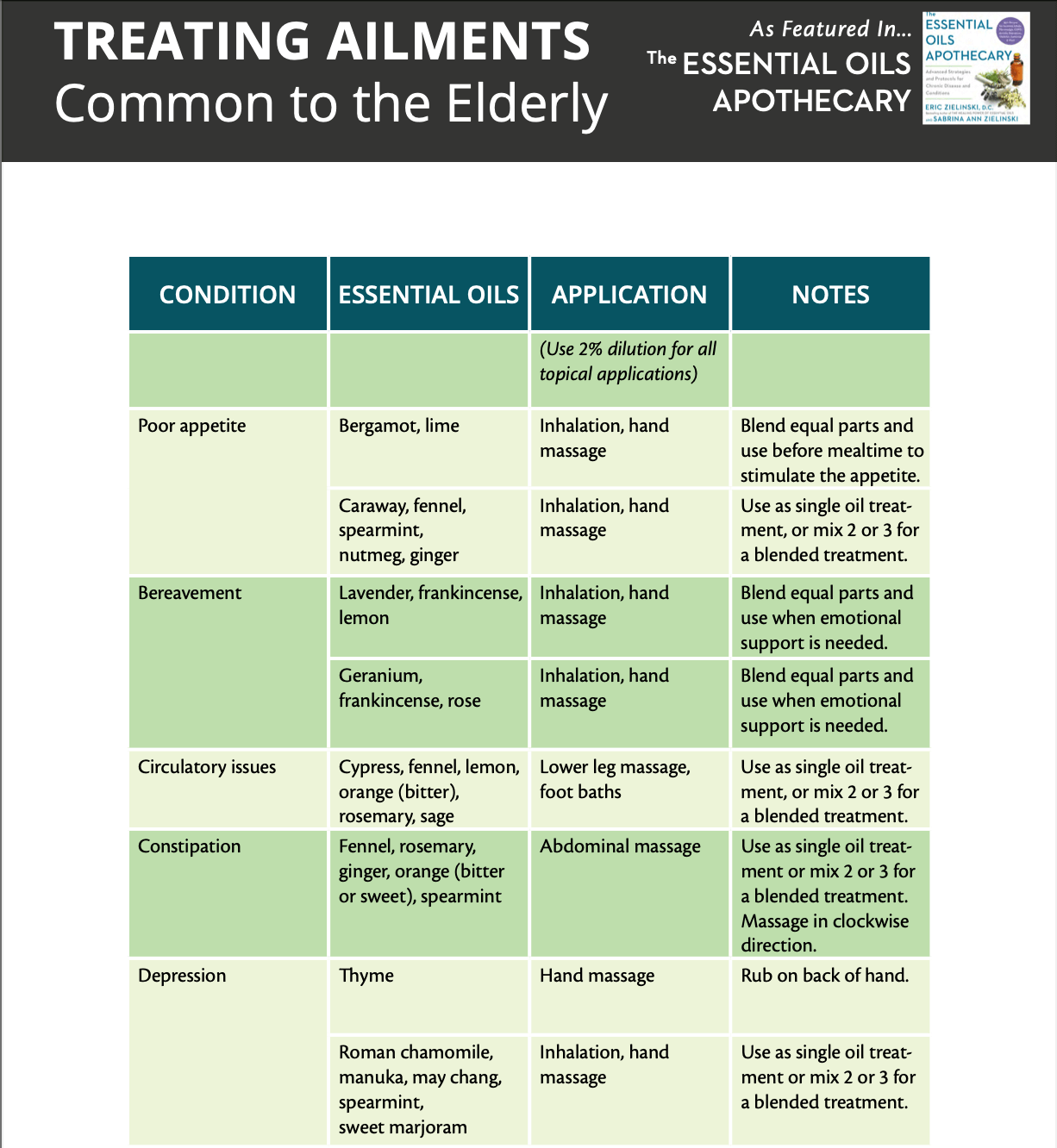
In addition to being more at risk of developing Alzheimer’s and dementia, the elderly often suffer from a wide variety of symptoms that aromatherapy can help with. There is significant overlap here with many common issues that AD patients struggle with and we include an extensive chart in The Essential Oils Apothecary outlining which oils to use for everything from poor appetite and grief to circulatory issues and depression.
Pro Tip: When you order The Essential Oils Apothecary, we have put together a special book bonus gift, which includes a full-color printable download of this chart & more than 6 hours of masterclass instructional videos to help you get the most out of the book!
Sneak Peek…


- https://www.cdc.gov/nchs/fastats/alzheimers.htm
- https://www.who.int/news-room/fact-sheets/detail/dementia
- https://pmc.ncbi.nlm.nih.gov/articles/PMC12040760/
- https://www.alz.org/alzheimers-dementia/facts-figures
- https://www.fda.gov/news-events/press-announcements/fda-converts-novel-alzheimers-disease-treatment-traditional-approval
- https://www.fda.gov/drugs/news-events-human-drugs/fda-approves-treatment-adults-alzheimers-disease
- https://www.thelancet.com/commissions-do/dementia-prevention-intervention-and-care
- https://academic.oup.com/emph/article/2013/1/173/1800347
- https://bmjopen.bmj.com/content/2/4/e000828
- https://bjsm.bmj.com/content/48/3/239
- https://www.ncbi.nlm.nih.gov/pmc/articles/PMC4022038/
- https://www.ncbi.nlm.nih.gov/pubmed/21157018
- https://www.ncbi.nlm.nih.gov/pubmed/24577474
- https://pubmed.ncbi.nlm.nih.gov/26592479/
- https://wwwn.cdc.gov/TSP/ToxFAQs/ToxFAQsDetails.aspx?faqid=190&toxid=34
- https://www.britannica.com/science/aluminum
- https://pubmed.ncbi.nlm.nih.gov/22330830/
- https://pubmed.ncbi.nlm.nih.gov/22223356/
- https://jmedicalcasereports.biomedcentral.com/articles/10.1186/1752-1947-8-41
- https://www.ncbi.nlm.nih.gov/pmc/articles/PMC6334595/
- https://pubmed.ncbi.nlm.nih.gov/27281330/
- https://www.ncbi.nlm.nih.gov/pmc/articles/PMC5447774/
- https://www.frontiersin.org/journals/aging-neuroscience/articles/10.3389/fnagi.2023.1104269/full
- https://pubmed.ncbi.nlm.nih.gov/32813272/
- https://pubmed.ncbi.nlm.nih.gov/39128826/
- http://www.yalescientific.org/2011/11/aromatherapy-exploring-olfaction/
- https://www.ncbi.nlm.nih.gov/pmc/articles/PMC9675096/
- https://www.ncbi.nlm.nih.gov/pmc/articles/PMC3736918/
- https://pubmed.ncbi.nlm.nih.gov/11994882/
- https://pubmed.ncbi.nlm.nih.gov/12143909/
- https://pubmed.ncbi.nlm.nih.gov/21335973/
- https://www.ncbi.nlm.nih.gov/pmc/articles/PMC4620533/
- https://pubmed.ncbi.nlm.nih.gov/25811848/