

QUICK SUMMARY
One of the most common questions we still get is, “Is tap water safe to drink?” The answer is complicated. Municipal tap water is treated and regulated, but “regulated” does not mean contaminant-free, and it does not mean every home faucet is automatically the best source for your family’s drinking, cooking, infant formula, DIY remedies, or daily hydration.
Tap water may contain pathogens, disinfectant byproducts, pesticides and herbicides, nitrates, heavy metals, lead from aging plumbing, microplastics, nanoplastics, and “forever chemicals” known as PFAS. Some risks depend on your local water source, treatment plant, pipes, well condition, storage containers, and the filter you use.
Our practical recommendation is simple: look up your local water quality report, test private wells regularly, avoid routine plastic bottled water, use glass or stainless steel bottles, and choose a high-quality filtration system that is independently tested for the contaminants you are trying to reduce. For our family, reverse osmosis has been the most practical daily solution.
One of the most common questions we get still is, “Is tap water safe to drink?”
Drinking water is among the most basic of needs for all living beings. Whether your water source is tap water, well water, bottled, filtered, or rainwater, follow along as we sort out the risks, myths, and facts of water safety.
One myth is that people buy water purification devices based only on the demonstrated safety they provide. Public perceptions about municipal water systems have little to do with actual safety and everything to do with culture, convenience, cost, taste, and marketing. Research has shown that these everyday preferences often influence drinking water choices more than health or environmental factors. (1)
This is important. God created water to sustain life, cleanse, nourish, and refresh. But in a polluted world, stewarding our families well means asking better questions, looking at the evidence, and taking wise action at home.
Table of Contents:

Is Tap Water Safe to Drink?
How bad could cold water straight from the tap be? If it tastes and looks OK, it’s fine, right? Well, maybe not.
We use water for drinking, sure, but also in our homemade cleaning formulas, our essential oil DIYs, and as a basis for our body’s healing. Unfortunately, people and corporations are extremely careless with this most precious natural resource—as if it were unlimited in supply and easy to obtain.
So, is tap water safe for drinking as is?
Hardly.
That does not mean every sip of tap water is an immediate crisis. It means truly clean drinking water is rare, and assuming a public water system makes water “safe enough” for every family, every home, every pregnancy, every infant bottle, and every health situation is not wise stewardship.
Even in the United States, waterborne diseases affect millions of people every year, and drinking-water outbreaks continue to occur in public systems, private wells, and premise plumbing. (2, 3) Add chemical contaminants, old pipes, agricultural runoff, PFAS, microplastics, and bottled-water storage problems, and the big picture becomes clear: we need to be proactive.
Systemic Water Problems Create Worldwide Issues
The theory that nothing happens in a vacuum is nowhere more true than when examining pesticide contamination of water supplies. A product designed to eliminate life, such as a pesticide or herbicide, continues to affect living systems everywhere it goes.
That path of destruction can move from farm fields to soil, from soil to groundwater, from groundwater to municipal water systems, and then into our children’s bathing water, our families’ cooking water, our infants’ bottles, and everyone’s drinking water.
Water sanitation chemicals are meant to kill waterborne pathogens, but does that mean tap water is automatically safe?
Chlorine and chloramine are commonly used to disinfect water and control pathogens. That disinfection can reduce acute infectious disease risk, which matters. But disinfection chemicals can also create byproducts, affect taste and odor, and add another layer of exposure that many families want to reduce.
The most common example of mass medication is fluoride in drinking water. It is added in many communities to reduce dental problems, but it is not something families choose at the faucet. This is one more reason we prefer clean, filtered water and informed choice.
Pathogens in the Tap Water
Despite complex water treatment efforts, drinking water can still carry some level of microbial risk. Water is the earthly source of life, and many microorganisms can live in it: bacteria, viruses, parasites, amoebas, and biofilm-associated organisms.
The CDC reports that waterborne diseases affect more than 7 million people in the U.S. every year and cost the healthcare system more than $3 billion annually. (2) A CDC surveillance report on drinking-water outbreaks from 2015–2020 also found that outbreaks still occur, including outbreaks linked to public systems and private wells. (3)
Common waterborne pathogens can cause gastroenteritis, diarrhea, vomiting, fever, cholera, typhoid fever, giardiasis, cryptosporidiosis, and dysentery. Improved water sources offer protection, but they do not guarantee water is free of fecal or other harmful contaminants. (4)
Reality check: This does not mean we panic. It means we respect water, test when needed, filter wisely, and never assume “clear” means “clean.”
Pesticides, Herbicide & Chemicals Pollutants in Our Water Systems
Harmful chemicals in household water generally fall into three major categories: agricultural chemicals, water sanitation chemicals, and environmental toxins.
Agricultural chemicals, including glyphosate-based herbicides, can enter groundwater, surface water, underground aquifers, and drinking-water sources. Farmers who grow genetically modified crops rely heavily on glyphosate-based herbicides to kill weeds, although Roundup and similar products are also available to home gardeners.
They are grossly overused, and that matters. We cannot poison the land, overwhelm pollinators, contaminate waterways, and then act surprised when our drinking water becomes part of the problem. Other agricultural pollutants include fertilizer runoff containing nitrates and nitrites, manure runoff from concentrated animal feeding operations, and persistent chemicals that linger long after use.
Nitrate Pollution in Tap Water
Nitrate pollution is one of the most important water issues for families, especially pregnant women and infants. Nitrate can enter water through fertilizer runoff, animal manure, septic systems, and agricultural pollution.
The regulatory limit for nitrate in public drinking water was originally set to protect infants from methemoglobinemia, also known as “blue baby syndrome.” But research reviews now raise concern that nitrate in drinking water may also be associated with colorectal cancer, thyroid disease, and certain birth outcomes. (5)
A 2024 narrative review reported emerging evidence connecting nitrate-contaminated drinking water with adverse pregnancy outcomes, including congenital anomalies and preterm birth, while also noting that the evidence varies by outcome and study design. (6)
So what does this mean for you? If you are pregnant, preparing infant formula, using a private well, or living near heavy agriculture, nitrate testing is not optional. It is a practical step of protection.
Glyphosate & GBHs in Tap Water
Glyphosate and glyphosate-based herbicides are among the most widely used agricultural chemicals in the world. Studies have detected glyphosate residues in groundwater, surface water, bottled drinking water, and urine samples from agricultural workers in some regions. (7)
A 2024 scientific review examined potential human health risks from glyphosate exposure and found the literature complex, with concerns involving toxicology, endocrine pathways, microbiome effects, oxidative stress, reproductive outcomes, cancer associations, and the role of commercial formulations. (8)
THE MANY DANGERS OF GLYPHOSATES Glyphosate-based herbicides are not just “weed killers.” Research continues to raise concerns about effects on liver, kidney, reproductive, endocrine, neurological, microbiome, and cellular health pathways. The real-world issue is not only glyphosate alone, but also commercial formulations, co-formulants, repeated exposure, and the way these chemicals move through food and water systems.
Put simply, we do not want our daily water supply to become a delivery system for industrial agriculture.
Heavy Metals In Tap Water
Lead-contaminated water has been a concern for decades, and for good reason. Lead is especially damaging for children, and there is no safe level of lead exposure.
Fortunately, focused prevention efforts have been made. In 2024, the EPA finalized Lead and Copper Rule Improvements requiring drinking water systems to identify and replace lead pipes within 10 years, with more rigorous testing and a lower action threshold. (9)
That is good news, but it does not mean your home is already protected today. Lead can still come from service lines, solder, plumbing, fixtures, and older infrastructure. Your drinking water may also contain other heavy metals or elements such as arsenic, aluminum, cadmium, barium, chromium-6, mercury, and antimony, depending on the source and plumbing.
This is why testing and filtration matter.
Microplastics in Tap Water
Microplastics are extremely small fragments of plastic, typically smaller than 5 millimeters. Nanoplastics are even smaller. They come from synthetic textiles, food packaging, plastic bottles, personal care products, tire dust, household plastics, and the breakdown of larger plastic waste.
Over time, microplastics and nanoplastics have been detected in oceans, freshwater sources, soil, food, bottled water, tap water, and human tissues. A 2024 PNAS study estimated that bottled water samples contained about 240,000 micro- and nanoplastic particles per liter on average, with about 90% of those particles being nanoplastics. (10)
And with microplastics now being detected in human brains, we need to pay attention. A 2025 Nature Medicine study found micro- and nanoplastics in human brain, liver, and kidney samples, with brain samples showing higher concentrations than liver or kidney samples. The authors also noted that the data are associative and do not prove causation. (11)
Fortunately, there are practical ways to reduce your family’s exposure. One 2024 study found that boiling hard tap water can help trap nano- and microplastics in limescale particles that can then be filtered out. (12) Reverse osmosis and ultrafiltration systems may also help reduce plastic particles, depending on the system and maintenance.
Application: Replace plastic containers with glass or stainless steel, stop heating food or drinks in plastic, avoid routine bottled water, and filter your home drinking water.
“Forever Chemicals” in Tap Water
“Forever chemicals,” also known as PFAS, are synthetic compounds used in a wide range of consumer products—from nonstick cookware and stain-resistant fabrics to fast food wrappers and firefighting foam. They resist heat, grease, oil, stains, and water, which also makes them incredibly persistent in the environment.
Once these chemicals enter the water supply, they do not easily break down. Instead, they accumulate over time in soil, wildlife, drinking water, and human bodies. PFAS exposure has been linked with concerns involving thyroid function, immune effects, hormone disruption, liver effects, reproductive outcomes, and certain cancers.
In 2024, the EPA finalized the first national drinking-water regulation for several PFAS, including legally enforceable limits for PFOA, PFOS, PFHxS, PFNA, HFPO-DA, and a hazard index for certain PFAS mixtures. (13)
For years, forever chemicals have also been detected in rainwater. A major 2022 analysis concluded that PFAS levels in environmental media are now widely above guideline levels, raising concern about planetary-scale contamination. (19)
Although removing PFAS can be difficult, it is not impossible. EPA notes that granular activated carbon, ion exchange, and reverse osmosis point-of-use systems can greatly reduce PFAS levels when the units are certified for the target contaminants and maintained properly. (14)
Investing in proper water filtration is a smart and proactive way to support your family’s long-term health and reduce the burden of hidden contaminants.
What Drinking Water Sources are Available?
Does it make a difference regarding the source of water?
Yes. Tap water, bottled water, delivered dispenser water, well water, rainwater, spring water, and filtered water each carry their own risks and benefits. We all need to get our drinking water from somewhere, so the goal is not fear. The goal is wisdom.
The following section outlines the benefits and risks of each water source.
Tap Water Facts
Unfiltered tap water provided by a municipal water system is low cost and convenient, but it almost always carries some level of contaminants. Watchdog groups such as the Environmental Working Group provide reports by zip code, helping families identify contaminants reported in local water systems. (15)
This information is a great place to start when selecting a water filter. Look up your local water report, note the contaminants of concern, and then choose a filter certified or independently tested for those contaminants.
Here’s the thing: legal limits do not always equal optimal health protection. Some contaminants have legal limits based on older standards, cost considerations, or acute toxicity, while newer research may raise concerns at lower levels.
Bottled Water vs Tap Water
The main benefit of bottled water is convenience. It is portable, easy to purchase, and often marketed as pure, clean, or elite.
Unfortunately, bottled water has serious downsides because you cannot always be sure about sources, treatments, storage conditions, or plastic contamination. FDA regulates bottled water as a food product, while EPA regulates public drinking water. (16) Bottled water must meet safety and sanitary standards, but that does not make it the cleanest or most practical daily solution.
Many major bottled water brands use tap water as their source, although it may go through additional treatment steps. (17) Purified water may come from tap, well, or spring sources, while “spring water” has a regulatory definition and should originate from an underground formation that flows naturally to the surface.
Finally, most bottled water is stored in plastic, and that plastic can contribute microplastics, nanoplastics, and chemical leaching—especially with heat, time, and poor storage. Never drink plastic bottled water that has been sitting in a hot car.
Is Delivered Dispenser Water Safe?
Water delivered in large, usually five-gallon bottles for dispensers such as office water coolers is still technically bottled water. That means it shares many of the same questions as individual water bottles: What is the source? How was it treated? What container was used? How long was it stored? Was it exposed to heat?
Sometimes delivered water comes in glass rather than plastic, and sometimes the source or filtration quality is better. It offers the ultimate convenience because it is brought directly to your door and can be dispensed hot or cold. But keep this in mind: it is only as good as its source, storage container, and processing practices.
Is Drinking Well Water Safe?
Well water carries powerful associations for most people, and it can be a viable alternative to community water systems because it is not usually treated with municipal disinfectants.
However, do not assume all well water is safe to drink.
Private wells can be contaminated by bacteria, nitrates, arsenic, uranium, radon, pesticides, PFAS, flooding, septic systems, animal waste, and local industrial pollution. The CDC recommends testing well water at least once each year for total coliform bacteria, nitrates, total dissolved solids, and pH, with additional tests based on local risks. (18)
Well water testing is crucial, especially in rural or agricultural areas. If your home has older plumbing, test for lead too.
Is Drinking Rain Water Safe?
Like I shared above, rainwater contains “forever chemicals” at this point, so the quick answer is no: do not assume rainwater is safe to drink.
Given the dangers of contaminants in underground water sources, many people are renewing their interest in collecting rainwater. Naturally soft rainwater can be useful for gardens, washing, and homesteading applications when local laws allow it. But drinking it requires extreme caution.
Rainwater harvesting laws vary by state, county, and municipality, so check your local rules before installing a system. Those who collect rainwater should also consider PFAS, air pollutants, microbial growth from water stagnation, insects, rodents, bird droppings, roof contaminants, gutter debris, leached toxins from collection surfaces, and chemical or heavy metal leaching from holding tanks.
Is Drinking Spring Water Safe?
The safety and risks of spring water are generally similar to well water unless the spring water is bottled. Spring water can be beautifully mineral-rich and refreshing when the source is genuinely clean, protected, and tested.
But spring water can also be contaminated near the soil surface by runoff, wildlife, pathogens, PFAS, pesticides, and nearby land use. Bottled spring water adds another layer of concern: plastic storage and transportation.
The Fortunate Few Note that some people may have perfectly good well water or spring water and may not need the same level of additional measures. But with air, soil, and groundwater contamination spreading, frequent testing is needed to ensure that the safety of these sources has not been compromised.
Is Tap Water Safe If I Filter it?
Filtered water begins with the same issues as tap water and is only as good as the filtration and storage methods employed.
Do you know how to purify tap water? This is not an exhaustive list, but the most common types of household water treatment products use methods such as reverse osmosis, ultraviolet light treatment, activated carbon filtration, ion exchange, distillation, ceramic filtration, and multi-media filtration.
Whole house filters are very convenient because they treat all the water coming into your home. This matters because we do not only drink water; we bathe in it, cook with it, wash produce with it, make DIY products with it, and breathe vapor from showers and humid indoor air. Whole-house systems can be expensive and may require professional installation, but they are worth considering if your water has strong chlorine/chloramine odor, sediment, known contaminants, or hard-water issues.
Tap mount, countertop, under-sink, and above-sink filters treat drinking and possibly cooking water. Their effectiveness depends entirely on the technology used. This is a fiercely competitive market, and many companies attempt to cash in on a few truly effective technologies. In general, true reverse osmosis systems are among the best options for drinking water.
Reverse osmosis filters are among the best available, and the cost is midrange compared with whole-house systems, resulting in a great value. Keep in mind that not all sink-mount filters are true reverse osmosis, so do your research before investing. Reverse osmosis is highly effective at reducing many contaminants, including heavy metals, fluoride, nitrates, PFAS, and total dissolved solids, depending on the system and certification. NSF/ANSI 58 is the standard commonly associated with point-of-use reverse osmosis systems. (21)
Multi-media & ceramic filter purifiers are difficult to classify because quality varies significantly. Simple ceramic filters can be a low-cost solution for households with few or minor contaminants. Composite ceramic elements, however, are usually proprietary, so no blanket statement can be made about effectiveness. Due diligence matters. Look for real third-party testing, contaminant-specific performance data, and replacement instructions.
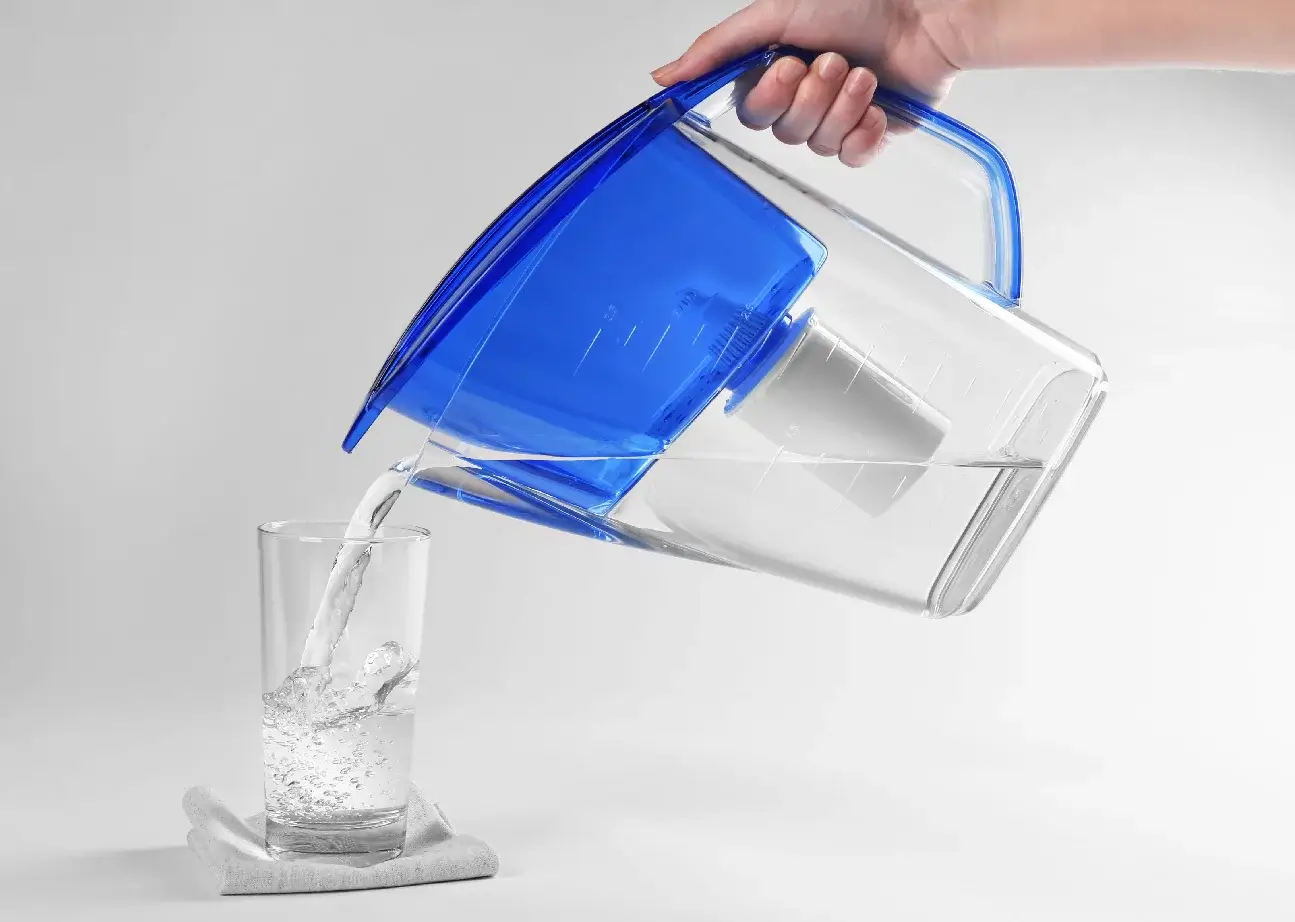
Water pitchers with activated charcoal filters are popular and inexpensive. Activated carbon should not be underestimated. It can improve taste and odor and reduce some contaminants. That said, do not overestimate these filters either. Many pitcher filters do not remove fluoride, nitrates, many metals, PFAS, or dissolved solids unless specifically designed and certified to do so. They can be a good first step, but they are not the same as a true high-performance purification system.
Commercial filtered water may use ultraviolet treatment, activated carbon, reverse osmosis, mineralization, distillation, or simple municipal processing. It is often stored in plastic, and the final water is only as good as its source, filtration, handling, and container.
Application: Choose your filter based on your actual water report. Look up your local water results, test if needed, identify contaminants, and choose a system certified or independently tested to reduce those contaminants.
Healthy Water on the Go
Despite the convenience of instantaneous, inexpensive, portable water anywhere and everywhere, there is no longer any doubt about the consequences. Plastic water bottle pollution is overwhelming our planet.
And with microplastics and nanoplastics being detected in bottled water and human tissues, we want to steer clear of unnecessary bottled water whenever possible. (10, 11)
The plastic water bottle nightmare. The sheer magnitude of the waste is significant even if plastic were not such a problematic material. Even PET plastic, often considered one of the safer plastics for water bottles, is not ideal as a daily hydration strategy.
- Bottled water is expensive, creates massive waste, and is often stored in plastic for long periods of time.
- Heat, time, and transport conditions can increase concerns about plastic breakdown and chemical leaching.
- Newer research shows bottled water can contain far more micro- and nanoplastic particles than earlier studies were able to detect. (10)
Worse, the risks are not limited to just the people who drink from these bottles. The damage extends to waterways, soil, wildlife, marine life, and future generations long after we discard the empty bottles.
We can learn by looking to the past. What did people do before plastic water bottles?
They carried water in glass, metal, ceramic, barrels, buckets, canteens, or jars when needed. No one expects you to keep a water barrel in the trunk of your car, but there are safe, modern options available.
Better Water Bottle Choices
- Glass is still a safe, clean, and reliable option…if your kids don’t break it. It does not leach chemicals, is safe at typical drinking water temperatures, and gets green bonus points if you repurpose or choose durable recycled glass.
- Stainless steel may be the perfect blend of safety and durability. Like glass, it does not leach toxins under normal use, but unlike glass, it does not break. Choose reputable stainless steel bottles, avoid mystery metal products, and keep them clean.
And let's debunk the myth: bottled water is NOT the most cost-effective way to significantly improve your drinking water.
Tap Water Safety FAQs
Is tap water safe to drink every day?
Tap water may be legally compliant and still contain contaminants that many families want to reduce. The best answer depends on your local water report, your home plumbing, whether you have lead service lines, your health season, and the filtration you use. We recommend looking up your local water data and filtering drinking and cooking water.
What is the healthiest water to drink at home?
For most families, the healthiest practical choice is clean, filtered water from a system matched to your water’s contaminants. Reverse osmosis is one of our favorite options because it can reduce a wide range of contaminants when the system is independently tested and maintained properly.
Does boiling tap water make it safe?
Boiling can kill many pathogens and may help reduce microplastics in some hard-water conditions when followed by filtration. (12) But boiling does not remove many chemical contaminants, heavy metals, nitrates, PFAS, or dissolved pollutants. In some cases, boiling can concentrate chemicals as water evaporates.
Should I test my well water?
Yes. Private well owners should test at least yearly for total coliform bacteria, nitrates, total dissolved solids, and pH, plus additional contaminants of local concern such as arsenic, lead, uranium, pesticides, or PFAS. (18) Test sooner after flooding, repairs, changes in taste or smell, pregnancy, or a new baby in the home.
Is bottled water better than tap water?
Not necessarily. Bottled water is convenient, but it may begin as municipal tap water, can be stored in plastic, may contain microplastics and nanoplastics, and creates a major waste problem. (10, 16, 17) Filtered water in glass or stainless steel is usually a better daily strategy.
Do water pitchers remove PFAS, fluoride, lead, and microplastics?
Some pitcher filters reduce some contaminants, but many do not remove PFAS, fluoride, lead, nitrates, or dissolved solids unless specifically designed and certified for those substances. Always check third-party certifications and contaminant-specific testing.
What should I do first?
Start with three simple steps: look up your local water report, stop relying on plastic bottled water, and choose a filter that matches your real-life contaminants. This one change can support hydration, reduce toxic burden, and help your family build a cleaner, healthier home.
Don’t worry about minerals or anything in your water. Tap water is not where we should depend on getting meaningful nutrition. You can easily supplement with electrolytes when needed (and here are some of our favs), eat mineral-rich foods, and focus on clean hydration first.


- https://www.ncbi.nlm.nih.gov/pmc/articles/PMC2714301/
- https://www.cdc.gov/healthy-water-data/waterborne-disease-in-us/index.html
- https://www.cdc.gov/mmwr/volumes/73/ss/ss7301a1.htm
- https://www.ncbi.nlm.nih.gov/pmc/articles/PMC2996186/
- https://www.ncbi.nlm.nih.gov/pmc/articles/PMC6068531/
- https://journals.plos.org/water/article?id=10.1371/journal.pwat.0000214
- https://www.ncbi.nlm.nih.gov/pmc/articles/PMC5486281/
- https://www.ncbi.nlm.nih.gov/pmc/articles/PMC11445186/
- https://www.epa.gov/ground-water-and-drinking-water/lead-and-copper-rule-improvements
- https://www.pnas.org/doi/10.1073/pnas.2300582121
- https://www.nature.com/articles/s41591-024-03453-1
- https://pubs.acs.org/doi/10.1021/acs.estlett.4c00081
- https://www.epa.gov/sdwa/and-polyfluoroalkyl-substances-pfas
- https://www.epa.gov/water-research/identifying-drinking-water-filters-certified-reduce-pfas
- https://www.ewg.org/tapwater/
- https://www.fda.gov/consumers/consumer-updates/bottled-water-everywhere-keeping-it-safe
- https://www.css.cornell.edu/cwmi/waterquality/bottled.htm
- https://www.cdc.gov/drinking-water/safety/guidelines-for-testing-well-water.html
- https://www.ncbi.nlm.nih.gov/pmc/articles/PMC9387091/
- https://www.fda.gov/food/buy-store-serve-safe-food/fda-regulates-safety-bottled-water-beverages-including-flavored-water-and-nutrient-added-water
- https://www.nsf.org/knowledge-library/nsf-ansi-58-reverse-osmosis-drinking-water-treatment-systems