QUICK SUMMARY
Clean skincare matters because your skin is not separate from the rest of your body. It is a living barrier that can absorb certain compounds, especially when products are designed to help ingredients penetrate. That is why we are so careful about what we put on our skin, just like we are careful about what we put in our mouths.
Purity Woods Age-Defying Dream Cream is one of our favorite clean skincare options because it brings together USDA Certified Organic botanicals, plant oils, butters, antioxidants, and maple leaf extracts in one easy-to-use cream.
The big idea is simple: choose ingredients that feed the skin well, support hydration and barrier health, help defend against oxidative stress, and encourage a smoother, firmer, younger-looking appearance without loading your daily routine with synthetic fillers, questionable preservatives, or “organic poser” marketing.
For clean skincare products to be worth the investment, it is necessary that only natural, truly clean ingredients be used. In fact, synthetic preservatives, fillers, artificial fragrance, and questionable chemical additives are the enemy of younger-looking skin. This is why we love Purity Woods Dream Cream.
If you want to support smooth, firm, radiant-looking skin in your golden years, remember the age-old adage, You are what you eat. Not only is this true of the foods you feed your body through your mouth, it is also true of the foods you feed your skin and body topically.
Table of Contents
The Importance of Feeding Your Skin Well
Here’s the thing: your skin is not just a covering. It is alive, active, and constantly responding to what you expose it to.
Your skin barrier does a wonderful job protecting you, but that does not mean everything you apply stays outside your body. Research on cosmetic ingredients and dermal absorption confirms that certain compounds can penetrate the skin, and absorption varies depending on the ingredient, the formula, the body area, the condition of the skin, and whether a product includes penetration-enhancing ingredients. (5)
That’s why we believe clean skincare deserves the same level of discernment as clean food. If you would not want questionable synthetic ingredients in your dinner, why make them part of your daily skincare routine?
Reality check: most people use skincare every single day. Creams, lotions, serums, sunscreen, makeup, aftershave, deodorant, body wash, and fragrance can add up to repeated exposure over time. Modern research continues to raise concerns about endocrine-disrupting and potentially toxic chemicals found in some cosmetics and personal care products, including parabens, phthalates, synthetic fragrance chemicals, formaldehyde-related compounds, and PFAS-type “forever chemicals.” (4)
That does not mean every conventional skincare product is automatically dangerous. But it does mean you should not blindly trust pretty packaging, green leaves on a label, or vague words like “clean,” “natural,” “green,” and “free of.”
The bottom line is, just like the foods you choose to put in your mouth, if you want to look and feel like junk food, feed your skin non-organic, synthetic, and toxic ingredients that are so prevalent in both inexpensive and expensive luxury skincare products today.
However, chances are you are reading this because you want the smoothest, firmest, healthiest, and youngest-looking skin possible, right? In which case, you are definitely in the right place.
So, before we get to those 10 most effective ingredients to feed your skin, here is something important you first need to know to help avoid premature aging and reduce your toxic burden…
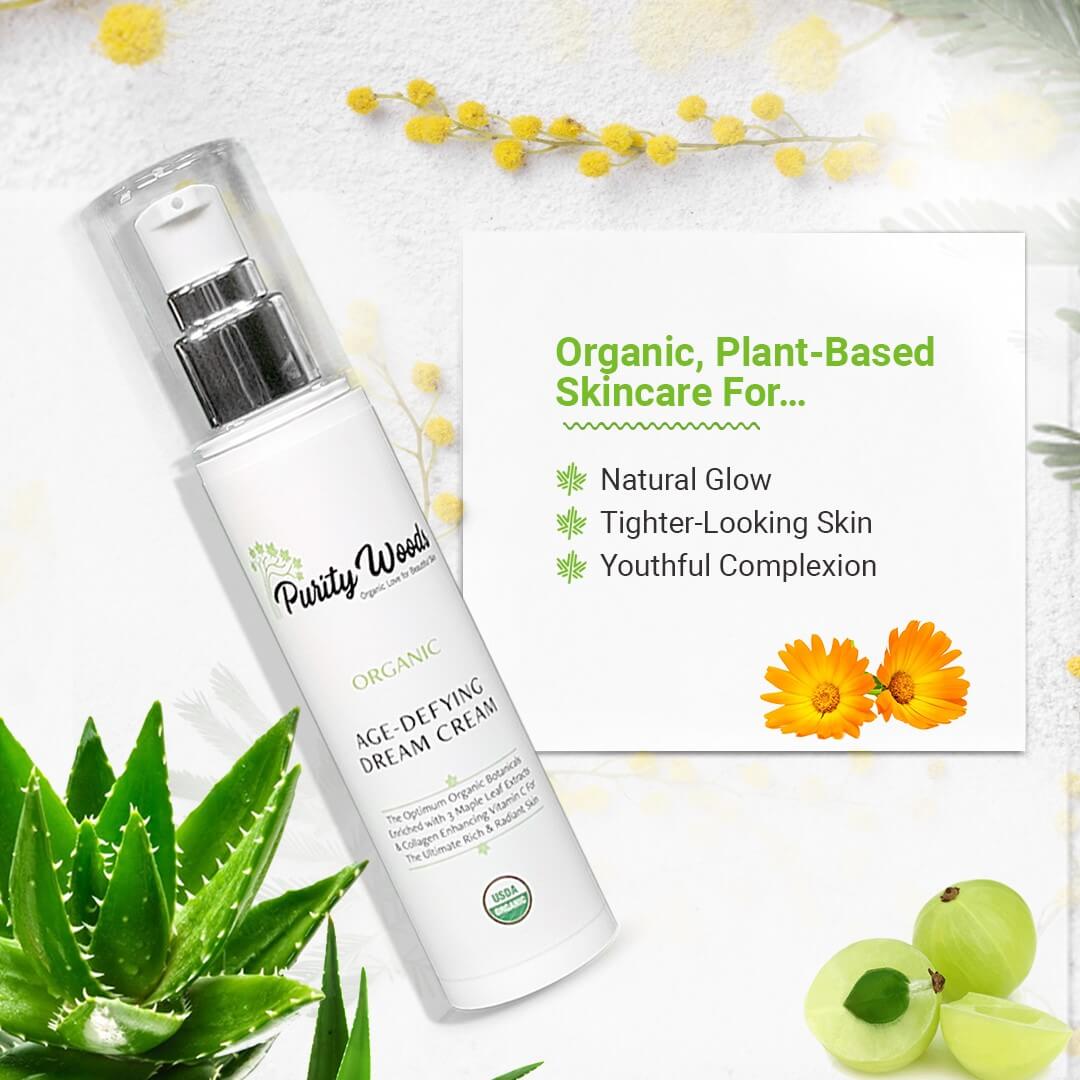
Why USDA Certified Organic is Important
Whether you are feeding it to your body through your mouth or skin, synthetic ingredients, pesticide residues, and other agricultural chemicals can be sources of toxic burden. Some compounds used in personal care products have been investigated for hormone-disrupting, reproductive, immune, or carcinogenic concerns. (4)
This is important.
In the case of skincare products, some formulas are specifically designed to improve penetration into the skin. That can be a benefit when the ingredients are nourishing, botanical, and thoughtfully chosen. But it is not so comforting when the product also contains questionable synthetic additives you would never intentionally invite into your daily routine.
This is one reason why choosing clean skincare products – and foods whenever possible — with the USDA Certified Organic label is so important. The closer to nature that anything you feed your body through your skin or mouth is, the better for you and the planet it is.
However, please BEWARE of getting bamboozled by words like “organic,” “natural,” “wild-crafted,” “plant-based,” and other natural-sounding words in promotions and on labels, especially when it comes to skincare products.
The FDA has stated that it has not established a regulatory definition for the word “natural” in cosmetic labeling. “Organic” cosmetic claims must meet USDA organic requirements for the organic claim and FDA requirements for cosmetic labeling and safety. (1, 3)
Put simply: “natural-looking” marketing is not the same thing as certified organic integrity.
If it doesn’t actually show the USDA Certified Organic seal, or a meaningful independent certification equivalent in another country, be very cautious and take a very close look at the ingredient label.
Words like “organic” can be thrown around loosely to trick people into buying. A product might use one organic ingredient and still contain many synthetic or undesirable ingredients. This is why the actual certification matters so much.
If you want to be sure you’re getting only the good stuff for your skin, only the USDA Certified Organic seal, or its equivalent in other countries, gives you that level of independent scrutiny.
If a product is USDA Certified Organic, it means it:
- Contains at least 95 percent organically produced ingredients, excluding water and salt
- The remaining ingredients must be allowed under USDA organic regulations
- Organic agricultural ingredients must be grown and handled according to organic standards
- Organic production prohibits sewage sludge, genetic engineering, and ionizing radiation
- Organic labeling must be reviewed by a USDA-accredited certifying agent
In other words, it means — independent of any claims the company makes for itself — the product has been proven organic in terms of both the ingredients used and how those ingredients were raised and handled. (2)
SPECIAL PRICE JUST FOR NATURAL LIVING FAMILY READERS!
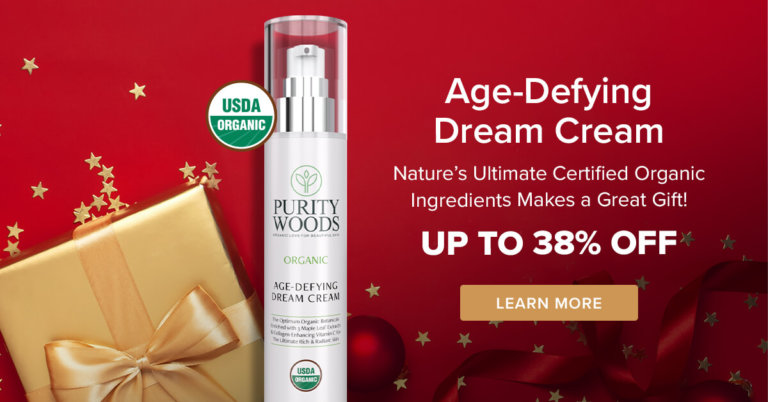
Our Natural Living Family “group buy” will save you 38% off USDA Organic Age-Defying clean skincare when you buy TODAY. Check out Purity Woods Dream Cream HERE!
The bottom line here?
Because toxic and synthetic ingredients and byproducts can contribute to early aging — and because some are being studied for hormone-disrupting, carcinogenic, immune, and reproductive concerns — it is more important than ever to care about high organic standards for whatever you put into your body, whether it’s through your mouth or skin.
10 Most Effective Clean Skincare Ingredients
Here’s a wonderful thing about your skin: no matter how old you are or what issues you may have, your skin may be THE #1 easiest thing you can improve on your body. Your skin is highly receptive to positive change.
Of course, the artificial and toxic ingredients found in MOST anti-aging and other skin products today are not that “positive change” your skin needs. Living things do not thrive on synthetic things, after all. Meanwhile, though, as always, nature knows what it is doing, and it does provide.
And on that note, below and based on research are 10 of nature’s most powerful ingredients to feed your skin. They’re presented in countdown style to the big #1. However, it must be noted that of course there is some subjectivity with any list like this.
Everyone’s skin shares many similarities, but each person’s skin – and what each person would like to improve with their skin — is also unique. As such, certain ingredients may rank higher for you personally.
With that said, these ingredients were chosen for their effectiveness and the range of benefits they provide. Again, though, comes the big caveat… Please make certain that whatever products you choose that provide these ingredients are USDA Certified Organic whenever possible, or your country’s meaningful equivalent.
The goal is not just to moisturize for an hour. The goal is to feed the skin well with botanicals that support hydration, skin barrier function, antioxidant protection, inflammatory balance, collagen pathways, elastin pathways, and a brighter, smoother, younger-looking glow.
Therefore, I hope you’ll personally TRY the Age-Defying Dream Cream to experience first-hand how fast and how well it truly works. Now onto those healthy ingredients your skin finds absolutely delicious…
After reviewing these ingredients below, please do head to Purity Woods and read about the #1 bestselling USDA Certified Organic Age-Defying Dream Cream!
10. Camellia Seed Oil (Camellia Oleifera)
Also known as the oil-seed camellia and tea oil camellia, this remarkable oil comes from cold-pressing the seeds of camellia oleifera, a flowering evergreen shrub native to Asia.
This is one of those traditional beauty oils that modern research is finally helping us appreciate more deeply.
- Camellia oleifera oil is rich in fatty acids and bioactive compounds that support moisturizing, antioxidant, and anti-inflammatory activity. (7)
- It contains skin-loving components such as vitamin E compounds, sterols, polyphenols, flavonoids, and squalene. (7)
- Its lightweight, emollient feel makes it especially useful in clean skincare formulas designed to soften dry-looking skin without a heavy greasy finish.
Camelia seed oil is particularly rich in nourishing lipids that help the skin look smoother, softer, and more supple. Since the skin barrier depends on healthy lipids, plant oils like camellia can be a beautiful part of a routine focused on barrier support and youthful radiance.
Bottom line is that camelia oleifera is one of the best-kept Eastern skin secrets… and now you are in on the secret!
9. Cocoa Seed Butter (Theobroma Cacao)
Hey, if it comes from the same plant as chocolate – the cacao tree – it’s got to be good, right? And this classic clean skincare ingredient truly is.
- Cocoa seed butter is rich in natural fatty acids that help promote soft, supple, and radiant-looking skin.
- Cocoa butter contains triglycerides and fatty acids, including oleic, palmitoleic, and other skin-conditioning lipids, along with vitamin E. (8)
- Modern skin research also shows interest in cocoa polyphenols because antioxidant compounds from cocoa can reach the stratum corneum after topical application. (9)
This makes cocoa seed butter a wonderful emollient for dry-looking, rough, or mature skin. It helps lock in moisture, supports a smoother feel, and pairs beautifully with other botanical extracts in a clean skincare formula.
Bottom line is that your skin loves cocoa seed butter as much as your mouth loves chocolate.
8. Astaxanthin Extract
Exposing ourselves to too much sun over the years can get us in trouble, just like exposing ourselves too much in other ways can also get us trouble.
This is important because one of the biggest reasons skin can look wrinkled, weathered, and otherwise “old” is because of excess sun exposure over the years.
- Enter the superstar ingredient called astaxanthin.
- Astaxanthin comes from certain marine plants and animals, with algae-derived astaxanthin being especially prized.
- It’s a carotenoid antioxidant that has been studied for skin moisture, wrinkles, elasticity, and photoaging support.
- A systematic review and meta-analysis found that oral and/or topical astaxanthin may help reduce signs of skin aging and showed promise for moisture content, elasticity, and wrinkles. (10)
Astaxanthin is not a replacement for wise sun habits. You still need shade, hats, safe sun practices, and common sense. But as part of a clean skincare lifestyle, astaxanthin is a beautiful antioxidant ally against the weathered look that can come from oxidative stress and too much sun over time.
Astaxanthin has also been shown in clinical research to help with elasticity, skin moisture, moisture retention, and smoother-looking skin while decreasing the appearance of fine lines and wrinkles. (10)
7. Sunflower Seed Oil (Helianthus Annuus)
Sunflower oil, prized for centuries by Native Americans, is rich in vitamin E and skin-supportive fatty acids.
What’s more, sunflower seed oil contains beneficial linoleic acid, which is one reason it is often discussed for skin barrier support. In a controlled adult forearm study, researchers compared olive oil and sunflower seed oil and evaluated barrier integrity, hydration, skin pH, and erythema. Sunflower seed oil helped preserve stratum corneum integrity and improved hydration without causing the barrier disruption seen with olive oil. (11)
This is why sunflower seed oil is such a helpful clean skincare ingredient. If your skin barrier is compromised, dry, rough, or irritated-looking, the right plant oils can help your skin feel more nourished and resilient.
If you’re looking for the ultimate hydrator for your skin, sunflower seed oil fits the bill.
6. Mango Seed Butter (Mangifera Indica)
Mango butter, which can be cold-pressed from the seed, has absolutely exceptional skin-enhancing effects.
Mango seed butter is rich, creamy, and naturally emollient. It helps soften and condition dry-looking skin, and research on mango butter and other exotic fats has highlighted natural compounds such as tocopherols, phytosterols, and triterpenes that may help reduce the appearance of wrinkles and roughness. (12)
Put simply, mango seed butter is one of those ingredients that makes your skin feel like it just took a long drink of moisture.
- It supports a smoother, softer skin texture.
- It helps replenish the look and feel of dry, depleted skin.
- It pairs beautifully with botanical extracts that support antioxidant protection and younger-looking radiance.
Fun fact: In India, the mango tree is a sacred symbol of love and some believe that they can even grant wishes. If your wish is for younger-looking skin, at least, mango seed butter certainly helps you love the skin you’re in!
ENJOY TOXIC-FREE USDA ORGANIC CLEAN SKINCARE
The Natural Living Family Group-Buy Special saves you up to 38% off on the skin-transforming Dream Cream by Purity Woods. Get yours HERE!
5. Aloe Vera Juice (Aloe Barbadensis)
If you have an aloe vera plant at home, cut off a leaf and scoop out the gel inside. Applying this vitamin- and enzyme-rich gel to your skin has long been treasured for soothing, cooling, and calming dry or irritated-looking skin.
Aloe is not just a folk remedy, either. In a human study of photoaged skin, oral aloe gel supplementation significantly improved facial wrinkles and elasticity. Researchers also found increased type I procollagen gene expression and decreased collagen-degrading MMP-1 gene expression in human skin. (13)
That is a big deal because collagen and elastin support are key reasons skin looks plump, smooth, and firm as we age.
Interestingly, this study focused on oral aloe gel, not a topical cream. But it gives us another beautiful reminder that skin health is an inside-out and outside-in lifestyle. What you eat, drink, apply, breathe, and live with all matters.
NOTE: Aloe vera can have a laxative effect when taken internally, so start with a very small amount to avoid any… ahem… surprises.
4. Camu Camu Extract (Myrciaria Dubia)
Camu camu is fun to say, but that’s the least of its benefits. It’s a low-growing shrub that grows near rivers in the western and central Amazon basin in South America, and its berries are even more of a nutrition powerhouse for you than the famed açai berry.
Camu camu is a rich source of polyphenols and vitamin C. Research has shown camu camu pulp powder and skin-and-seed flour are rich in polyphenols and vitamin C and demonstrate antioxidant capacity. (14)
This matters for skin because vitamin C is essential for collagen synthesis and helps support antioxidant protection against UV-related oxidative stress. A review in Nutrients explains that vitamin C contributes to collagen formation and helps protect skin against photodamage-related oxidative stress. (15)
Because of this, applying camu camu extract to your skin may provide a range of powerful anti-aging benefits, such as helping brighten the appearance of dull skin, supporting a more even-looking complexion, and feeding the skin with antioxidant-rich botanical nutrition.
Along with the amazing benefits of applying it to your skin, also note that eating vitamin C-rich, antioxidant-rich foods is part of the bigger abundant life picture. Oils, creams, and botanicals work best when paired with an anti-inflammatory diet, hydration, sleep, movement, prayer, and a low-toxin lifestyle.
It can be both eaten and applied topically to the skin; whatever products you use that contain camu camu, though, make 100% certain it is USDA Certified Organic to ensure purity.
3. German Chamomile Extract (Chamomilla Recutita)
Chamomilla recutita, also known as German chamomile, is not just another pretty flower. This natural plant has impressive antioxidant, antimicrobial, soothing, and anti-inflammatory properties. (16)
While chamomile tea and extracts may be useful for calming the body from the inside, chamomile applied to the skin is prized in traditional and modern botanical skincare for calming dry, irritated-looking skin.
This is one of the reasons chamomile appears so often in gentle skincare products for sensitive skin. When your skin looks stressed, red, tired, or reactive, chamomile is one of nature’s most comforting botanicals.
It’s also excellent for promoting the appearance of tighter and healthier “plump-looking” skin.
2. Indian Gooseberry Extract (Phyllanthus Emblica)
Indian gooseberry, also known as amla, is a medicinal plant long used in Ayurvedic systems of medicine to restore lost vitality and vigor.
- Ayurvedic texts consider Indian gooseberry to be a Rasayana, which is a compound ideal for longevity and rejuvenation.
- And science is showing that is precisely the case.
- Indian gooseberry is rich in vitamin C, amino acids, minerals, and phenolic compounds – all reasons why it’s so beneficial in skin-focused botanical formulas.
In vitro research found that amla extract promoted procollagen production and inhibited matrix metalloproteinase-1 in human skin fibroblasts. (17)
That means amla supports the very pathways involved in helping skin look firm, plump, and youthful.
And there’s more: a clinical study on Phyllanthus emblica branch extract found improvements in skin color, elasticity, hydration, and wrinkle reduction. (18)
Indian gooseberry stimulates pro-collagen while protecting your skin from oxidative stress, helping to prevent the appearance of dark spots and wrinkles. It’s also known for helping skin look fresher, smoother, brighter, and more refined.
1. Maple Leaf Extract (Acer Rubrum, Acer Saccharum, Acer Pennsylvanicum)
Native Americans have long treasured maple leaves for their healing properties. Modern science is finally catching up, and maple leaf extracts may be among the most exciting clean skincare ingredients for the appearance of younger-looking skin.
You see, maple leaves are packed with phenolic compounds that support elastin-focused skincare. This is important because elastin helps skin maintain its bounce, firmness, and snap-back appearance.
When researchers looked in detail at red maple leaves, they identified a wide range of phenolic compounds. Earlier reporting on the research noted 106 compounds, including several not previously reported in red maple leaves. (19)
Now, perhaps THE key reason skin can increasingly look wrinkled, saggy, and otherwise “old” is because the elastin in the skin that maintains skin’s elasticity increasingly breaks down.
Well, certain glucitol-core-containing gallotannins in red maple leaf extract have been studied for their ability to inhibit elastase, the enzyme involved in elastin breakdown. Researchers have also investigated skin-permeable maple leaf compounds for elastase inhibition and protective effects in human keratinocytes. (20, 21)
The researchers described the potential as a topical “plant-based Botox” concept — not an injection, and not the same mechanism as Botox, but a plant-based way to support the look of tighter, firmer skin through elastin-focused pathways. (20)
Put simply: maple leaf extract is the superstar among superstars in this Dream Cream formula.
ENJOY TOXIC-FREE USDA ORGANIC CLEAN SKINCARE
If You Love Your Skin & Want These 10 Top Ingredients for YOUR Youngest-Looking Skin… Try the Dream Cream at our Natural Living Family “Group Buy” Discount & save 38% HERE!!
The Age-Defying Purity Woods Dream Cream
Okay, so you now know 10 of the planet’s most powerful research-based natural ingredients that each provide a range of different benefits and that, in total, add up to your youngest and healthiest-looking skin.
Up to now, though, it would have been quite the challenge to find most of these. (Especially given that, as you now also know, it is so important to only choose USDA Certified Organic versions of these ingredients, and really USDA Certified Organic versions of anything you put on or into your body today!)
And even if you could find them, it would be an enormous hassle to apply some, much less all of them, to your skin… and it would cost hundreds of dollars on a monthly basis, which is beyond impractical.
That’s why Purity Woods set out to provide one of the cleanest, most effective solutions we have found to restore the appearance of youth to your skin.
- YES, Purity Woods’ Age-Defying Dream Cream provides you all 10 of the top natural anti-aging ingredients for skin you just discovered above. In fact, it provides you all 10 PLUS over 15 additional top USDA Certified Organic ingredients!
- YES, Purity Woods’ Age-Defying Dream Cream is USDA Certified Organic, which is a true rarity amongst skincare products.
- And YES, as you can imagine it was a very long and painstaking process to be able to bring this natural wonder to families who want clean skincare that actually feels luxurious.
Now, with all of that in mind, many people automatically assume that Purity Woods’ Age-Defying Dream Cream is going to be priced like so many other “high-end” luxury anti-aging skin products… in the $100s or $200s or beyond.
However, this is where you’re going to be quite pleasantly surprised!
So, head HERE now to find out more about clean skincare and the Age-Defying Dream Cream!
NLF “Group Buy” (Get 38% off TODAY)!
We have fallen in love with a USDA Certified Organic Age-Defying Dream Cream made by our friends at Purity Woods. Not only does it provide you with maple leaf extracts, it includes 25 organic clean skincare botanicals to combat the signs of aging that make skin look “old.” Yes, Age-Defying Dream Cream is 100% cruelty-free, never tested on animals, and it is completely FREE of synthetic additives like pesticides, chemical fertilizers, and dyes, and it was NOT processed using industrial solvents, irradiation, or genetic engineering (non-GMO). Right now, clean skincare is available to our Natural Living Family at a very special “group buy” price you cannot find anywhere else.

- FDA. “Organic” Cosmetics.
- USDA Agricultural Marketing Service. Cosmetics, Body Care Products, and Personal Care Products Fact Sheet.
- FDA. Small Businesses & Homemade Cosmetics: Fact Sheet.
- Alnuqaydan AM. The dark side of beauty: an in-depth analysis of the health hazards and toxicological impact of synthetic cosmetics and personal care products. Front Public Health. 2024.
- Hewitt NJ, et al. Measurement of the penetration of 56 cosmetic relevant chemicals into and through human skin using a standardized protocol. J Appl Toxicol. 2019.
- Lin TK, Zhong L, Santiago JL. Anti-inflammatory and skin barrier repair effects of topical application of some plant oils. Int J Mol Sci. 2018.
- Zhou L, et al. The antioxidant, anti-inflammatory and moisturizing effects of Camellia oleifera oil and its potential applications. 2024.
- Hunt A, et al. From the kitchen to your skin: a review of nontraditional natural ingredients in dermatology. Journal of Integrative Dermatology. 2024.
- Draelos ZD, et al. Topical antioxidant cocoa polyphenol skin penetration. 2024.
- Zhou X, et al. Systematic review and meta-analysis on the effects of astaxanthin on human skin ageing. Nutrients. 2021.
- Danby SG, et al. Effect of olive and sunflower seed oil on the adult skin barrier: implications for neonatal skin care. Pediatr Dermatol. 2013.
- Mandawgade SD, Patravale VB. Formulation and evaluation of exotic fat based cosmeceuticals for skin repair. Indian J Pharm Sci. 2008.
- Cho S, et al. Dietary Aloe vera supplementation improves facial wrinkles and elasticity and it increases the type I procollagen gene expression in human skin in vivo. Ann Dermatol. 2009.
- Langley PC, et al. Antioxidant and associated capacities of camu camu. 2015.
- Pullar JM, Carr AC, Vissers MCM. The roles of vitamin C in skin health. Nutrients. 2017.
- Sah A, et al. A comprehensive study of therapeutic applications of chamomile. 2022.
- Fujii T, et al. Amla extract promotes procollagen production and inhibits matrix metalloproteinase-1 in human skin fibroblasts. J Ethnopharmacol. 2008.
- Chaikul P, et al. Phyllanthus emblica L. branch: a safe and effective ingredient against skin aging. 2021.
- American Chemical Society. Maple leaf extract could nip skin wrinkles in the bud. 2018.
- Liu C, et al. Inhibitory effects of skin permeable glucitol-core containing gallotannins from red maple leaves on elastase and their protective effects on human keratinocytes. Journal of Functional Foods. 2020.
- Liu C, et al. Cytoprotective effects of a proprietary red maple leaf extract and its major polyphenol ginnalin A against oxidative stress in human keratinocytes. Food & Function. 2020.