QUICK SUMMARY
How do you make homemade glass cleaner? Combine distilled white vinegar, a small amount of unscented liquid Castile soap, distilled water, and citrus essential oils in a glass spray bottle. Shake well, spray lightly on glass or mirrors, and wipe with a lint-free microfiber cloth.
This homemade glass cleaner helps remove fingerprints, grease, dust, and everyday grime without ammonia, synthetic fragrance, or phthalates. Lemon is my favorite essential oil for this recipe, but bergamot, grapefruit, lime, neroli, tangerine, and wild orange also smell fresh and clean.
For the best streak-free finish, use distilled water, avoid overspraying, and polish the surface with a clean, dry cloth.
A sparkling home does not require ammonia, synthetic fragrance, or harsh chemical sprays.
With vinegar, distilled water, a touch of Castile soap, and fresh citrus essential oils, you can clean windows and mirrors effectively while reducing your family’s toxic burden.
This is natural homemaking at its best: simple, affordable, effective, and rooted in wise stewardship of the home God has given you.
Table of Contents
=
3 Toxins in Conventional Glass Cleaners
Finding natural cleaning products that genuinely work can be a challenge, so I decided to create chemical-free options for our Natural Living Family.
My Homemade Glass Cleaner Spray with Essential Oils is powered by citrus, cuts through everyday grime, and leaves windows and mirrors sparkling.
A clean home is one of my simple joys.
There’s nothing better than a fresh, comfortable home that smells amazing. While cleaning can get tedious, I’m always happy I put in the effort, especially when I can use simple DIY products that reduce our family’s toxic burden.
Commercial glass cleaners may get the job done, but many contain ingredients we would rather not spray into the air or leave on surfaces throughout the home.
Here are three of the biggest concerns.
1. Ammonia
Manufacturers often include ammonia in glass cleaners because it evaporates quickly and helps create a streak-free shine.
Unfortunately, ammonia is also a strong irritant. Exposure can irritate the eyes, nose, throat, lungs, and other mucous membranes, especially in enclosed spaces or at higher concentrations. (1)
The smell alone can be overwhelming.
Even more important, ammonia-containing cleaners should never be mixed with chlorine bleach. That combination can create dangerous chloramine gases.
There are safer ways to get squeaky-clean windows.
2. Synthetic Fragrance
Our brains have been trained to associate “clean” with certain artificial scents.
The truth is, synthetic fragrance can contain complex mixtures of aroma chemicals, and consumers may not see every component listed individually on the label.
Fragrance exposure can trigger headaches, watery eyes, respiratory irritation, skin reactions, nausea, or migraines in sensitive people.
Here’s the thing: a truly clean home does not need to smell like a chemical perfume.
When you remove synthetic fragrance and replace it with fresh air, simple ingredients, and carefully chosen essential oils, many families notice a real difference.
3. Phthalates
Phthalates are used in some fragrance and plastic applications to help scents last longer or make materials more flexible.
Several phthalates have raised concerns because of their effects on reproductive and endocrine health, especially during sensitive stages of development. Human studies have associated certain prenatal phthalate exposures with changes in male reproductive development and childhood neurodevelopment. (2, 3)
This is one reason pregnant women, young children, and families working to lower chemical exposure may want to avoid heavily fragranced household products.
Application: Do not feel like you need to replace every product in your home overnight. Start with the cleaners you use most often, such as glass spray, all-purpose cleaner, laundry products, and air fresheners.
Safe & Natural Glass Cleaning Ingredients

This natural homemade glass cleaner uses just a few simple ingredients.
The best part is that you can customize it with your favorite citrus essential oils.
I prefer lemon, but you can mix and match until you find the blend your family loves.
Organic Unscented Liquid Castile Soap
Organic unscented liquid Castile soap appears in many of my DIY cleaning recipes.
In this glass cleaner, a tiny amount helps loosen fingerprints, grease, smudges, and dirt.
If you have little ones who love putting their hands on every glass surface, you’ll appreciate this addition.
Use only a small amount. Too much soap can leave residue and create streaks.
Organic Distilled White Vinegar
Distilled white vinegar is acidic, which helps dissolve greasy residue, mineral film, fingerprints, and everyday grime.
Some people hesitate to use vinegar because of the sour smell, but citrus essential oils help make the finished spray much fresher.
The vinegar aroma also fades quickly as the surface dries.
Surface note: Do not use vinegar-based cleaners on natural stone such as marble, granite, travertine, or limestone. Acid can dull or etch those surfaces.
Purified or Distilled Water
Distilled or purified water helps dilute the cleaner and makes the recipe last longer.
Distilled water is especially helpful for glass because it contains fewer minerals than tap water. That reduces the chance of mineral spots or cloudy residue.
Citrus Essential Oils
Citrus essential oils are some of my favorites for natural cleaning.
They make the home smell bright and fresh, and many contain limonene-rich constituents that help loosen greasy or sticky residue.
Try one oil or create your own blend:
- Bergamot
- Grapefruit
- Lemon
- Lime
- Neroli
- Tangerine
- Wild orange
I want to encourage you to get creative with your DIYs.
A few simple combinations include:
- Classic Clean: Lemon and wild orange
- Bright Citrus: Grapefruit, lime, and tangerine
- Fresh Floral Citrus: Bergamot and neroli
- Simple Lemon: Lemon essential oil by itself
Application: Essential oils do not dissolve in water, so shake the bottle before each use to redistribute the ingredients.
Homemade Glass Cleaner with Essential Oils
This recipe comes together in minutes.
It’s so easy that kids can help measure and pour with supervision. You may want to put a towel down first, though!
Homemade Glass Cleaner Spray With Essential Oils
Quantity
Ingredients
- ½ teaspoon organic unscented liquid castile soap
- ¼ cup organic distilled white vinegar
- 25 drops citrus essential oils*
- Purified OR distilled water
Instructions
- Pour the soap, vinegar, and essential oils into the spray bottle.
- Fill the rest of the bottle with distilled water, screw on the pump, and shake heavily.
- Spray directly on glass windows and mirrors for cleaning.
Step One: Add Ingredients to the Bottle

Pour the liquid Castile soap, vinegar, and essential oils of choice into a spray bottle.
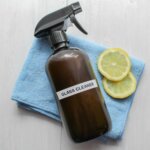
I recommend using a dark amber glass bottle. Citrus essential oils can affect certain plastics over time, and dark glass helps protect the oils from light exposure.
Step Two: Add Water and Clean

Fill the rest of the bottle with distilled water.
Replace the spray top and shake well to combine.
To use, lightly spray glass windows or mirrors and wipe with a clean microfiber cloth or lint-free towel.
Enjoy your sparkling, streak-free surfaces!

How to Get Streak-Free Glass
Homemade glass cleaner works best when you use the right technique.
If your mirror looks cloudy or your windows are streaky, the cleaner may not be the problem. Often, it is the amount of spray, the cloth, or leftover residue from old products.
Use Less Spray
More cleaner does not mean cleaner glass.
A light mist is usually enough. Overspraying leaves more liquid and soap residue to wipe away.
Use a Clean Microfiber Cloth
Use a dry, lint-free microfiber cloth reserved only for glass and mirrors.
Avoid cloths washed with conventional fabric softener because the coating left behind can cause smears.
Clean Away Heavy Grime First
If a window is greasy, dusty, or covered with fingerprints, wipe away the heavy grime before polishing.
You may need one damp cloth for cleaning and a second dry cloth for buffing.
Avoid Direct Hot Sun
Cleaning windows in direct hot sunlight can make the spray dry before you finish wiping, which creates streaks.
Clean early in the morning, later in the day, or when the glass is shaded.
Use Distilled Water
Hard water contains minerals that can leave spots behind.
Distilled water is one of the easiest ways to improve a homemade glass cleaner.
Remove Old Product Buildup
Commercial cleaners, smoke, kitchen grease, and fabric softener residue can build up on glass.
The first few cleanings with a natural product may require extra wiping before the old film is fully removed.
Next Steps in Creating a Non-Toxic Household
If you enjoy our Homemade Glass Cleaner Spray with Essential Oils, chances are you’ll love the other effective DIY cleaners we have to offer.
Whether you’re deep cleaning a crusty oven or simply wiping down counters, there are safe ways to get the job done without relying on harsh chemical fragrance.
Creating your own cleaning products means you know exactly what is in each bottle.
No mystery scents. No toxic surprises. No overwhelming cleaner aisle.
Natural living is built one decision at a time.
Start with this glass cleaner, then choose the next product your family uses regularly and find a cleaner alternative.
That is how a low-tox home is created: not through perfection, but through faithful, practical progress.
Homemade Glass Cleaner FAQs
How do you make natural glass cleaner?
Combine distilled white vinegar, distilled water, a very small amount of unscented Castile soap, and citrus essential oils in a glass spray bottle. Shake well before each use.
What essential oil is best for glass cleaner?
Lemon essential oil is my favorite because it smells fresh and helps loosen greasy or sticky residue. Grapefruit, lime, bergamot, tangerine, wild orange, and neroli are also good options.
Why is my homemade glass cleaner streaky?
Common causes include using too much spray, adding too much soap, using hard tap water, wiping with a dirty cloth, or having residue from previous commercial cleaners on the glass.
Can I use vinegar and Castile soap together?
This recipe uses only a very small amount of Castile soap. Too much can react with the vinegar and leave residue, so follow the recipe measurements and shake before use.
Can I use this cleaner on mirrors?
Yes. Spray lightly and wipe immediately with a clean microfiber cloth. Avoid saturating the edges of mirrors because excess moisture can damage the backing over time.
Can I use homemade glass cleaner on car windows?
It may be used on many untreated exterior and interior glass surfaces, but check your vehicle instructions first. Avoid overspray on dashboards, tint films, electronic screens, leather, and specialty coatings.
Can I use this on natural stone?
No. Vinegar is acidic and can etch marble, granite, limestone, travertine, and other natural stone surfaces.
Is this cleaner safe around children and pets?
It is a lower-tox option than many commercial sprays, but it should still be stored out of reach. Do not let children or pets ingest it, and avoid spraying near faces, food, or pet areas.
Why should I use a glass bottle?
Citrus essential oils can affect certain plastics over time. Dark glass also helps protect the oils from light and keeps the bottle reusable.
How long does homemade glass cleaner last?
When made with distilled water and stored in a clean bottle, it can last for several months. Discard it if the smell, color, or texture changes.


Resources & References
- National Center for Biotechnology Information. Ammonia Toxicity. StatPearls. https://www.ncbi.nlm.nih.gov/books/NBK546677/
- Swan SH, Main KM, Liu F, et al. Decrease in anogenital distance among male infants with prenatal phthalate exposure. Environmental Health Perspectives. 2005;113(8):1056-1061. https://pubmed.ncbi.nlm.nih.gov/16466537/
- Factor-Litvak P, Insel B, Calafat AM, et al. Persistent associations between maternal prenatal exposure to phthalates on child IQ at age 7 years. PLoS One. 2014;9(12):e114003. https://pubmed.ncbi.nlm.nih.gov/25493564/
- International Fragrance Association. Ingredients. https://ifrafragrance.org/priorities/ingredients