QUICK SUMMARY
This homemade honey mustard recipe combines raw honey or Manuka honey with organic Dijon mustard for the perfect balance of sweet, tangy, and zesty flavor.
It takes just minutes to prepare, contains no refined sugar, and works as a dip, salad dressing ingredient, glaze, or marinade. Raw honey provides naturally occurring plant compounds, while mustard seeds contain glucosinolates and other bioactive constituents.
Blend the two ingredients until smooth, transfer the mixture to a covered container, and refrigerate for up to 3 weeks. If you use it to marinate raw meat, discard any portion that has come into contact with the meat.
Every chef needs a good homemade honey mustard recipe. This version comes together in minutes and has the perfect ratio of sweet and zesty.
I created this recipe because I couldn’t find a single honey mustard on the market that didn’t contain refined sugar or other ingredients I didn’t want to serve my family. Delicious creations are born out of necessity, and this dip is among my most outstanding achievements.
We enjoy this condiment on its own, and we also use it in many other recipes. With just two ingredients, you have nothing to lose!
Table of Contents:

Organic Local Honey vs. Manuka Honey
How do you know what type of honey is best for you? The number of choices can confuse anyone!
We can eliminate many options by steering clear of heavily processed honey and products made with added corn syrup or refined sweeteners. Honey naturally contains sugars, but it also provides enzymes, minerals, phenolic compounds, and flavonoids that contribute to its antioxidant activity. The exact profile depends on the flowers, location, processing, and storage conditions. (1)
Thankfully, both raw local honey and authentic Manuka honey are wonderful options for this recipe.
Raw Organic Local Honey
You can find local honey at many farmers markets, roadside stands, natural food stores, and local apiaries.
Raw honey is typically strained to remove pieces of wax and honeycomb but is not subjected to the same degree of heat and filtration as many mass-market products. Minimal processing can help preserve more of honey’s natural aroma, flavor, pollen, enzymes, and plant compounds. (1)
Local honey is delicious and supports beekeepers in your community. You may have also heard that regularly eating local honey can eliminate seasonal allergies because it contains local pollen.
The research is mixed.
One controlled study found that honey did not relieve allergic rhinoconjunctivitis symptoms better than placebo, while another trial reported improvement when honey was consumed alongside standard allergy treatment. Those different findings mean we should not present local honey as a proven substitute for allergy immunotherapy or medication. (2, 3)
We choose it because it tastes wonderful, is minimally processed, and lets us support local farmers. Sometimes, you can even find beautiful raw honeycomb!
Manuka Honey
This gourmet honey is a true gem. While local wildflower honey can come from the nectar of many plants, authentic Manuka honey is produced when bees gather nectar from the Manuka plant, which is native to New Zealand.
Manuka honey is more expensive than many other varieties because of its limited growing region, testing requirements, and concentration of characteristic compounds such as methylglyoxal.
It is important to understand exactly what the research and regulatory language mean. The FDA has cleared specific sterile wound-dressing products that contain Manuka honey. This does not mean that a jar of culinary Manuka honey is FDA-approved to treat wounds or that kitchen honey should be applied to broken skin. (4)
Manuka honey also demonstrates antibacterial activity against several microorganisms in laboratory studies, including Streptococcus pyogenes. One study found that it inhibited bacterial biofilm development, but that was an in vitro finding, not proof that eating honey eradicates a throat infection. (5)
Still, honey can feel wonderfully soothing in warm herbal tea when your throat is irritated, and clinical research suggests that honey may help relieve cough and other symptoms associated with uncomplicated upper respiratory infections. (6)
Weigh the flavor, price, and benefits of each option and choose the one that works best for your family. Both are delicious in this homemade honey mustard recipe.
Never give honey to a child under 12 months old because of the risk of infant botulism.
Healthy Honey Mustard Ingredients
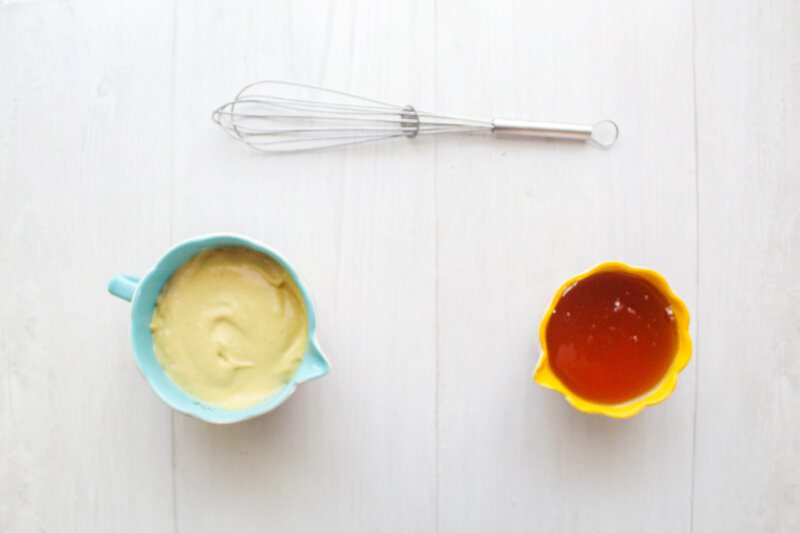
The best honey mustard contains simple ingredients! Here’s what you need to add to your shopping cart.
Raw Organic Local Honey or Manuka Honey: With its rich flavor and many practical uses, honey is an excellent investment for your pantry. You can use either raw organic local honey or Manuka honey.
After much trial and error, I found the perfect ratio of honey to mustard. Adding too much honey can make your condiment overly sweet and too runny, and no one wants that!
You’ll be pleased to find that this version is thick enough for dipping but smooth enough to drizzle over vegetables or whisk into a dressing. No messes allowed!
Organic Dijon Mustard: There are many different kinds of mustard, but I find that organic Dijon mustard works best for this recipe. It has a more robust, complex flavor than traditional yellow mustard, which pairs beautifully with the sweetness of honey.
Mustard is made from seeds in the cruciferous plant family. These seeds naturally contain glucosinolates, sulfur-containing plant compounds that break down into bioactive substances such as isothiocyanates. Research has explored their antioxidant, antimicrobial, inflammatory, and cellular effects. (7)
That doesn’t mean prepared Dijon mustard is medicine, but it is another example of how God created flavorful plants with fascinating natural compounds.
Be sure to read the ingredient label. Some prepared mustards contain added sugar, artificial flavors, or preservatives you may prefer to avoid.
Supplies: I love a smooth dip, and a blender works perfectly. A small blender or food processor is an excellent investment for chefs who love a good dip or dressing. It creates the smoothest texture without a lot of mess.
You can also whisk the ingredients vigorously by hand or use an immersion blender.
If you’re like me, you have lots of homemade creations around your kitchen. I recommend purchasing a label maker so you can keep your ingredients straight! There’s nothing worse than thinking you’re adding honey mustard to a dressing and learning it’s really lemon dip.
Ways to Use Homemade Honey Mustard
This simple pantry staple is good for so many things! Need some inspiration? Here are a few ideas.
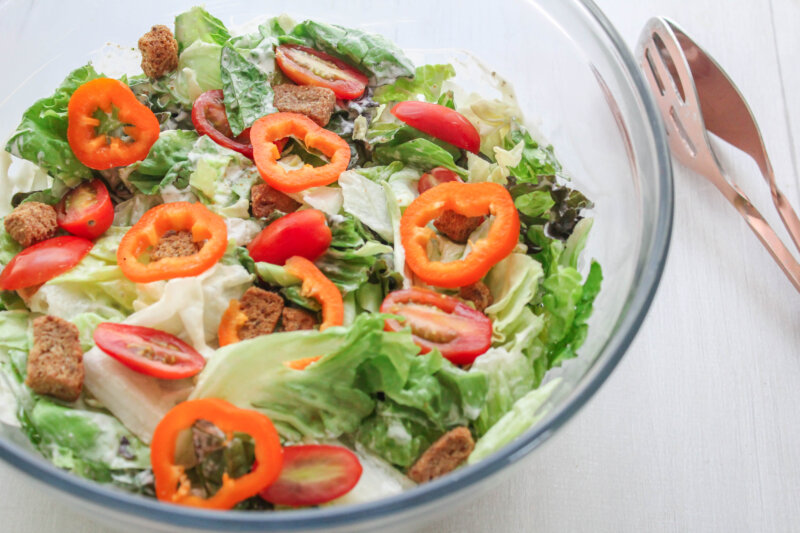
- Make my Caesar salad dressing. This is one of our all-time favorite ways to top a salad.
- For a spicy twist, add a sprinkle of organic ground cayenne pepper. Serve it as a flavorful dip for herb-roasted potato wedges. This is one of Dr. Z’s favorite ways to enjoy honey mustard!
- Add it to a party charcuterie board. Guests love dipping apple slices, vegetables, and gluten-free crackers.
- Gluten-free soft pretzels take on a whole new flavor when dipped in this condiment.
- Drizzle it over roasted vegetables or use it as a glaze for your favorite protein.
- Whisk a spoonful into one of our delicious vinaigrettes.
- Thin it with a little extra-virgin olive oil and apple cider vinegar for a quick honey mustard salad dressing.
- Spread it on sandwiches, wraps, lettuce cups, or veggie burgers.
The possibilities are endless!
Make Healthy Honey Mustard
This healthy honey mustard comes together in minutes with the help of a blender. Make a batch to use throughout the week as a dip, spread, or recipe ingredient.

Mama Z's Quick Honey Mustard
Servings
Ingredients
- 1 9-ounce container organic Dijon mustard
- 3 ounces raw organic local honey OR Manuka honey
Supplies
- Small blender , food processor, OR immersion blender
Instructions
- Blend the mustard and honey in a small blender or food processor until smooth. Alternatively, you can use an immersion blender. Using a funnel, refill the mustard container and label it accordingly. Place the rest in a small glass custard cup with a lid to use first. Enjoy!
Step One: Blend the Honey Mustard
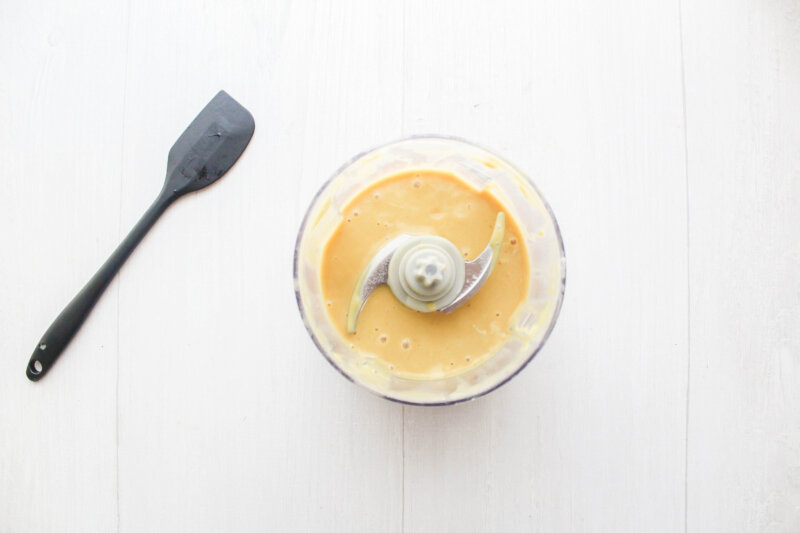
Blend the mustard and honey in a small blender, such as a Magic Bullet, or food processor until completely smooth. Alternatively, you can use an immersion blender or whisk the ingredients together by hand.
Using a funnel, refill the mustard container and label it accordingly. Place any leftovers in a small glass custard cup or jar with a tightly fitted lid to use first.
Store the honey mustard in the refrigerator, tightly covered, for up to 3 weeks. Always use a clean utensil and discard it sooner if you notice mold, fermentation, an unusual odor, or a change in texture.
If used as a marinade for raw meat, poultry, or fish, discard any remaining mustard that has touched the uncooked food. Do not return it to the storage container or serve it as a dipping sauce.
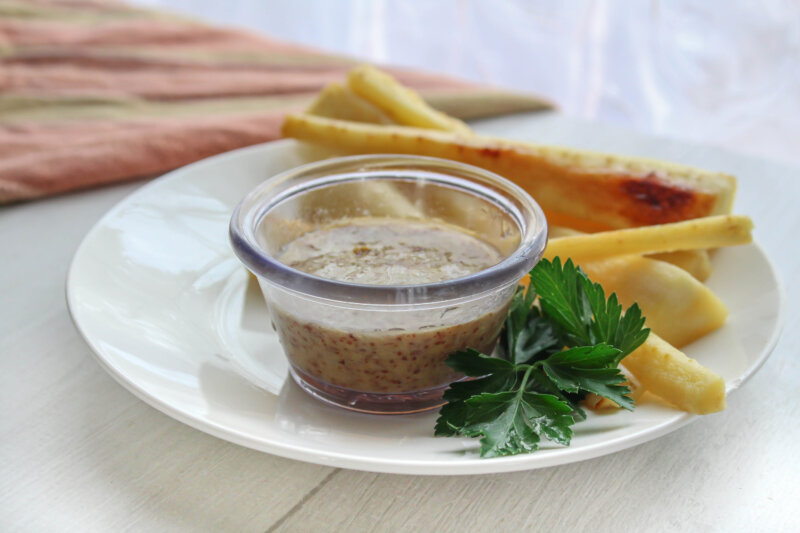
For an exotic twist, use organic German mustard. The texture may not be quite as smooth, but the bold flavor is out-of-this-world delicious!
Homemade Honey Mustard FAQs
What is honey mustard made from?
This homemade honey mustard recipe contains just 2 ingredients: raw honey or Manuka honey and organic Dijon mustard. Some commercial versions also contain refined sugar, mayonnaise, oils, thickeners, or preservatives.
What is the best mustard for honey mustard?
Organic Dijon mustard gives this recipe a smooth texture and bold, tangy flavor that balances the sweetness of the honey. Yellow, whole-grain, spicy brown, or German mustard can also be used for different flavor variations.
Can I make honey mustard without a blender?
Yes. Place the honey and mustard in a small bowl or jar and whisk vigorously until smooth. A blender creates the silkiest texture, but it is not essential.
Is homemade honey mustard healthy?
This version avoids refined sugar and contains only honey and mustard. Honey is still a concentrated source of natural sugar, so enjoy it as a condiment rather than treating it as a limitless food.
Does local honey cure seasonal allergies?
Research is mixed. Some studies report symptom improvement, while another controlled trial found no benefit beyond placebo. Local honey is delicious and may contain beneficial plant compounds, but it should not replace proven allergy care. (2, 3)
Is Manuka honey better than regular honey?
Manuka honey has a distinctive chemical profile and strong antibacterial activity in laboratory testing. Raw local honey is more affordable, supports nearby beekeepers, and also contains beneficial plant compounds. Either works well in this recipe.
How long does homemade honey mustard last?
Store it tightly covered in the refrigerator for up to 3 weeks. Use clean utensils and discard it if the smell, color, or texture changes.
Can babies eat homemade honey mustard?
No child under 12 months old should consume honey or foods made with honey because of the risk of infant botulism.

- Cianciosi D, Forbes-Hernández TY, Afrin S, et al. Phenolic Compounds in Honey and Their Associated Health Benefits: A Review. Molecules. 2018. https://pmc.ncbi.nlm.nih.gov/articles/PMC6074882/
- Rajan TV, Tennen H, Lindquist RL, Cohen L, Clive J. Effect of Ingestion of Honey on Symptoms of Rhinoconjunctivitis. Annals of Allergy, Asthma & Immunology. 2002. https://pubmed.ncbi.nlm.nih.gov/11868925/
- Asha’ari ZA, Ahmad MZ, Jihan WS, Che CM, Leman I. Ingestion of Honey Improves the Symptoms of Allergic Rhinitis: Evidence From a Randomized Placebo-Controlled Trial. Annals of Saudi Medicine. 2013. https://pubmed.ncbi.nlm.nih.gov/24188941/
- U.S. Food and Drug Administration. 510(k) Premarket Notification K133729: Wound Dressing With Manuka Honey. https://www.accessdata.fda.gov/scripts/cdrh/cfdocs/cfpmn/pmn.cfm?ID=K133729
- Maddocks SE, Lopez MS, Rowlands RS, Cooper RA. Manuka Honey Inhibits the Development of Streptococcus pyogenes Biofilms and Causes Reduced Expression of Two Fibronectin Binding Proteins. Microbiology. 2012. https://pubmed.ncbi.nlm.nih.gov/22294681/
- Abuelgasim H, Albury C, Lee J. Effectiveness of Honey for Symptomatic Relief in Upper Respiratory Tract Infections: A Systematic Review and Meta-Analysis. BMJ Evidence-Based Medicine. 2021. https://pubmed.ncbi.nlm.nih.gov/32817011/
- Maina S, Misinzo G, Bakari G, Kim HY. Human, Animal and Plant Health Benefits of Glucosinolates and Strategies for Enhanced Bioactivity: A Systematic Review. Molecules. 2020. https://pmc.ncbi.nlm.nih.gov/articles/PMC7464879/