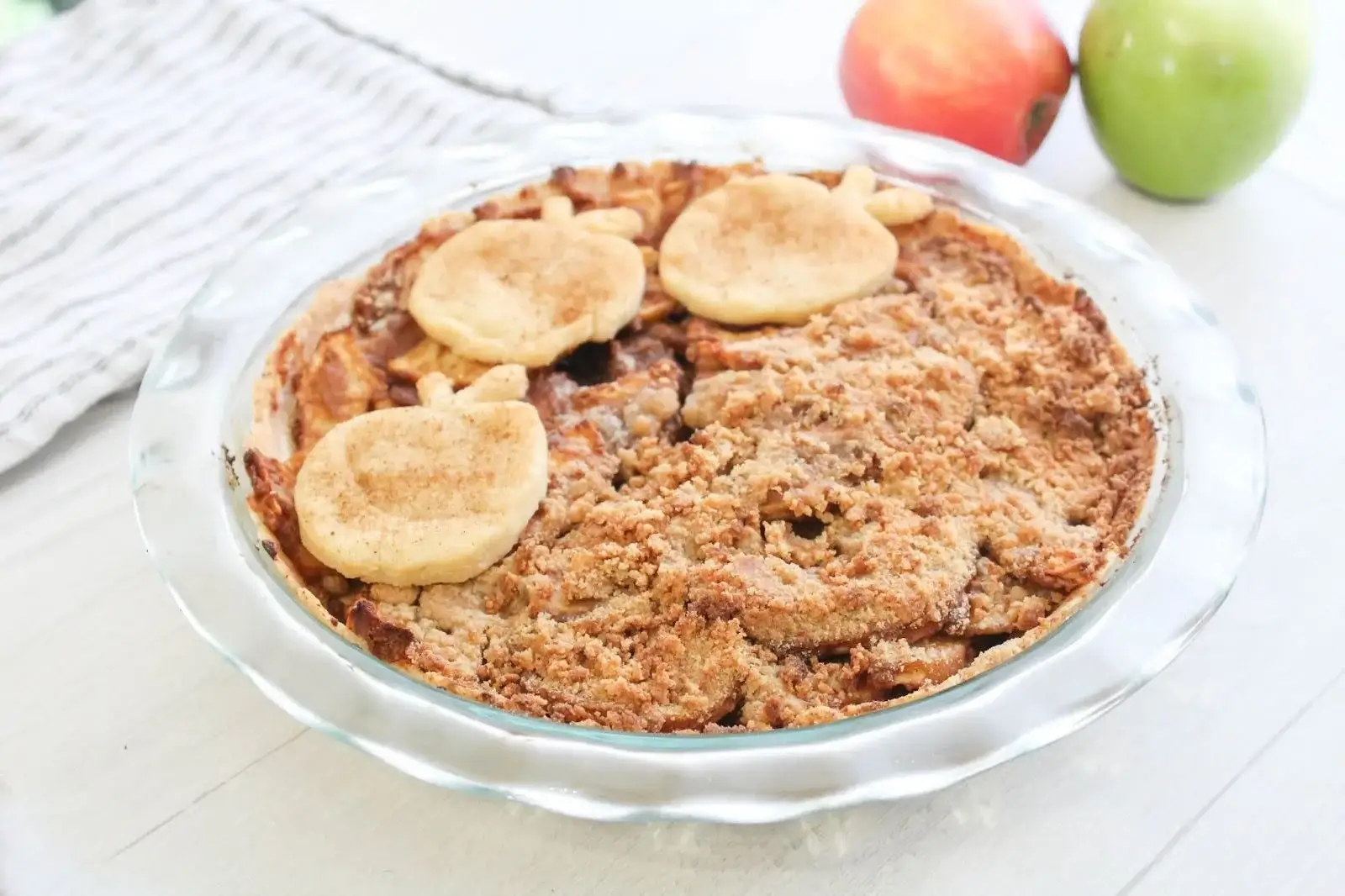
QUICK SUMMARY
This gluten-free cookie crumb pie crust is one of the easiest crusts you'll ever make. It uses crunchy gluten-free cookie crumbs, butter or coconut oil, sea salt, and a light mist of cooking spray, with about 10 minutes of hands-on prep before baking.
The crust is naturally customizable. Use cinnamon or pecan cookies for a warm holiday flavor, gingersnaps with pumpkin pie, or chocolate cookies with a chocolate or nut-butter filling. To keep it dairy-free or vegan, choose coconut oil and a cookie that fits your family's needs.
One important label note: gluten-free does not automatically mean sugar-free or minimally processed. The cookies you choose determine the final ingredients, sweetness, and nutrition of the crust, so check the label and choose a crunchy cookie made with ingredients you feel good about.
Our family loves having dessert during the holidays, and my Cookie Crumb Pie Crust Recipe allows us to have our pie and eat it too! This crust is gluten-free and one of the easiest crusts you'll ever make.
For most of us, holidays and special occasions are marked by loved ones, meaningful conversations, and delicious food. Ending your celebratory meal with a sweet treat makes the event extraordinary. Dessert is a must-have for any special day!
Table of Contents:
Why Make Your Own Pie Crust?

There are a gazillion pie crust recipes out there, many gluten-free. So, why make this one? Here are a few reasons why we love this recipe.
Cookie Crumb Pie Crust is Easy to Make
Many pie crusts are labor-intensive, requiring a lot of mixing, rolling and stretching. This pie crust is easy-peasy! You do all the work in your food processor, so it's a one-bowl operation. It's virtually foolproof!
This is a great recipe to have your older children help with. There's nothing better than making memories in the kitchen!
Cookie Crumb Pie Crust is Easily Customizable
While we share our favorite cookies in this recipe, you can use any gluten-free crunchy cookie you want. Pumpkin pie tastes impressive with a gluten-free gingersnap-based crust, while nut butter or chocolate filling pairs nicely with chocolate cookies.
You should note that soft cookies won't give you the desired result. You need nice, crunchy cookies to create enough crust.
This crust can be varied for all your favorite seasonal pies. The possibilities are endless! Let us know what combinations you come up with. We're always looking for new healthy recipes!
Cookie Crumb Pie Crust Fits Your Healthy Goals
Traditional crumb crusts are often made with refined flour, added sugar, and highly processed cookies. For our family, making the crust ourselves gives us control over the ingredients and lets us choose a gluten-free cookie that better fits the way we eat. If you want to understand more about why we choose to avoid gluten in our home, read our guide on why gluten can be a problem.
Gluten-free does not automatically mean healthier. Reviews of packaged gluten-free foods have found that many products rely heavily on refined starches and may be lower in fiber or certain nutrients than their gluten-containing counterparts. (3) That's why the ingredient list still matters.
Our tried-and-true choices use crunchy gluten-free cookies made with ingredients we prefer, such as nut-based flours and coconut sugar. Coconut sugar is still real sugar, so this crust is not automatically sugar-free. The goal is not to give dessert a health halo. It's to make a simple swap that works better for your family while still enjoying the celebration.
If you have celiac disease or need strict gluten avoidance, choose cookies specifically labeled gluten-free and take normal precautions against cross-contact in your kitchen.
Healthy Dessert Ingredients 101

To make this recipe, you need just 4 simple ingredients. You may already have some of them in your pantry!
Cooking Spray: Cooking spray can get a bad reputation, but it's a handy tool! We recommend avoiding canola or vegetable oil and sticking with coconut or olive oil-based sprays. For this recipe, you only need a light mist to help the finished crust release cleanly.
Cookie Crumbs: Our favorite cookies to use in this recipe are crunchy gluten-free cookies.
Our tried and true favorites for this crust are Simple Mills Crunchy Cinnamon or Crunchy Toasted Pecan Cookies. You can also use Hu or Siete cookies. Product formulas can change, so always check the current ingredient and allergen labels if you are avoiding gluten, dairy, eggs, nuts, or another ingredient.
Butter or Raw Coconut Oil: Butter helps the cookie crumbs crisp up and gives the crust a rich flavor. During the margarine era, butter was often treated as though it automatically increased cardiovascular risk. A large 2016 systematic review and meta-analysis found that butter intake had a largely neutral association with cardiovascular disease and only a small inverse association with type 2 diabetes. Because those diabetes data came from observational studies, they do not prove that eating butter prevents diabetes. (1)
We still enjoy good-quality butter in moderation when it fits the recipe and the person eating it.
If you aren't interested in using butter or want the crust to be dairy-free, you can use raw coconut oil. Coconut oil contains a unique mix of fatty acids, including lauric acid. Some medium-chain fatty acids are metabolized more rapidly than long-chain fats, but ordinary coconut oil is not the same thing as purified MCT oil, and research on isolated MCTs should not automatically be applied to coconut oil. (2)
For this recipe, the practical reason I love coconut oil is simple: it gives us an easy dairy-free option and helps bind and crisp the cookie crumbs beautifully.
Sea Salt: Sodium is an essential nutrient, and your body needs it for normal nerve, muscle, and fluid-balance functions. At the same time, the blanket claim that a low-sodium diet is inherently harmful goes beyond the evidence. The National Academies found insufficient evidence that the lower sodium intakes studied in adults caused deficiency symptoms or other established harms and set an Adequate Intake of 1,500 mg per day for most adults. (4) Individual needs can differ with activity, climate, medical conditions, and fluid losses.
We prefer Colima sea salt for its flavor and traditional hand-harvested character. Sea salt can contain trace minerals, but like table salt it is still mostly sodium chloride. (5) Most specialty sea salts are also not iodized, so if your family relies on salt as a source of iodine, check the label and make sure you are getting enough iodine elsewhere. (6)
My Cookie Crumb Pie Crust Recipe
The hands-on prep takes about 10 minutes. The crust then bakes for 10 minutes and cools for about 20 minutes before you add the filling. It makes one 9-inch pie crust. Here's how to make it.

Cookie Crumb Pie Crust (With Vegan Option)
Servings
Ingredients
- 1½ cups crumbs from gluten-free coconut sugar cookies such as Simple Mills Crunchy Cinnamon OR Crunchy Toasted Pecan Cookies*
- ¼ cup (½ stick) grass-fed organic sea-salted butter OR 1⁄2 cup coconut oil, extra-virgin AND unrefined AND 1⁄4 teaspoon pink Himalayan salt OR sea salt, ground
- ¼ teaspoon pink Himalayan salt OR sea salt, ground
Instructions
- Preheat the oven to 350°F. Mist a 9-inch glass pie pan with unrefined (non propellant) coconut oil, avocado oil OR olive oil cooking spray.
- In a food processor, combine the cookie crumbs, butter, and salt and process until evenly mixed. Put aside 2-3 tablespoons of the crumb mixture for the topping. Press the remaining mixture firmly and evenly against the bottom and sides of the pie pan. Bake on the center rack of the oven for 10 minutes. Allow to cool on a wire rack for about 20 minutes before adding the pie filling.
Step One: Prep Your Pie Pan

Preheat the oven to 350°F. Mist a 9-inch glass pie pan with cooking spray. We recommend using olive oil or coconut oil-based spray. Since this crust involves melted butter, lightly mist the pan.
Step Two: Combine Ingredients

In a food processor, combine the cookie crumbs, butter, and salt and process until evenly mixed. Put aside 2 to 3 tablespoons of the crumb mixture for the topping. Press the remaining mixture firmly and evenly against the bottom and sides of the pie pan.
Bake for 10 minutes. Allow to cool for about 20 minutes before adding pie filling.
Delicious Ways to Use Cookie Crumb Pie Crust
You have a simple gluten-free pie crust. Now you need some ways to use it! Here are a few of our top suggestions.
- Use it as a topping for our Essentially Delicious Yogurt!
- Create a decadent, allergy-friendly cheesecake. (One of Dr. Z's all-time favorites!)
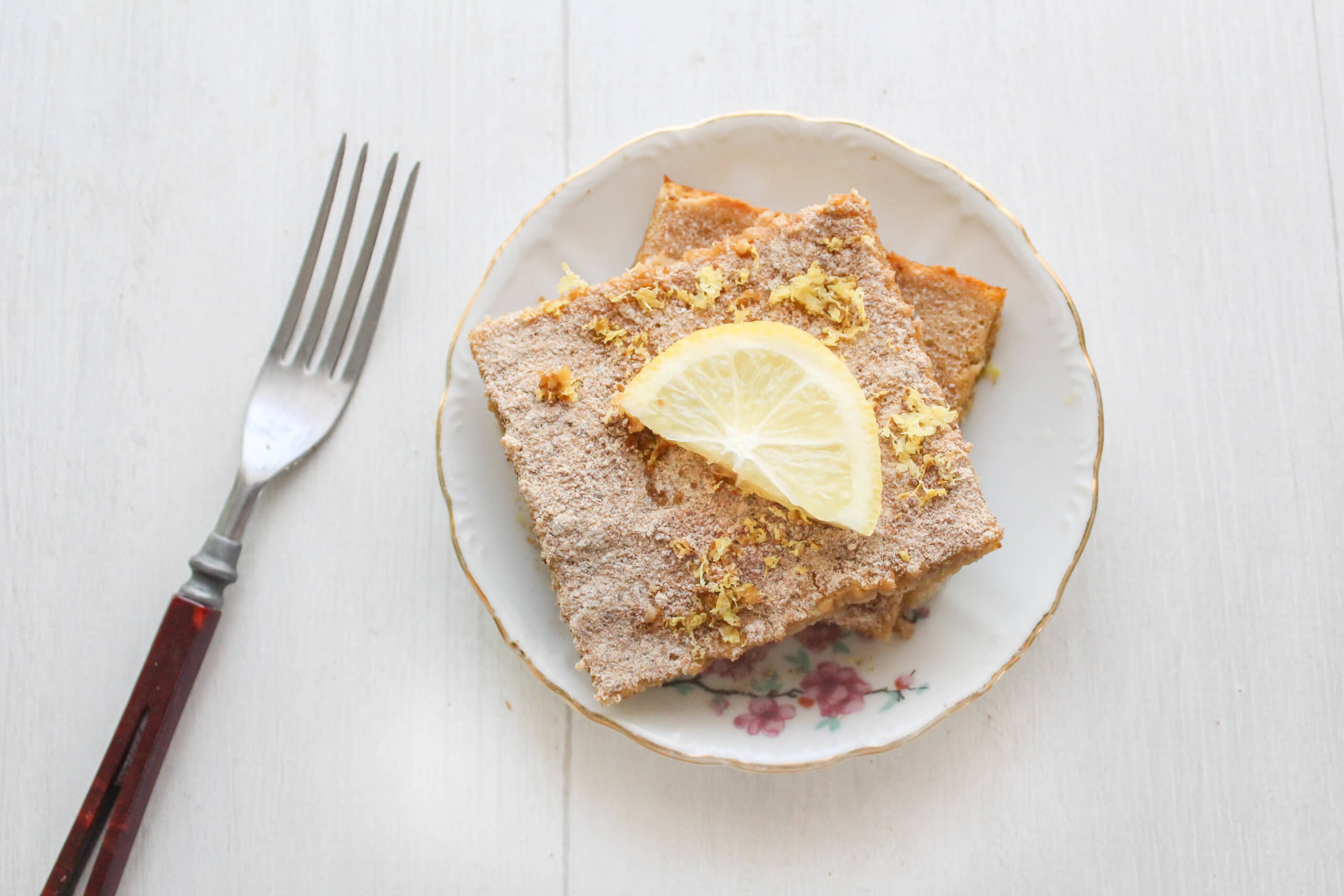
- Think Spring with a delicious lemon pie!
- Make ice cream sundaes with ALL the fixings. My coconut milk vanilla ice cream is a great place to start!
- Need a healthy Thanksgiving dessert? What's better than pumpkin pie?
- Make individual pie crusts by using ramekins.
Like swapping your pie crust recipe, small changes are how we began to move to a healthier, toxin-free lifestyle. We've never looked back! Simply swapping out an ingredient here or there may not seem like a lot, but it adds up, and before you know it, you've completely revamped your eating habits.
You won't believe how much better it can feel to move away from highly processed foods and build your kitchen around ingredients closer to the natural gifts God gave us. Dessert can still be dessert. The difference is that you get to decide what goes into it.


References
- Pimpin L, Wu JHY, Haskelberg H, Del Gobbo L, Mozaffarian D. “Is Butter Back? A Systematic Review and Meta-Analysis of Butter Consumption and Risk of Cardiovascular Disease, Diabetes, and Total Mortality.” PLoS One. 2016;11(6):e0158118. doi:10.1371/journal.pone.0158118.
- Wallace TC. “Health Effects of Coconut Oil: A Narrative Review of Current Evidence.” Journal of the American College of Nutrition. 2019;38(2):97-107. doi:10.1080/07315724.2018.1497562.
- Vici G, Belli L, Biondi M, Polzonetti V. “Gluten Free Diet and Nutrient Deficiencies: A Review.” Clinical Nutrition. 2016;35(6):1236-1241. doi:10.1016/j.clnu.2016.05.002.
- National Academies of Sciences, Engineering, and Medicine. Dietary Reference Intakes for Sodium and Potassium. Washington, DC: National Academies Press; 2019. NCBI Bookshelf.
- American Heart Association. “Sodium Sources: Where Does All That Sodium Come From?” Source.
- National Institutes of Health, Office of Dietary Supplements. “Iodine: Health Professional Fact Sheet.” Source.