


QUICK SUMMARY
Homemade fruit roll-ups are an easy, healthy snack made with real organic fruit, no added sugar, and no artificial dyes. Kids love the chewy texture, and parents love that this recipe is made with pure ingredients instead of junk.
You can use whatever fruit you have in your fridge, including berries, mango, peaches, apples, pears, pineapple, or even a handful of spinach, kale, or carrots for hidden veggies. Since everything gets pureed, this is a perfect way to use produce that is ripe, soft, or not quite pretty enough for a fruit tray.
To make fruit roll-ups at home, blend your fruit with grass-fed gelatin or the plant-based gelatin substitute specified in the recipe, spread the puree on non-stick dehydrator sheets or parchment paper, and dehydrate until flexible and fully dry. The National Center for Home Food Preservation recommends 140°F for fruit leather and says properly dried fruit leather keeps up to one month at room temperature or up to one year in the freezer.
Making homemade fruit roll-ups is easy and foolproof. Kids love this healthy snack, and I have to admit, it’s a great treat for kids at heart, too! This recipe contains pure ingredients; no junk allowed. Plus, you can use whatever fruit you have in your fridge. Pro tip: Sneak in those veggies, too!
This snack is excellent for on-the-go fun. We take it to the beach, on road trips, to the playground, and even on errands. Your kids will never guess they’re getting in a hefty dose of produce!
And homemade matters for another reason: you get to decide exactly what goes into every batch. Packaged fruit snacks are changing rapidly, including newer products made without artificial colors, but homemade fruit leather still gives you complete control over the fruit, sweetener, texture, and ingredients your family eats.
Table of Contents

Why DIY Snacks?
Fruity snacks are so tempting to little ones. Bright packages and beloved characters make them hard for children to resist! But raising healthy kids doesn’t mean eating bland food. Your kids will be more likely to eat clean when they have fun, nutritious treats that still feel special.
My parents used their dehydrator often, and this fruit roll-up recipe was always on repeat. I have fond memories of the sweet, fruity smell wafting up the stairs!
You may be able to find some “healthy” fruit roll-ups on the market, but even if they were toxin-free, they’d put a dent in your wallet. Here are a few reasons to try this recipe.
No Added Sugar Needed
One important wording update: homemade fruit roll-ups made with fruit are not literally sugar-free. Fruit naturally contains sugar.
What this recipe does beautifully is eliminate the need for added sugar. The sweetness comes from the fruit itself.
That matters because dried fruit is concentrated. As water leaves the puree, the natural carbohydrates and sweetness become concentrated into a smaller, chewier serving. That is exactly why kids love fruit leather, but it is also a good reason to serve it as a snack rather than treating an entire tray as one serving.
The original version of this article also said sugar “weakens the immune system.” That statement was too broad. Diets chronically high in added sugars and ultra-processed foods can contribute to metabolic dysfunction and inflammatory pathways, but a single serving of sugar does not simply switch off the immune system.
This homemade version keeps things much simpler: real fruit, no added sugar, and no corn syrup or artificial sweetener required.
Homemade Fruit Roll-Ups Don’t Need Synthetic Dyes
This is another area where the market has changed since this article was first published.
Many brightly colored packaged foods have historically used synthetic certified colors, and most certified food dyes in the United States have been produced from petrochemical feedstocks. California’s Office of Environmental Health Hazard Assessment concluded after reviewing human, animal, and mechanistic research that synthetic food dyes can contribute to hyperactivity and other neurobehavioral effects in some children, with individual sensitivity varying considerably. (1)
FDA’s current position is more cautious. Its July 2026 consumer guidance states that most children do not experience adverse behavioral effects from approved color additives, while acknowledging evidence that some children may be sensitive. (2)
And the food industry is changing quickly. General Mills announced in May 2026 that newer Fruit Roll-Ups varieties, including Rainbow Sherbet, are made with no colors from artificial sources. (3)
So I would no longer tell you that every store-bought fruit roll-up contains petroleum-based dye. Read the current label.
Our reason for making these at home is even simpler: fruit already comes in God-given colors. Blueberries, strawberries, mango, cherries, kiwi, and spinach do not need a laboratory color additive to make snack time fun.
Unlimited Potential
Unlike a prepackaged fruit roll-up, homemade versions can work for your family’s preferences.
If you want more citrus flavor, add lemon. If you want to use up greens before they wilt, blend in spinach or kale. If you have berries that are too soft for the lunchbox but still wholesome, puree them.
If someone is iron-deficient, a handful of spinach can contribute some iron, but fruit leather should not be presented as a treatment for iron deficiency. True iron deficiency deserves attention to total dietary iron, absorption, laboratory values, and the underlying reason for the deficiency.
Plus, you can customize these homemade fruit roll-ups to fit your dietary needs. If you’re vegan, use the plant-based gelatin substitute specified in the recipe. The sky is the limit!
Less Food Waste
Fruit leather is one of my favorite ways to rescue produce before it goes bad.
The National Center for Home Food Preservation specifically recommends ripe or slightly overripe fruit for fruit leather. (4)
That means the soft peaches nobody wants to bite into, the berries that need to be eaten today, or the apples with a bruised spot can still become something your family gets excited about.
Cut away spoiled, moldy, or damaged areas rather than dehydrating food that is no longer wholesome.
Healthy Snack Ingredients 101

This recipe requires just two ingredients and one handy kitchen tool. Here’s what you need to add to your shopping cart.
Organic Fruit: This recipe calls for 4 cups of fruit. I like to sneak in a few vegetables for good measure! You can use whatever you have on hand, and since it’s going to be pureed anyway, it doesn’t have to be pretty.
This snack is one of my favorite ways to use less-than-ideal produce! Not sure what to include in your mix? Here are some of our tried and true combinations:
- Apples
- Bananas
- Blackberries
- Blueberries
- Carrots
- Cherries
- Cranberries
- Kiwi
- Mango
- Peaches
- Pears
- Pineapple
- Plums
- Raspberries
- Spinach or kale
- Strawberries
A mixture of fruits often gives you the best texture. Bananas, mangoes, pears, peaches, and apples help create a smooth base, while berries bring bold color and flavor.
Because this recipe purees the whole edible fruit rather than extracting juice and discarding the pulp, much of the fruit’s fiber remains in the leather.
Organic Grass-fed Beef Gelatin or Plant-Based Gelatin Substitute: These homemade fruit roll-ups have the best texture when you add a gelatin-like substance to them. This ingredient thickens them up and gives them chewiness and moisture. Grass-fed beef gelatin is always a great option, plus it contributes protein.
Gelatin is an animal-derived protein made largely from collagen. Plant-based gelling agents such as agar are chemically different, so texture can vary depending on the substitute.
You can use a gelatin substitute if you’re following a vegan diet. Follow the preserved recipe rather than assuming every gelling agent can be swapped one-for-one.
Food Dehydrator: A dehydrator is one of the most valuable tools a chef can own, but it’s often the most overlooked. Aside from making amazing homemade fruit roll-ups, you can preserve your garden bounty or even produce you find on sale at the store.
With a dehydrator, you can make apple or banana chips, grass-fed beef jerky, re-crisp stale gluten-free crackers, make potpourri, or dehydrate sprouted nuts.
A dehydrator with an accurate thermostat is especially helpful. The National Center for Home Food Preservation recommends drying fruit leather at 140°F. (4)
Non-Stick Dehydrator Sheets: This dehydrator accessory is a lifesaver! It allows you to peel your roll-ups with ease, even if they’ve been sitting there a while. The best part is that these dehydrator sheets are reusable, so you don’t have to continue purchasing them!
If you’re in a pinch, you can use parchment paper.
Make Homemade Fruit Roll-Ups
Preparing these fruit roll-ups is a cinch. In a few minutes, you’ll be on your way to a healthy, vitamin-packed snack!
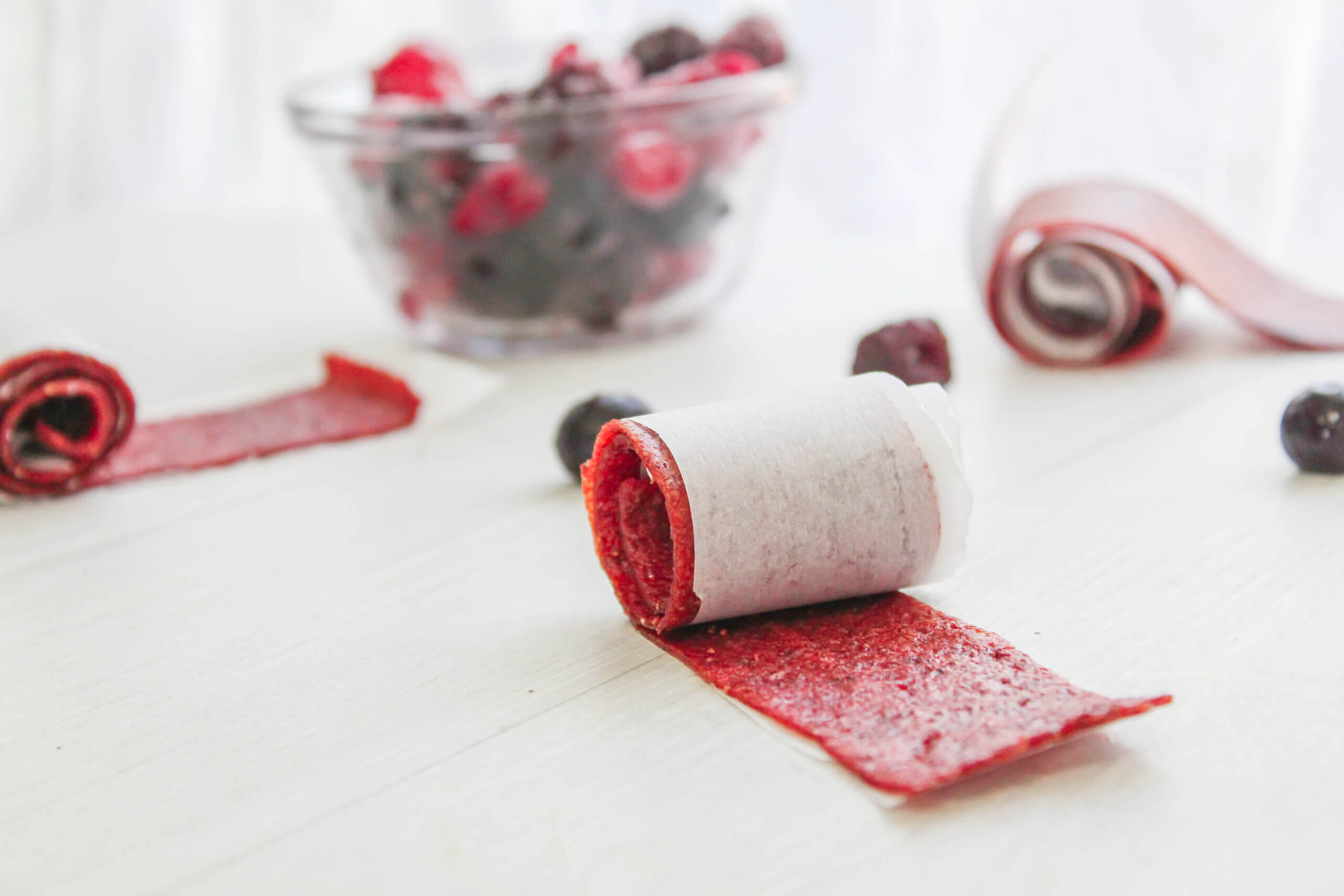
Homemade Fruit Roll Ups (With Vegan Option)
Servings
Ingredients
- 4 cups organic fruit*
- 2 tablespoons organic grass-fed beef gelatin OR plant-based gelatin
- Purified OR distilled water
Supplies
- Nonstick dehydrator sheets OR parchment paper
Instructions
- Place the fruit in a blender and blend at high speed until pureed. Thicker fruits like bananas may need ¼ cup of water to reach the right consistency. Add the gelatin and blend again until thoroughly mixed.
- Lay nonstick dehydrator sheets over the tray grates and pour fruit puree on top. Tilt the tray as needed to spread puree into a ¼-inch thick layer. Dehydrate at 140°F or a low setting for 6-10 hours or overnight. Time will vary based on your climate.
- Bend the dehydrator sheet to remove the fruit leather in one flexible sheet when finished. Roll in a clean piece of parchment paper and store in an airtight container for up to 3 months.
Step One: Create the Fruit Puree

Place your fruit of choice in a blender and blend at high speed until pureed. Depending on what type of fruit you use, you may need to add ¼ cup of water. Add the gelatin and blend again until thoroughly mixed.
Step Two: Dehydrate the Roll-Ups

Lay the dehydrator sheets over the grates on the tray and pour the puree on top. Tilt your tray as needed to spread the mixture. Your puree layer should be ¼-inch thick.
Dehydrate your fruit roll at 140° or on low for 6-10 hours or overnight. Cooking time will vary based on your climate.
Step Three: Store Properly

When the puree is dry, gently bend the dehydrator sheet. Your fruit leather should peel up into one flexible piece. Roll your fruit layer on a clean sheet of parchment paper for storage. Place in an air-tight container and use within the next few months. Enjoy!
Want to learn how to make over more of your family’s favorite foods? Mama Z’s recipe makeover guide is full of practical tips and tricks to help you transform unhealthy recipes with allergy-friendly ingredient options.

This is a priceless tool full of simple substitutions to help you practice clean eating.
Fruit Roll-Up Storage & Food Safety
Homemade fruit leather is simple, but moisture is what determines whether it stores well.
The National Center for Home Food Preservation recommends drying fruit leather at 140°F until the center no longer shows an indentation when touched. Properly dried leather should peel readily from the tray while remaining flexible. (4)
Important recipe note: The preserved recipe above uses a 1/4-inch puree layer. Current National Center for Home Food Preservation guidance uses an approximately 1/8-inch layer, which dries more quickly and evenly. Because we never alter Mama Z’s published recipe formulas or instructions, the original 1/4-inch direction remains unchanged. When making a thicker leather, expect drying to take longer and verify that the center is fully dried before storage.
Also verify the actual temperature of your dehydrator’s “low” setting. If it is not approximately 140°F, use the numbered temperature setting instead of relying on the word “low.”
How Long Do Homemade Fruit Roll-Ups Last?
Current preservation guidance is more specific than the older “next few months” wording in the recipe.
The National Center for Home Food Preservation says properly dried fruit leather can be stored for up to one month at room temperature. For storage up to one year, tightly wrap the rolls and freeze them. (4)
For everyday family use:
- Cool fruit leather completely before packing it.
- Roll individual portions in clean parchment.
- Store in a clean airtight container away from heat, sunlight, and moisture.
- If you see mold, unusual moisture, fermentation, or an off smell, discard the batch.
- Freeze extra batches when you want longer storage.
Wash Produce Before Dehydrating
Drying does not make spoiled or contaminated produce magically wholesome.
Wash fresh produce under cool running water before cutting or pureeing. Remove stems, seeds, pits, and damaged areas as appropriate. The National Center for Home Food Preservation specifically begins its fruit-leather method with washing and preparing ripe fruit before pureeing. (4)
A Note for Toddlers
Fruit leather is chewy.
USDA WIC guidance notes that dried fruit can be a choking risk for children under age four. (5) Cut fruit leather into small, age-appropriate pieces and supervise young children while they eat.
Never send a large rolled strip with a child who is not developmentally ready to chew it safely.
Best Fruit & Veggie Combinations
One of the best things about homemade fruit roll-ups is that you do not need a different recipe every time the fruit bowl changes.
Use the preserved recipe as your base and change the produce combination.
Berry Blast: Strawberries, raspberries, blueberries, and a little banana. The banana softens the tart berries and gives the puree body.
Tropical: Mango, pineapple, and banana. This is one of the sweetest combinations without adding sugar.
Apple Berry: Apples and strawberries or raspberries. Apples create a mild background that lets the berries shine.
Peach Mango: Peaches and mango make an especially smooth puree with a gorgeous golden color.
Green Machine: Apple, pear, spinach, and a little pineapple. Start with a modest amount of greens so the fruit still leads the flavor.
Carrot Mango: Mango with finely blended carrot creates a beautiful orange leather. If using a firm raw vegetable that your blender cannot puree smoothly, soften it first or use very finely grated pieces.
Use-What-You-Have: This is my favorite. Combine the ripe fruit that needs to be eaten today and turn it into tomorrow’s snack.
Keep in mind that high-water fruits may take longer to dry, while bananas, mangoes, applesauce-like fruits, and pears can give the leather more body.
Homemade Fruit Roll-Up FAQs
Are homemade fruit roll-ups healthy?
Yes, homemade fruit roll-ups can be a nourishing snack when they’re made with real fruit, no added sugar, and no artificial dyes. They provide fruit-derived carbohydrates, fiber, vitamins, minerals, and plant compounds in a concentrated form.
Are homemade fruit roll-ups sugar-free?
No. Fruit naturally contains sugar, so the most accurate description is no added sugar. This recipe does not require added table sugar, corn syrup, honey, maple syrup, or artificial sweeteners.
What fruit is best for homemade fruit roll-ups?
Berries, mango, peaches, pineapple, apples, pears, bananas, and plums all work well. Fruits with more body, such as banana, mango, apple, pear, and peach, can help create a smooth, flexible leather.
Can I add vegetables to fruit roll-ups?
Yes. Carrots, spinach, and kale can work well in modest amounts. Pair stronger vegetables with naturally sweet fruit so the finished snack still tastes fruity.
Can homemade fruit roll-ups be vegan?
Yes, if you use the plant-based gelatin substitute specified by the recipe instead of grass-fed beef gelatin. Plant-based gelling agents behave differently from animal gelatin, so do not assume every substitute works as a direct one-for-one replacement.
How long do homemade fruit roll-ups last?
The National Center for Home Food Preservation recommends up to one month at room temperature for properly dried fruit leather and up to one year in the freezer when tightly wrapped. (4)
What temperature should I use for fruit leather?
Current National Center for Home Food Preservation guidance recommends 140°F. (4) If your dehydrator has a setting labeled “low,” verify the actual temperature instead of assuming it equals 140°F.
How do I know when fruit roll-ups are done?
The leather should feel dry but flexible, peel readily from the drying sheet, and show no indentation when you press the center. Wet or sticky pockets need more drying time.
Why are my fruit roll-ups cracking?
Cracking usually means the leather became too dry, the puree layer was too thin in spots, or the fruit mixture did not contain enough naturally pliable fruit. Next time, spread the puree as evenly as possible and begin checking before the maximum drying time.
Why are my fruit roll-ups sticky?
Sticky or wet spots usually need more drying time. Humidity, fruit water content, puree thickness, and dehydrator airflow can all change the total drying time.
Do store-bought Fruit Roll-Ups still contain artificial dyes?
Do not assume they do. General Mills announced newer Fruit Roll-Ups varieties in 2026 that are made with no colors from artificial sources. (3) Formulas vary by product and can change, so read the current ingredient label if synthetic colors are something your family avoids.
Are artificial food dyes linked to behavior problems?
The evidence is nuanced. California OEHHA concluded that synthetic food dyes can contribute to neurobehavioral effects in some children, while FDA says the totality of evidence does not show adverse behavioral effects in most children but acknowledges that some may be sensitive. (1, 2)


- California Office of Environmental Health Hazard Assessment. Health Effects Assessment: Potential Neurobehavioral Effects of Synthetic Food Dyes in Children. April 16, 2021. Source.
- U.S. Food and Drug Administration. “Color Additives: Information for Consumers.” Updated July 22, 2026. Source.
- General Mills. “Sweet, Sour and Spicy: General Mills Taps into Flavor Trends with New Gushers, Fruit by the Foot and Fruit Roll-Ups Varieties.” May 7, 2026. Source.
- National Center for Home Food Preservation. “Fruit Leathers.” University of Georgia Cooperative Extension. Accessed August 13, 2026. Source.
- U.S. Department of Agriculture, WIC Works Resource System. “What Do I Do With the CVB (Fruits and Vegetables)?” Accessed August 13, 2026. Source.


