




QUICK SUMMARY
A deck garden turns a porch, patio, balcony, or rooftop into productive growing space with containers. Start by watching how many hours of direct sun your space receives, then choose plants that fit those conditions. Use containers with drainage holes and a quality potting mix, give larger plants enough root space, and check moisture often because containers can dry out quickly. We love mixing edible plants, herbs, flowers, and even container-grown citrus to make our deck both beautiful and useful.
Whether you have an urban homestead or simply want to grow more of your own food, these deck garden ideas can help you maximize your growing space and create a peaceful, relaxing atmosphere without a large garden plot.
Interestingly, most people we talk to have never heard of a deck garden before, and when they come to our house they are amazed at the beautiful array of plants that line our porch. I guess I take this for granted because I was raised with TONS of flowering plants around my home. Thankfully, my mom and dad passed that tradition along to me, and I’ve carried it into our own family. I wouldn’t have it any other way!
A deck garden can be as simple as a few pots of herbs near the kitchen door or as abundant as a collection of tomatoes, citrus trees, edible flowers, herbs, and pollinator-friendly plants. The key is to work with the space and sunlight God has given you rather than wishing you had a different yard.
Table of Contents

Deck Garden Ideas for Urban Homesteading
Even though we live in the city, we can still enjoy some of the pleasures of living in the country, right? That’s what urban homesteading is all about!
- Luscious fruit-bearing plants around the house.
- Beautiful blossoms blooming throughout the growing season.
- Fresh herbs and vegetables just steps from the kitchen.
- Vibrant flowers that attract birds, pollinators, and my favorite, hummingbirds!
You don’t need acres of land to grow something useful. You need containers, good organic potting mix, plants suited to your conditions, some creativity, and time to nurture them.
Maximizing all the space available to you is especially important when organizing your deck, porch, patio, rooftop, or balcony garden. Worried about not having enough space? Don’t be! Some of the most beautiful apartment balconies we’ve seen around the world were filled with trees, plants, flowers, and vines.
We saw a lot of this in Italy. In some communities, plants and vines lined fences and balconies so abundantly that they helped create privacy between individual apartments. It was a wonderful reminder that small-space gardening doesn’t have to feel small.
You can grow vertically, group pots at different heights, place herbs close to the kitchen, use railings or trellises for climbing plants, and move containers when the seasons or sunlight change. That’s one of the things I love most about deck gardening: you can adapt it as you go.
How to Plan a Container Garden on Your Deck
Deck gardens can be really fun and an excellent supplement to your indoor gardens. But before choosing plants because they’re pretty or because you want to eat them, spend a few days paying attention to your space.
Start with sunlight. Watch where direct sun falls and for how long. Fruiting plants such as tomatoes and peppers generally need plenty of direct sun to produce well, while many herbs can tolerate somewhat less. Match the plant to the conditions you actually have.
You can’t put a lime tree in a heavily shaded New York apartment and expect it to thrive, amen?!?
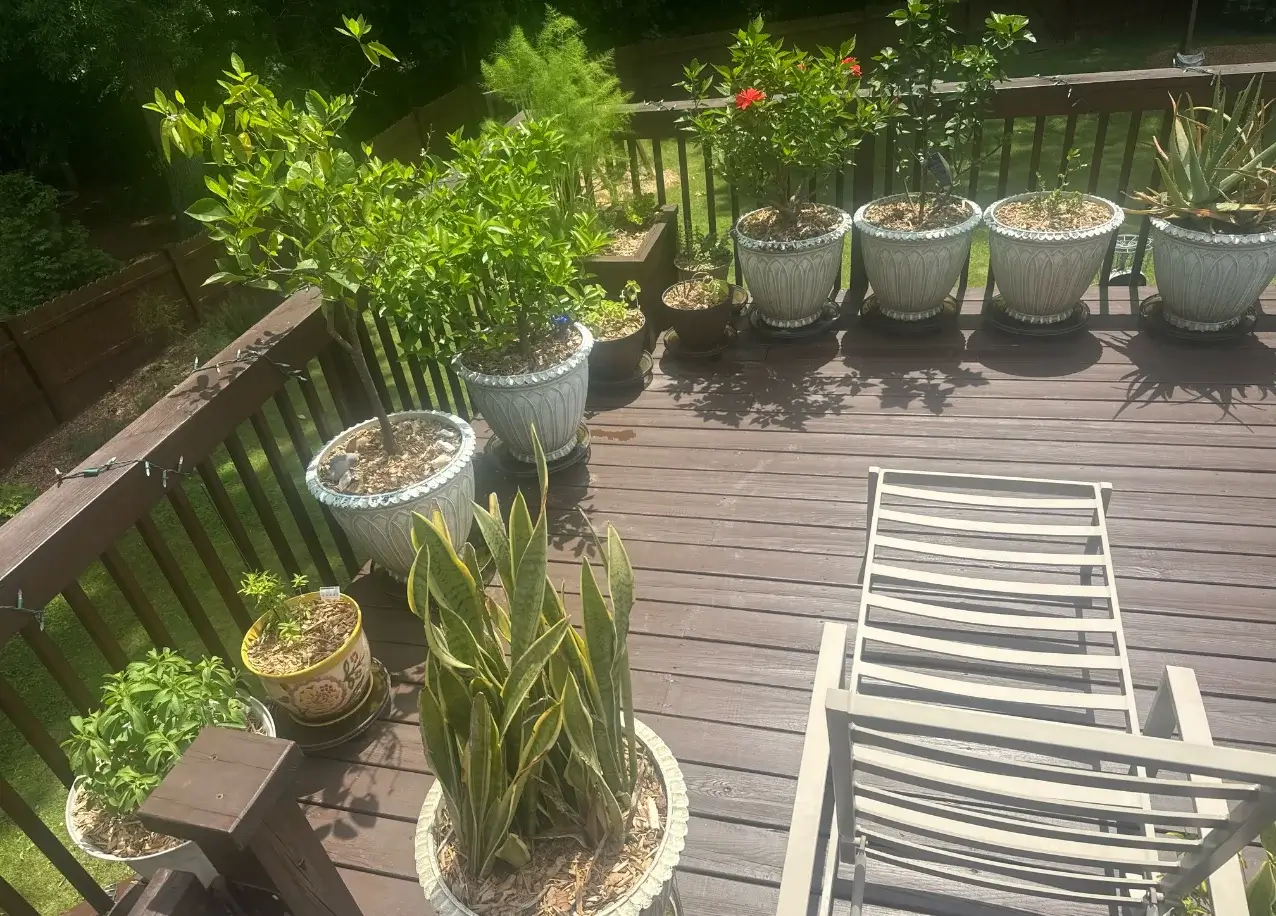
But, like our lime tree below, you can grow one in Atlanta when you have enough direct sun and can protect it when temperatures drop.
Choose containers with drainage. Plant roots need both moisture and oxygen. Whatever style of pot you choose, make sure excess water can escape rather than collecting around the roots. Don’t add rocks or gravel to the bottom as a substitute for drainage holes.
Give plants enough room. Tiny pots dry out quickly and can restrict larger root systems. Herbs can often thrive in smaller containers, but tomatoes, citrus trees, and other large plants need considerably more root space. For example, a tomato generally needs at least a 5-gallon container, and larger containers can be even easier to keep consistently watered.
Use potting mix, not ordinary garden soil. Containers need a growing medium that holds moisture while still allowing good drainage and aeration. A quality potting mix is designed for this job and is usually a much better choice than digging soil from the yard and putting it into a pot.
Watch water more closely than you would in the ground. Containers can dry out fast, especially during hot, sunny weather. Check the soil regularly rather than watering strictly by the calendar. Large, thirsty plants such as tomatoes may need frequent watering during summer, while Mediterranean herbs such as rosemary and oregano generally prefer not to sit in constantly soggy soil.
Group plants with compatible needs. Mixing plants in the same container is beautiful and practical, but it works best when they like similar amounts of sun and water. This is one reason I love experimenting with herbs, edible plants, and flowers together.
Just remember to be flexible and go with the flow. As my old Pastor used to say: Blessed are the flexible, for they won’t be broken!
My Deck Garden & Favorite Plants

By mixing herbs and flowering plants you can have a beautiful garden that also provides for the kitchen! This is one of my favorite approaches because I don’t believe a productive garden has to look purely utilitarian. Your deck can feed your family, attract pollinators, and still be a beautiful place to sit and enjoy.

Citrus trees can grow beautifully in appropriately sized containers when they receive the light and care they need. One of the biggest advantages of keeping citrus in containers is mobility. In climates with freezing weather, you can move the container into a protected location for winter rather than trying to grow a cold-sensitive tree permanently in the ground.

Combining edible plants with herbs and flowering plants to attract pollinators is an easy win for a deck garden or balcony garden. Just remember to pair plants according to their mature size, sunlight, and watering needs rather than choosing companions only because they look pretty together.

We grew this tropical pineapple from a fruit we bought at the grocery store. How awesome is that!? We explain more about how to root a pineapple in our indoor gardening post.
This is one of the reasons I encourage people not to let limited space keep them from experimenting. A plant doesn’t have to grow in a traditional garden bed to become part of your family’s food-growing experience.

I love growing mixed herbs in a large container to give us plenty of growing space on our deck. The roomy container gives you a chance to play with your favorite plant combinations. Keep similar growing needs in mind, though. Herbs that prefer drier soil, such as rosemary and thyme, may be easier to manage together than pairing them with plants that want consistently moist soil.

If you’re growing a tomato in a container on your deck or balcony, give it a large enough pot, plenty of sun, consistent moisture, and proper support. You can also experiment with compatible sun-loving herbs nearby. Just be sure to provide proper support for your tomatoes as they grow!

I always grow lots of stevia. It’s easy to dehydrate when you harvest and stevia is a wonderful natural sweetener.
Growing plants that you actually use is one of the best ways to make a small garden worthwhile. Think about what your family reaches for in the kitchen, then see which of those plants fit the sunlight and space you have available.

Basil is one of my favorite plants for containers because we use it so often in the kitchen. Keep it where you can easily harvest it, give it good sunlight and consistent moisture, and snip it regularly during the growing season.

Hibiscus is one of my favorite plants, and certain edible varieties can be used for tea. Because “hibiscus” describes many species and ornamental cultivars, be sure you know exactly which plant you’re growing before using any part of it as food or tea.

Hibiscus comes in a beautiful variety of colors, and flowering containers are one of the easiest ways to make a productive deck garden feel like a peaceful outdoor living space instead of simply a collection of pots.
That’s really the heart of our deck garden. Use the space you have. Grow food your family will actually eat. Add herbs you can walk outside and snip for dinner. Include flowers for beauty and pollinators. And don’t be afraid to experiment.
How about you? What plants do you have on your deck or balcony?


