


QUICK SUMMARY
Calendula oil is a gentle herbal-infused oil made by steeping dried calendula flowers in a carrier oil such as olive oil, jojoba oil, grapeseed oil, or avocado oil.
Calendula-infused oil is traditionally used to soothe dry skin, irritated skin, bug bites, razor burn, sunburn, minor cuts, and everyday skin inflammation.
Once you learn how to make calendula oil, you can use it on its own or as the base for homemade salves, balms, lotions, massage oils, nipple cream, and other natural skincare remedies.
Learning how to make calendula oil gives you a gentle, natural remedy you can use again and again.
With just dried calendula flowers and a quality carrier oil, you can create a soothing herbal infusion for dry skin, bug bites, sunburn, salves, lotions, massage oils, and everyday skin care.
Start with a small batch, label it well, and enjoy bringing this beautiful healing flower into your natural home apothecary.
Table of Contents

What Is Calendula Oil?
Calendula (Calendula officinalis) has been used for centuries in herbal medicine for skin irritations, dry skin, cuts, abrasions, and inflamed skin. It is especially popular in natural skincare because it is gentle enough for sensitive skin and versatile enough to use in salves, balms, lotions, massage oils, and first-aid preparations.
You can grow and harvest your own calendula flowers or purchase dried organic calendula from a trusted herbal supplier. And that will give you the best ingredients to make this healing calendula oil.
Calendula oil is an herbal-infused oil made by steeping calendula flowers, also known as pot marigold, in a carrier oil. The result is a gentle, golden oil that captures calendula’s soothing, skin-supportive properties.
You can purchase calendula oil from herbal shops, but making your own allows you to choose high-quality carrier oils, organic plant material, and the exact infusion method you prefer.
| Botanical name | Calendula officinalis |
| Common name | Calendula or pot marigold |
| Best for | Dry skin, irritated skin, bug bites, sunburn, minor cuts, salves, and lotions |
| Best carrier oils | Olive oil, jojoba oil, grapeseed oil, avocado oil, or sweet almond oil |
| Shelf life | Usually 6-12 months when stored properly |
Calendula Oil Benefits for Skin
Calendula-infused oil is one of the best herbal oils to keep in your natural skincare cabinet.
It is gentle, nourishing, and useful for many everyday skin needs.
1. Helps Soothe Dry or Irritated Skin
Calendula oil is moisturizing and soothing, making it a wonderful option for dry, chapped, irritated, or sensitive skin.
It is commonly used in herbal skincare for eczema-prone skin, rough patches, winter dryness, and general skin discomfort.
Application: Massage a small amount into dry areas after bathing or washing hands.
2. Calms Sunburn and Razor Burn
Calendula’s soothing properties make it helpful for red, irritated skin after sun exposure or shaving.
It can be used on its own or blended into an aloe-based after-sun gel or calming body oil.
Application: Apply gently to affected areas after the skin has cooled. Avoid applying oil to severe burns or blistered skin without professional guidance.
3. Eases Bug Bites
Calendula-infused oil can help calm itchy, swollen bug bites and support the skin’s natural healing process.
Application: Dab a small amount directly onto bug bites as needed.
4. Supports Minor Wound Care
Calendula oil is often used in natural first-aid preparations for minor cuts, scrapes, and abrasions.
It is not a substitute for cleaning wounds properly, but it can support the skin once the area is clean and beginning to heal.
Application: Use calendula oil in salves or balms for minor skin concerns. Seek medical care for deep, dirty, infected, or slow-healing wounds.
Materials and Ingredients Needed
Learning how to make calendula oil is simple.
At its most basic, you only need calendula flowers and a carrier oil.
Calendula Flowers
Calendula flowers are common plants to grow in herb gardens because of their beauty and usefulness in herbal preparations.
While they are not culinary herbs in the same way basil or thyme are, they are wonderful medicinal plants for natural skincare.
If you do not have space to grow your own, you can purchase organic dried calendula flowers from a trusted herbal shop.
Look for flowers that are:
- Brightly colored
- Dry and free of mold
- Fresh-smelling
- Organic or unsprayed when possible
Quality Carrier Oil
When it comes to choosing a carrier oil, select the highest quality you can.
This matters because your finished calendula oil is only as good as the oil base you use.
Olive oil, jojoba oil, grapeseed oil, sweet almond oil, and avocado oil are all good options. Since olive oil can sometimes be adulterated, buy from a trusted source.
Making your own calendula infusion lets you control the quality from start to finish.
How to Make Calendula Oil
Calendula oil can be made with a double boiler or a slow cooker.
The gentle heat helps the carrier oil pull beneficial compounds from the calendula flowers faster than a traditional cold infusion.
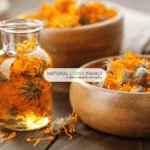
How to Make Calendula Oil Recipe
Quantity
Ingredients
- 1 cup extra-virgin olive oil
- ½ cup calendula flowers
- ½ cup chamomile flowers (optional)
Supplies
- 1 Saucepan
- 1 Double boiler OR
- 1 Crockpot (if not using double boiler)
Instructions
- Fill a saucepan with 1-2 inches of water and place over high heat. Bring to a boil, then turn down to medium-high.
- Place the olive oil, calendula flowers, and chamomile flowers (if using) into a double boiler or glass jar. Set inside the saucepan.
- Allow the mixture to heat on low for several hours. When done, the oil will change color and take on the smell of the herbs.
- Using a jelly strainer held over a glass measuring cup, strain the flower pieces. Squeeze the flowers to get all of the infused oil out.
Crockpot Method
- If you don’t have a double boiler or the supplies to make one, you can use a crockpot.
- Place the ingredients in a glass jar, and set inside the slow cooker.
- Fill the crockpot with 1-2 inches of water, or until half of the jar is covered.
- Let the mixture heat for 4 hours on low, then strain as usual.
Step One: Prepare the Ingredients
Gather your calendula flowers, carrier oil, and supplies.
If you are using a double boiler, set it up before you begin. If you are using a slow cooker, place your ingredients in a glass jar that will sit safely inside the crockpot.
Step Two: Heat the Oil and Calendula Flowers
For the stovetop method, fill a saucepan with 1-2 inches of water and bring it to a boil. Turn the heat down to medium-high.
Add the olive oil, calendula flowers, and chamomile flowers if using to a double boiler or glass jar. Set the jar inside the saucepan.
For the crockpot method, place the calendula flowers and oil in a glass jar, then set the jar inside the slow cooker. Fill the crockpot with 1-2 inches of water or until the water reaches about halfway up the jar.
Step Three: Simmer the Oil
Allow the mixture to heat on low for 4-6 hours.
If you are using the stovetop, keep the heat low and monitor the water level so it does not evaporate.
The oil will begin to change color and take on the gentle herbal scent of calendula.
Step Four: Strain the Oil
After the oil has infused for several hours, carefully remove the jar from the saucepan or slow cooker.
Let it cool slightly.
Use a jelly strainer, cheesecloth, or fine mesh strainer to remove the calendula petals and plant material from the oil.
Squeeze the flowers to get as much infused oil as possible.
Step Five: Store the Oil
Pour the calendula-infused oil into a clean glass jar or dark glass bottle.
Make sure the container is airtight.
Label the jar with the date you made it and store it in a cool, dry place.
Choosing the Right Carrier Oil
One of the most important steps in making homemade calendula oil is selecting the right carrier oil.
Different oils have different textures, shelf lives, and skin benefits.
Olive Oil
Olive oil is a classic choice for calendula oil.
It is rich, nourishing, and wonderful for dry skin. It is also easy to find and works beautifully in salves and balms.
Best for: Dry skin, salves, balms, and all-purpose herbal oil.
Jojoba Oil
Jojoba oil is technically a liquid wax and is very similar to the skin’s natural oils.
It absorbs well and is a great choice for sensitive skin, facial oils, and lighter skincare products.
Best for: Sensitive skin, facial oil, and non-greasy applications.
Grapeseed Oil
Grapeseed oil is lightweight and absorbs quickly.
It is often a good choice for oily or combination skin because it feels lighter than olive oil.
Best for: Lightweight body oil, massage oil, and oily skin.
Avocado Oil
Avocado oil is rich and deeply moisturizing.
It is a great option for extra-dry skin, cracked skin, and body-care products.
Best for: Very dry skin, body butter, and rich salves.
Sweet Almond Oil
Sweet almond oil is a gentle, versatile carrier oil that works well for many skin types.
Avoid it if you have a tree nut allergy.
Best for: Massage oil, body oil, and general skincare.
How to Store Calendula Oil
Calendula-infused oil typically lasts 6-12 months depending on the carrier oil you use and how well it is stored.
To extend shelf life:
- Use dry plant material. Fresh flowers can introduce moisture and increase the chance of spoilage.
- Add vitamin E oil. A few drops can help slow oxidation.
- Store in dark glass. Amber or cobalt bottles protect the oil from light.
- Keep it cool. Store away from heat, sunlight, and moisture.
- Use clean hands or droppers. Avoid introducing water or bacteria into the jar.
- Smell before use. If the oil smells rancid or looks cloudy, discard it.
Ways to Use Calendula-Infused Oil
Once your calendula oil is ready, you can use it in many natural skincare recipes.
DIY Calendula Salve
Use calendula oil as the base for a healing salve.
Combine it with beeswax pellets to make a balm for dry skin, minor scrapes, rough hands, cracked heels, or irritated patches.
Bruise Healing Roll-On
Calendula oil makes a great base for a bruise support roll-on.
It can be paired with other skin-supportive ingredients to help with bumps, bruises, and discoloration.
Moisturizing Lotion
Add calendula-infused oil to homemade lotion to moisturize sensitive skin and soothe irritation.
Massage Oil
Use calendula oil as a gentle massage oil for tired muscles while also nourishing the skin.
Breastfeeding Nipple Cream
Calendula oil is a star ingredient in soothing nipple cream for breastfeeding moms.
It is gentle, nourishing, and ideal for tender skin.
After-Sun Oil
Use calendula oil after sun exposure to help calm and moisturize the skin.
For extra cooling support, combine it with aloe vera gel in a separate application.
Baby and Sensitive Skin Care
Calendula is gentle enough for many sensitive skin preparations.
Use it in baby balms, diaper-area care, and gentle body oils, while avoiding essential oils for very young babies unless properly guided.
Calendula Oil FAQs
What is calendula oil good for?
Calendula oil is good for dry skin, irritated skin, bug bites, sunburn, razor burn, minor cuts, salves, lotions, massage oils, and natural skincare products.
How do you make calendula oil?
Calendula oil is made by gently heating dried calendula flowers in a carrier oil, then straining out the flowers and storing the infused oil in a clean glass jar.
What carrier oil is best for calendula oil?
Olive oil is a classic choice, but jojoba oil, grapeseed oil, avocado oil, and sweet almond oil also work well depending on your skin type and intended use.
Can I use fresh calendula flowers?
Dried calendula flowers are best because fresh flowers contain moisture, which can cause the oil to spoil more quickly.
How long does calendula oil last?
Calendula oil usually lasts 6-12 months when stored in a cool, dark place in a clean, airtight glass container.
How do I know if calendula oil has gone bad?
If the oil smells rancid, looks cloudy, changes color dramatically, or develops mold, throw it away.
Can calendula oil be used on the face?
Yes, calendula oil can be used on the face, especially when made with a lighter carrier oil like jojoba or grapeseed. Patch test first if you have sensitive or acne-prone skin.
Can calendula oil help eczema?
Calendula oil is often used to soothe dry, irritated, eczema-prone skin. It may help moisturize and calm discomfort, but persistent or severe eczema should be evaluated by a healthcare provider.
Can calendula oil help bug bites?
Yes, calendula oil can help calm itchy, swollen bug bites and support the skin’s natural healing process.
Can calendula oil help sunburn?
Calendula oil may help soothe mild sunburn after the skin has cooled. Do not apply oil to severe, blistered, or fresh burns without professional guidance.
Can I make calendula salve from calendula oil?
Yes. Calendula oil is one of the best bases for homemade salves. Combine it with beeswax to create a simple balm.
Can I add essential oils to calendula oil?
Yes, you can add skin-friendly essential oils such as lavender, frankincense, or Roman chamomile if appropriate for the user. Always dilute properly and avoid essential oils for very young babies.
Is calendula oil safe for babies?
Calendula-infused oil is gentle and often used in baby-care products. Keep formulas simple, avoid essential oils for newborns, and patch test first.
Can breastfeeding moms use calendula oil?
Yes, calendula oil is commonly used in nipple cream recipes. If applying before nursing, make sure the formula is baby-safe and wipe off excess if needed.
Can I use calendula oil as massage oil?
Yes, calendula oil works beautifully as a gentle massage oil, especially when infused in jojoba, grapeseed, or sweet almond oil.
Can I use a crockpot to make calendula oil?
Yes. Place the calendula flowers and oil in a glass jar, set it in a slow cooker with 1-2 inches of water, and heat on low for about 4 hours before straining.
Can I make arnica oil the same way?
Yes. You can make arnica-infused oil by substituting the calendula and chamomile with organic dried arnica flowers.
Why add chamomile to calendula oil?
Chamomile is optional, but it adds extra soothing properties and makes the infused oil especially gentle for irritated or sensitive skin.
Should calendula oil be refrigerated?
Refrigeration is not required, but it can help extend shelf life. At minimum, store it in a cool, dark cupboard away from heat and light.
Can calendula oil clog pores?
That depends on the carrier oil. Jojoba and grapeseed are lighter options for the face, while olive and avocado are richer and better for dry body skin.


