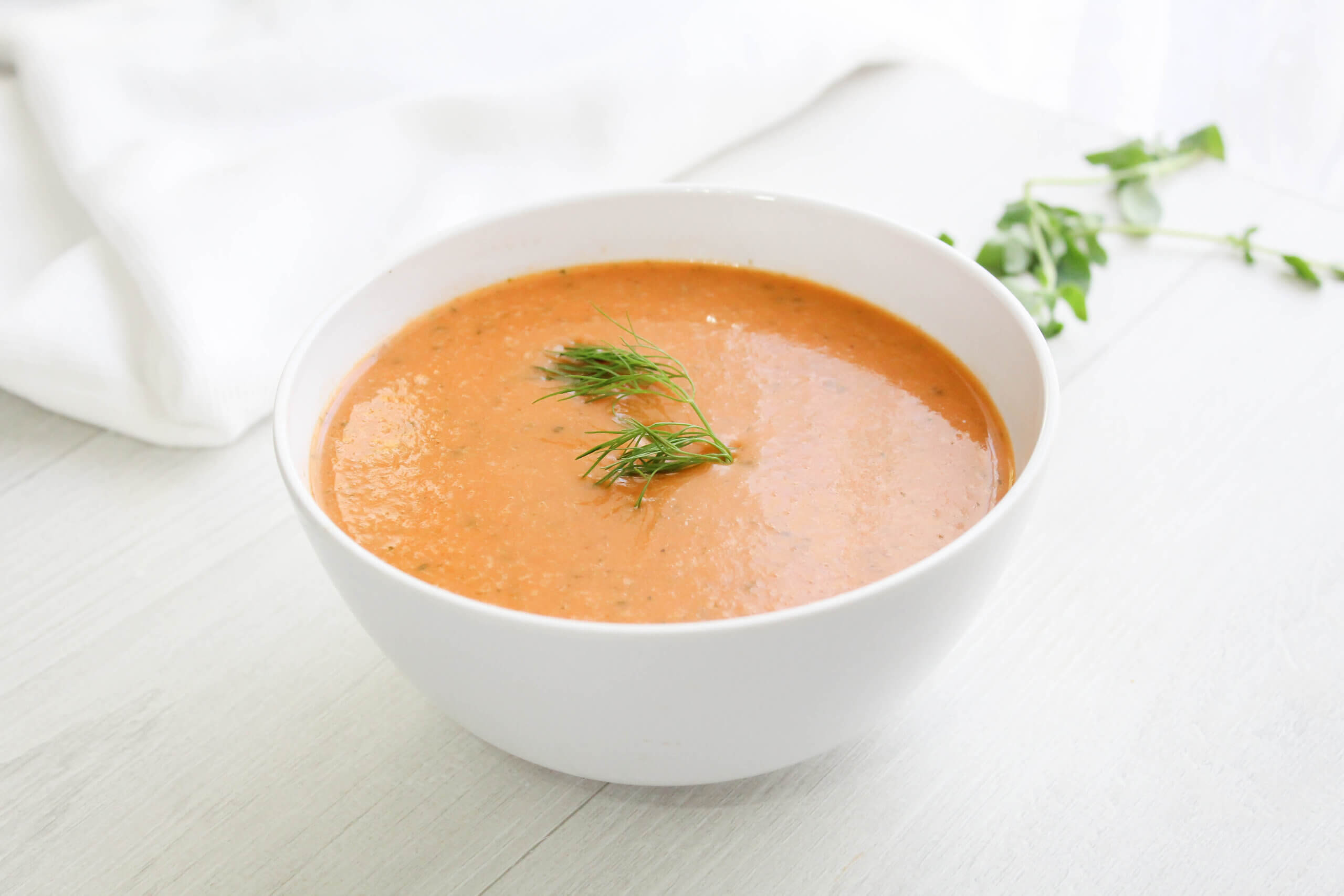
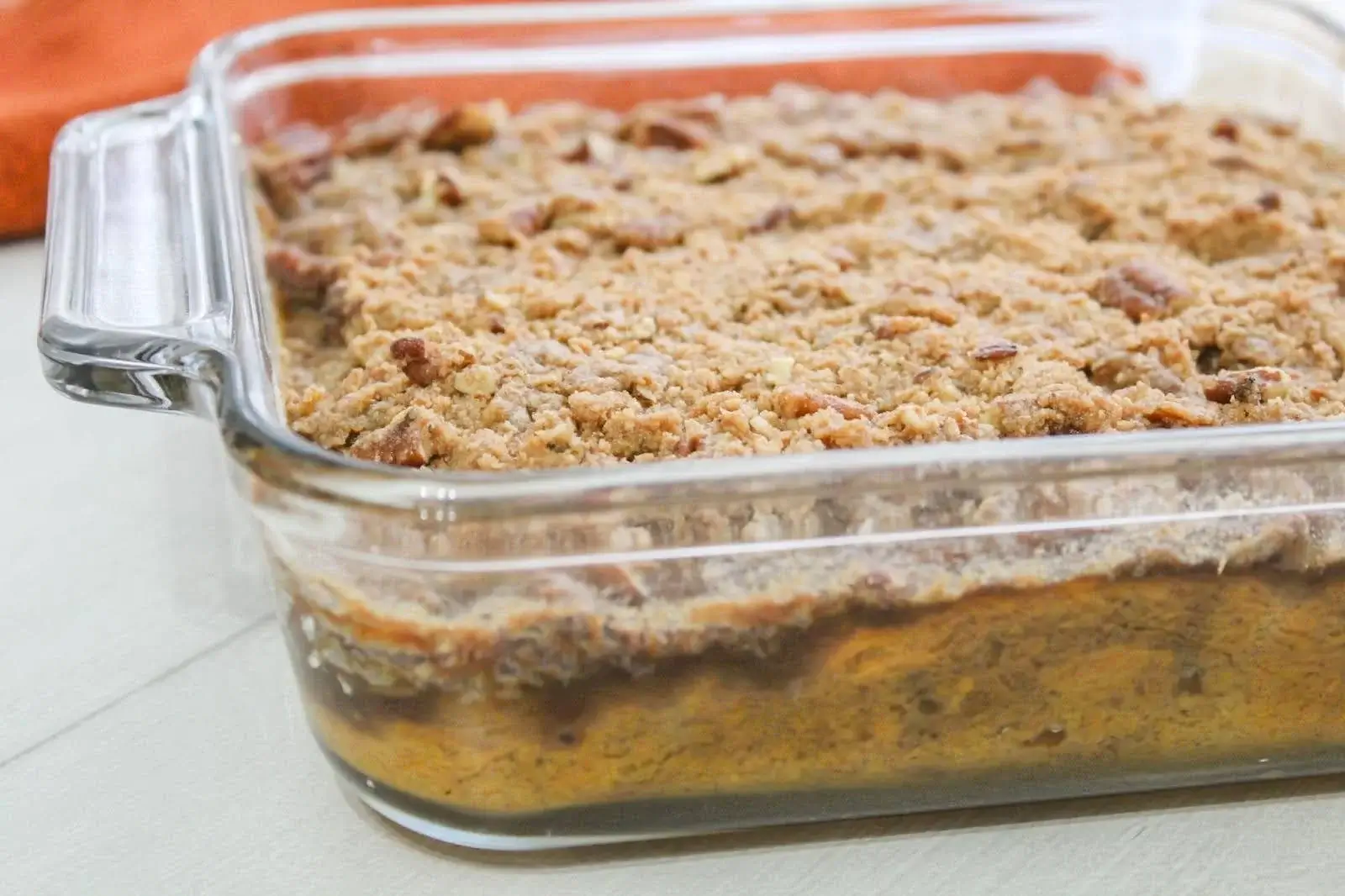
This easy dairy-free scalloped potatoes recipe gives you tender sweet and red potatoes layered with a creamy coconut-milk white sauce. It is naturally easy to make gluten-free, and if you use coconut oil instead of butter, it is completely dairy-free.
The original recipe came from the ever-so-popular Better Homes and Gardens Cookbook. Our lovely family friend adapted it for their needs, and of course, I adapted it for ours!
Tender potatoes topped with a creamy white sauce…what could be better? I use a mix of organic sweet and red potatoes because we love the color, texture, and flavor combination. Sweet potatoes also bring fiber, beta-carotene, and other plant compounds to the casserole. Blood sugar response still depends on the variety, portion size, and cooking method, so I would not call any baked potato automatically “low glycemic.”
Table of Contents


Gene’s Easy Scalloped Potatoes (With Vegan Option)
Servings
Ingredients
Potatoes
- 8 cups combination organic red AND sweet potatoes, pared and thinly sliced
- 2 tablespoons organic dried minced onion OR 3 tablespoons fresh
White Sauce
- 4 tablespoons grass-fed organic sea-salted butter OR 4 tablespoons coconut oil extra-virgin AND unrefined AND a pinch of pink Himalayan salt OR sea salt, ground
- 3 tablespoons gluten-free all-purpose flour
- 2 teaspoons pink Himalayan salt OR sea salt, ground
- 4 cups organic full-fat unsweetened coconut milk
Supplies
Instructions
- Preheat the oven to 325°F. Peel the red and sweet potatoes and slice them into thin slices. Combine the potatoes, so each type is evenly distributed.
- In a small pot over low heat, melt the butter. Add the flour, sea salt, and coconut milk. Bring to a simmer and let cook until thickened. Immediately take off the heat.
- Place half the potatoes in a 9 x 13-inch pan. Top with half the onions and half the sauce. Repeat the layers. Bake uncovered for 2 hours or until you can stick a fork clear through the potatoes to the bottom of the casserole dish.
Benefits of Sweet Potatoes
Sweet potatoes are an affordable root vegetable with a naturally sweet flavor that works in savory dishes, breakfast recipes, and even desserts. They are especially known for fiber, carotenoids, potassium, and vitamin A activity from beta-carotene.
Healthy Source of Carbohydrates
In a sea of diet culture that eliminates food groups, allow us to be a voice of reason and say that carbohydrates AND fats can both be part of a thriving, whole-food diet.
Sweet potatoes contain fiber, and their glycemic response varies substantially with the variety and how they are cooked. In a small human study comparing ten sweet-potato cultivars, boiled sweet potatoes had a much lower glycemic index than baked or roasted versions. In other words, it is too simplistic to say that every sweet potato is automatically easier on blood sugar than every white potato. (6)
For this casserole, enjoy the sweet and red potato combination for what it is: a nourishing, satisfying side dish. If blood sugar is a concern for you, portion size and the rest of the meal matter too.
Antioxidants & Protective Plant Compounds
Sweet potatoes contain carotenoids, phenolic compounds, and other antioxidants that help protect cells from oxidative stress.
The older study cited in this article is interesting, but it needs an important clarification. Researchers tested purified sweet potato protein against colorectal cancer cells in a laboratory and in mouse tumor models. The preparation inhibited cancer-cell growth in those models. That does not mean eating scalloped sweet potatoes has been proven to prevent or treat cancer in people. (1)
That is still a good reminder that whole foods contain far more than calories and carbohydrates. They provide a complex mixture of nutrients and plant compounds that belong in an overall healthy diet.
Rich in Beta-Carotene
Beta-carotene is responsible for much of the lovely orange color in orange-fleshed sweet potatoes. Your body can convert beta-carotene into vitamin A.
Vitamin A is essential for normal vision, immune function, reproduction, growth, and development. The NIH lists baked sweet potato as one of the richest common food sources of vitamin A activity. (2, 7)
That is one of the reasons I love mixing sweet potatoes into familiar comfort-food recipes like this one.
Healthy Potato Ingredients 101

How do you create dairy-free scalloped potatoes that are creamy and delicious? The answer is simple: a few clever swaps and high-quality ingredients.
Organic Potatoes: The trick to perfect scalloped potatoes is to peel them and slice them thin. This helps them cook evenly and gives the casserole that classic tender texture. You can use a food processor set on the thin-slice option to make this easier.
Organic Chopped Onions: We talk often about the benefits of cruciferous vegetables, but onions belong to a different plant family: the Allium family, along with garlic, leeks, and shallots. Allium vegetables contain organosulfur compounds and flavonoids such as quercetin.
Human observational research has explored whether higher Allium intake is associated with lower cancer risk, but the results are not strong enough to say onions themselves “lower your chances of getting cancer.” A meta-analysis found the clearest signal for garlic and colorectal cancer, while the onion-specific estimate was not statistically significant. (5)
Healthy Fat: We love using grass-fed butter in this recipe, but if you want the dish to be genuinely dairy-free, use coconut oil. We’ve used both options with success. The fat helps create the rich white sauce that makes scalloped potatoes so comforting.
Gluten-Free All-Purpose Flour: Instead of white wheat flour, we use gluten-free flour. It thickens our white sauce just as well as traditional flour. If you are cooking for someone with celiac disease or a medically necessary gluten-free diet, use a flour blend labeled gluten-free and watch for cross-contact in the kitchen.
Pink Himalayan Salt or Sea Salt: Sodium is an essential mineral, and salt is the main source of sodium in most diets. We enjoy Colima sea salt for its flavor and traditional hand-harvested preparation. If you don’t have sea salt, you can use pink Himalayan salt.
One nutrition distinction is worth making: specialty salts may contain trace minerals, but those amounts are generally too small to make them a meaningful mineral supplement. Iodized table salt also has one advantage many specialty salts do not: added iodine, an essential nutrient for thyroid function. Use the salt you prefer, but do not choose a specialty salt because you expect it to provide significant amounts of trace minerals.
Organic Full-Fat Unsweetened Coconut Milk: Coconut milk is a wonderful, decadent substitute for dairy. It creates a creamy white sauce that thickens beautifully! When purchasing coconut milk, be sure to grab the full-fat kind. The “lite” variety doesn’t contain the same richness from coconut cream.
Make Easy Scalloped Potatoes
This recipe is easy to prep! It does require a couple of hours to cook, but that’s fine by me. I have no problems with my oven doing the heavy lifting! This side dish serves 3-6 people, generously!
Step One: Prepare the Potatoes

Preheat the oven to 325°F. Peel the red and sweet potatoes and slice them into thin slices. Combine the potatoes so each type is evenly distributed.
Step Two: Make the White Sauce

In a small pot over low heat, melt the butter. Add the flour, sea salt, and coconut milk. Bring to a simmer and let cook until thickened. Immediately take off the heat.
Step Three: Layer the Potatoes and Sauce

Place half the potatoes in a 9 x 13-inch pan. Top with half the onions and half the sauce. Repeat the layers. Bake uncovered for 2 hours or until you can stick a fork clear through the potatoes to the bottom of the casserole dish.
If you want your casserole to bake even faster, you can divide it between two 9 x 13-inch pans so your potatoes are cooking in a thinner, single layer. Once the potatoes are softened (about one hour) then you can place all the potatoes in one pan, clean the extra empty pan, and arrange all the potatoes back into the clean pan for final presentation. Put it back into the oven (or warmer) for the last 10 minutes if you want a nice crisp top to your potato casserole.
Want more healthy holiday recipes? Check out this list that contains all of our favorites! You’ll find appetizers, drinks, main dishes, and of course, dessert! These recipes are free of sugar, gluten, and dairy, but not free of flavor!

- Li PG, Mu TH, Deng L. “Anticancer effects of sweet potato protein on human colorectal cancer cells.” World Journal of Gastroenterology. 2013;19(21):3300-3308. https://pubmed.ncbi.nlm.nih.gov/23745032/
- Dawson MI. “The importance of vitamin A in nutrition.” Current Pharmaceutical Design. 2000;6(3):311-325. https://pubmed.ncbi.nlm.nih.gov/10637381/
- https://www.ncbi.nlm.nih.gov/pmc/articles/PMC2906676/
- https://www.longdom.org/open-access/role-of-diet-in-dermatological-conditions-2155-9600-1000400.pdf
- Turati F, Guercio V, Pelucchi C, La Vecchia C, Galeone C. “Colorectal cancer and adenomatous polyps in relation to allium vegetables intake: a meta-analysis of observational studies.” Molecular Nutrition & Food Research. 2014;58(9):1907-1914. https://pubmed.ncbi.nlm.nih.gov/24976533/
- Bahado-Singh PS, Riley CK, Wheatley AO, Lowe HIC. “Relationship between Processing Method and the Glycemic Indices of Ten Sweet Potato Cultivars Commonly Consumed in Jamaica.” Journal of Nutrition and Metabolism. 2011;2011:584832. doi:10.1155/2011/584832
- National Institutes of Health, Office of Dietary Supplements. “Vitamin A and Carotenoids: Health Professional Fact Sheet.” NIH ODS